Educational
15 Modern Glass Staircase Design Ideas for 2026
Published:
Last updated:
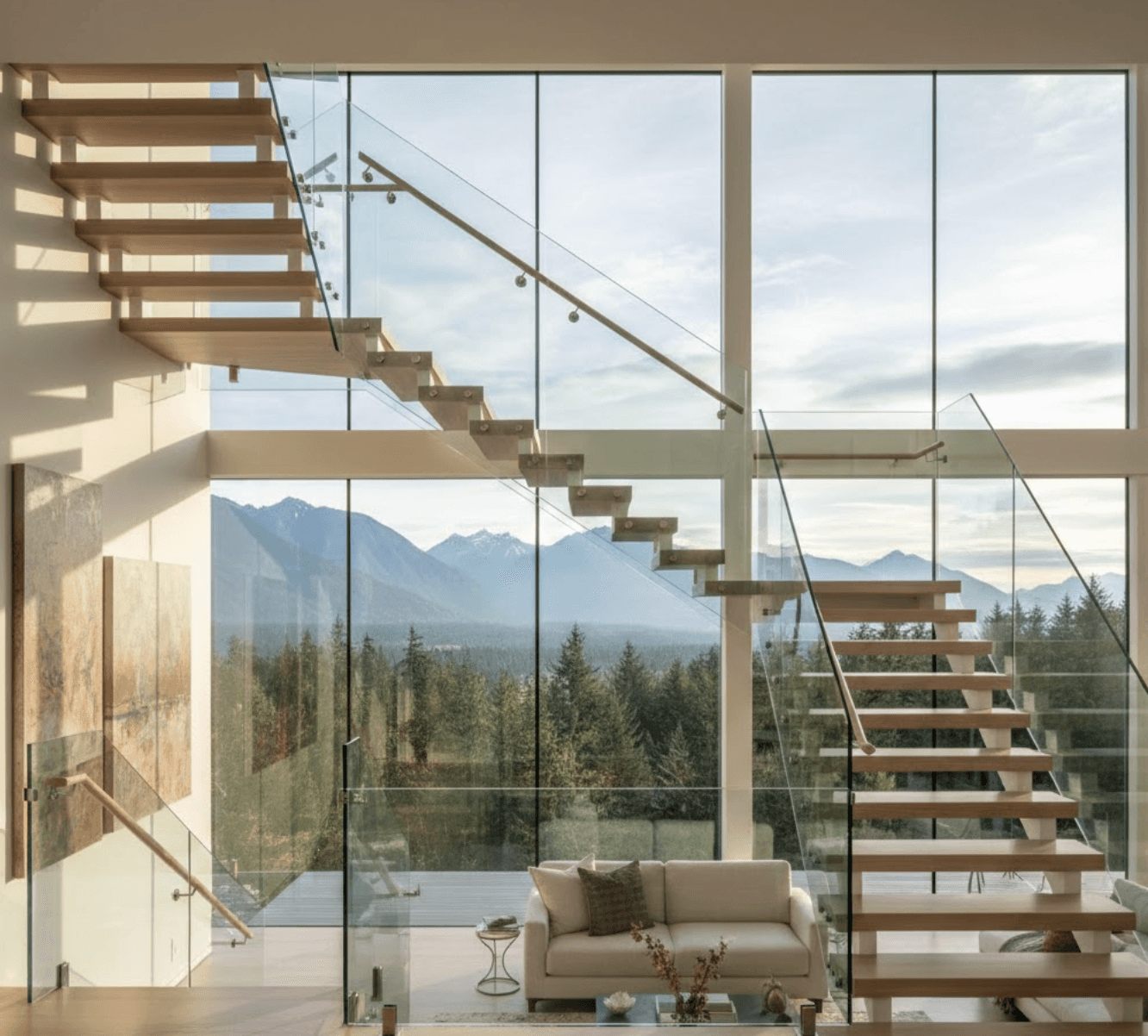
In 2026, staircases are no longer hidden connectors between floors. They are architectural centrepieces that define how a home feels the moment you walk in.
Glass staircases lead this shift. Their transparency floods interiors with natural light, creates visual space in compact floor plans, and delivers the clean, modern aesthetic that dominates contemporary design. For Fraser Valley and Vancouver homeowners, glass staircases also make practical sense in our often-overcast climate, maximizing every ray of available sunlight.
This guide presents 15 glass staircase designs inspiring BC homeowners this year, along with everything you need to know about costs, BC Building Code requirements, and the installation process.

15 Modern Glass Staircase Designs for 2026
These designs represent the range of possibilities for glass staircases, from minimalist floating treads to dramatic sculptural statements. Each includes practical considerations for BC homeowners.
1. The Floating Minimalist
The floating minimalist design strips away everything except the essentials. Glass treads appear to hover against a clean wall, with frameless glass balustrades providing safety without visual interruption.
This design demands precision. The treads cantilever from a structural wall, with all support hidden from view. The result is a staircase that seems to defy gravity.
Best for: Contemporary homes, open-concept spaces, minimalist interiors
Practical notes: Requires a structural wall capable of supporting cantilevered loads. BC code requires 12mm safety glass minimum. This is a premium design due to engineering complexity.

2. Glass and Warm Wood Fusion
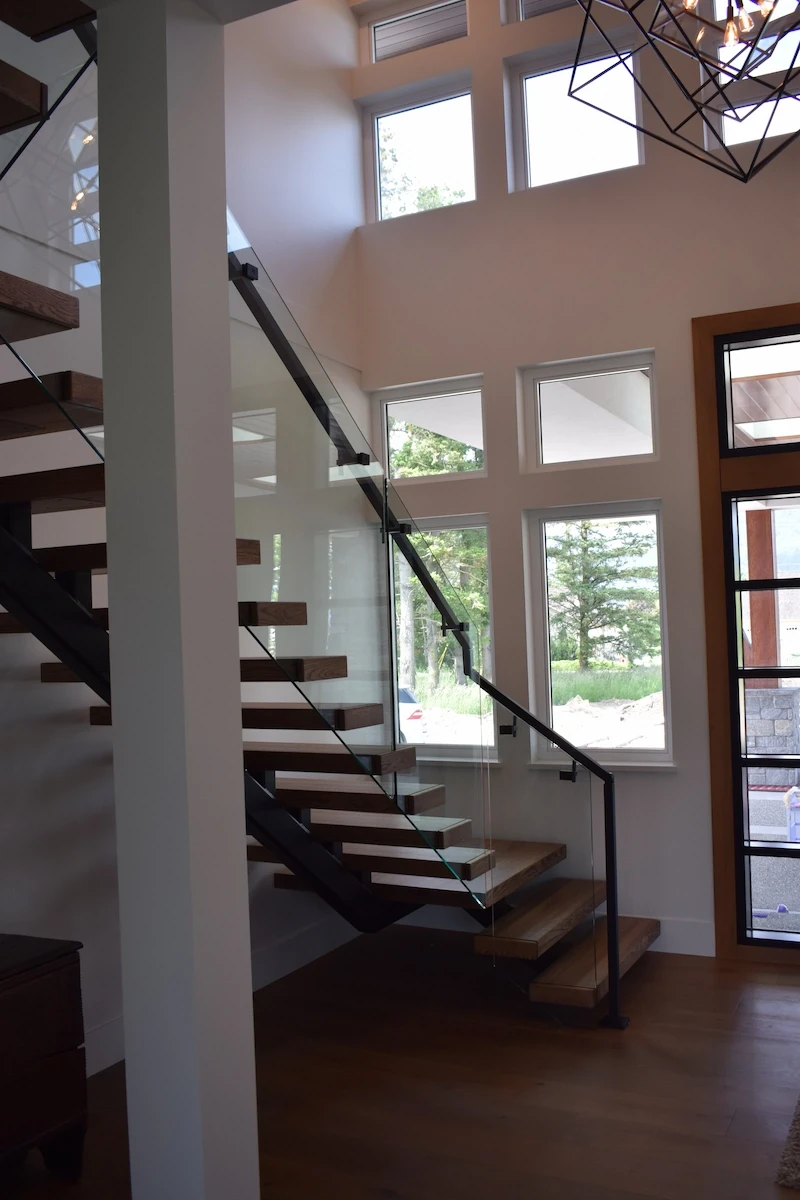
This design balances modern transparency with natural warmth. White oak, walnut, or maple treads pair with frameless glass panels, while a wood handrail adds tactile comfort.
The combination works because each material does what it does best. Glass provides openness and light transmission. Wood delivers warmth, texture, and a graspable surface.
Best for: West Coast modern homes, transitional styles, family-friendly spaces
Practical notes: Select wood species suited for BC humidity. Oak and walnut perform well. This design works for both new builds and renovations updating traditional staircases.

3. Industrial Steel and Glass
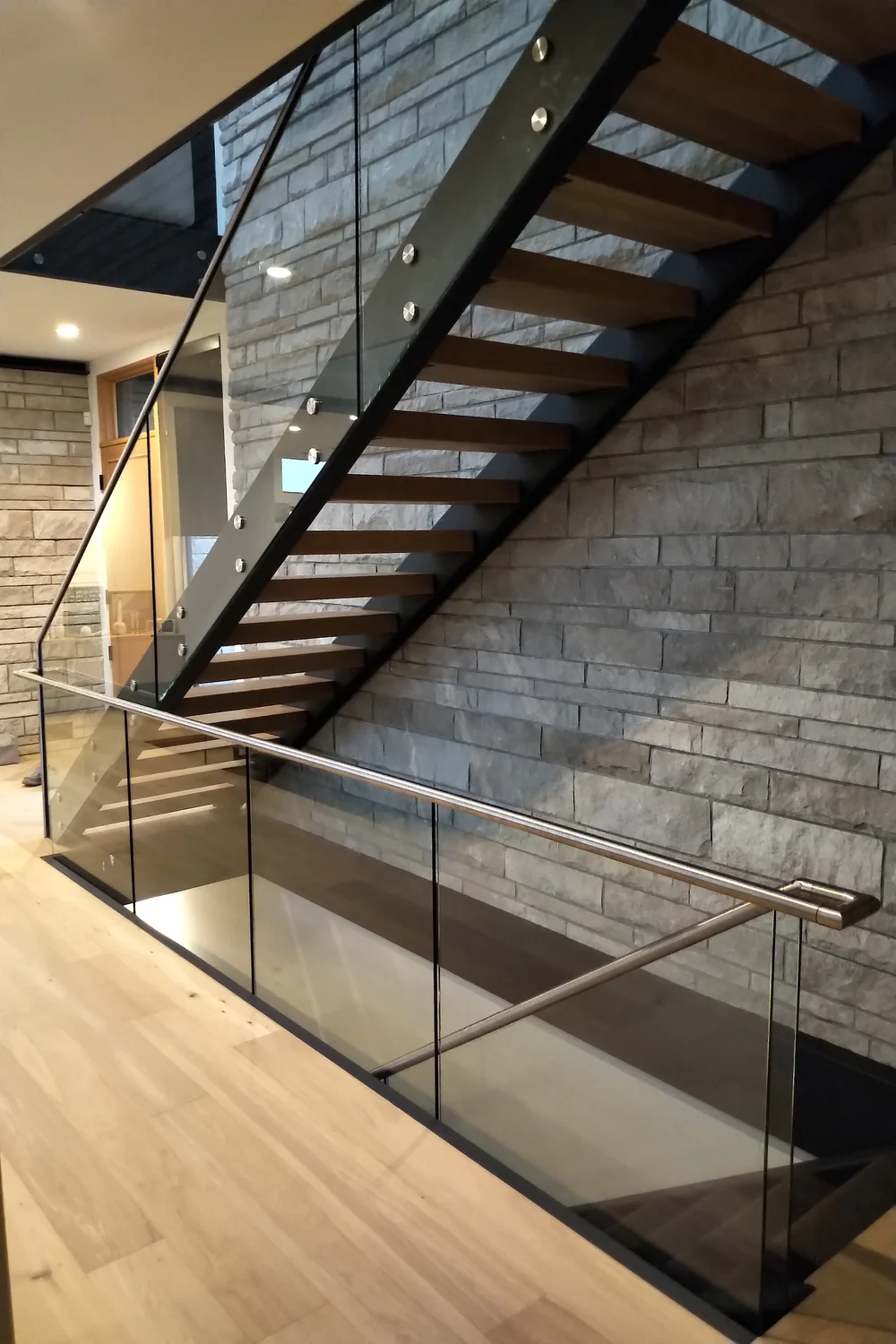
Raw, urban, and unapologetic. This design combines black steel framework with clear glass panels, letting the structure become the aesthetic.
Powder-coated finishes in matte black, charcoal, or bronze provide durability and visual impact. Exposed welds and visible hardware add to the industrial authenticity.
Best for: Lofts, warehouse conversions, modern industrial homes
Practical notes: Powder coating is essential for coastal BC to prevent corrosion from salt air. Steel framework can use lighter gauge materials when combined with structural glass.

4. LED-Integrated Glass Staircase
Subtle LED strips integrated under treads or within handrails create both ambient glow and improved nighttime safety. Smart home integration allows control of colour and intensity.
This design transforms a staircase into a lighting feature. During the day, the glass and clean lines dominate. At night, the LED accents take over.
Best for: Entertainment spaces, tech-forward homes, safety-conscious families
Practical notes: LED placement options include under-tread mounting, recessed channels in handrails, and base illumination. Low-voltage systems are safe and energy-efficient. Motion activation adds convenience.

5. Curved Glass Spiral
Space-saving elegance with maximum visual impact. Custom-curved glass panels follow the spiral's arc, creating a continuous flow of transparency around the central structure.
Curved glass requires specialized manufacturing. Flat glass is heated to approximately 550-600°C until it softens, then shaped over a mould (Bent Glass Design, 2024). The result is glass that follows complex curves without distortion.
Best for: Compact spaces, architectural statements, luxury homes
Practical notes: Curved glass requires longer lead times than straight configurations. Expect premium pricing reflecting the engineering and fabrication complexity. This is a statement piece.
Learn more about curved glass railings

6. Frameless Glass with Floating Treads
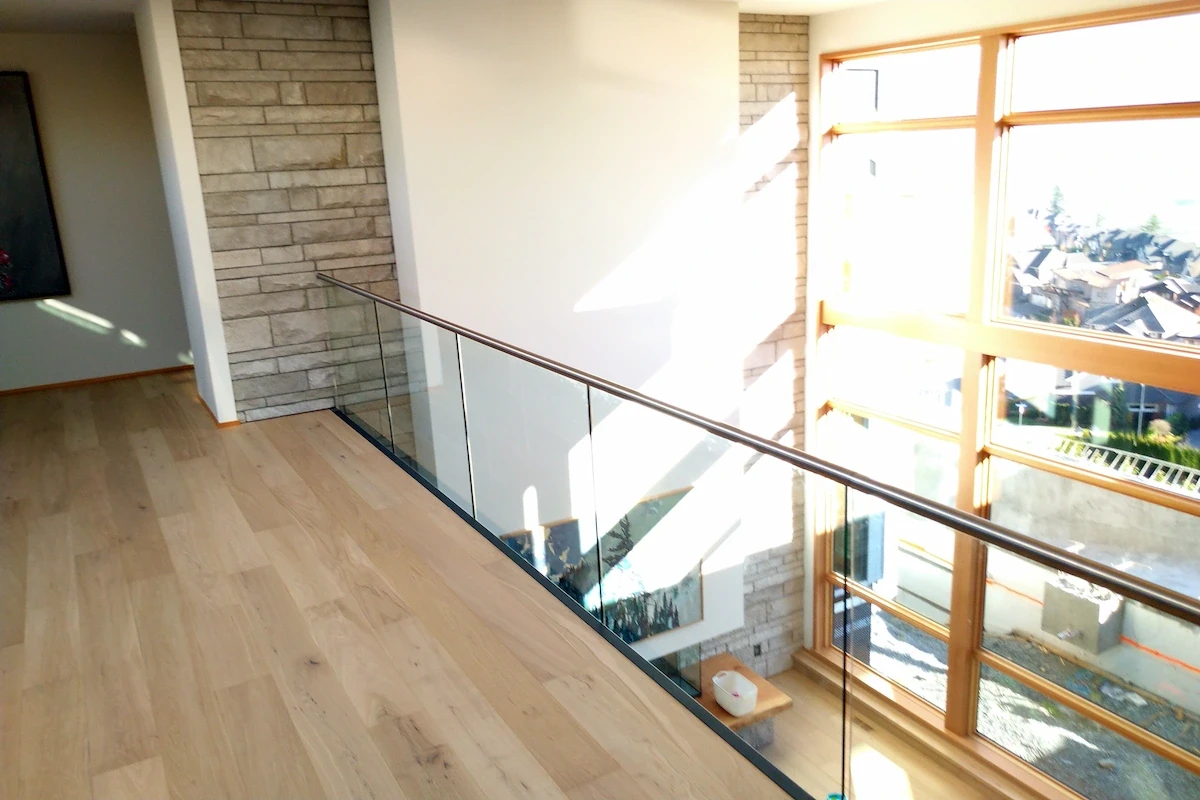
The ultimate minimalist statement. No posts, no top rail, no visible frame. Thick glass panels are secured with concealed base clamps, and treads appear suspended in space.
This design demands precision engineering and installation. Every element must be perfectly aligned because there is nothing to hide behind.
Best for: Design purists, gallery-like interiors, architectural showcases
Practical notes: BC Building Code requires engineer-sealed shop drawings for frameless systems. Structural requirements are more demanding than framed alternatives. The investment is higher, but the visual payoff is dramatic.
Explore frameless glass railings

7. Semi-Frameless with Slim Posts
This design balances openness with defined lines. Slim aluminum or stainless posts at intervals (maximum 42 inches apart) support glass panels, with an optional top rail for added safety.
Semi-frameless systems deliver most of the visual impact of frameless at a more accessible price point. The slim posts almost disappear.
Best for: Budget-conscious modernization, practical family homes
Practical notes: Posts can be powder-coated to match any interior colour scheme. Installation is more straightforward than frameless, with fewer structural requirements. This is often the best value option.

8. Frosted Glass for Privacy
Translucent panels transmit light while obscuring views. Acid-etched or sandblasted finishes create a sophisticated texture that softens the overall effect.
Frosted glass works where full transparency would feel too exposed. It provides the openness of glass without the fishbowl effect.
Best for: Staircases near bedrooms, bathrooms, or spaces requiring visual privacy
Practical notes: Frosted glass resists fingerprints better than clear glass, making it easier to maintain in high-traffic areas. Gradient treatments (clear to frosted) offer creative possibilities.

9. Glass Treads with Contrasting Risers
Glass treads paired with solid risers create a unique visual rhythm. The transparency of each step contrasts with the defined line of the riser behind it.
This design offers partial transparency while providing a more defined sense of each step. Some homeowners find it easier to navigate than fully transparent designs.
Best for: Those wanting transparency without full openness, easier maintenance, retrofit projects
Practical notes: Solid risers can hide under-stair storage or mechanical systems. This design can retrofit existing closed staircases by replacing only the treads.
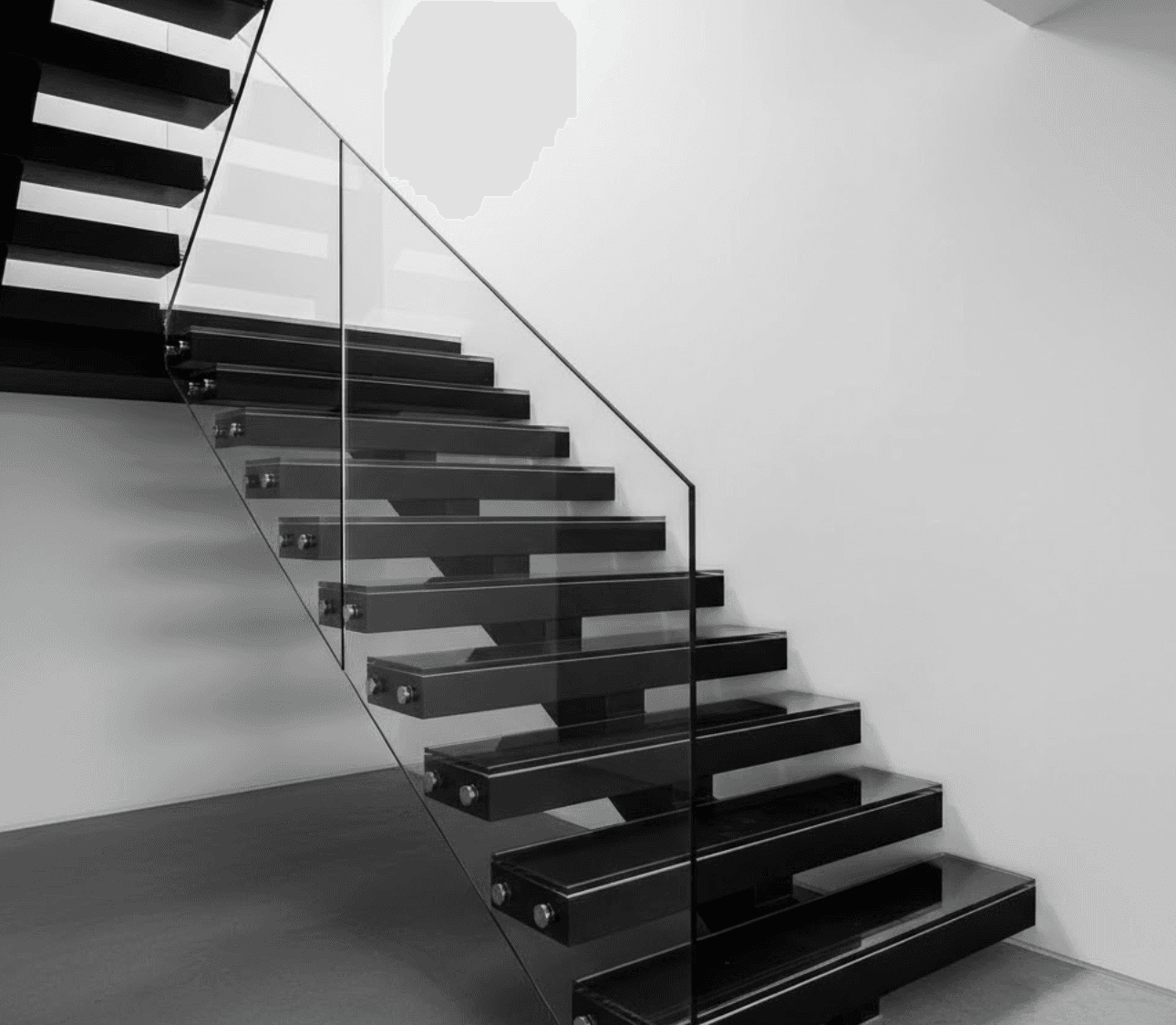
10. Outdoor Glass Staircase
Weather-resistant design for deck and patio connections. Marine-grade stainless steel hardware stands up to BC's coastal environment while maximizing views.
Outdoor glass staircases extend the transparency and openness from interior spaces to decks, patios, and gardens. They create seamless transitions between indoor and outdoor living.
Best for: Waterfront properties, elevated decks, outdoor entertaining spaces
Practical notes: Hardware must withstand salt air and moisture. 316-grade stainless steel is recommended for coastal BC. Self-cleaning glass coatings reduce maintenance for exterior applications. BC code requirements apply equally to exterior guards.

11. Double-Height Glass Feature Wall
Floor-to-ceiling glass panels spanning multiple storeys create dramatic vertical impact. This design turns a staircase into a major architectural feature.
In double-height spaces, the staircase often becomes the focal point by default. This design embraces that reality, using full-height glass to maximize the drama.
Best for: Grand entrances, luxury foyers, homes with double-height spaces
Practical notes: Requires specialized installation equipment for tall panels. Structural engineering is critical for wind and seismic loads in BC. This is a premium investment with significant visual return.

12. Glass and Cable Rail Hybrid
Combines glass panel sections with horizontal cable runs for an industrial-meets-modern aesthetic. Cables provide additional visual interest without blocking views.
This hybrid approach works well for properties with dramatic views. The cables add texture and a sense of security without the visual weight of solid barriers. If you are weighing one system against the other for your project, see our full comparison of glass railings vs cable railings.
Best for: Mountain properties, contemporary cabins, view-focused designs
Practical notes: Cable spacing must meet BC code (maximum 100mm openings). Stainless steel cables require periodic tensioning. Glass panels can be positioned strategically for wind protection in exposed locations.

13. Textured and Patterned Glass
Reeded, fluted, or patterned glass adds visual interest while providing partial privacy. This treatment is trending strongly in 2026 interior design.
Textured glass offers a middle ground between clear and frosted. It transmits light freely while adding visual depth and interest to the surface.
Best for: Design-forward homes, spaces needing subtle screening, coordinated interior schemes
Practical notes: Reeded and fluted glass hide fingerprints better than clear. Pattern orientation (vertical versus horizontal) affects the visual effect. Textured glass can be combined with clear sections for variety.

14. Retrofit Glass Railing Upgrade
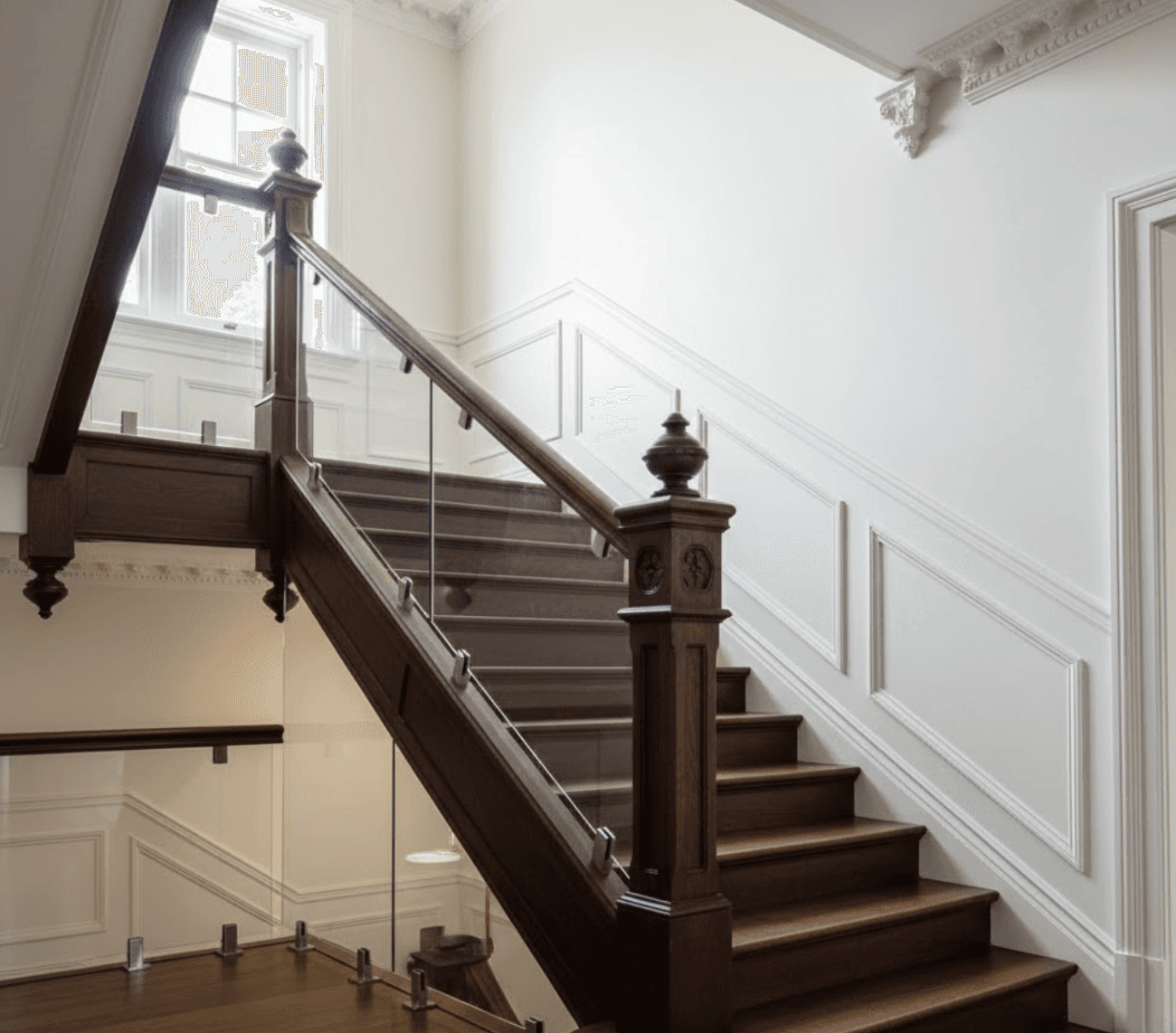
Modernize an existing staircase without full reconstruction. Replace traditional wood balusters with glass panels while keeping existing treads, stringers, and newel posts.
This approach delivers much of the modern glass aesthetic at a fraction of the cost of a complete staircase replacement. It works for homeowners who love their existing staircase structure but want an updated look.
Best for: Budget-conscious renovations, heritage home updates, quick transformations
Practical notes: Most traditional staircases can accept glass panel retrofits. Existing handrails can often be retained or refinished. This is significantly less expensive than full replacement.
15. Sculptural Statement Staircase
The staircase as art installation and functional element. Unique geometric forms, ribbon-style curves, or cantilevered drama create one-of-a-kind results.
This is not a design you select from a catalogue. It requires collaboration between architect, engineer, and fabricator to realize a custom vision.
Best for: Custom builds, luxury renovations, homeowners wanting a signature feature
Practical notes: Longest lead times and highest investment of any option. Requires close coordination between design and construction teams. The result is a true signature home feature that cannot be replicated.

Why Glass Staircases Are Going to Dominate 2026 Design
The designs above share common advantages that explain their growing popularity among Fraser Valley and Vancouver homeowners.
Maximizing Natural Light in Coastal Climates
BC's overcast climate makes light optimization essential. Unlike solid railings that block and absorb light, glass transmits it freely between floors.
This matters more than aesthetics. Research links natural light exposure to improved circadian rhythm, better sleep quality, and enhanced mood (PMC, 2019). Glass staircases help distribute the natural light we do receive throughout interior spaces.
In a region where grey skies dominate winter months, every design decision that maximizes available light has real impact on daily living.
Creating Visual Space in Modern Floor Plans
Open-concept living dominates contemporary home design. Glass staircases complement this approach by maintaining visual connection between living areas.
A solid staircase wall can make an open floor plan feel divided. Glass preserves the flow, allowing sightlines to extend across multiple areas. This is particularly valuable in smaller Vancouver condos and townhomes where square footage is at a premium.
Long-Term Value and Durability
Glass railings require minimal maintenance and outlast many alternatives in BC's coastal environment.
Wood railings need regular refinishing to combat moisture damage. Wrought iron requires rust prevention. Glass needs only periodic cleaning.
Quality glass railing systems also contribute to property value. The modern, clean aesthetic appeals to buyers, and the durability ensures the investment holds up over time.
Understanding Glass Railing Systems
To choose the right design, it helps to understand the system options available.
Frameless Systems
Frameless glass railings deliver maximum transparency with no posts or top rail. Thick glass panels (typically 12mm minimum) are secured with concealed base clamps or channel systems.
BC Building Code requires engineer-sealed shop drawings for frameless installations. This adds to the upfront work but ensures the system meets structural requirements.
Frameless systems typically range from $300 to $400 per linear foot, depending on complexity and site conditions.
Learn more about frameless glass railings
Semi-Frameless Systems
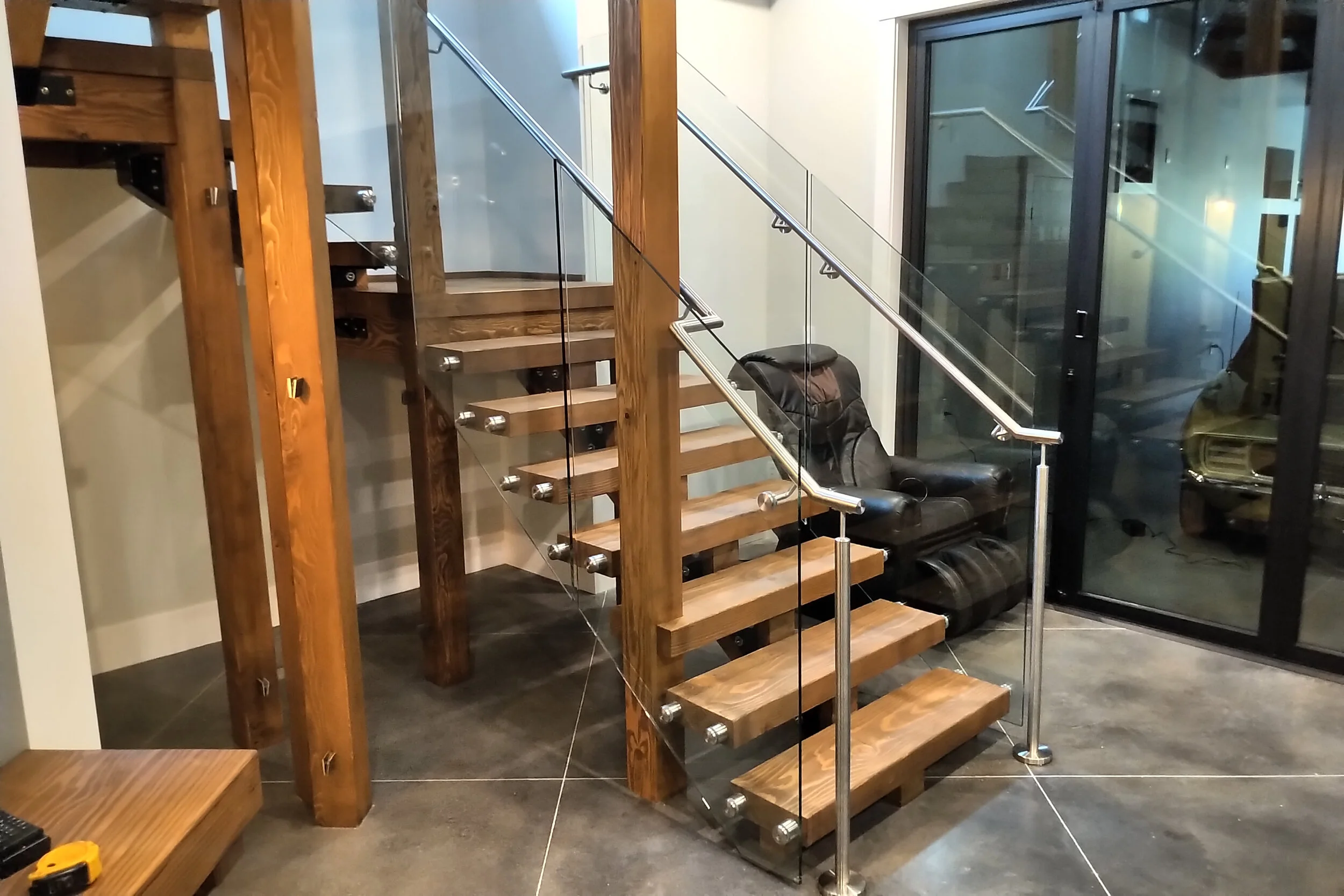
Semi-frameless systems use slim aluminum posts with glass panels between them. Posts are spaced at a maximum of 42 inches apart, with an optional top rail.
This design balances openness with a lower cost. The slim posts are visible but unobtrusive, and the installation requirements are more straightforward than frameless.
Semi-frameless systems typically range from $250 to $350 per linear foot.
Curved Glass Systems
Curved glass panels are custom-fabricated by heating flat glass to approximately 550-600°C until it softens, then shaping it over a mould (CRICURSA, 2024). The glass cools in its new curved form.
This specialized manufacturing means longer lead times and higher costs than straight configurations. Curved glass is typically reserved for spiral staircases, sweeping architectural features, or custom statement pieces.
BC Building Code Requirements for Glass Staircases
Beautiful design must meet safety standards. Here is what BC requires for glass staircase installations.
Glass Specifications
All glass used in guards must conform to CAN/CGSB-12.1-M90, the Canadian safety glazing standard. This ensures the glass meets requirements for strength and safe breakage patterns.
Minimum glass thickness is 12mm for panels used in guards. Thicker glass may be required for larger panels or specific structural applications.
Height Requirements
BC Building Code specifies minimum heights for guards based on the drop below:
Stair guards: Minimum 900mm (36 inches)
Guards above 1.8m drop: Minimum 1,070mm (42 inches)
Maximum openings: 100mm (4 inches) to prevent child entrapment
These requirements apply equally to interior and exterior installations.
Structural Requirements
Guards must resist specified loads to ensure they hold up under real-world conditions:
Horizontal load resistance: 0.5 kN/m minimum
Concentrated load: 1.0 kN point load capacity
Frameless systems require engineer-sealed shop drawings verifying that the design meets these structural requirements. This is not optional under BC Building Code.
Read more about BC Building Code requirements for glass railings
Glass Staircase Costs in the Fraser Valley
Understanding realistic costs helps you plan your project and evaluate quotes.
Investment by System Type
Frameless systems typically range from $300 to $400 per linear foot. The higher cost reflects engineering requirements, thicker glass, and precision installation.
Semi-frameless systems typically range from $250 to $350 per linear foot. This option delivers most of the visual impact at a more accessible price point.
Curved glass typically starts above $400 per linear foot due to specialized manufacturing and installation requirements.
These ranges reflect installed costs including materials, hardware, and professional installation.
Factors Affecting Your Price
Several factors influence where your project falls within these ranges:
Linear footage and layout complexity: Straight runs cost less than configurations with multiple turns or levels
Glass specifications: Thicker glass and specialty finishes add cost
Hardware selection: Stainless steel costs more than aluminum but lasts longer in coastal environments
Site access and preparation: Difficult access or extensive prep work adds to labour costs
Understanding Value Versus Price
Glass railings cost more upfront than basic wood or metal alternatives. However, long-term costs tell a different story.
Wood railings require refinishing every few years. Metal railings need rust prevention. Glass requires only periodic cleaning with soap and water.
In BC's coastal climate, this durability matters. Salt air and moisture accelerate deterioration of materials that would last decades in drier climates. Glass stands up to these conditions without degradation.
The Installation Process: What to Expect
A clear understanding of the installation process helps you plan your project timeline.
Consultation and Measurement
Every project begins with an on-site assessment. This includes reviewing the existing structure, confirming design requirements, and taking precise measurements.
For glass installations, measurement accuracy is critical. Glass panels are fabricated to exact dimensions and cannot be adjusted on site. Getting measurements right the first time prevents delays and errors.
Fabrication Timeline
After measurements are confirmed, glass fabrication begins. Custom panels are manufactured to your specific dimensions and specifications.
This fabrication process takes time. Plan for a total timeline of 6 to 8 weeks from measurement to completed installation. Projects involving curved glass or unusual configurations may require additional time.
Professional Installation
Installation follows a specific sequence: hardware is installed first, then glass panels are positioned and secured. This ensures the hardware is precisely placed to receive panels fabricated to exact specifications.
Final inspection confirms the installation meets BC Building Code requirements. Documentation is provided for municipal inspectors as needed.
How to Choose the Right Glass Staircase
With so many options available, these considerations help narrow the choices.
Match Design to Home Style
Different glass staircase designs suit different architectural styles:
Contemporary and minimalist homes: Frameless systems with floating treads deliver the cleanest aesthetic
West Coast modern: Glass and wood combinations balance transparency with natural warmth
Industrial and urban: Steel and glass designs embrace raw materials and visible structure
Traditional homes seeking updates: Semi-frameless retrofit preserves character while adding modern transparency
Practical Considerations
Beyond aesthetics, consider how your household will use the staircase:
Families with children: All BC-compliant systems meet safety requirements including maximum 100mm openings. Semi-frameless with a top rail provides additional security.
Maintenance preferences: Frosted or textured glass shows fingerprints less than clear glass. Families with young children may prefer these options.
Budget alignment: Semi-frameless systems offer the best value for most households. Reserve frameless for situations where maximum transparency is the priority.
Indoor Versus Outdoor
Exterior applications require additional consideration:
Hardware: Marine-grade stainless steel (316 grade) is recommended for coastal BC to resist salt air corrosion
Climate exposure: BC's wet climate demands hardware that withstands constant moisture
Code requirements: BC Building Code applies equally to interior and exterior guards
Frequently Asked Questions
Are glass staircases safe for homes with children?
Yes. BC Building Code requires safety glass and maximum 100mm openings specifically to protect children. All compliant glass railing systems meet rigorous safety standards. The glass used is designed to resist breakage and, if broken, fragments in ways that minimize injury risk.
How do you clean glass stair railings?
Simple soap and water with a microfibre cloth handles routine cleaning. For coastal BC, periodic cleaning prevents salt residue buildup. Avoid abrasive cleaners that could scratch the surface. Frosted glass requires less frequent cleaning than clear because it shows fingerprints less.
Can glass railings be added to an existing staircase?
Yes. Most traditional staircases can accept glass panel retrofits. Often the existing handrail, newel posts, and treads can be retained while only the balusters are replaced with glass. This approach delivers a modern look at a fraction of the cost of full replacement.
Do glass staircases meet BC Building Code?
When properly designed and installed, yes. Systems must use CAN/CGSB-12.1-M90 compliant safety glass, minimum 12mm thickness, and meet height and load requirements. Frameless systems require engineer-sealed shop drawings.
How long does installation take?
From measurement to completion, expect 6 to 8 weeks. This timeline includes custom glass fabrication, hardware coordination, and professional installation. Rushing this process risks errors that are difficult and expensive to correct.
What is the difference between frameless and semi-frameless?
Frameless systems have no posts or top rail, using thick glass panels secured only at the base for maximum transparency. Semi-frameless uses slim aluminum posts spaced a maximum of 42 inches apart with glass panels between, giving an open look at a lower price point.
Compare frameless vs semi-frameless
Are glass staircases more expensive than traditional railings?
Initial investment is higher, with systems ranging from $250 to $400 per linear foot. However, long-term costs are lower due to minimal maintenance requirements. Glass requires no refinishing, resists rot and corrosion, and maintains its appearance for decades.
Can glass staircases be installed outdoors?
Yes. Exterior applications require marine-grade stainless steel hardware (316 grade) to withstand BC's coastal climate. Proper hardware selection ensures the installation performs as well outdoors as it does inside.
Key Takeaways
Glass staircases maximize natural light, which research links to improved mood, sleep quality, and overall wellbeing (PMC, 2019)
BC Building Code requires minimum 12mm safety glass and specific guard heights: 900mm for stairs, 1,070mm for elevated guards above 1.8m
Frameless systems range from $300 to $400 per linear foot; semi-frameless offers excellent value at $250 to $350 per foot
Professional installation takes 6 to 8 weeks from measurement to completion, including custom glass fabrication
Quality glass railings require minimal maintenance and outperform wood and metal alternatives in BC's coastal climate
Transform Your Fraser Valley Home
Your staircase can be more than a way to move between floors. In 2026, it can be the defining feature of your home.
Whether you prefer the dramatic transparency of frameless glass, the warmth of wood and glass combinations, or the architectural impact of a curved spiral, there is a glass staircase design that fits your vision and budget.
Ready to explore options for your home? Contact Marten at (604) 819-9896 to discuss your project and receive a personalized consultation.