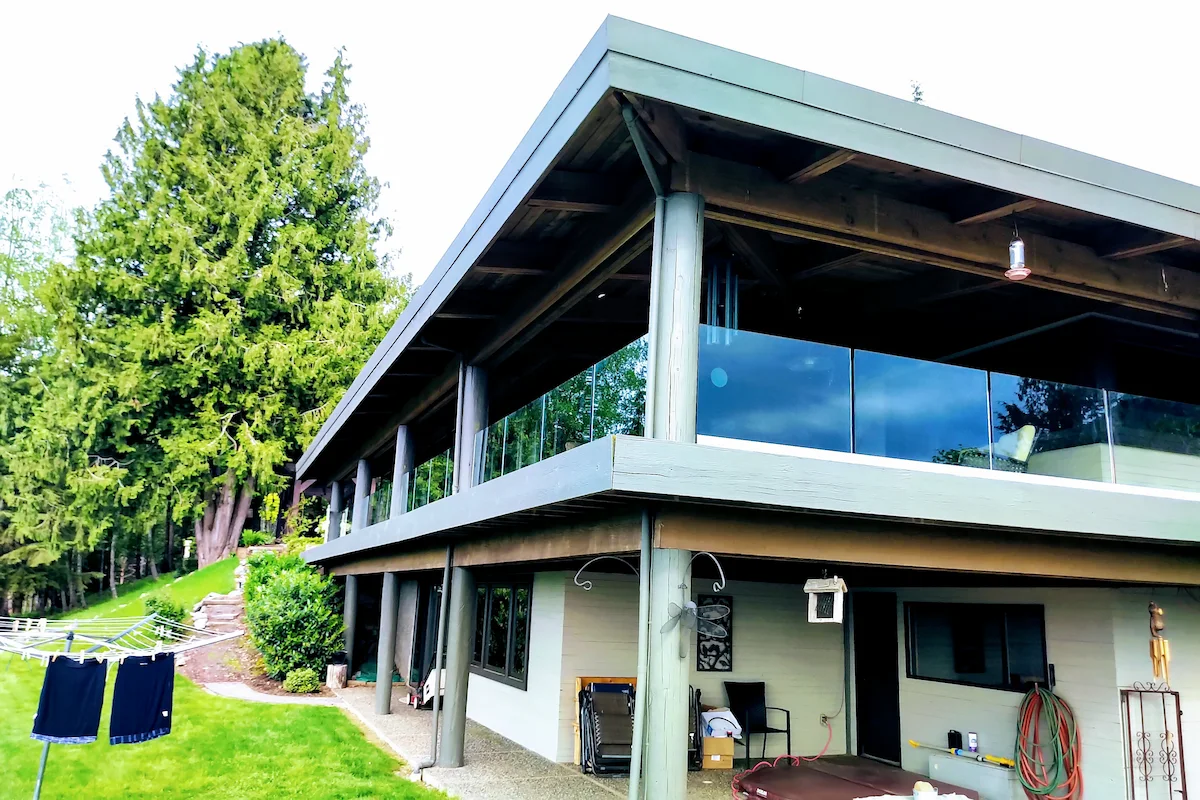
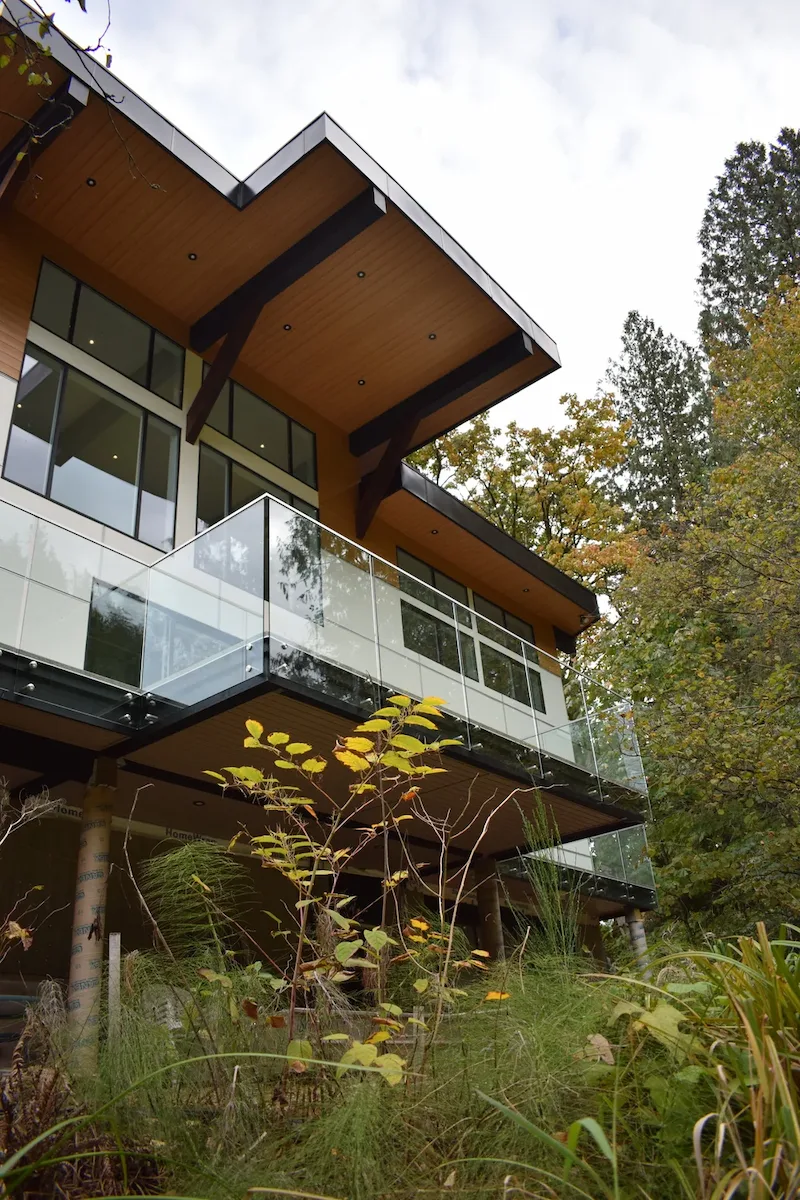
Educational
Glass Railings Wind Protection: How to Create a Windbreak on Your Vancouver Deck
Published:
Last updated:

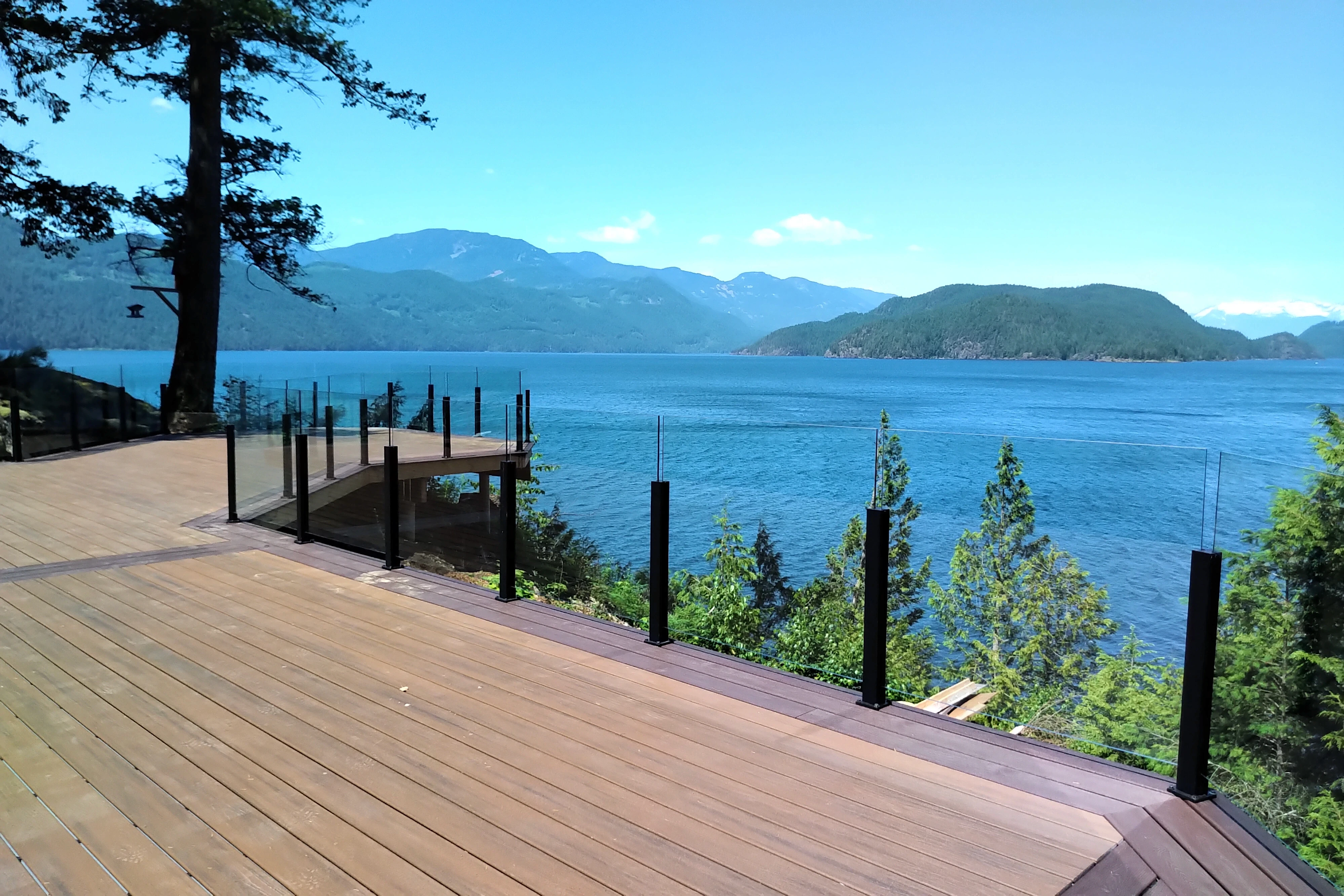
Glass railings for wind protection is one of the most effective windbreak solutions for decks, balconies, and patios in Greater Vancouver and the Fraser Valley. Solid glass panels block wind without blocking your view, a combination that no other railing material can match (Fortress Building Products, 2025).
A standard windbreak can reduce wind speed for a distance up to 30 times its height (Nebraska Forest Service, 2024). That means a 42-inch glass railing, the minimum height required under the BC Building Code for elevated decks, can create a calmer zone extending over 100 feet behind it. For most residential decks, that covers the entire usable space.
This guide explains how glass railings work as windbreaks, why they suit Vancouver's coastal climate, and what to consider when choosing a system for wind-exposed properties.
Why Wind Is a Problem for Vancouver Outdoor Spaces
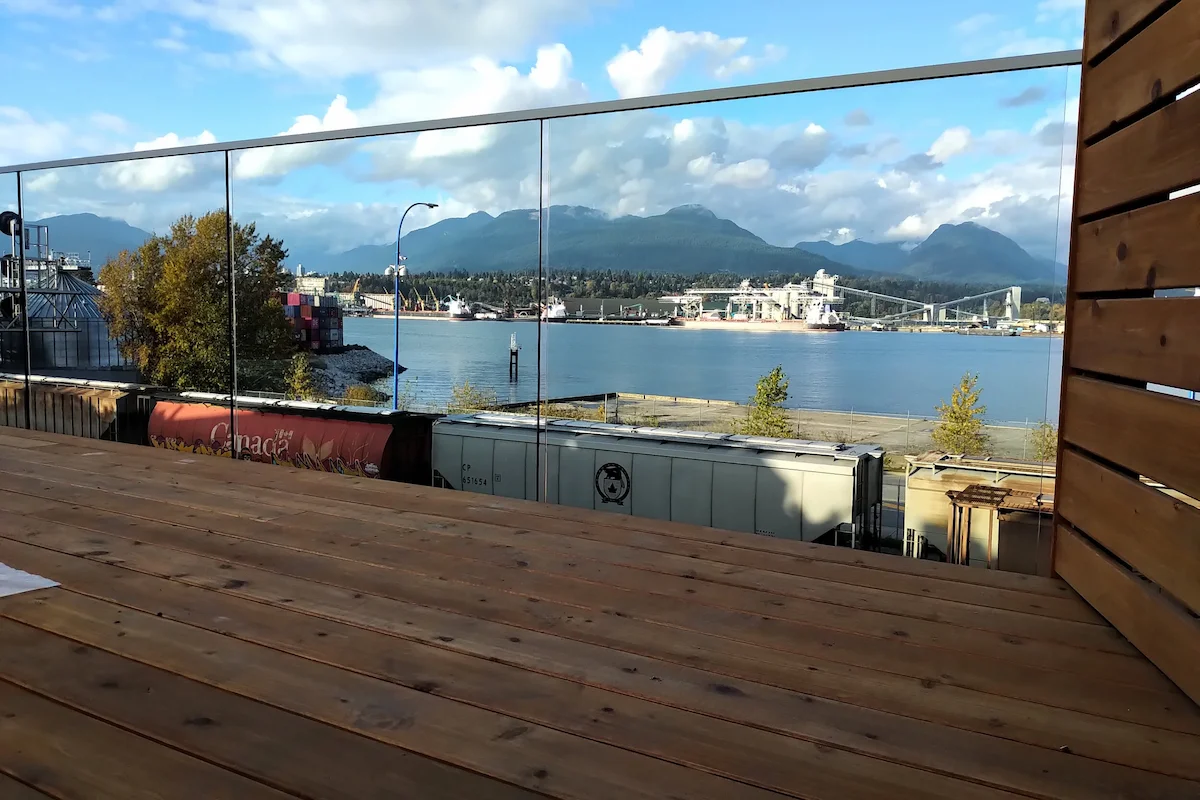
Wind is the number one reason homeowners in Metro Vancouver underuse their decks and balconies during fall, winter, and spring. The region's coastal geography creates persistent wind conditions that reduce comfort and limit outdoor living.
Vancouver Wind Conditions
Vancouver's windiest months are November through January, with average wind speeds reaching 11.4 km/h in November (Weather Atlas, 2024). Gusts along exposed waterfront and elevated properties regularly exceed those averages. West Vancouver, North Vancouver, and Fraser Valley hillside properties experience higher sustained winds due to topographic channelling.
Even moderate wind creates discomfort. Wind chill makes the air feel colder than the actual temperature by increasing the rate of heat loss from exposed skin (U.S. Department of Energy, 2025). On a 10 degree Celsius fall evening, a 20 km/h breeze can make it feel closer to 5 degrees. That is the difference between relaxing on your deck and going inside.
What Wind Does to Your Deck Experience
Wind affects outdoor comfort in several ways beyond temperature. It carries rain sideways onto covered seating areas. It picks up leaves, dust, and debris and deposits them across your deck surface (Deck Expressions, 2025). It knocks over lighter furniture, extinguishes candles, and makes conversation difficult.
For homeowners who invested in outdoor living spaces, patio heaters, and entertaining areas, wind turns a premium feature into an underused one. A windbreak solves this without enclosing the space or sacrificing the view.
How Glass Railings Work as Windbreaks
Glass panels function as a solid barrier that interrupts wind flow. Understanding the basic science helps you make informed decisions about placement, height, and system type.
The Dead Zone Effect
When wind hits a solid vertical surface such as a glass railing panel, it deflects upward. This creates a sheltered area behind the barrier known as a "dead zone," where wind speed drops significantly (Deck Expressions, 2025). The size of this dead zone depends on the height of the barrier.
A windbreak reduces wind speed on the sheltered side for a distance up to 30 times its height (Nebraska Forest Service, 2024). For a 42-inch (1,070 mm) railing, that translates to a protected area extending roughly 105 feet downwind. Most residential decks are well under 30 feet deep, meaning a properly installed glass railing can shelter the entire space.
Why Glass Outperforms Other Railing Materials
Not all railings provide equal wind protection. The key advantage of glass is that it offers full coverage without gaps.
Wood railings use spaced balusters that allow wind to pass through. They block the view and still fail to stop the wind effectively. Wood also requires regular maintenance and deteriorates quickly in Vancouver's wet climate (Fortress Building Products, 2025).
Metal and cable railings are designed for visibility, not wind protection. Narrow balusters and thin cables create minimal resistance to airflow. Cable railings, while aesthetically popular, offer almost no wind reduction.
Glass panel railings provide a continuous solid surface from post to post. There are no gaps, no balusters, and no spaces for wind to pass through. This full coverage is what makes glass the most effective railing material for wind-exposed locations (Bay Area Railings, 2025).
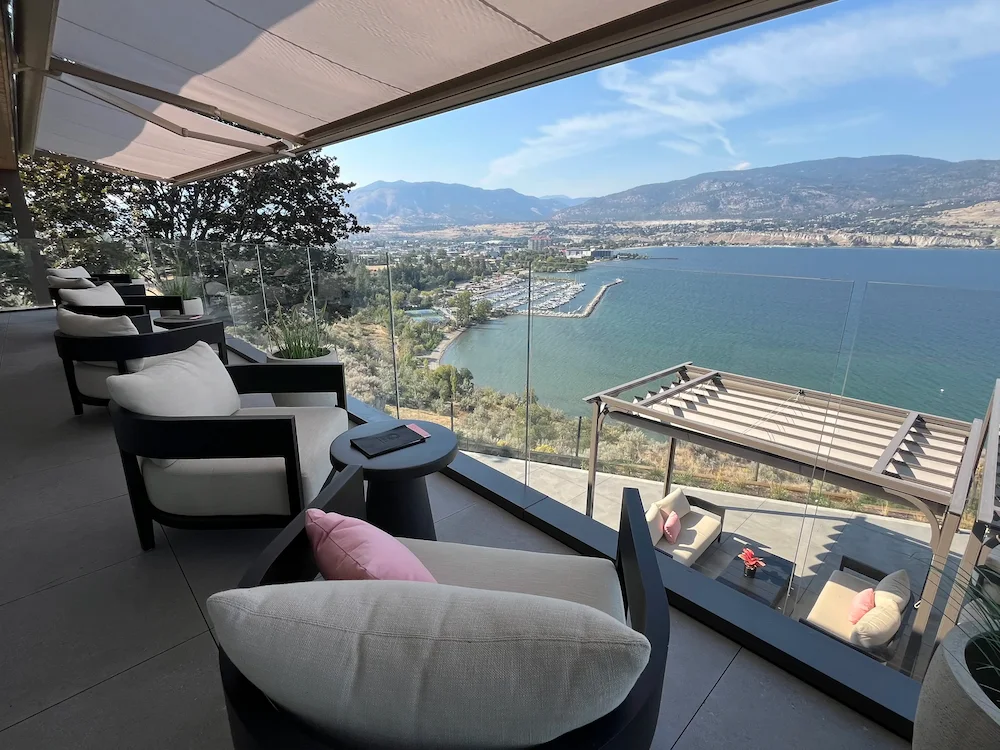
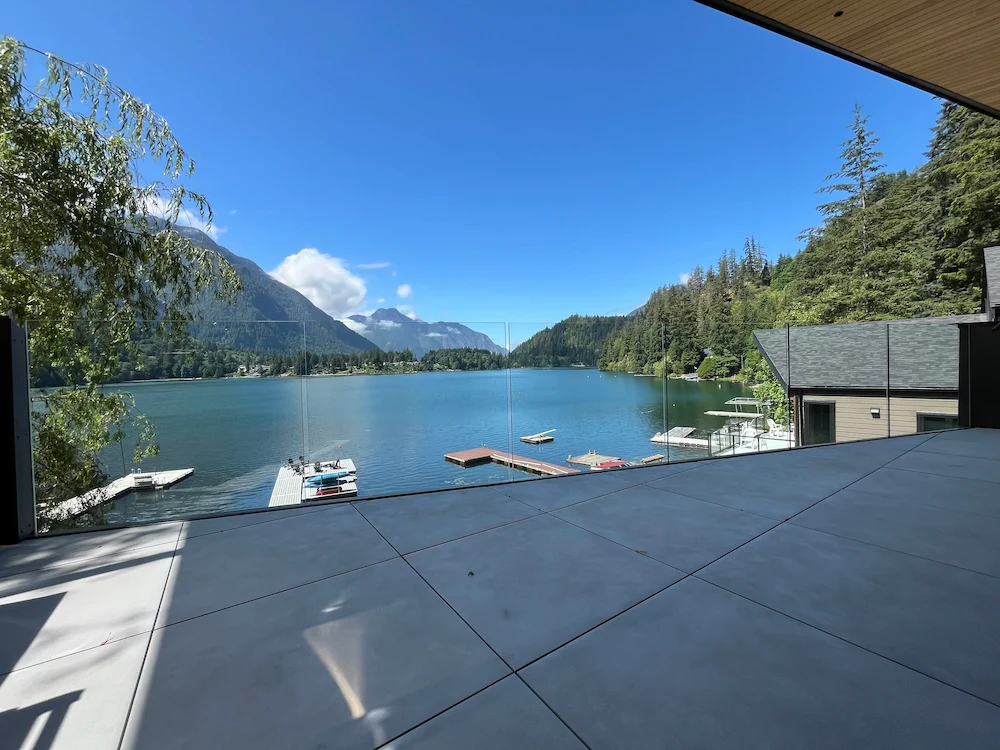
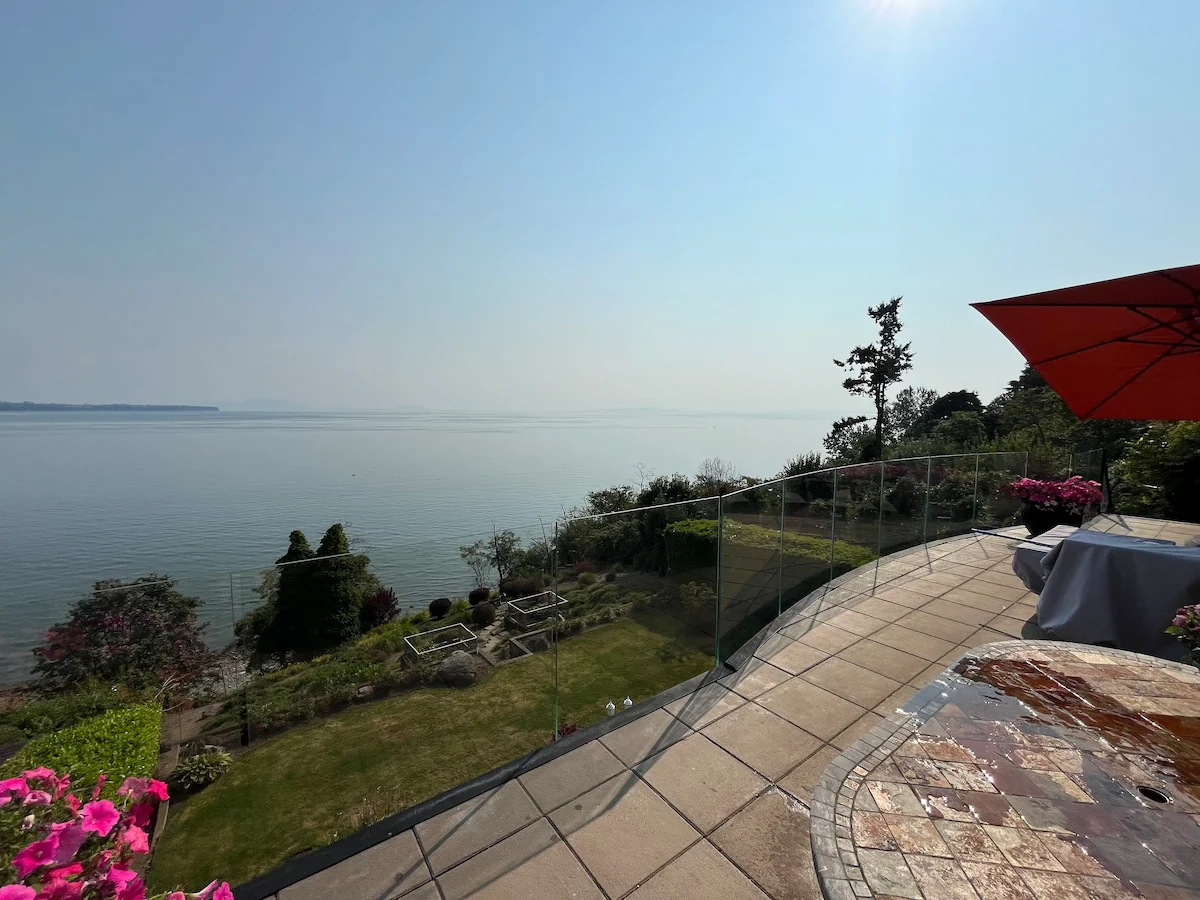
The transparency of glass means you get full wind protection without losing the mountain, water, or garden views that make outdoor living in Vancouver worth the investment. This combination of protection and visibility is unique to glass (Fortress Building Products, 2025).
Wind Protection Benefits Beyond Comfort
Blocking wind on your deck or balcony creates advantages that go beyond simply feeling warmer.
Extended Outdoor Living Season
A glass windbreak can add weeks or months to your outdoor living season. In Vancouver, where rain keeps people inside for much of fall and winter, a sheltered deck with a glass railing becomes usable on dry but breezy days that would otherwise drive you indoors. Paired with a patio heater, a wind-protected deck can be comfortable well into November and again starting in March.
This is particularly valuable for properties with waterfront exposure, mountain views, and second-storey decks where elevation increases wind exposure.
Reduced Energy Costs Near the Home
Wind increases the rate of heat exchange between your home's exterior walls and the outdoor environment. When wind blows across wall surfaces, it pulls heat from the interior during winter and pushes heat inward during summer (U.S. Department of Energy, 2025).
A windbreak placed near the home can reduce winter heating fuel consumption by 10% to 25% (University of Missouri Extension, 2025). Glass railings on a deck adjacent to the house contribute to this effect by reducing wind speed along the building envelope. The savings are more pronounced on homes with large windows or sliding glass doors facing the prevailing wind direction.
Debris and Maintenance Reduction
Wind carries leaves, pine needles, sand, and other debris onto your deck. On exposed properties, this creates a constant maintenance cycle of sweeping and cleaning. Glass panels intercept airborne debris before it reaches your seating area, furniture, and grill (Fortress Building Products, 2025).
For patio glass railing installations near gardens or landscaped areas, this debris reduction is a practical daily benefit that homeowners often underestimate before installation.
Noise Reduction
Glass panels also dampen sound. Traffic noise, neighbour activity, and environmental sounds are partially blocked by the solid barrier (DekSmart Railings, 2024). This makes a noticeable difference on properties adjacent to busy streets, commercial areas, or other homes with close proximity.
Choosing the Right Glass Railing System for Wind Protection
Both frameless and semi-frameless glass railings provide effective wind protection. The best choice depends on your property's exposure level, aesthetic preference, and budget.
Frameless Glass Railings
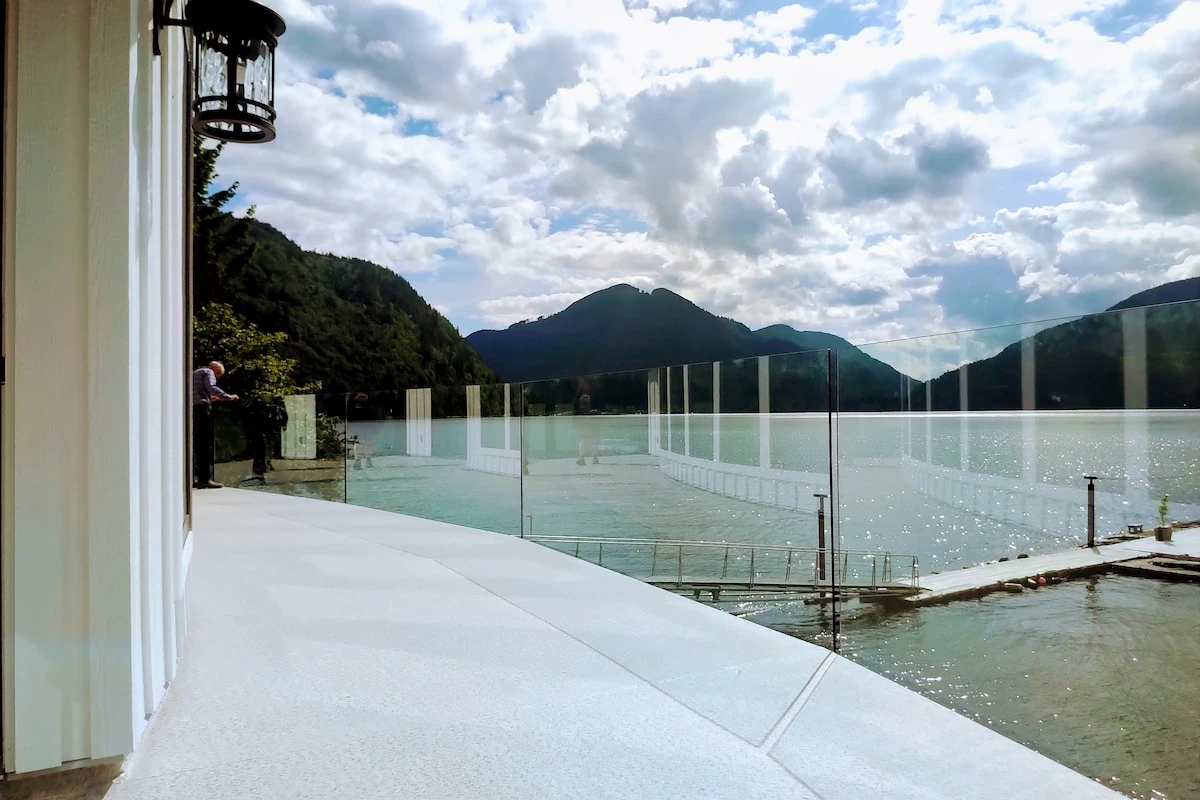
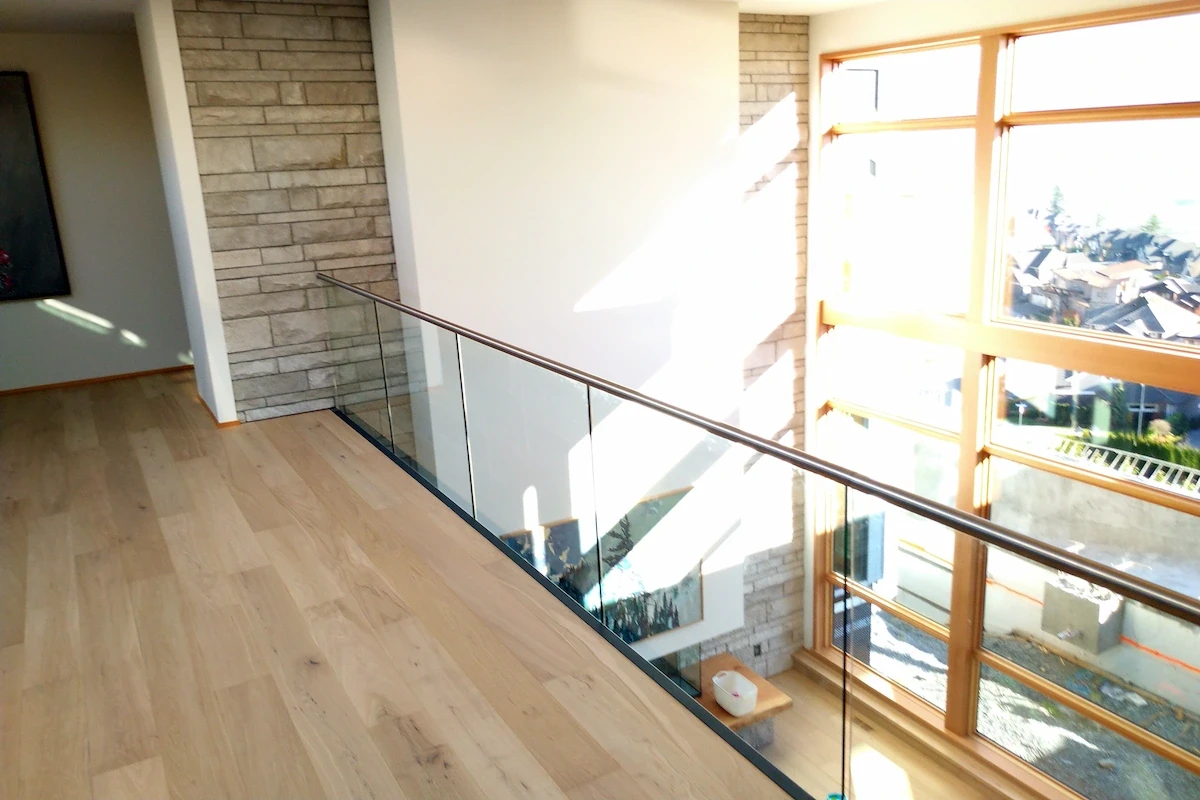
Frameless glass railings use 12mm glass panels mounted without visible posts. The glass itself is the structural element. This creates the most continuous wind barrier possible, with minimal gaps between panels.
Frameless systems are ideal for properties where wind protection and unobstructed views are both priorities. They range from $300 to $400 per linear foot and are mounted using base shoes, standoffs, or spigots.
For wind-exposed applications, frameless systems offer one key advantage: fewer posts mean fewer gaps. The glass-to-glass joints in a frameless system are tighter than the glass-to-post connections in semi-frameless designs.
Semi-Frameless Glass Railings
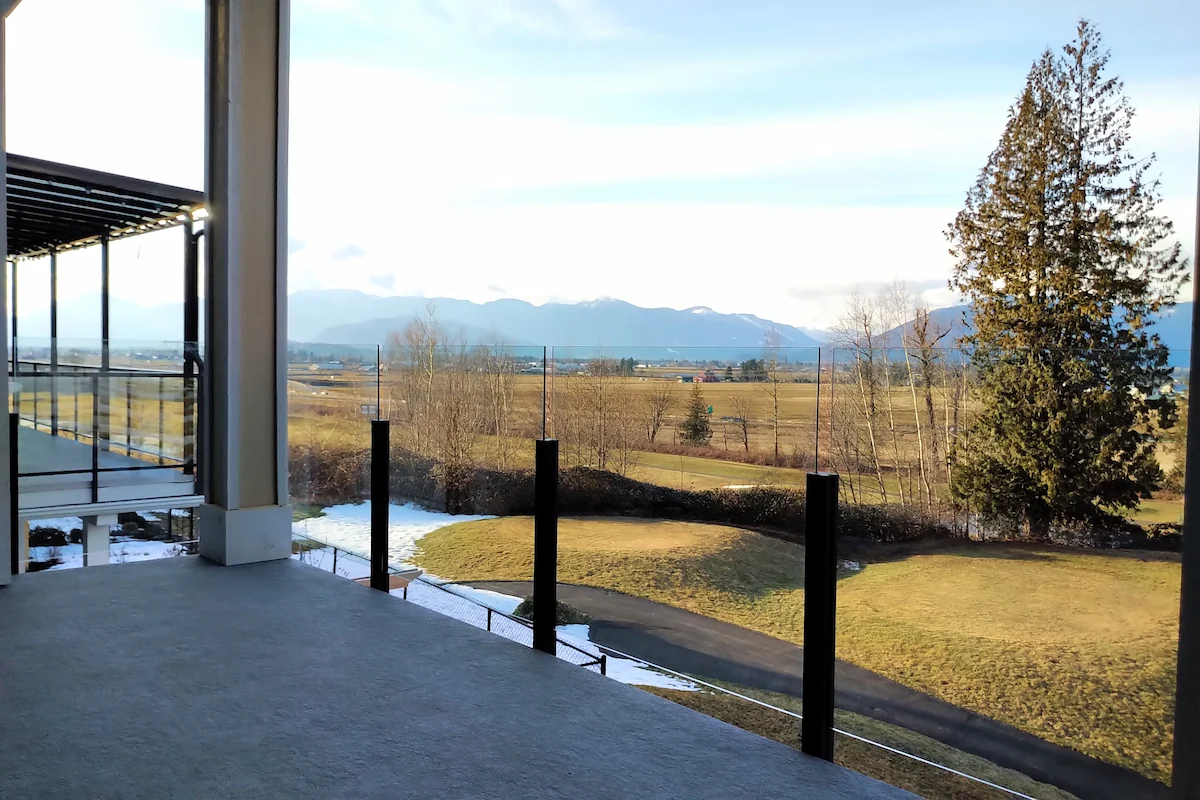
Semi-frameless glass railings use aluminum posts spaced a maximum of 42 inches apart, with glass panels between them. These systems range from $250 to $350 per linear foot.
Semi-frameless railings still block the majority of wind. The small gaps at post connections allow minimal airflow, which can actually be beneficial. A slight amount of air passage reduces the pressure differential across the glass, lowering the wind load on the panel and reducing vibration.
For most residential applications in Vancouver, semi-frameless systems provide excellent wind protection at a lower price point than frameless. They are a practical choice for deck railings, exterior railings, and balcony applications.
Wind Walls and Privacy Screens
For properties with extreme wind exposure or where privacy is also a concern, dedicated glass wind walls are an option. These are taller panels, often installed above the railing height, that extend protection to standing or seated height. They can incorporate tinted or frosted glass for privacy without sacrificing wind protection.
Tenmar designs custom wind protection solutions tailored to each property's exposure and layout. Contact us to discuss what would work for your specific situation.
BC Building Code and Wind Considerations
Glass railings in British Columbia must meet specific structural requirements that account for wind loading.
Height Requirements
The BC Building Code requires guards on any platform with a vertical drop exceeding 600 mm (24 inches). Minimum guard height depends on elevation (BCBC, 2024):
Decks up to 1.8 m (5 feet 10 inches) above grade: minimum 900 mm (36 inches)
Decks above 1.8 m: minimum 1,070 mm (42 inches)
The taller 42-inch requirement applies to most second-storey decks and condo balconies. This added height also increases the wind protection zone.
Structural Load Requirements
Guards must withstand a uniform horizontal load of 0.75 kN per metre and a concentrated load of 1.0 kN at any point. In areas with higher wind exposure, such as coastal and elevated sites, engineers must calculate wind pressure on glass panels to meet the code (Greco Railings, 2025).
British Columbia requires all glass in guards to be at least 12mm thick, and the province requires laminated glass for all guardrails to prevent shattered glass from falling in the event of breakage (Greco Railings, 2025).
Why Professional Engineering Matters for Wind-Exposed Sites
Frameless glass railing systems require engineer-sealed shop drawings that verify load capacity and glass specification. This is especially important for wind-exposed properties, where panels must resist sustained lateral pressure without deflection or vibration.
Tenmar's installations are engineer-designed for coastal environments, with stainless or powder-coated hardware selected for corrosion resistance and verified load compliance under BCBC Part 9.8 and Part 4. Learn more about our approach to BC building code compliance.
Where Glass Wind Protection Matters Most in Vancouver
Some properties benefit from glass wind protection more than others. If your home matches any of the following, a glass railing windbreak is likely to make a significant difference.
Waterfront and Oceanfront Properties
Homes along Burrard Inlet, English Bay, Boundary Bay, and the Fraser River face persistent onshore winds. Glass railings on waterfront decks create a usable outdoor space that would otherwise be uncomfortable for much of the year.
Hillside and Elevated Properties
Properties in West Vancouver, North Vancouver, and Fraser Valley hillsides are exposed to stronger winds due to elevation and topographic channelling. Glass railings on elevated decks serve double duty as safety barriers and windbreaks.
High-Rise Condos and Penthouses
Condo balconies and penthouse terraces face wind speeds that increase with building height. Upgrading from an aging metal railing to glass transforms a balcony from a storage area to a usable living space.
Open and Exposed Suburban Decks
Even in suburban areas like Surrey, Langley, and Maple Ridge, properties backing onto open fields, parks, or waterways can experience uncomfortable wind conditions. Glass railings on patio spaces provide targeted protection without the visual weight of a solid fence.
Glass Railing Maintenance for Wind-Exposed Sites
Glass railings require minimal maintenance, which is one of the reasons they outperform other windbreak solutions on coastal BC properties.
Routine Cleaning
Clean glass panels with a soft cloth and standard glass cleaner, just as you would clean a window. In wind-exposed areas, salt spray and airborne grit may require more frequent cleaning, typically once a month during fall and winter.
Hardware Inspection
On wind-exposed properties, check mounting hardware annually for signs of loosening. Sustained wind creates vibration that can affect fasteners over time. Stainless steel or powder-coated aluminum hardware resists corrosion from Vancouver's wet, salt-laden air far better than untreated metal.
Why Glass Outlasts Other Windbreak Options
Wood fences and lattice screens used as windbreaks require staining, sealing, and eventual replacement, especially in Vancouver's rain-heavy climate. Glass does not rot, warp, crack, or corrode. The panels themselves will last decades with no structural maintenance. This makes glass the lowest total cost of ownership windbreak option for most properties (Fortress Building Products, 2025).
For properties in coastal BC, where salt air accelerates deterioration of wood and untreated metal, the durability advantage of glass is especially significant.
Frequently Asked Questions
Do glass railings block wind effectively?
Yes. Glass panel railings are among the most effective railing-based windbreaks available. The solid, continuous surface blocks wind without the gaps found in baluster, cable, and metal railing systems. A glass railing can reduce wind speed for a distance up to 30 times its height, which covers most residential decks entirely.
How high should a glass railing be to block wind?
The BC Building Code requires a minimum height of 900 mm (36 inches) for lower decks and 1,070 mm (42 inches) for elevated decks (BCBC, 2024). Both heights provide meaningful wind protection. A 42-inch railing creates a sheltered zone extending over 100 feet behind it. For seated areas, even a 36-inch railing makes a noticeable difference in comfort.
Will glass railings vibrate in strong wind?
Properly engineered and installed glass railings resist vibration under normal wind conditions. Panel thickness, mounting method, and post spacing all affect vibration resistance. Tenmar's systems use 12mm glass panels with engineered connections designed for Vancouver's wind and seismic conditions, minimizing vibration risk.
Can glass railings withstand Vancouver's winter storms?
Yes. Glass panels used in railing systems are engineered to meet BC Building Code load requirements, which account for wind, impact, and lateral forces. Laminated glass, required by the BC code for all guardrails, holds together even under extreme impact. The hardware and mounting systems are the components most affected by storms, which is why Tenmar specifies marine-grade, corrosion-resistant hardware for all exterior installations.
Are frameless or semi-frameless railings better for wind?
Frameless systems provide slightly more continuous wind blockage due to fewer gaps. Semi-frameless systems still block the vast majority of wind and offer the added benefit of reduced pressure differential across panels, which can lower vibration in very windy conditions. Both systems work well. The choice usually comes down to aesthetic preference and budget.
Do glass railings reduce heating costs?
Indirectly, yes. By reducing wind speed along your home's exterior walls and near windows and doors, glass railings can lower the wind chill effect that increases heat loss. Windbreaks near the home have been shown to reduce winter heating costs by 10% to 25% (University of Missouri Extension, 2025). The savings depend on your home's orientation, insulation, and the railing's placement relative to the building.
Do you offer glass railing services outside of Vancouver?
Yes, we offer framerless, semi-frameless, curved glass and glass privacy walls services across BC, including Fraser Valley, Vancouver Island, Whistler, Squamish and other locations.
Key Takeaways
Glass railings are the most effective railing-based windbreak, providing full coverage without blocking views, unlike wood, metal, or cable systems
A standard-height glass railing creates a wind-protected zone extending up to 30 times its height, easily covering the full depth of most residential decks (Nebraska Forest Service, 2024)
Vancouver's coastal winds, averaging 11.4 km/h in the windiest months with frequent gusts, make wind protection essential for usable outdoor living spaces (Weather Atlas, 2024)
Windbreaks near the home can reduce winter heating costs by 10% to 25%, adding practical energy savings to the comfort benefits (University of Missouri Extension, 2025)
Both frameless ($300 to $400 per linear foot) and semi-frameless ($250 to $350 per linear foot) glass railing systems provide effective wind protection, with the choice depending on aesthetic preference, exposure level, and budget