Educational
Types of Glass Railings: Finding Your Perfect Match
Published:
Last updated:
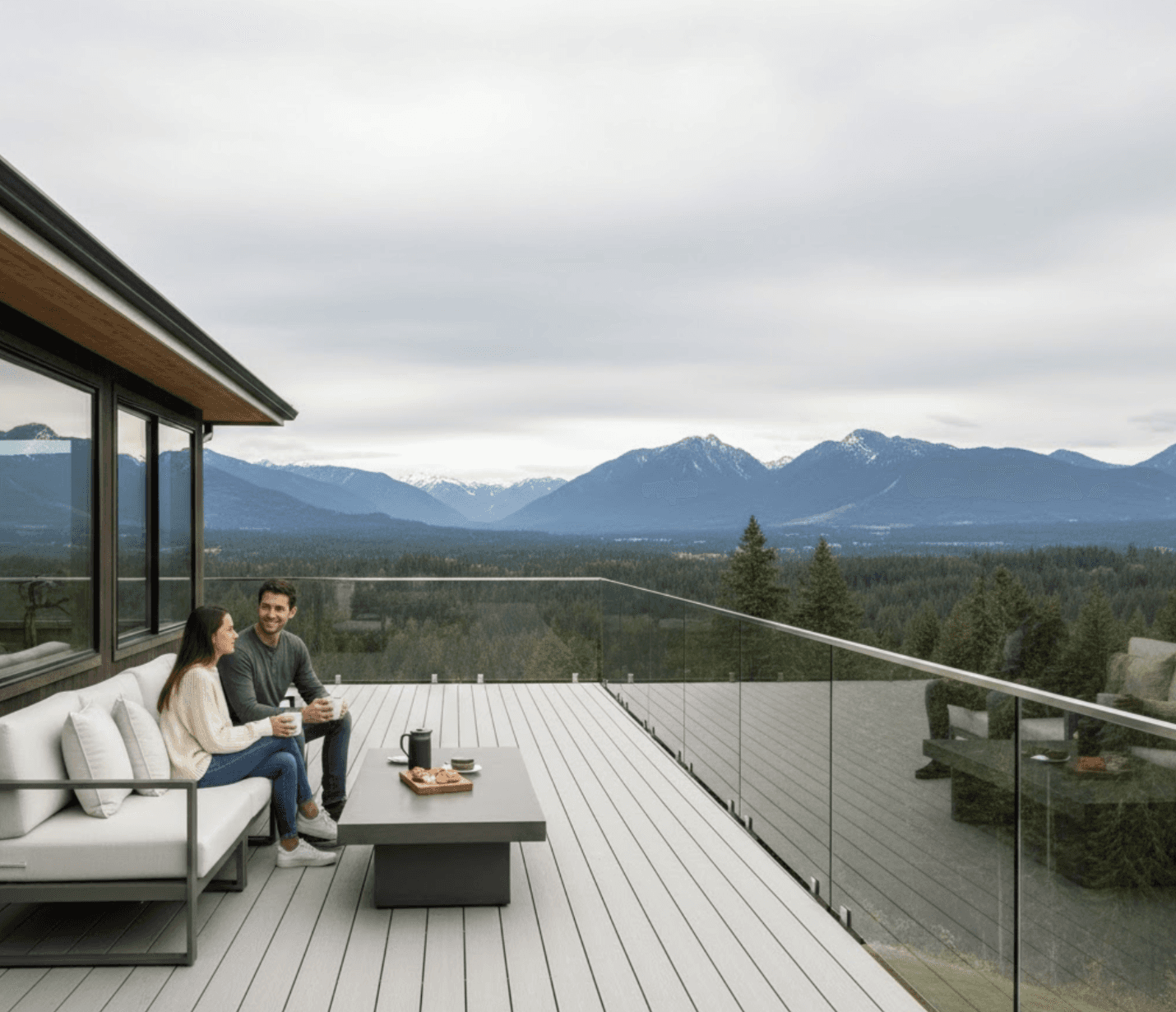
Glass railings transform decks, balconies, and staircases from ordinary to exceptional. Whether you are planning a new installation or replacing weathered wooden railings, choosing the right glass railing system affects everything from your view and safety to your budget and maintenance schedule.
Glass railing systems fall into three main categories: frameless, semi-frameless, and framed systems. Each uses different mounting methods like spigots, base shoes, standoffs, or posts. The right choice depends on your budget, aesthetic preferences, installation location, and local building code requirements.
In the Fraser Valley, glass railing selection also requires consideration of coastal climate factors. Heavy rainfall, temperature fluctuations, and BC Building Code compliance all influence which system works best for your project. This guide covers everything you need to make an informed decision for your Fraser Valley home.
Understanding Glass Railing System Categories
Glass railing systems are classified by how much hardware is visible and how the glass panels are supported. The three main categories offer different balances between unobstructed views, structural support, and cost. Understanding these distinctions helps narrow your options before exploring specific mounting methods. Learn more about glass railing applications.
Frameless Glass Railings
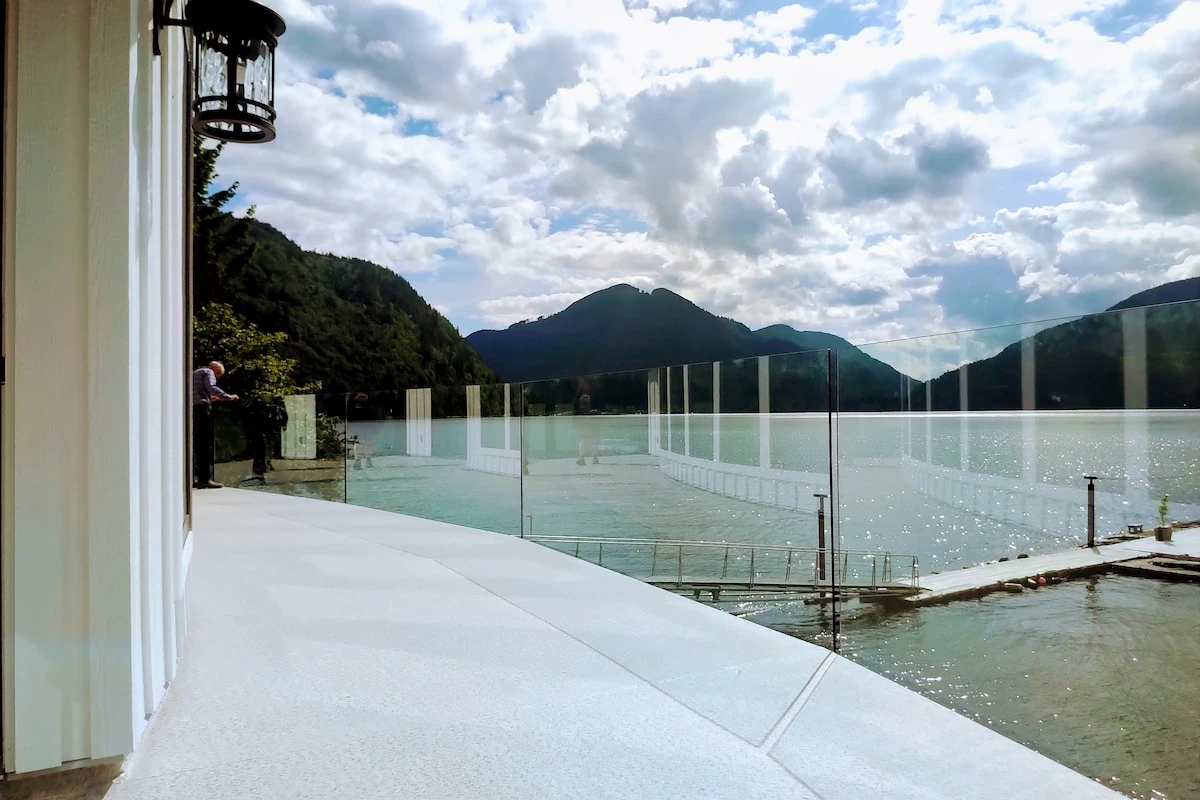
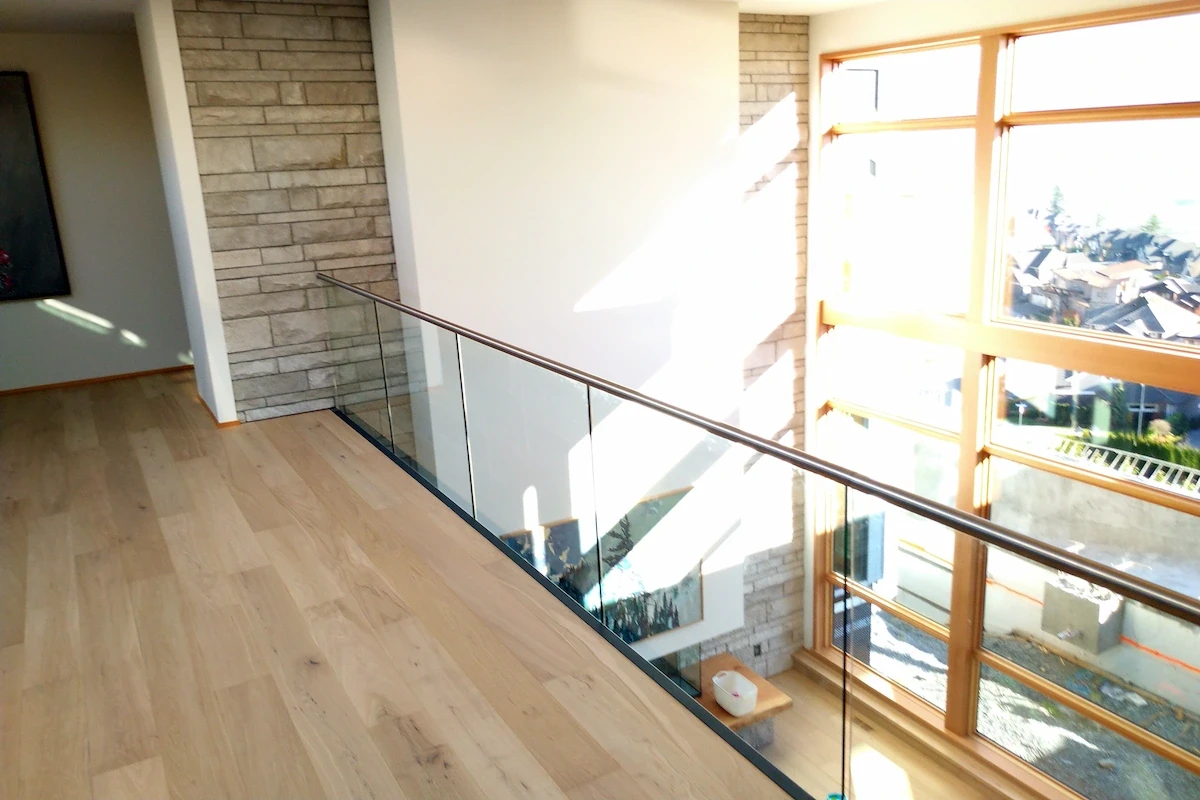
Frameless glass railings eliminate vertical posts and top rails to create completely unobstructed views. These systems use thick glass panels mounted directly to the deck or fascia with minimal hardware. The result is a clean, modern aesthetic that maximizes sightlines.
Key characteristics:
No vertical posts between glass panels
May include top rail for code compliance or omit it with engineered design
Uses thicker glass for structural integrity
Most expensive option due to precision requirements
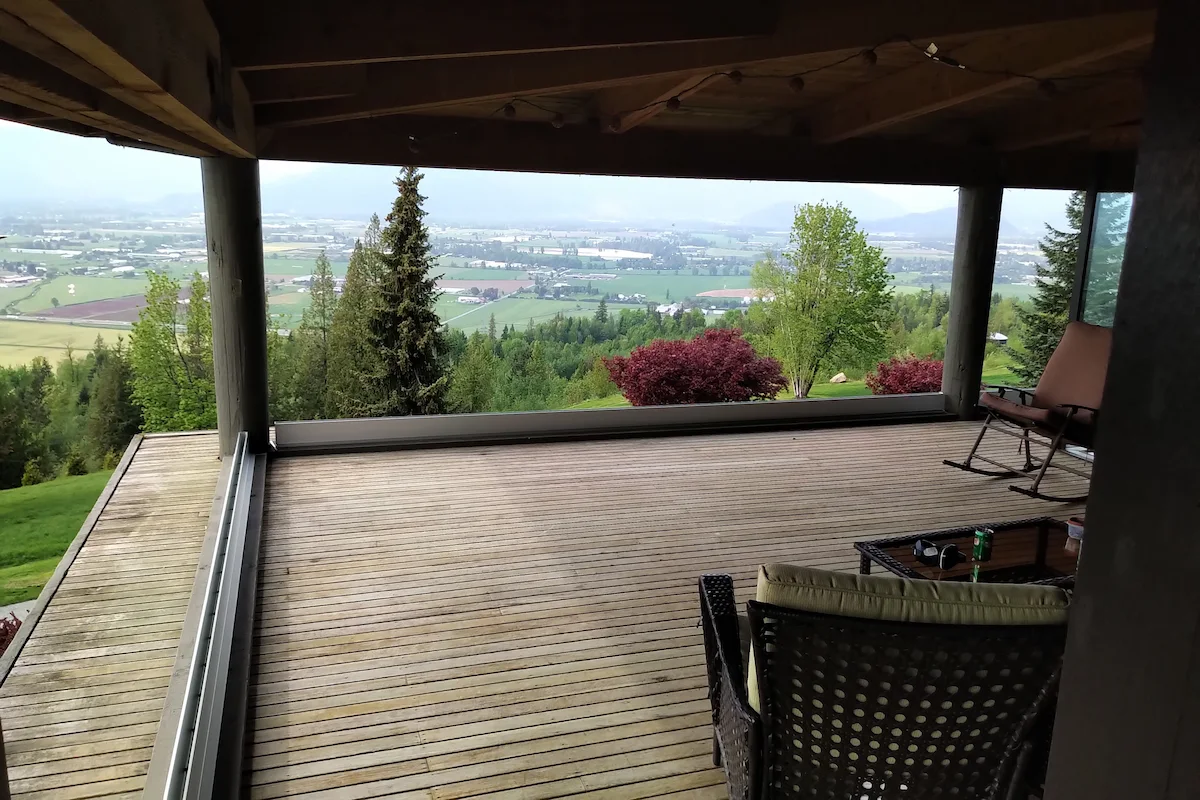
Frameless systems excel for waterfront properties, mountain views, or any location where preserving the view is paramount. They work particularly well for modern architectural styles in the Fraser Valley where homeowners want to showcase natural surroundings. All glass guards in BC must have a top rail capable of transferring guard loads, or in the case of frameless systems, must include engineer-sealed drawings confirming compliance (BC Building Code, 2024).
These systems typically cost between $300-400 per linear foot installed (Viewrail, 2024). Learn more about our frameless glass railing installations.
Semi-Frameless Glass Railings
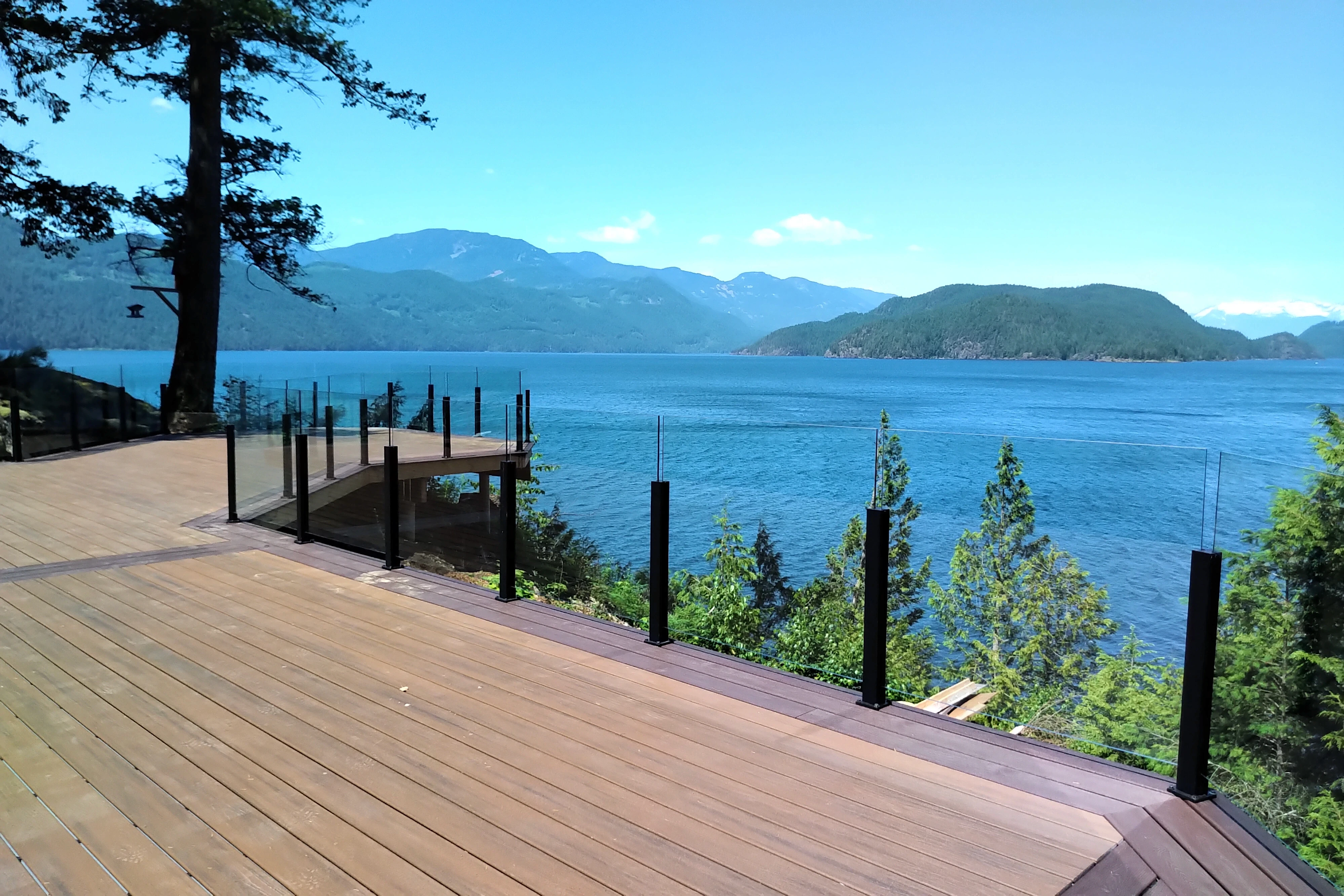
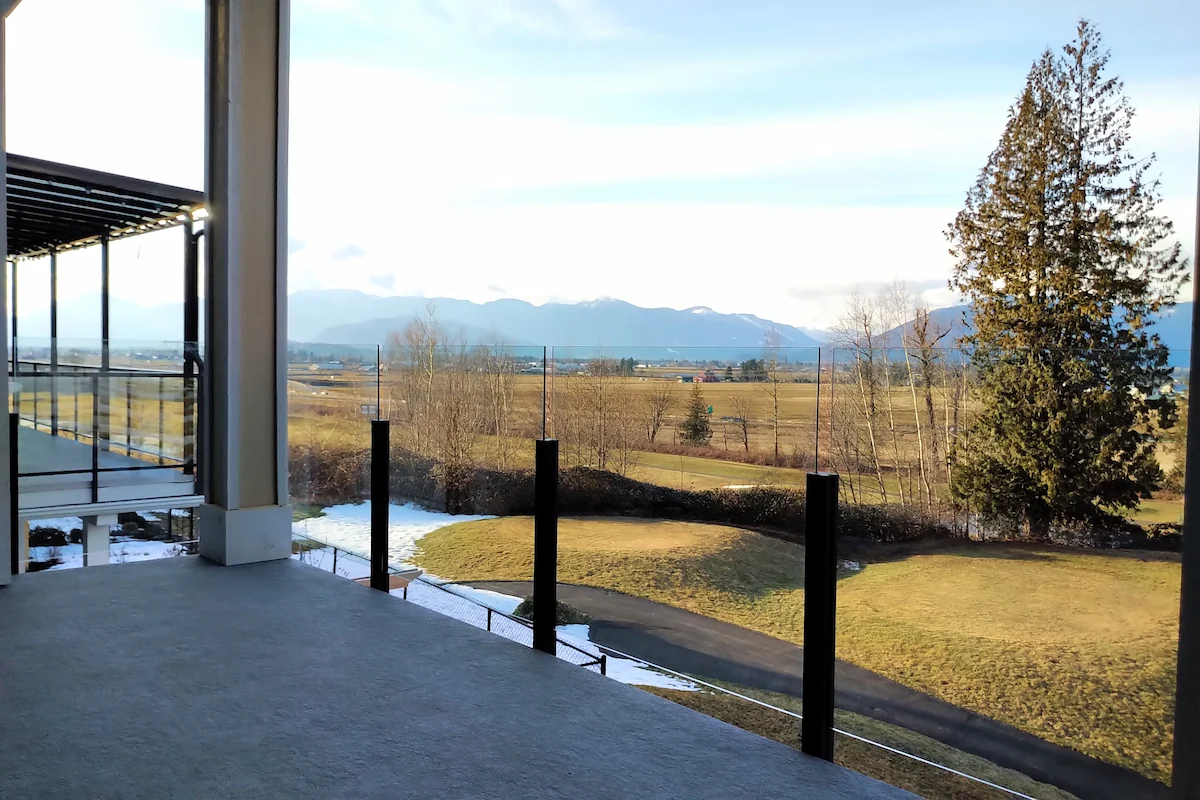
Semi-frameless systems use vertical aluminum posts to support glass panels while eliminating the top and bottom rails. This hybrid approach provides structural support at regular intervals while maintaining relatively open views. Posts are typically spaced at maximum 42-inch intervals.
Key characteristics:
Vertical posts every 3-4 feet for support
No top or bottom rails required
Uses standard glass thickness
Offers design flexibility with post finishes and styles
Semi-frameless systems balance view preservation with budget considerations, typically costing 20-30% less than frameless options (HomeGuide, 2025). They install faster and work well for larger deck projects where cost efficiency matters. The visible posts also provide handholds for stability, which some homeowners prefer. Semi-frameless railings are easier to install than frameless due to the frames holding glass panels in position (The Glass Railing Store, 2024).
Explore our semi-frameless railing options for your project.
Framed Glass Railings
Framed systems enclose glass panels with metal or wooden frames on all four sides. While this traditional approach provides maximum structural support, the visible framing reduces transparency. Most homeowners in the Fraser Valley choose frameless or semi-frameless options for better views.
Framed systems work for budget-conscious projects or locations where maximum structural support outweighs view preservation. However, the heavy framing often defeats the purpose of choosing glass over traditional railings.
Glass Railing Mounting Methods Explained
Beyond the frameless versus framed distinction, glass railings use different mounting hardware to attach panels to your deck structure. The mounting method affects installation complexity, cost, visual appearance, and long-term durability. Fraser Valley's wet climate makes hardware selection particularly important for corrosion resistance.
Base Shoe (U-Channel) Systems
Base shoe systems seat glass panels into a continuous aluminum channel secured to the deck surface. The channel runs along the entire railing length, holding multiple glass panels in precise alignment. This creates a sleek, modern look with minimal visible hardware.
Advantages:
Clean, continuous appearance along deck edge
Good for straight runs and gentle curves
Easier alignment during installation
Works with both frameless and semi-frameless designs
Base shoe mounting excels for long, straight deck runs where consistent alignment matters. It is popular for commercial installations and contemporary residential designs. The continuous channel also helps prevent debris accumulation beneath the glass (Roble Glass & Railings, 2024).
Spigot Mounting Systems
Spigots (also called mini-posts) are individual metal supports that bolt to the deck surface and hold each glass panel from the bottom. The glass panels slot into the spigots, which can be surface-mounted or core-mounted depending on your deck structure. This method provides flexibility for non-linear layouts.
Advantages:
Ideal for curved or angled railing runs
Works on various mounting surfaces
Easier to adjust individual panels
Excellent for outdoor applications in wet climates
In the Fraser Valley's high-rainfall environment, stainless steel spigots resist corrosion better than other mounting options. Spigot systems also allow water to drain freely rather than pooling in channels. This makes them particularly suitable for exposed deck locations. The Fraser Valley experiences frequent atmospheric rivers bringing 70-100mm rainfall events (Environment and Climate Change Canada, 2025), making proper drainage essential.
Coastal BC air with salt and moisture accelerates corrosion on inferior hardware (Stan Glass Works, 2024). This is why spigot systems work particularly well for outdoor applications where durability matters.
Standoff Pin Systems
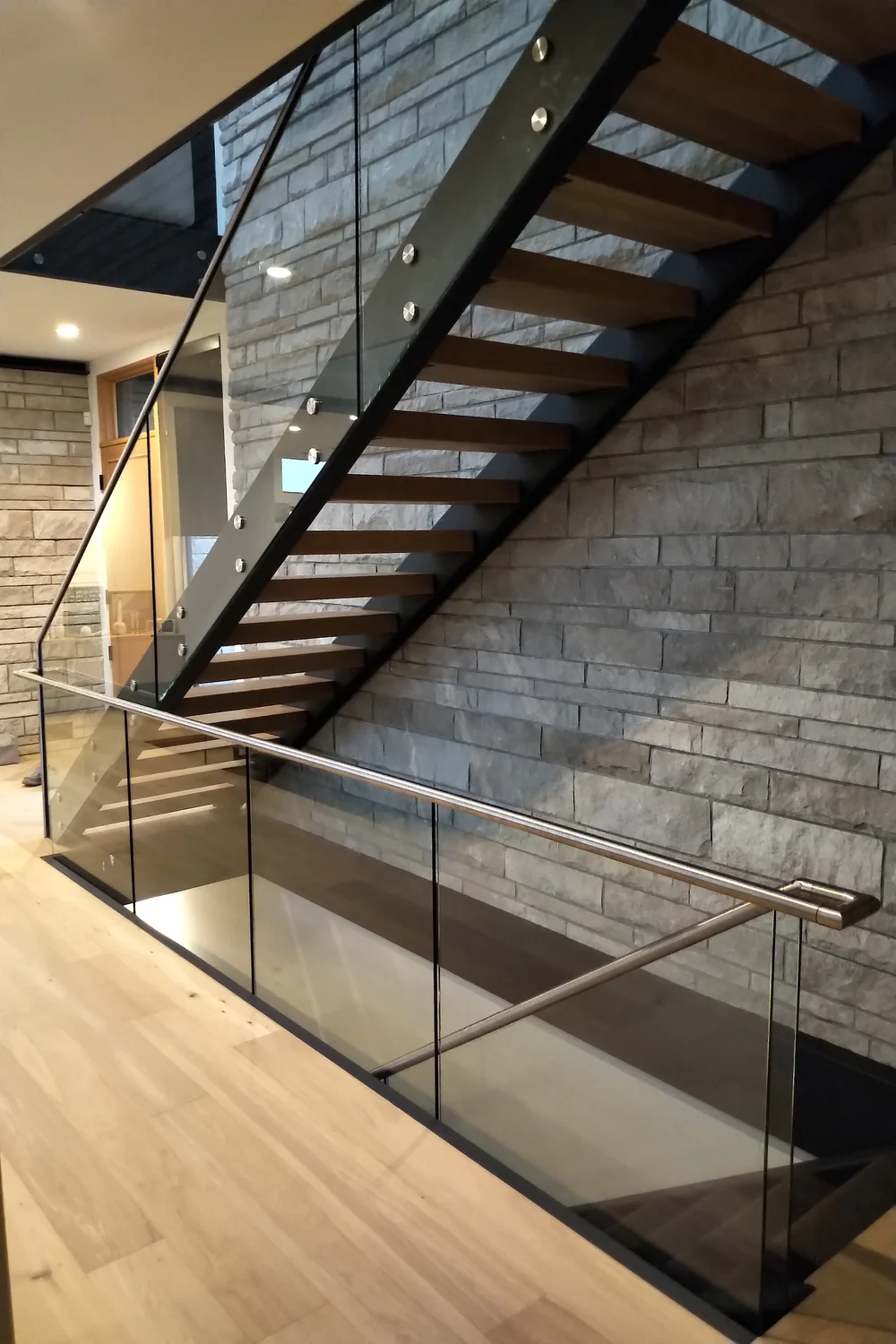
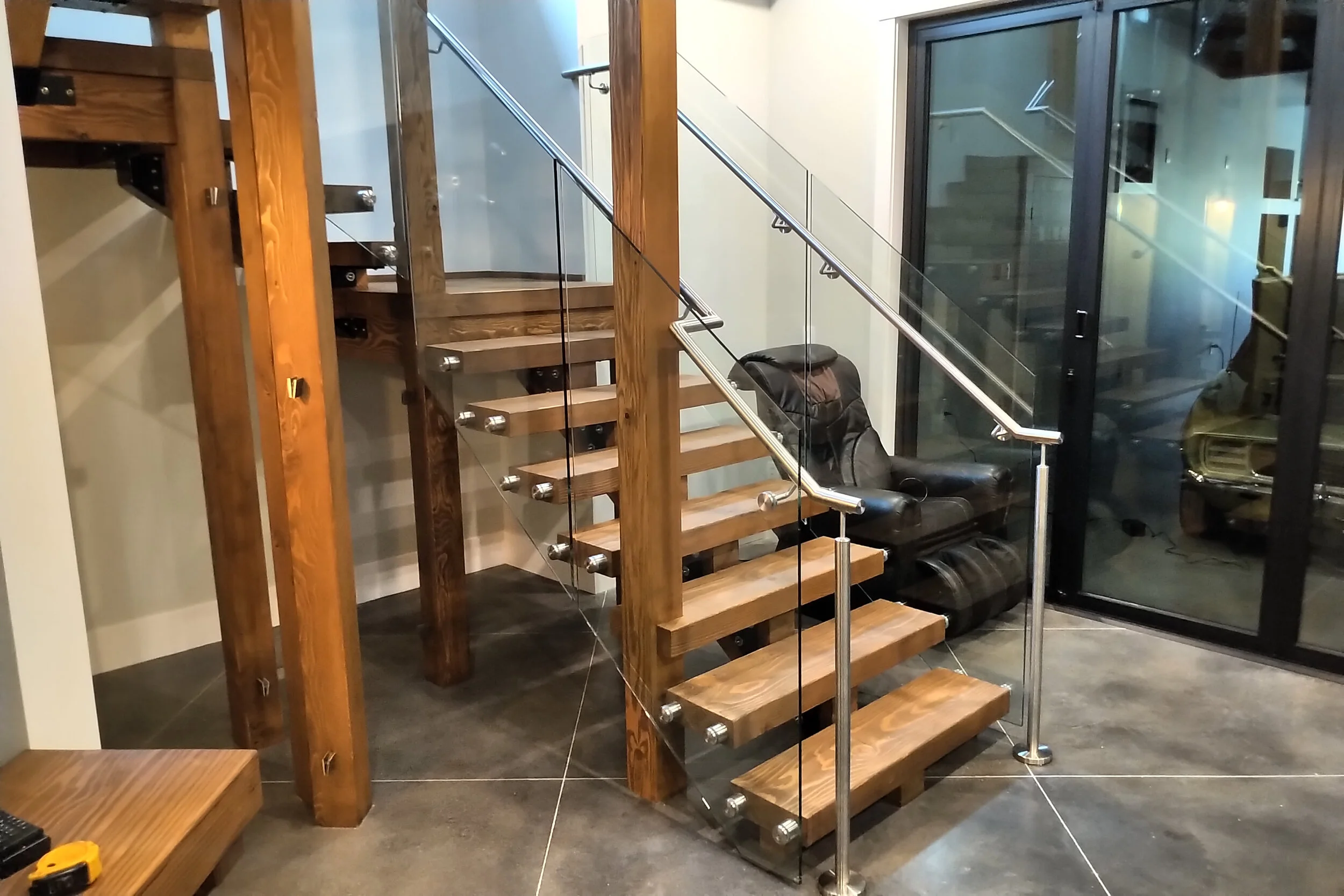
Standoff systems use circular stainless steel pins that mount to the side of your deck structure (fascia mount). Holes are drilled through the glass panels, which are then secured to the standoffs. This creates a floating appearance with truly minimal visible hardware.
Advantages:
Most minimalist aesthetic option
Keeps deck surface clear
Works well for tight spaces
Popular for interior staircases
Standoff systems require precise drilling through tempered glass, which must be done during manufacturing. This precision requirement increases lead times and costs slightly. However, the ultra-clean appearance often justifies the additional investment for design-focused projects.
Post-Mounted Systems
Post-mounted systems use vertical posts (aluminum or stainless steel) to support glass panels. Glass panels are held by clamps or channels integrated into the posts. Posts can be surface-mounted, fascia-mounted, or core-mounted depending on your deck construction.
Advantages:
Maximum structural support
Most customizable (post materials, finishes, styles)
Works for all heights including tall windscreens
Easier installation option
Post systems provide the most design flexibility with countless finish and style options. They work particularly well for semi-frameless designs where posts become an architectural element. The added support also makes them suitable for taller railing heights required by some municipal codes.
Fascia mount is generally stronger than surface mount because the sides and ends of beams are stronger than deck surfaces (eGlass Railing, 2024).
Choosing Between Glass Material Types
All glass railings in BC must use safety-rated glass that meets Canadian standards. The two approved types are tempered glass and laminated glass, each with distinct characteristics. Understanding the difference helps you choose the right material for your specific application and budget.
Tempered Glass Characteristics
Tempered glass undergoes heat treatment at approximately 1,100°F followed by rapid cooling. This process makes it 5-7 times stronger than standard glass (Viewrail, 2024). If broken, tempered glass shatters into small, blunt pieces rather than dangerous shards.
Advantages for railings:
Most affordable safety glass option
Excellent clarity with minimal green tint
Widely available with shorter lead times
Suitable for most residential applications
Tempered glass typically costs $50-100 per linear foot for materials (A3 Glass Fabricator, 2025). This makes it the most budget-friendly choice for standard railing projects. It meets BC Building Code requirements which specify that glass in guards must conform to CAN/CGSB-12.1-M standards for tempered or laminated safety glass (BC Building Code, 2024).
All glass panel railings must be at least 12mm (0.5 inches) thick for laminated or tempered safety glass to meet BC standards.
Laminated Glass Benefits
Laminated glass bonds two or more glass layers with a plastic interlayer (PVB or EVA). When broken, the interlayer holds glass fragments together, preventing them from falling. This provides the highest safety rating for glass railings (Safety Glazing Certification Council, 2024).
Advantages for railings:
Superior safety for high-traffic areas
Required for commercial installations
Provides sound insulation benefits
May allow code-compliant installations without top rails in some applications
BC Building Code requires laminated glass for certain commercial applications and high-risk residential locations. Coastal areas increasingly specify laminated glass for exterior installations due to wind-borne debris concerns (Viewrail, 2024). Some engineered frameless systems use laminated glass to meet structural requirements without top rails.
Ultra-Clear Low-Iron Glass Option
Standard glass has a subtle green tint visible when viewing the edge. Ultra-clear low-iron glass eliminates this tint for perfectly transparent panels. The difference becomes particularly noticeable with thicker glass or when viewing mountain and water vistas.
Low-iron glass typically costs $100-200 per linear foot, adding 25-50% to material costs. This premium option makes sense for luxury installations where crystal-clear views justify the investment. It is popular for waterfront properties and modern architectural designs in the Fraser Valley.
For detailed pricing information, see our guide on glass railing installation costs.
Curved Glass Railings for Architectural Impact
Curved glass railings create flowing lines that follow your deck contours or add sculptural elements to straight layouts. These custom-fabricated systems require specialized engineering and manufacturing. The result transforms railings from functional barriers into architectural features.
When to Consider Curved Glass
Curved glass excels for circular or oval decks, curved staircases, and balconies with radius edges. It also creates visual interest on straight decks by using gentle curves as design elements. The flowing lines complement contemporary and modern architectural styles common in Fraser Valley custom homes.
Engineering requirements:
Custom glass fabrication to exact radius specifications
Specialized mounting hardware
Engineer-sealed drawings for BC Building Code compliance
Extended lead times (6-8 weeks typical)
Curved glass systems cost more than straight installations due to custom fabrication requirements. However, the architectural impact often justifies the premium for distinctive homes. The investment also translates to higher property values for luxury homes.
Learn more about our curved glass railing installations.
BC Building Code Requirements That Affect System Selection
BC Building Code establishes minimum safety standards that affect which glass railing systems work for your project. These requirements cover height, glass specifications, opening sizes, and structural loads. Understanding these rules upfront prevents costly redesigns during the permit process.
Height Requirements by Application
Guards on residential decks under 1.8m from grade require minimum 914mm (36") height. Decks above 1.8m require 1,070mm (42") guard height (BC Building Code, 2024). These requirements apply regardless of which glass railing system you choose.
Stairway guard requirements:
Interior residential stairs: 865mm (34") minimum
Exterior stairs: 914mm (36") minimum
Commercial stairs: 1,070mm (42") minimum
Guards required when vertical drop exceeds 600mm (24")
For complete details, see our comprehensive guide to BC Building Code requirements for glass railings.
Glass Specifications and Safety Standards
BC Building Code requires all glass guards to use safety glass conforming to CAN/CGSB-12.1 standards. Acceptable types include tempered safety glass or laminated safety glass. Minimum thickness is 12mm (0.5 inches) for both types.
Guards must prevent passage of a 100mm (4") spherical object between panels or components (BC Building Code, 2024). This "4-inch rule" protects children from falling through gaps or getting heads stuck. The requirement affects spacing between glass panels and post positioning.
Structural Load Requirements
All guards must resist a concentrated load of 1.0 kN (approximately 225 lbs) applied at any single point. They must also withstand a uniform horizontal load of 0.75 kN per meter along the top. These requirements ensure railings can safely catch someone who falls against them.
Mounting considerations:
Fascia mount generally stronger than surface mount
Posts must anchor to structural framing, not just deck boards
Frameless systems require engineer-sealed drawings
All systems need proper flashing for water drainage
Cost Comparison and Budget Planning
Glass railing costs vary significantly based on system type, glass specifications, mounting method, and project complexity. Understanding these cost factors helps set realistic budgets. Fraser Valley installation costs include materials, labour, engineering (if required), and permit fees.
Cost by System Type
Frameless glass railings typically cost $300-400 per linear foot installed in the Fraser Valley. This includes thicker glass panels, precision mounting hardware, and skilled installation labour. A typical 20-foot deck perimeter costs $6,000-$8,000 for frameless railings.
Semi-frameless systems range from $250-350 per linear foot installed. The same 20-foot deck perimeter costs $5,000-$7,000, saving 15-20% compared to frameless. The cost reduction comes from using standard glass thickness and simpler installation.
Cost breakdown by component:
Glass panels: $50-150 per linear foot depending on type
Mounting hardware: $30-80 per linear foot
Labour and installation: $50-200 per linear foot
Engineering (frameless only): $500-1,500 per project
Permit fees: $150-500 depending on municipality
The average glass railing project costs $7,000, with range from $3,000-$20,000 depending on complexity and materials (Angi, 2025).
Factors That Increase Costs
Design complexity:
Curved railings: Add 20-30% to base cost
Stairs and angles: Add $100-200 per transition
Custom heights above 42": Add $5-10 per linear foot
Low-iron ultra-clear glass: Add 25-50% to glass cost
Difficult access increases labour costs for installation. Second-storey installations cost more than ground-level work. Multi-level homes with several deck areas see economies of scale that reduce per-foot costs (HomeAdvisor, 2025).
Long-Term Value Considerations
Glass railings require minimal maintenance compared to wood railings that need annual staining or painting. Over a 15-year period, maintenance savings typically offset the higher initial investment. Glass also lasts many years without deterioration; additionally, glass railings also add value to your home.
Frameless systems require the least maintenance with only glass panels to clean, while semi-frameless adds post cleaning but remains low-maintenance (The Glass Railing Store, 2024). Both options significantly outperform wood railings that need constant refinishing.
For more detailed cost analysis, visit our glass railing costs guide.
Fraser Valley Climate Considerations
The Fraser Valley's coastal climate creates specific challenges for outdoor railings. Heavy rainfall, temperature fluctuations, and high humidity affect material selection and mounting hardware choices. Understanding these local factors helps your glass railing system last for decades.
Rainfall and Drainage Considerations
The Fraser Valley experiences frequent atmospheric rivers bringing 70-100mm rainfall events throughout fall and winter. The 2021 atmospheric river caused catastrophic flooding, highlighting the region's challenging weather conditions (Fraser River Discovery Centre, 2022). Annual rainfall in areas like Chilliwack and Abbotsford exceeds 1,500mm.
Drainage design importance:
Spigot and standoff systems allow water to drain freely
Base shoe systems need proper weep holes
Avoid trapped water that causes corrosion
Slope deck surfaces away from house for proper drainage
Proper drainage prevents water accumulation that leads to hardware corrosion and structural issues over time.
Corrosion-Resistant Hardware Selection
Coastal BC air with salt and moisture accelerates corrosion on inferior hardware. Stainless steel mounting hardware resists corrosion far better than aluminum or galvanized steel. Powder-coated aluminum posts with marine-grade finishes provide additional protection.
Quality hardware selection prevents rust staining on glass panels and structural weakness over time. Fraser Valley installations should use 316 stainless steel hardware for maximum corrosion resistance. The upfront investment in superior hardware prevents expensive replacements within 5-10 years.
Temperature Fluctuation Effects
Fraser Valley temperatures range from below freezing in winter to 30°C+ in summer. This 40+ degree range causes materials to expand and contract. Quality mounting systems accommodate these movements without cracking glass or loosening fasteners.
Glass railing installations work best during dry weather periods from May through October. Winter installations face rain delays and temperature challenges. Planning your project for summer months ensures optimal installation conditions and faster completion.
Making Your Selection: Decision Framework
With so many glass railing options, a systematic approach helps identify the right system for your specific project. Consider these factors in order to narrow your choices. Your priorities around budget, views, and maintenance determine which system fits best.
Prioritize Your Key Factors
If budget is your primary concern, semi-frameless systems with standard tempered glass offer the best value. They provide modern glass aesthetics at 20-30% less than frameless options. Frameless systems justify their premium for high-end homes with exceptional views.
View preservation priorities:
Waterfront property: Frameless with standoffs or spigots
Mountain views: Frameless or semi-frameless with wide panel spacing
Small deck: Frameless maximizes usable space and visual openness
Privacy needed: Frosted glass options available for any system
Frameless systems require the least maintenance with only glass panels to clean. Semi-frameless adds post cleaning but remains low-maintenance. Both options significantly outperform wood railings that need annual refinishing.
For small deck optimization strategies, see our guide on how to make a small deck feel larger.
Match System to Application
Deck and balcony applications:
Straight deck runs: Base shoe or spigot systems work well
Curved deck edges: Spigots or custom curved glass
Small decks under 200 sq ft: Frameless maximizes space
Large decks over 500 sq ft: Semi-frameless offers cost efficiency
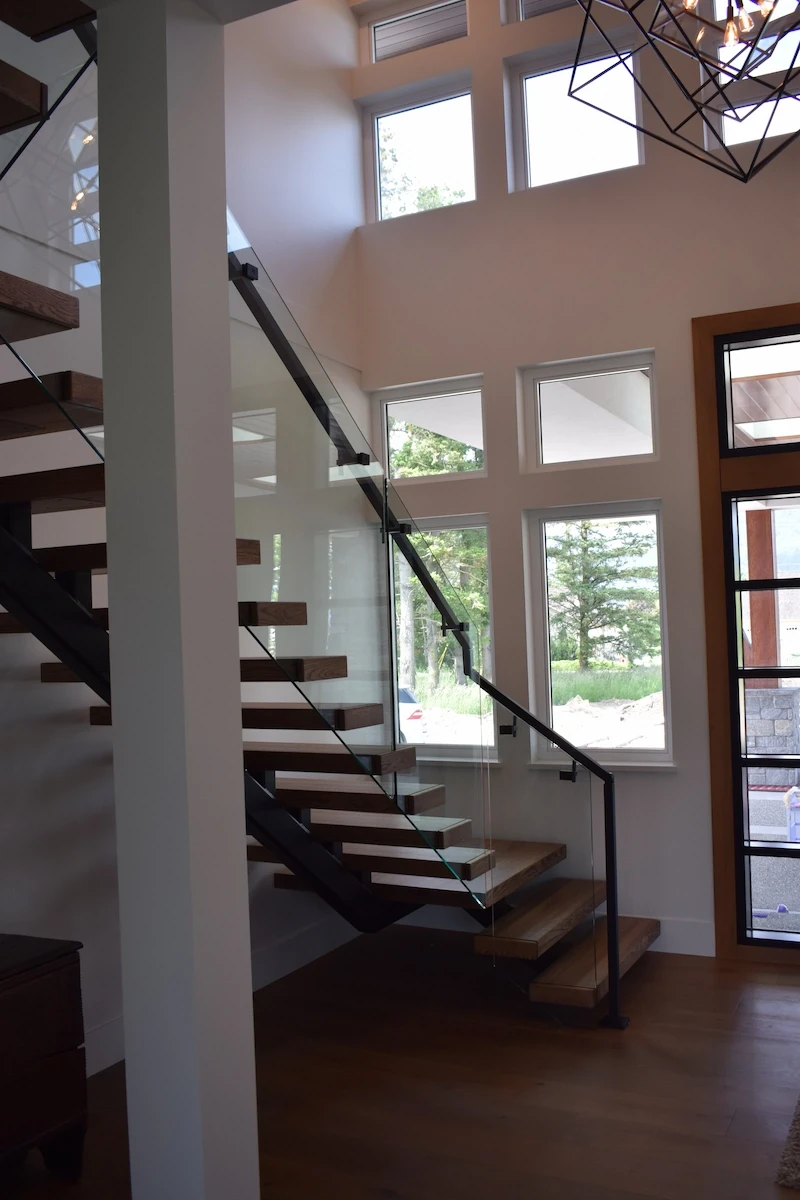
Stairs work best with post-mounted or standoff systems that provide handholds. Interior stairs benefit from ultra-minimalist standoff mounting. Exterior stairs in the Fraser Valley need corrosion-resistant hardware for longevity.
Whether you are looking for deck railings, balcony railings, or stair railings, understanding system differences helps you choose wisely.
Timeline and Installation Planning
Frameless systems require 6-8 weeks from measurement to installation for custom glass fabrication and engineering. Semi-frameless systems take similar timeframes with 2 weeks for post installation then 6-8 weeks for glass panels. Planning early ensures completion before your desired deadline.
Installation process steps:
Site measurement and design consultation
Engineering (frameless systems)
Material ordering and fabrication
Post installation (semi-frameless)
Glass panel installation
Final inspection and cleanup
Frequently Asked Questions
Do I need a permit for glass railing installation in BC?
Yes, most municipalities in BC require building permits for new railing installations or replacements. Permit requirements vary by jurisdiction, but generally apply to any guard on a deck or balcony. Your contractor typically handles permit applications and inspections.
How long do glass railings last?
Quality glass railings last 25+ years with minimal maintenance. The glass itself does not degrade, rot, or corrode like traditional railing materials. Hardware lifespan depends on material quality, with stainless steel outlasting aluminum or galvanized options.
Are glass railings safe for children and pets?
Yes, glass railings meet rigorous BC Building Code safety requirements including the 100mm (4") opening rule. Tempered and laminated glass break into small, relatively safe pieces if shattered. The solid panels also prevent children and pets from slipping through gaps common with traditional picket railings.
Can glass railings withstand Fraser Valley weather?
Yes, properly installed glass railings with quality hardware perform excellently in Fraser Valley's wet climate. Stainless steel mounting hardware resists corrosion from rain and humidity. The glass itself is completely impervious to moisture, rot, and temperature fluctuations.
What is the difference between frameless and semi-frameless glass railings?
Frameless railings eliminate all posts between glass panels for completely unobstructed views. Semi-frameless systems use vertical posts every 3-4 feet to support thinner glass panels. Semi-frameless costs 20-30% less while still providing modern glass aesthetics.
For a detailed comparison, see our guide on frameless vs semi-frameless glass railings.
Do glass railings require more maintenance than wood railings?
No, glass railings require significantly less maintenance than wood options. Glass needs only occasional cleaning with standard glass cleaner. Wood railings require annual staining, sealing, or painting to prevent rot and weathering in Fraser Valley's wet climate.
Learn more about maintenance in our article on how to clean and maintain glass railings for coastal BC.
Key Takeaways
Glass railing systems fall into three categories: frameless, semi-frameless, and framed. Frameless offers the clearest views while semi-frameless provides the best value. Mounting methods including base shoe, spigots, standoffs, and posts affect installation complexity, cost, and drainage performance in Fraser Valley's high-rainfall climate.
BC Building Code requires 12mm minimum glass thickness, 100mm maximum openings, and specific guard heights based on application. Fraser Valley installations benefit from stainless steel hardware and proper drainage design to handle atmospheric rivers and coastal moisture. Total costs range from $250-400 per linear foot depending on system type, with frameless commanding premium pricing for unobstructed views.
Choosing the right glass railing system requires balancing your budget, view priorities, and local climate considerations. Fraser Valley homeowners should prioritize corrosion-resistant hardware and proper drainage design for long-term durability. Professional installation ensures BC Building Code compliance and optimal performance for decades.
Ready to explore glass railing options for your Fraser Valley home? Contact Tenmar Contracting for expert guidance and a free consultation on frameless glass railings, semi-frameless systems, or curved glass installations.