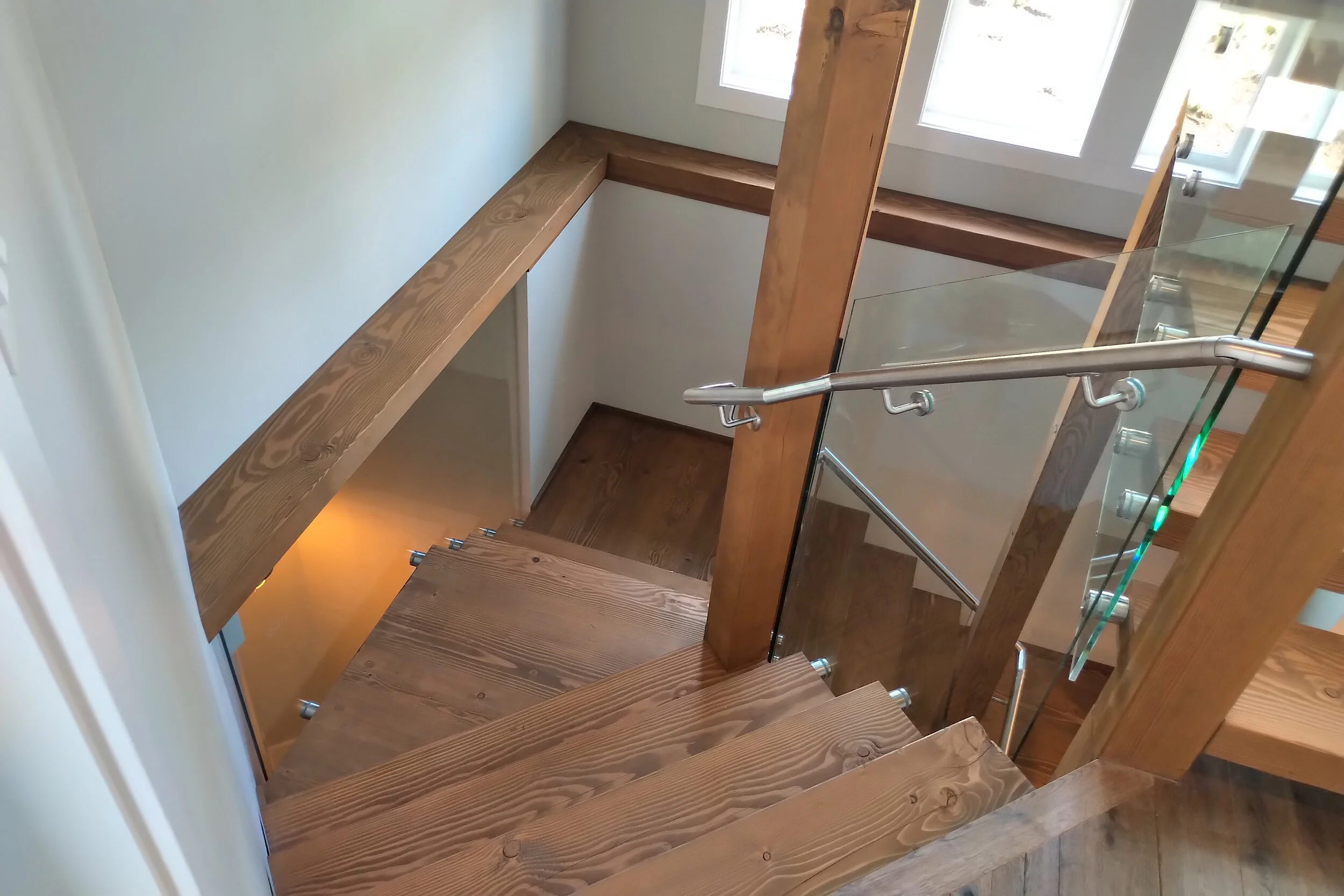

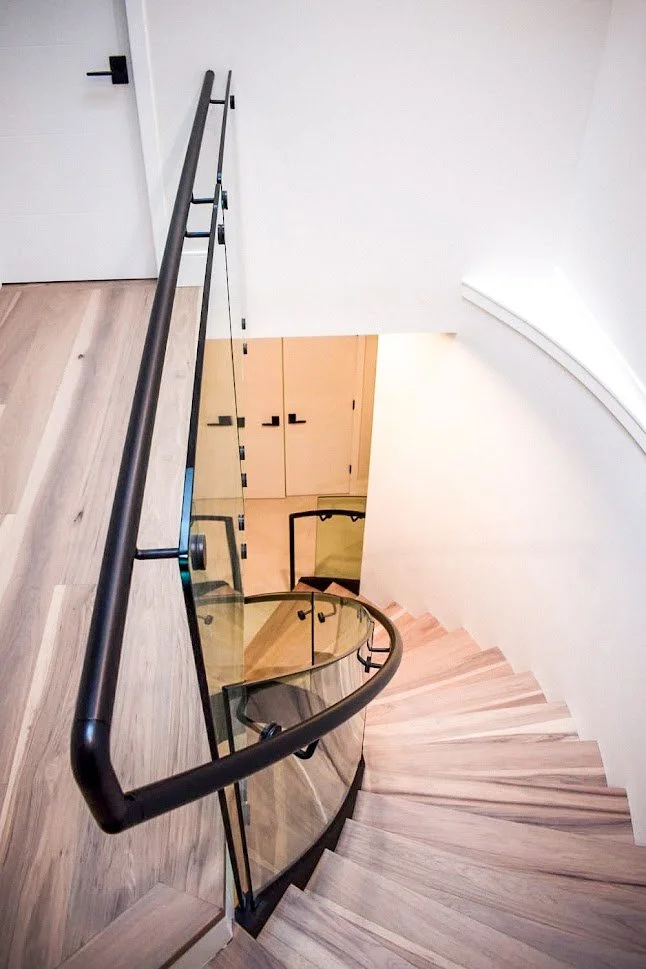
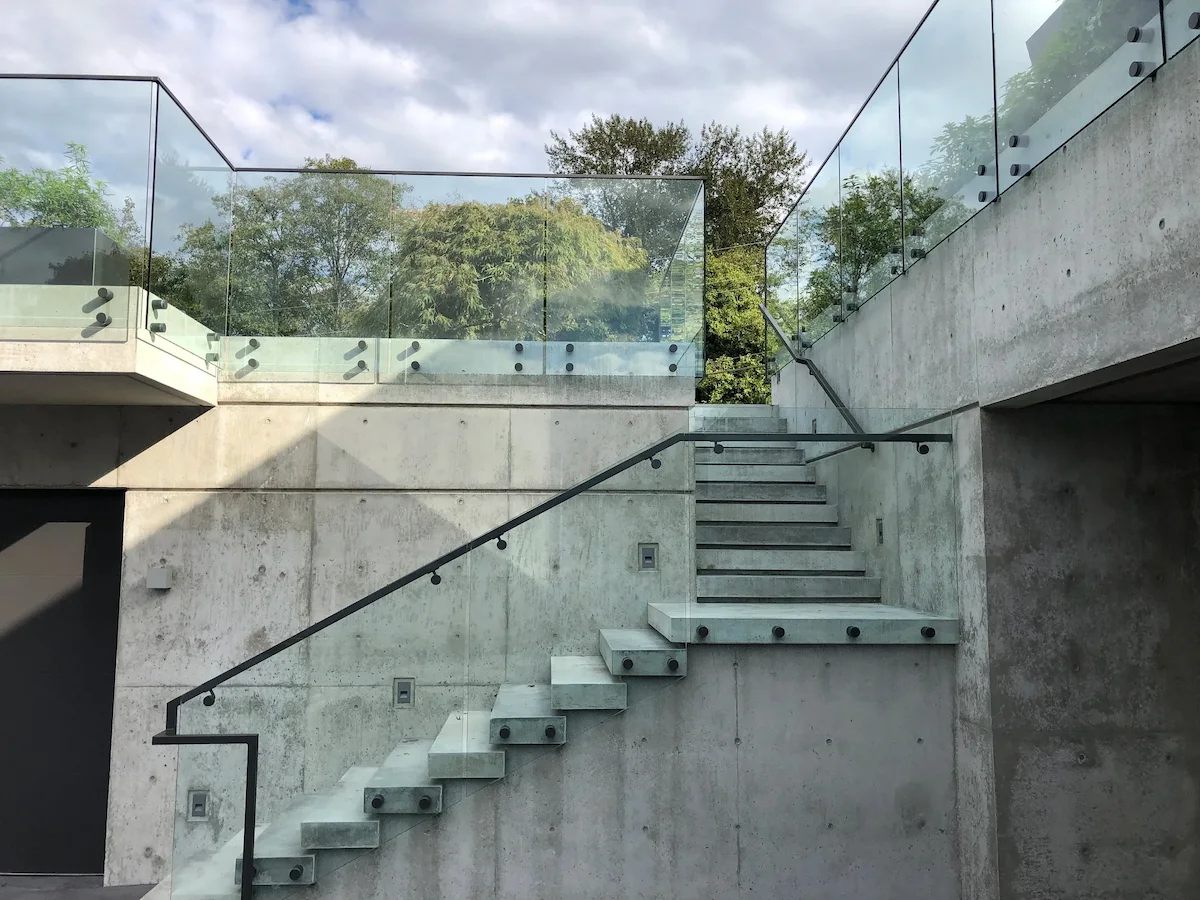
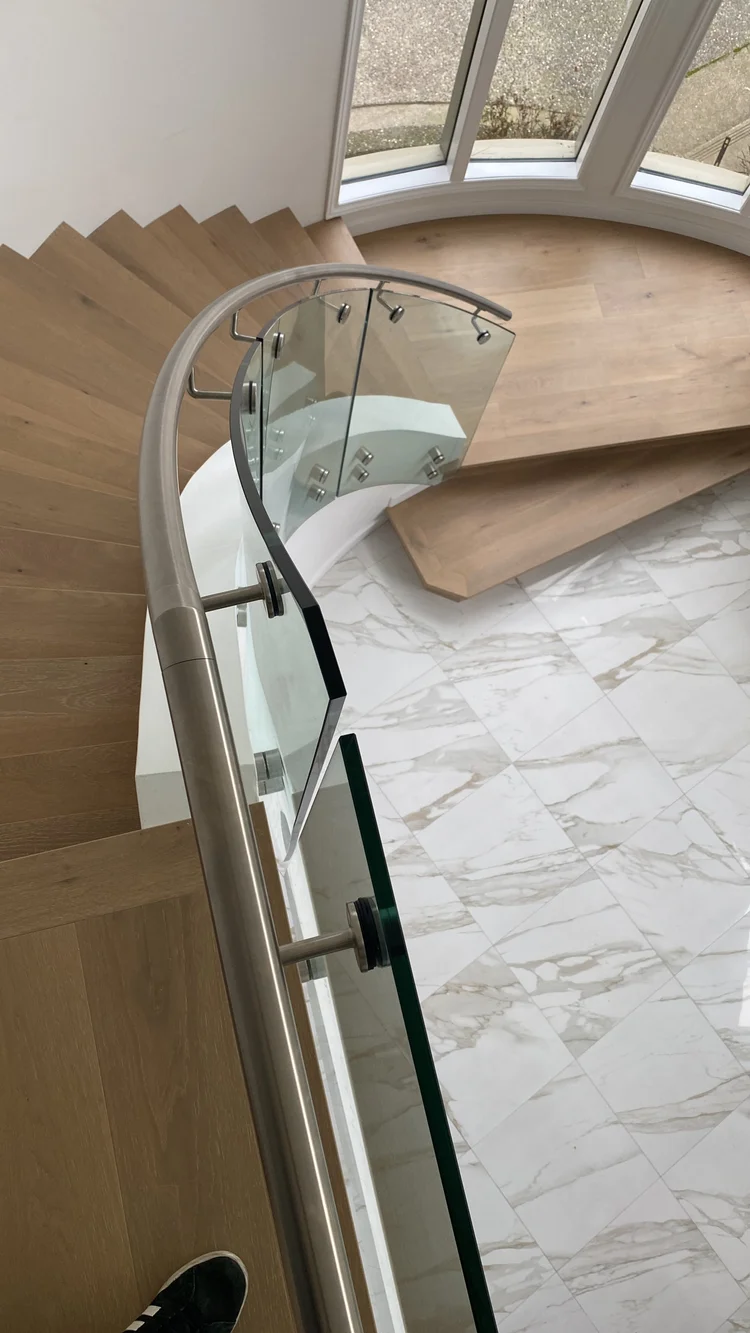
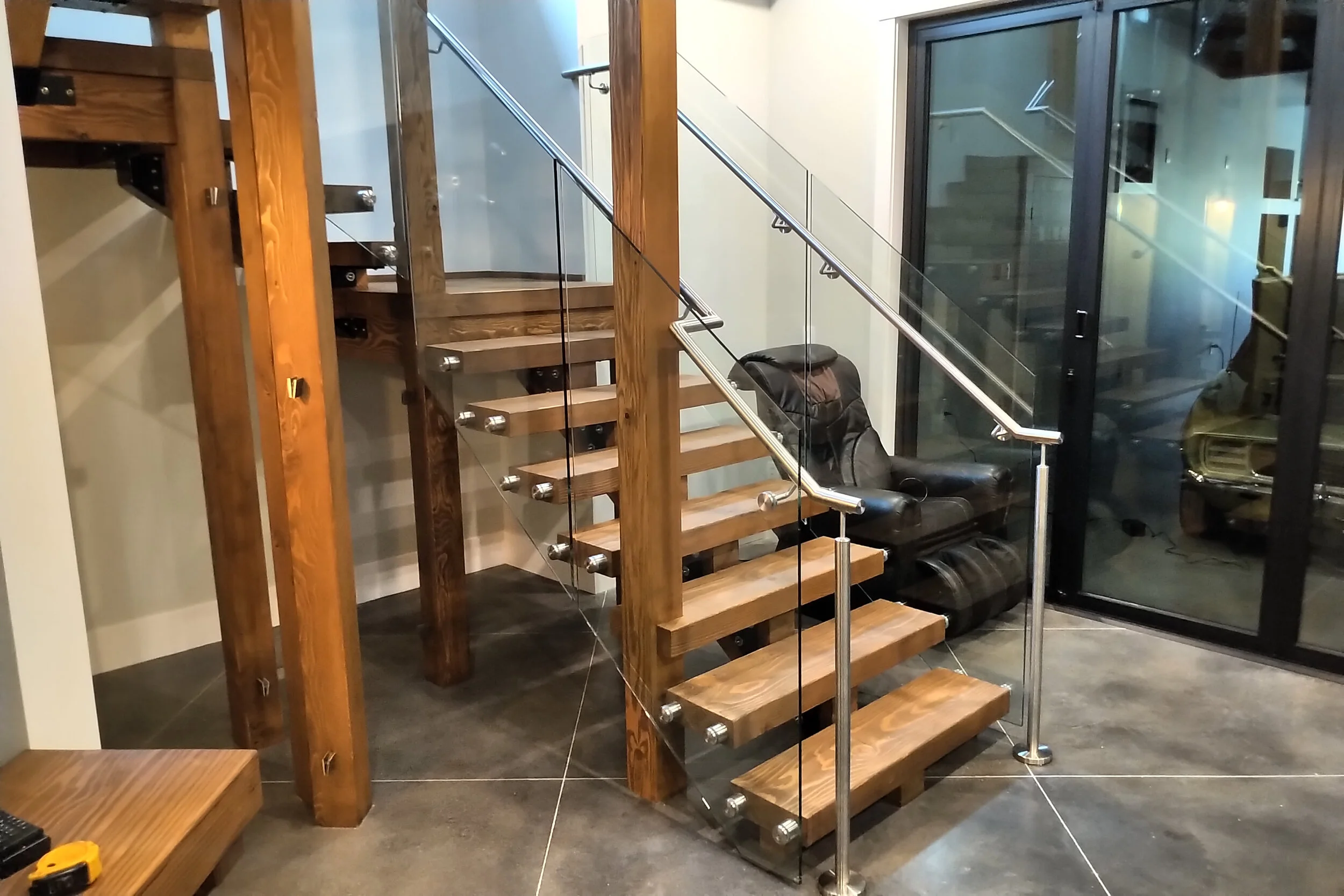
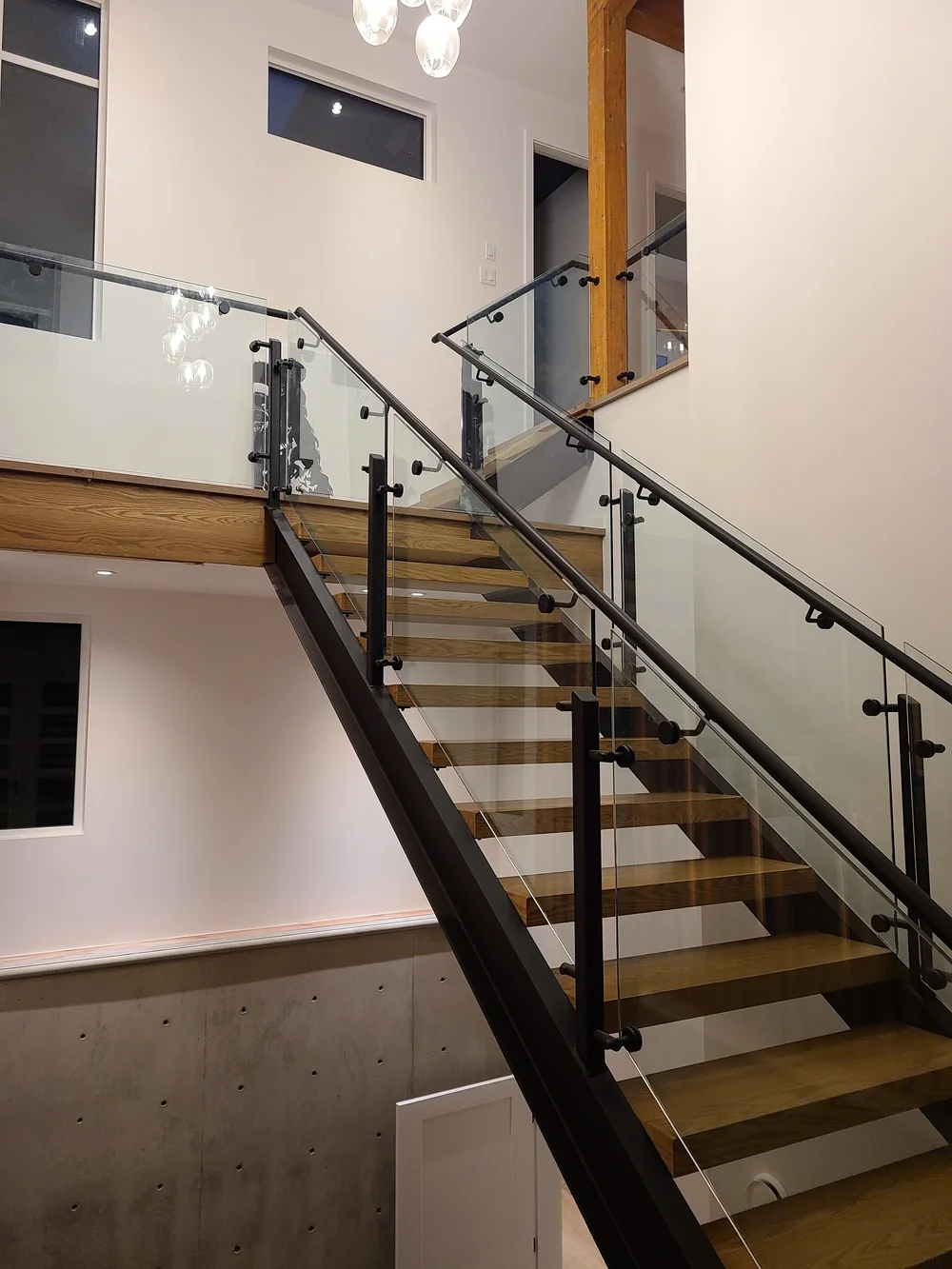
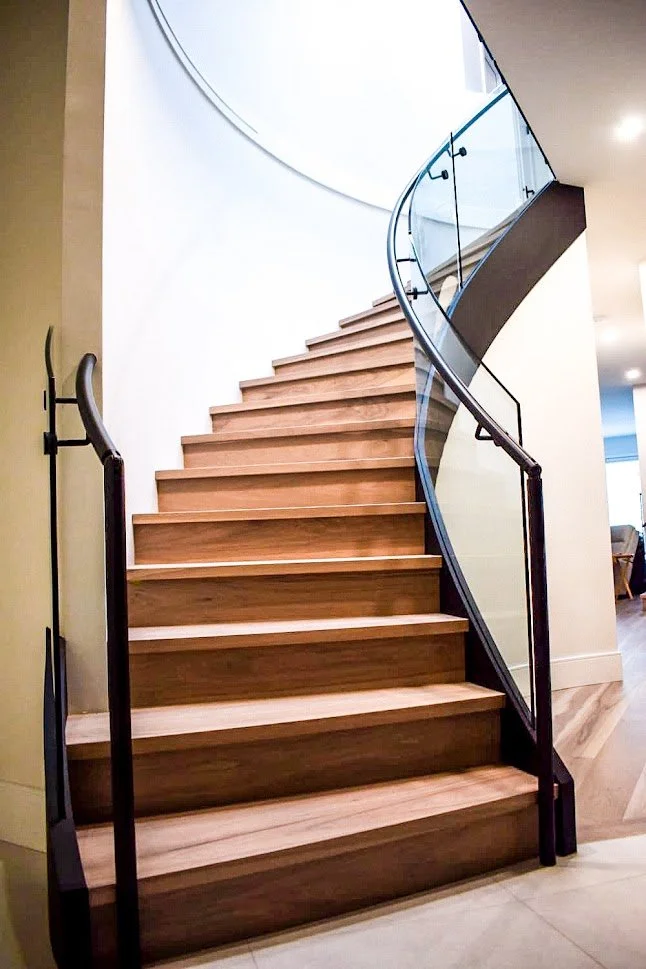
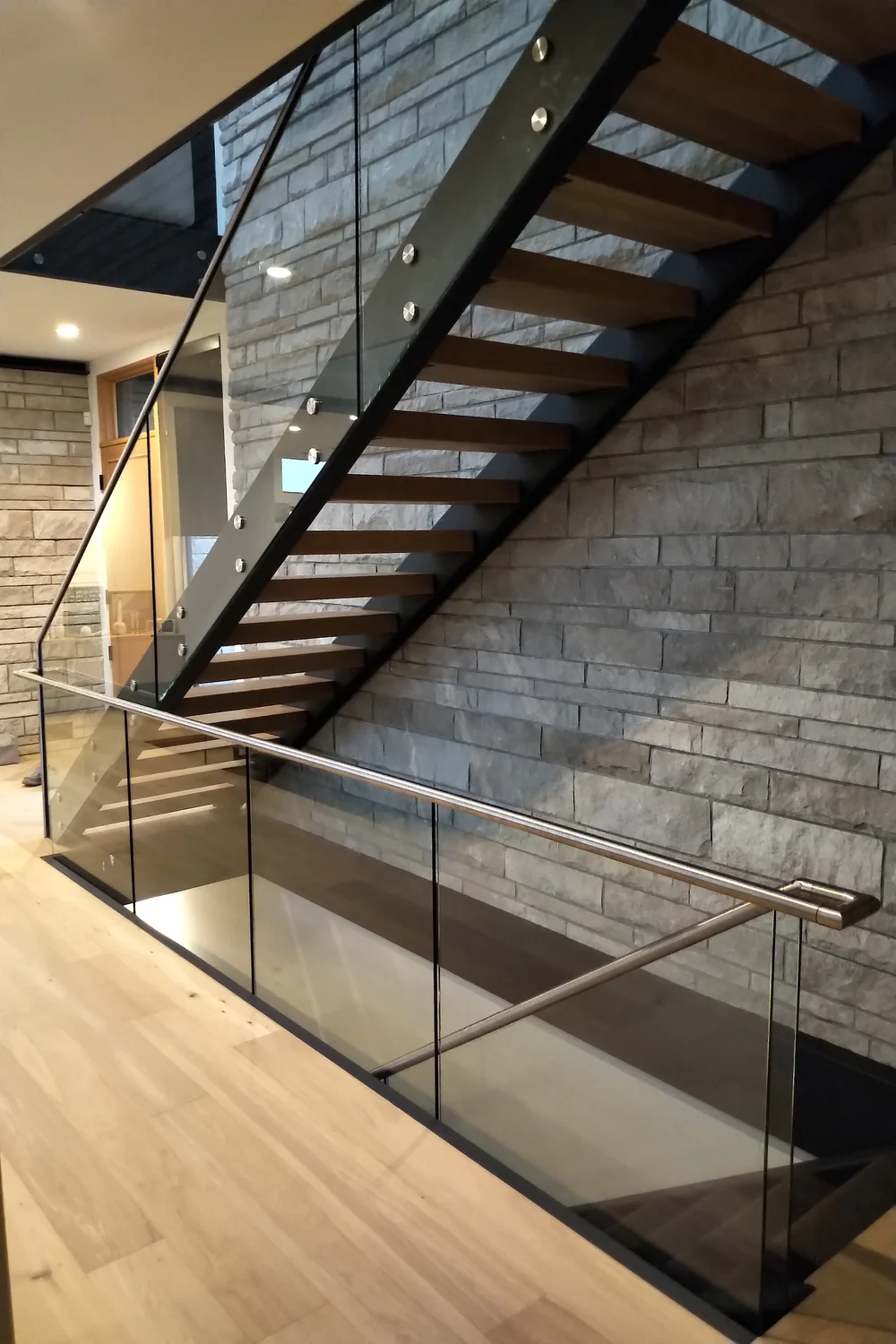
Fabrication
How Custom Stair Railing Fabrication Works
Measurements
Fabrication starts with detailed measurement of your stairs. Every angle, curve radius, rise, run, and structural mounting point is documented. This creates a complete map of your stair geometry before any glass is cut.
Calculations
Engineering calculations determine glass thickness, panel sizes, and hardware placement based on your specific configuration. Curved sections receive special attention for structural requirements. Floating stairs are analyzed for load paths and mounting strength.
Custom Cutting
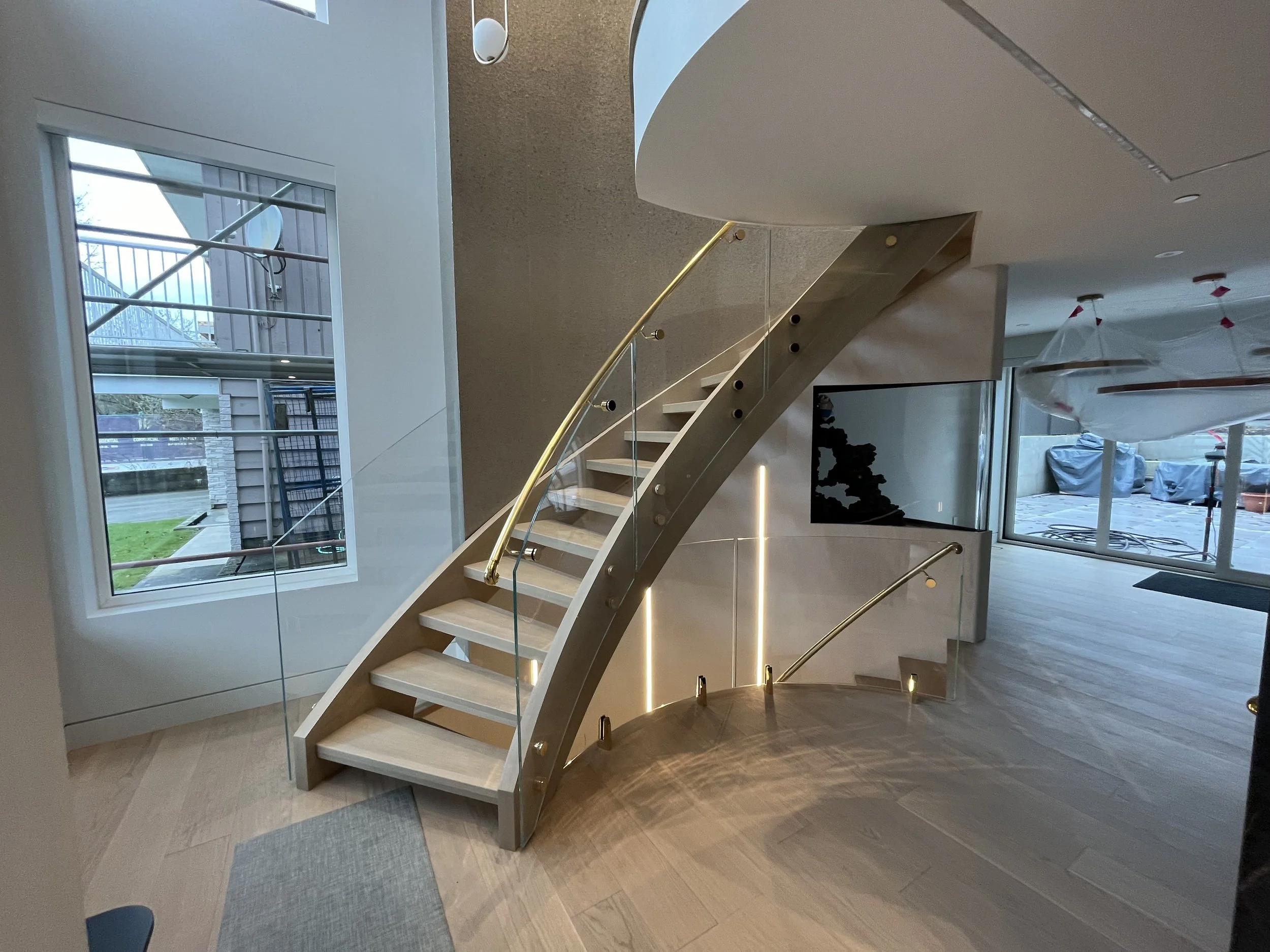
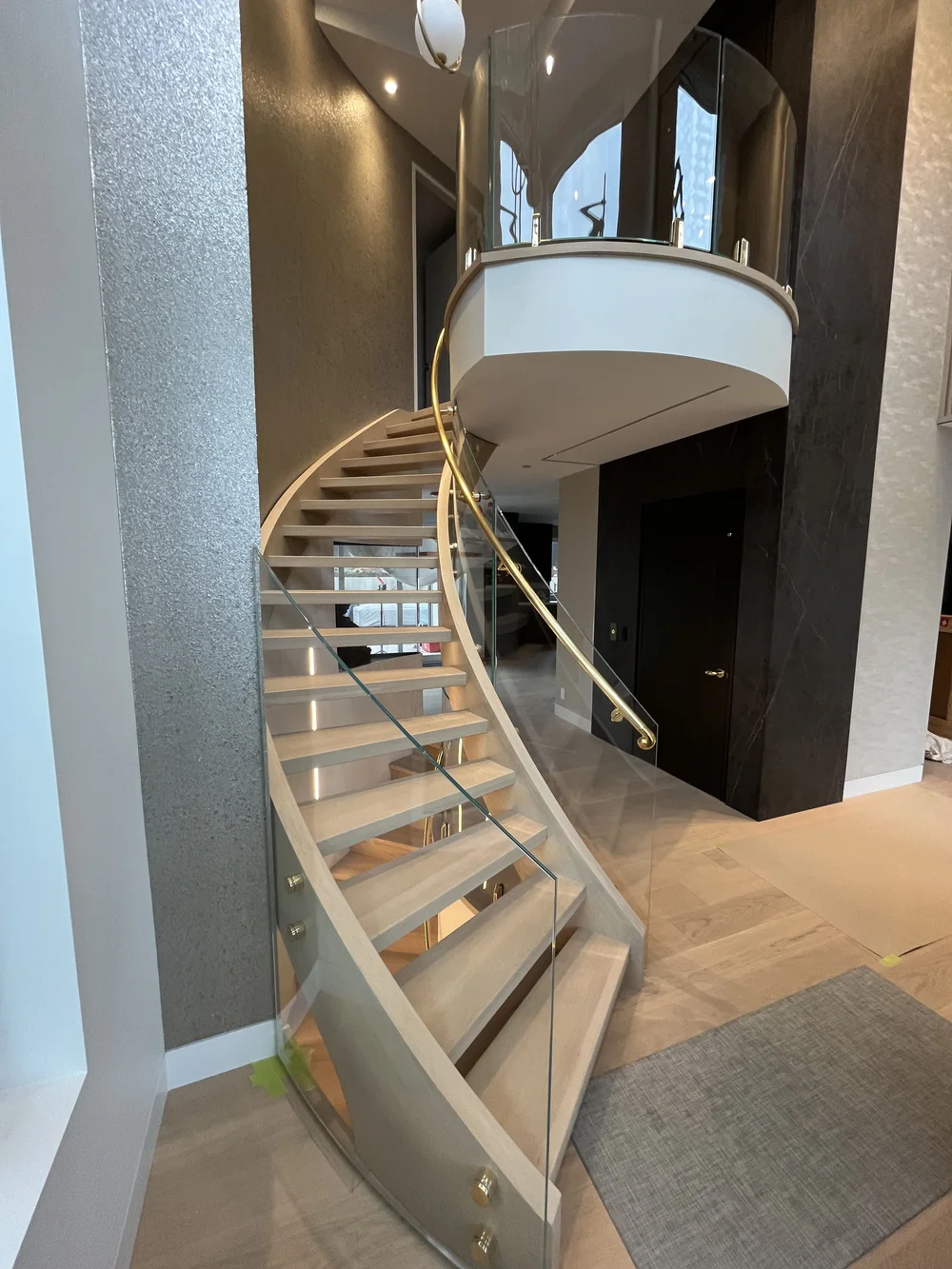
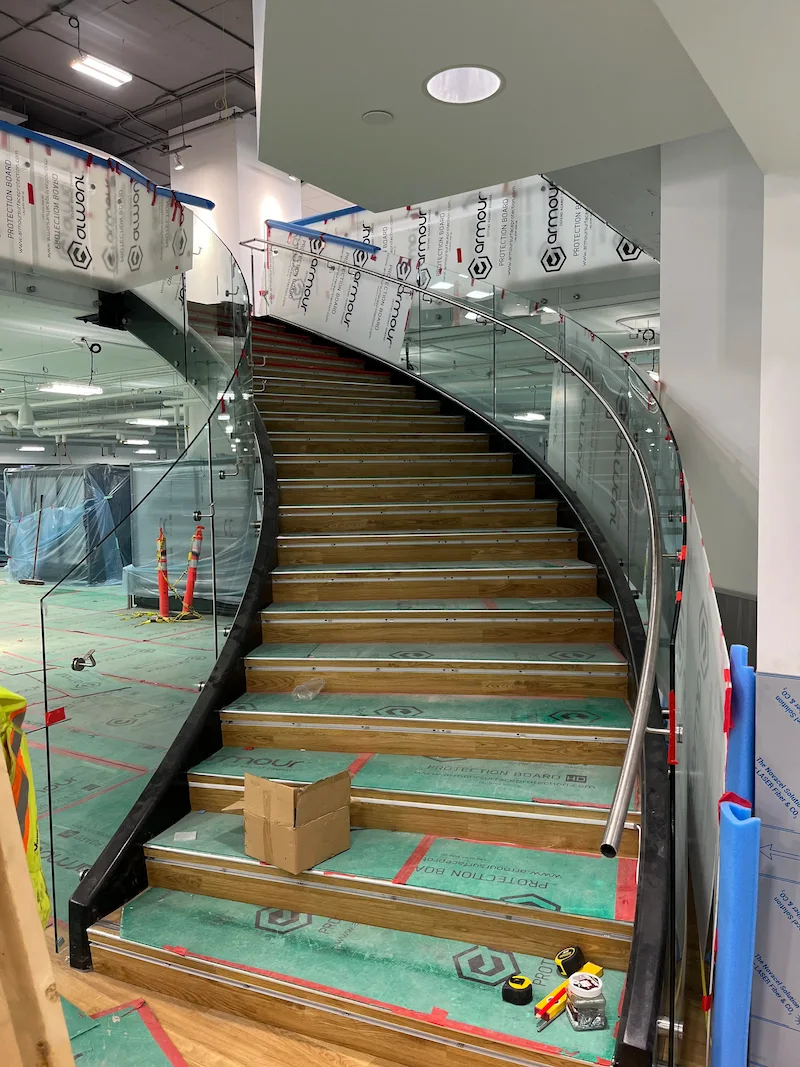
Glass panels are custom-cut using CNC equipment that follows the engineered specifications. Each panel is unique to its location on your stairs. Curves are cut to exact radiuses. Angles are cut to precise degrees. Heights vary as needed for code compliance and design intent.
Installation
Hardware is positioned and installed according to engineering specifications. Mounting methods are selected based on your stair construction. Glass panels are then fitted into place. Custom projects require more precision than standard installations because there are no adjustments possible with pre-cut panels.
Tenmar Advantage
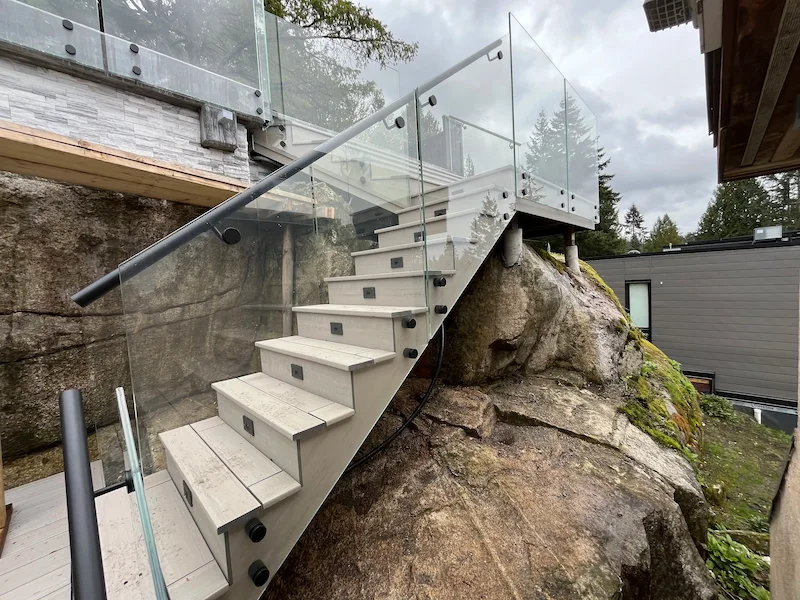
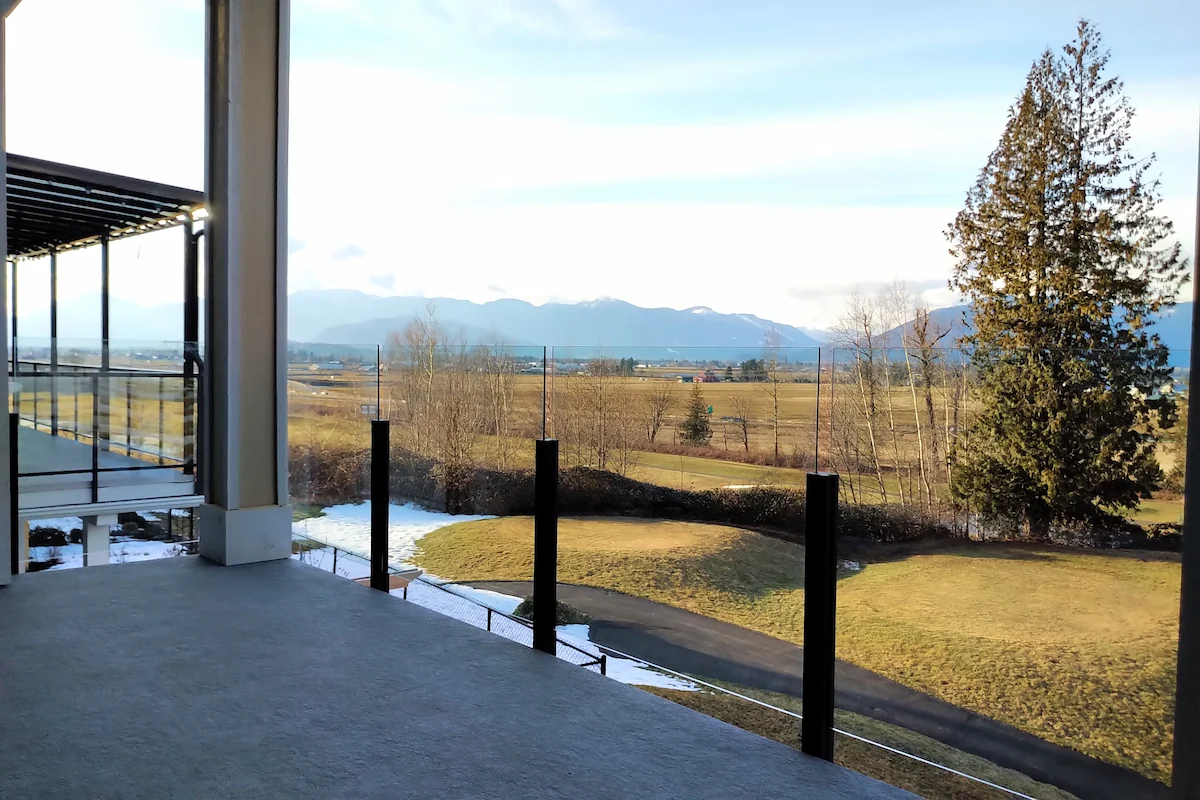
Each design is custom-measured, engineered, and fabricated in BC to perform under coastal exposure and high rainfall conditions typical of Metro Vancouver.
Gallery
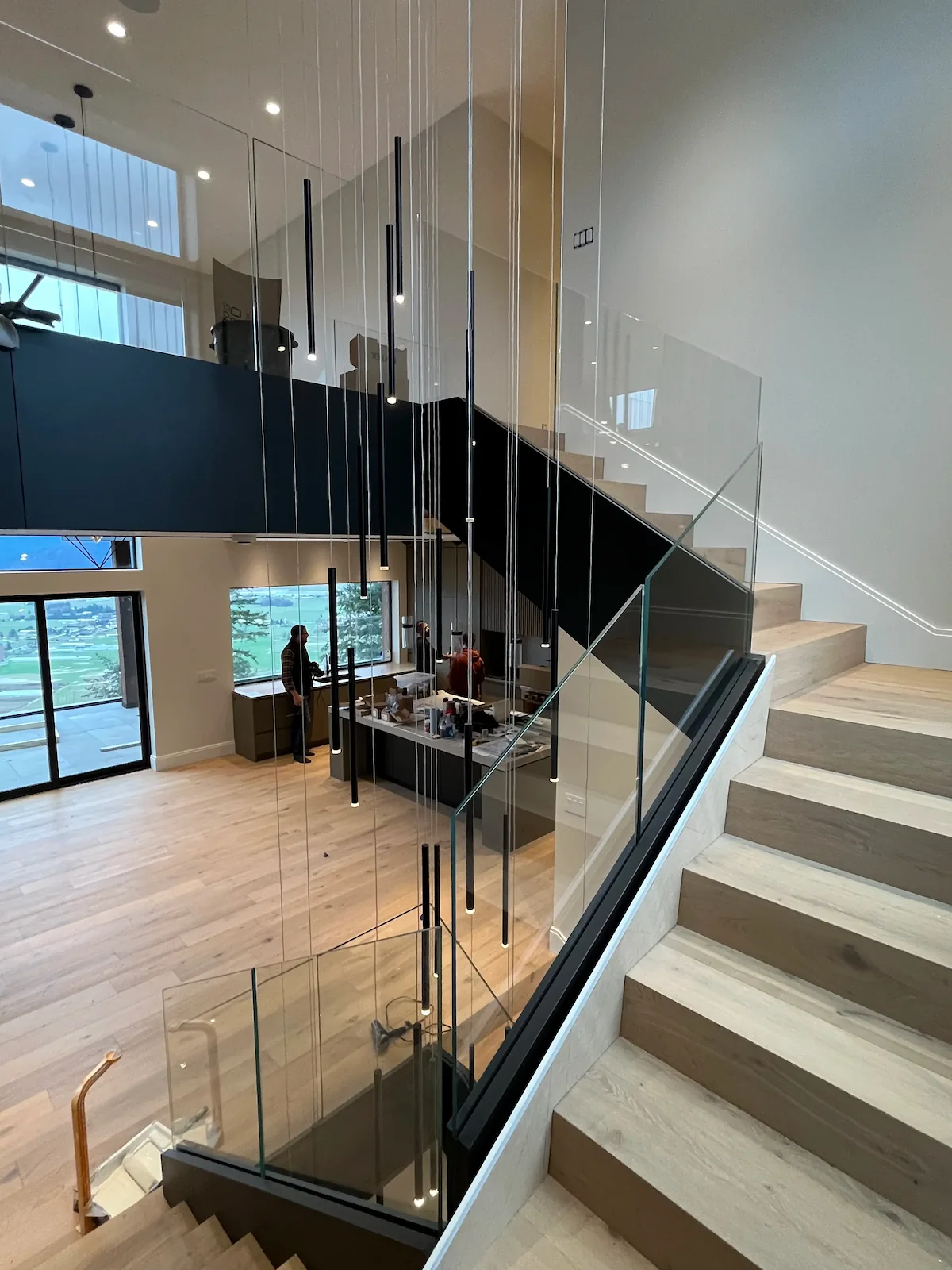
View Our Custom Stair Railing Projects
Customization Options
Design Customization Options
Custom stair railings give you flexibility to match your home's unique design. Your installation can include:
Variable panel heights - Use 36-inch panels in lower sections and 42-inch panels in upper sections to handle low ceilings or unusual layouts
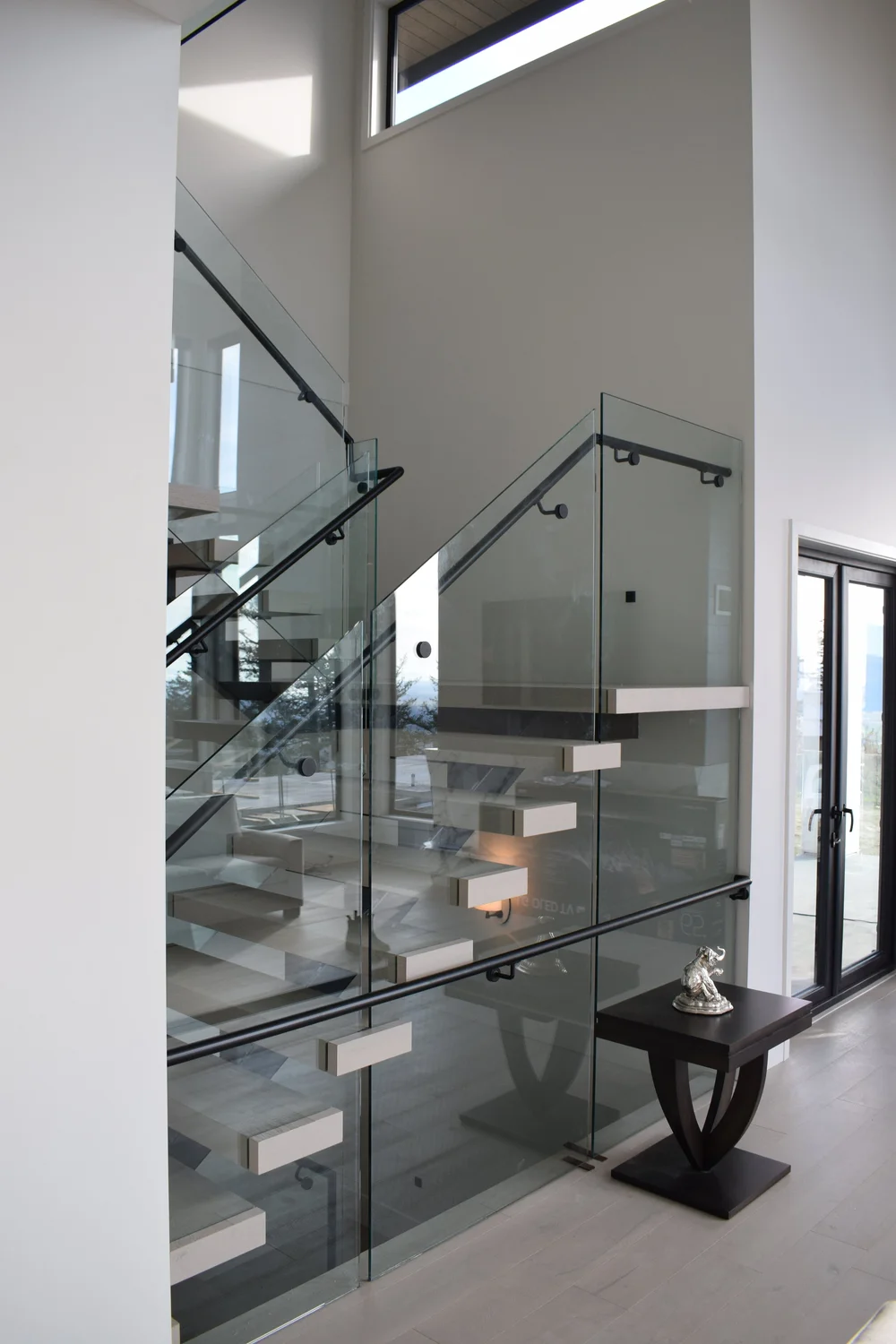
Matching handrails - Wood matches your stair treads, metal matches your fixtures, or choose composite materials for specific textures
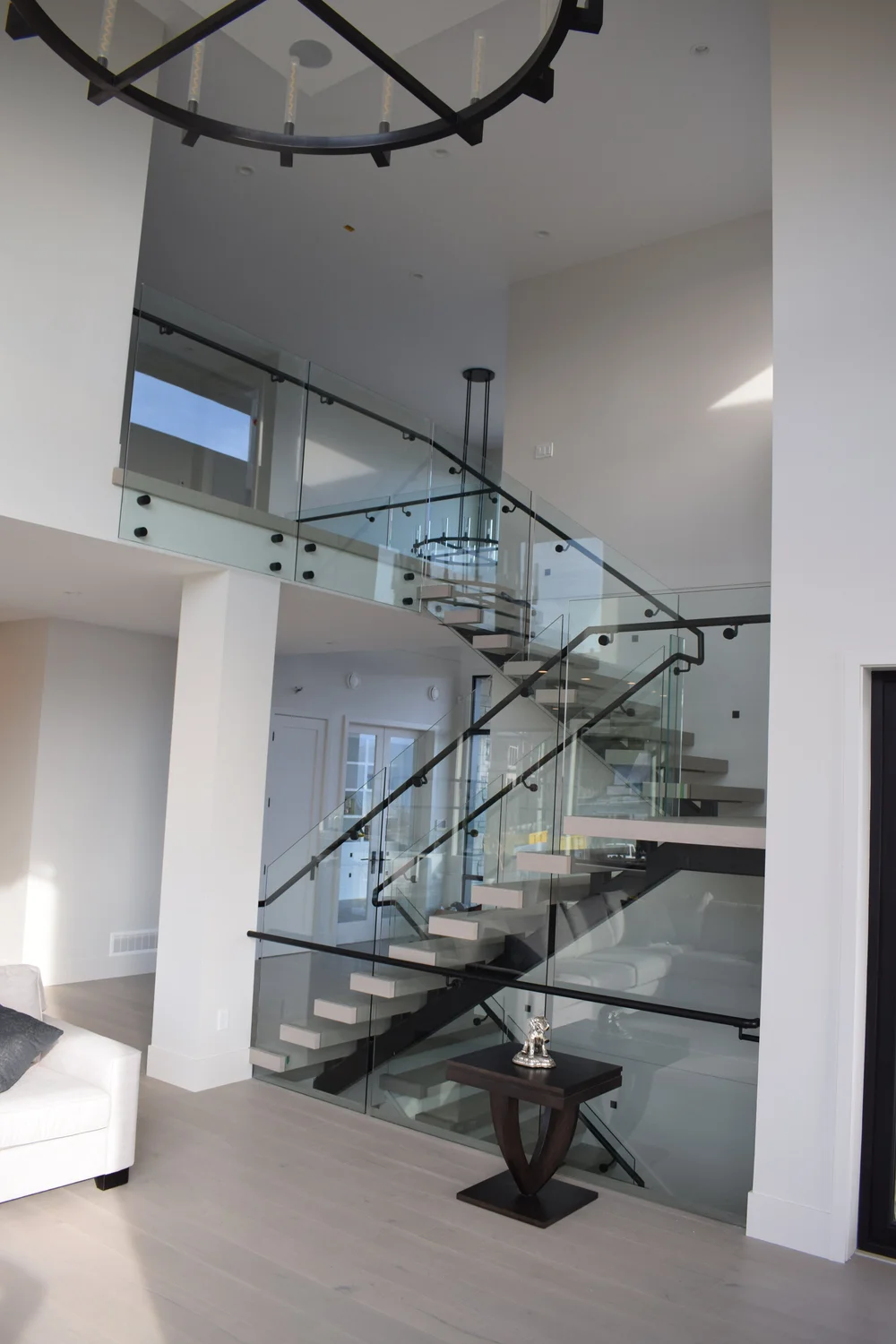
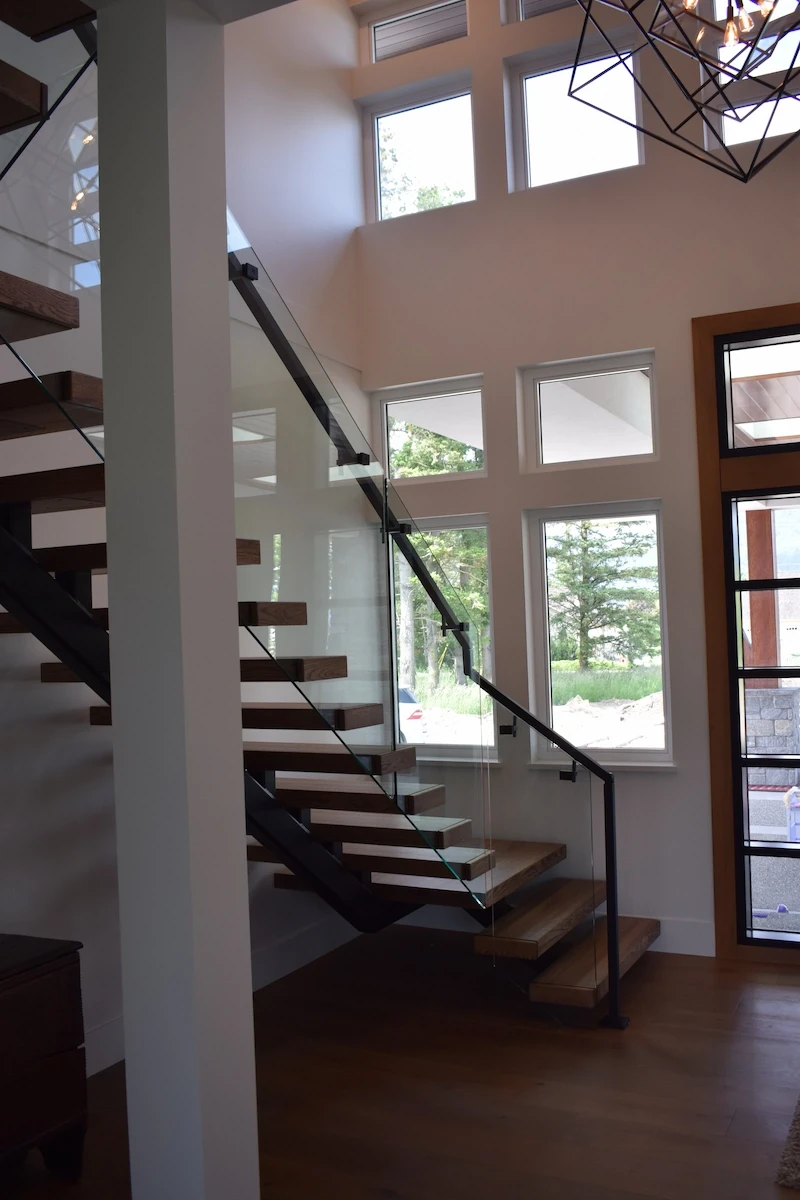
Flexible mounting methods - Base shoe channels for solid landings, standoffs for wall mounting, spigots for floor mounting, or combine methods in one staircase
Privacy treatments - Frosted glass on lower sections for bedroom privacy, clear glass on upper sections for light flow, or etched patterns for visual interest
Your installer helps you choose options that work with your stair structure and design goals.
Architects & Designers
Working With Architects and Designers
Custom stair railings require collaboration between your design team and fabrication specialists. The process includes:
Design review - Architects provide specifications and design intent, fabricators translate concepts into engineered solutions
Shop drawings - Detailed drawings show exact panel sizes, hardware locations, and mounting methods before fabrication begins
Design team approval - Your architect or designer reviews shop drawings to verify everything matches their vision
Code integration - Engineering ensures the custom design meets building code requirements for heights, loads, and spacing
Permit support - Documentation is provided for permit approval and building inspections
This collaborative approach delivers railings that meet both your design vision and building code requirements.


FAQ
Frequently Asked Questions
Here are the top questions our clients ask about custom stair railings before getting started.
How long does a custom stair railing project take?
Most projects take 6-8 weeks from consultation to installation, depending on material availability and complexity.
Can you match existing railings in other parts of my home?
Yes. Glass panels can be cut to match existing railing heights and styles. Hardware finishes can coordinate with existing installations. This creates visual continuity when updating one staircase in a home with multiple levels.
Do custom stair railings meet building codes?
Yes. All custom fabrication is engineered to meet BC Building Code requirements. Engineering calculations account for your specific configuration, loads, and heights. Documentation is provided for permit review and inspection approval.
Can custom railings be installed on old stairs?
Usually yes. Existing stairs are evaluated for structural capacity to support glass railing loads. Older construction may need reinforcement before installation. This is identified during initial consultation so all costs are known upfront.
What’s the difference between custom and prefabricated railings?
Custom railings are built specifically for your site’s dimensions and architectural intent, delivering superior aesthetics, code compliance, and long-term performance.
Related Services
Looking for more information? Explore these related pages: