Educational
Glass Deck Railing Ideas for BC Homes: Plan in Winter, Install by Spring
Published:
Last updated:
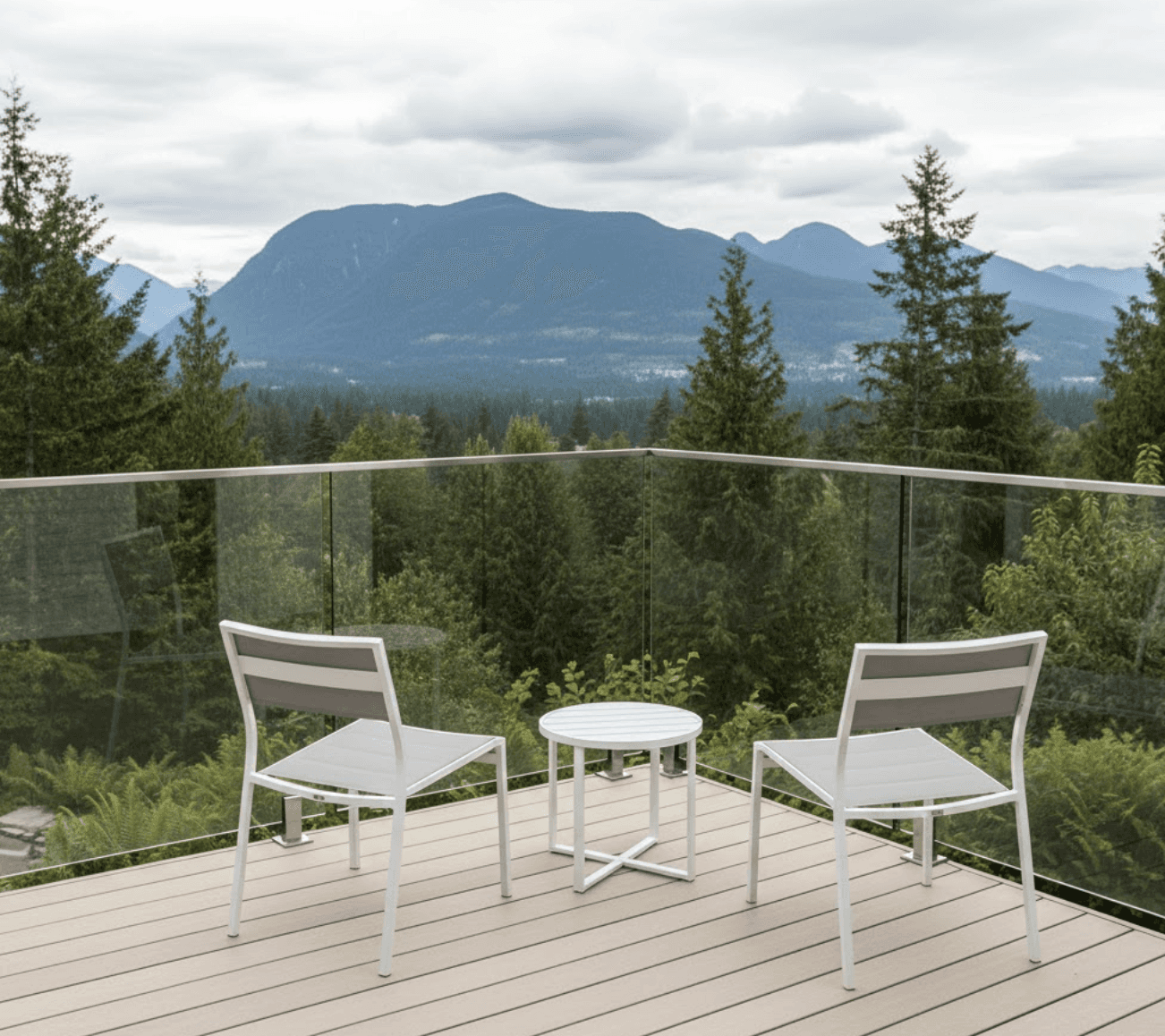
The main glass deck railing ideas are frameless panels with no posts along the run, semi-frameless glass between slim aluminum posts, and frosted glass where you want privacy. Frameless panels are held by a base shoe, standoffs or spigots, and the mount changes how the base of the railing looks.
Timing matters as much as style. Frameless glass railings take 6–8 weeks from measurement to completion, so a railing measured over the winter can be in before deck season.
This guide covers deck railing ideas with glass for homes in Greater Vancouver and the Fraser Valley, the mount styles, what the BC Building Code asks of a deck guard, and how to plan the timing.
Glass Deck Railing Ideas by Look
Three popular looks for a glass deck railing are frameless, semi-frameless and frosted. The choice comes down to how much of the view you want, how much framing you like and your budget.
Frameless glass panels
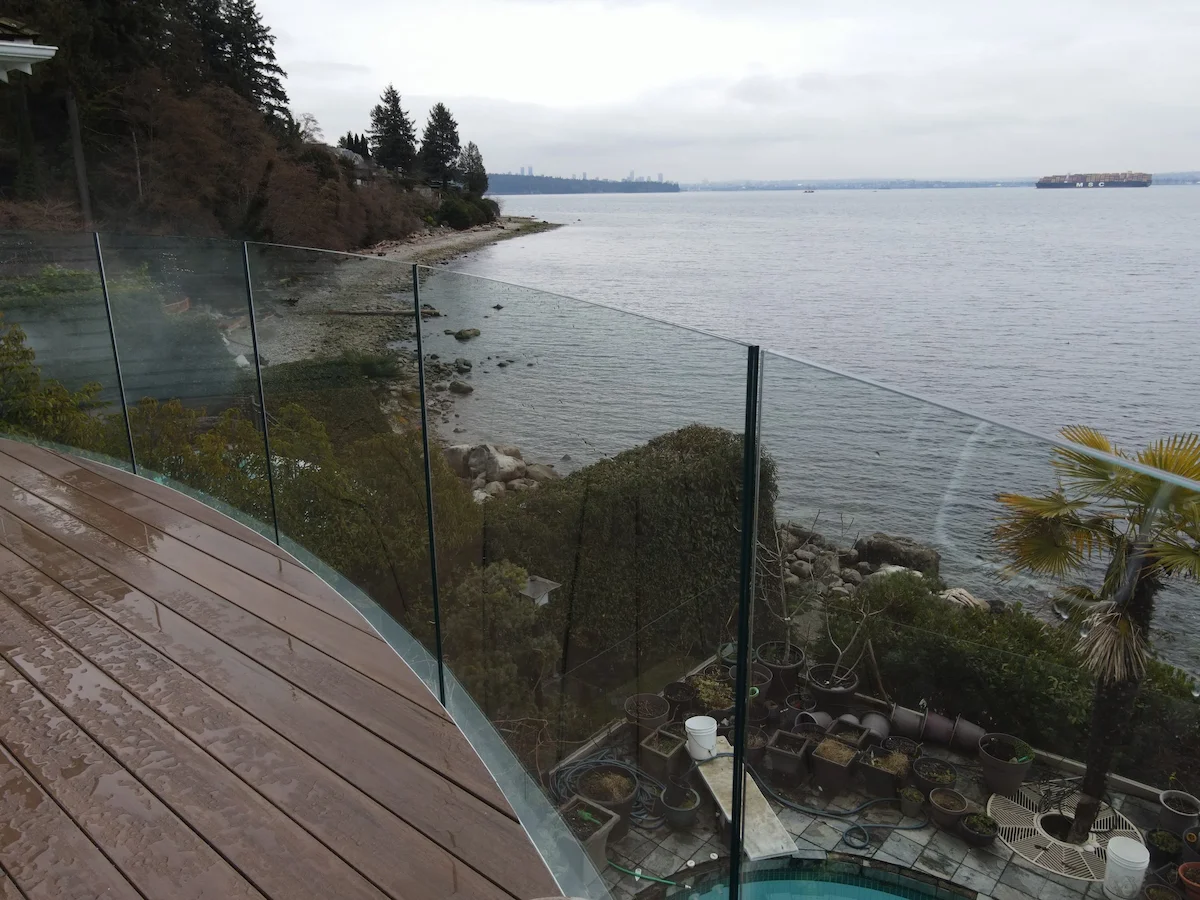
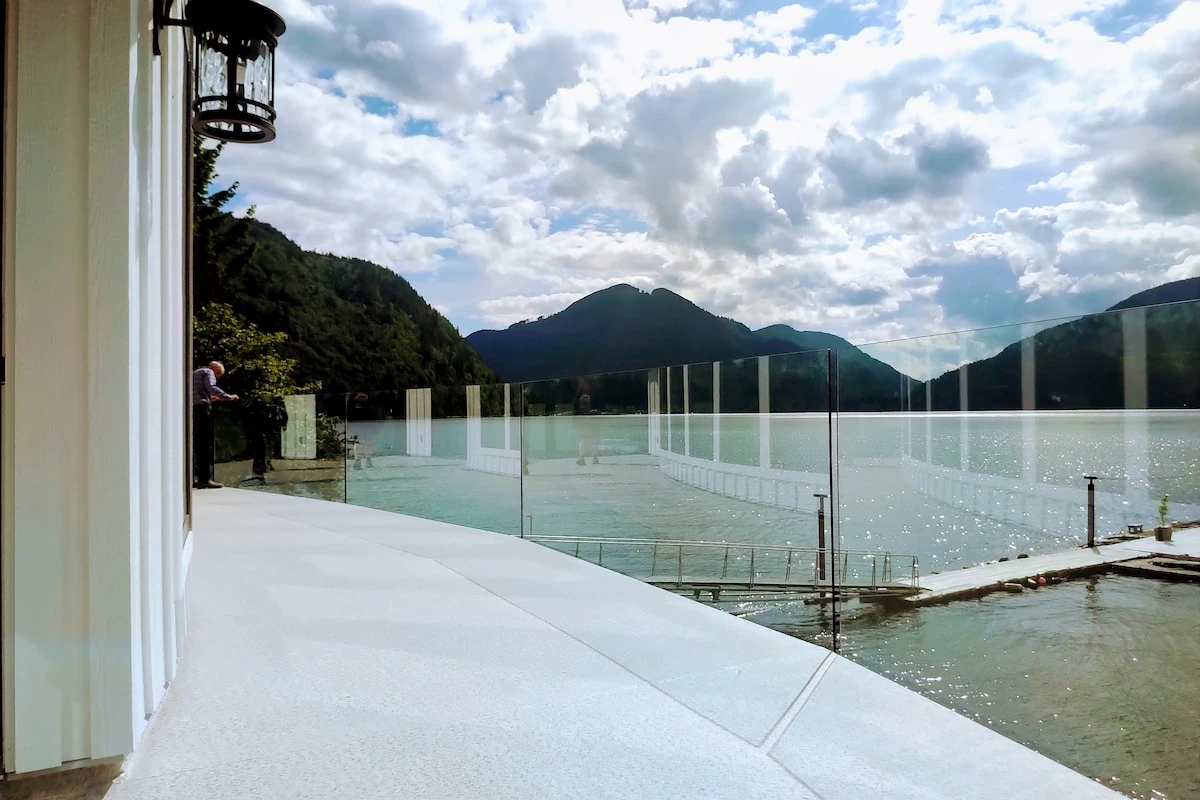
A frameless railing is a run of glass with no posts along it, so no posts interrupt the view. These systems typically use 12mm glass, and the panels are held by one of the three mounts below.
Frameless glass costs $300–$400 per linear foot. It suits decks where the view is the point, modern exteriors, and smaller decks where visual clutter is most noticeable.
Semi-frameless glass with aluminum posts
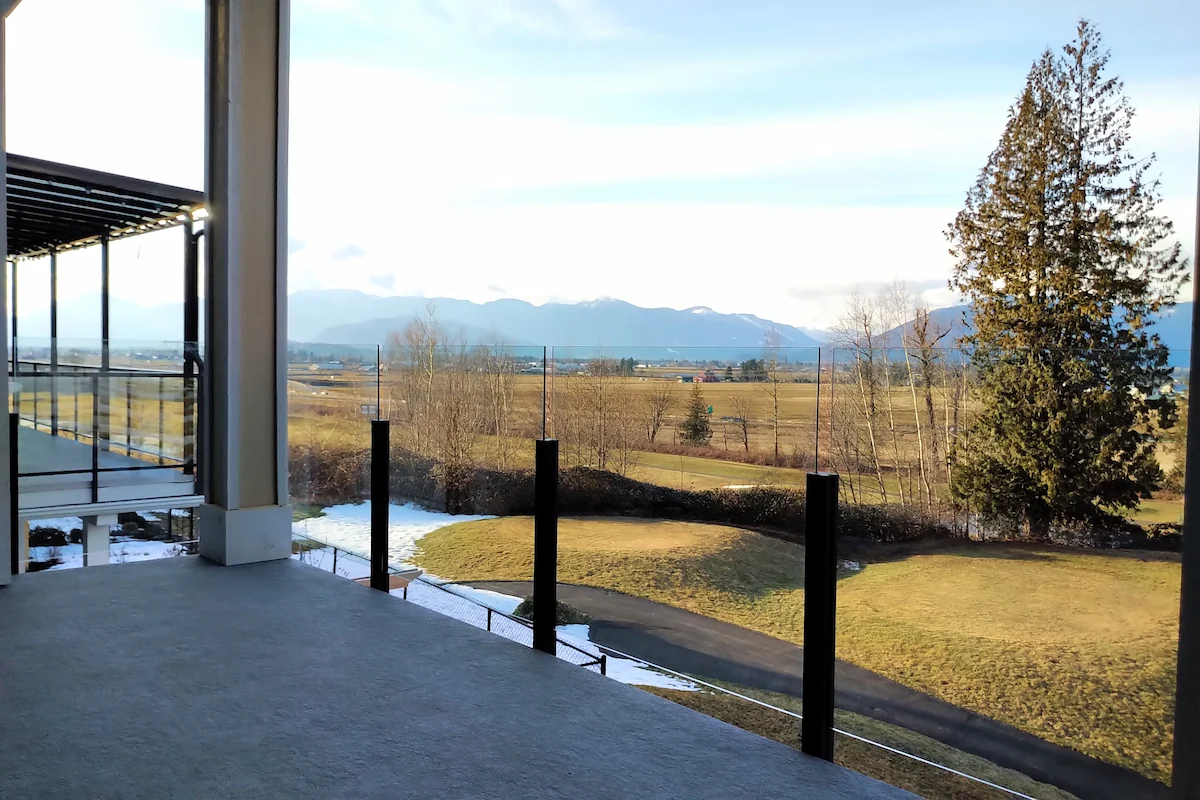
Semi-frameless railings set 12mm glass panels between aluminum posts spaced a maximum of 42 inches apart. The posts give the railing a framed rhythm, and you can choose the post finish to suit your home.
Semi-frameless glass costs $250–$350 per linear foot, so it is the lower-cost of the two systems. It suits homeowners who like the look of visible posts or whose budget favours the lower range.
Frosted glass panels
Frosted glass blocks sightlines while still letting light through. Use it on the side of a deck that faces a neighbour or the street, and keep clear glass where the view is.
Our guide to frosted glass railing panels covers the styles. For a taller screen beside a hot tub or a close neighbour, glass privacy walls stand higher than a guard railing.
If you are torn between the looks, start from the view. Stand where you sit most on the deck and look out: if posts every few feet would cut across what you want to see, frameless is the fit. If the view is a yard or a fence line, semi-frameless gives you glass at the lower range, and frosted panels can cover the side you would rather not look at.
Mount Styles for Glass Deck Railings
Frameless glass deck railings use one of three main mounts, and each one gives the deck edge a different look:
Base shoe: glass mounted in a continuous channel.
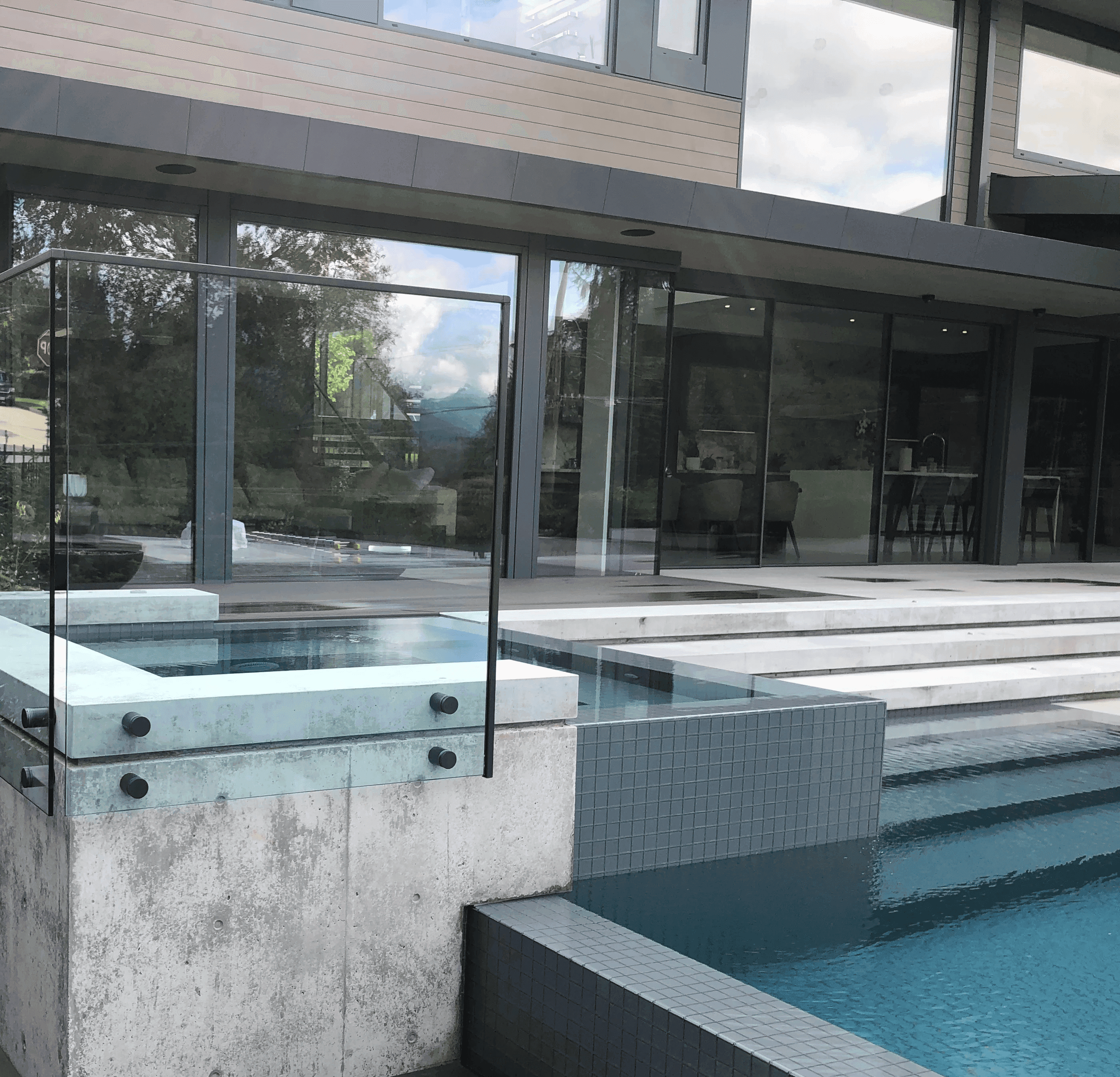
Standoffs: glass anchored to the deck face using pairs of stainless or powder-coated standoffs.
Spigots: glass clamped in pairs of surface-mounted spigots.
A base shoe gives a clean line along the deck surface. Standoffs move the glass to the face of the deck and keep the walking surface clear. Spigots leave space under the glass at the base.
Compare the three mounts in our guide to base shoe vs standoffs vs spigots, or read more about spigot glass railings and standoff glass railings.
Deck Railing Ideas With Glass
The best deck railing idea depends on the deck. Here is how glass works on common deck types.
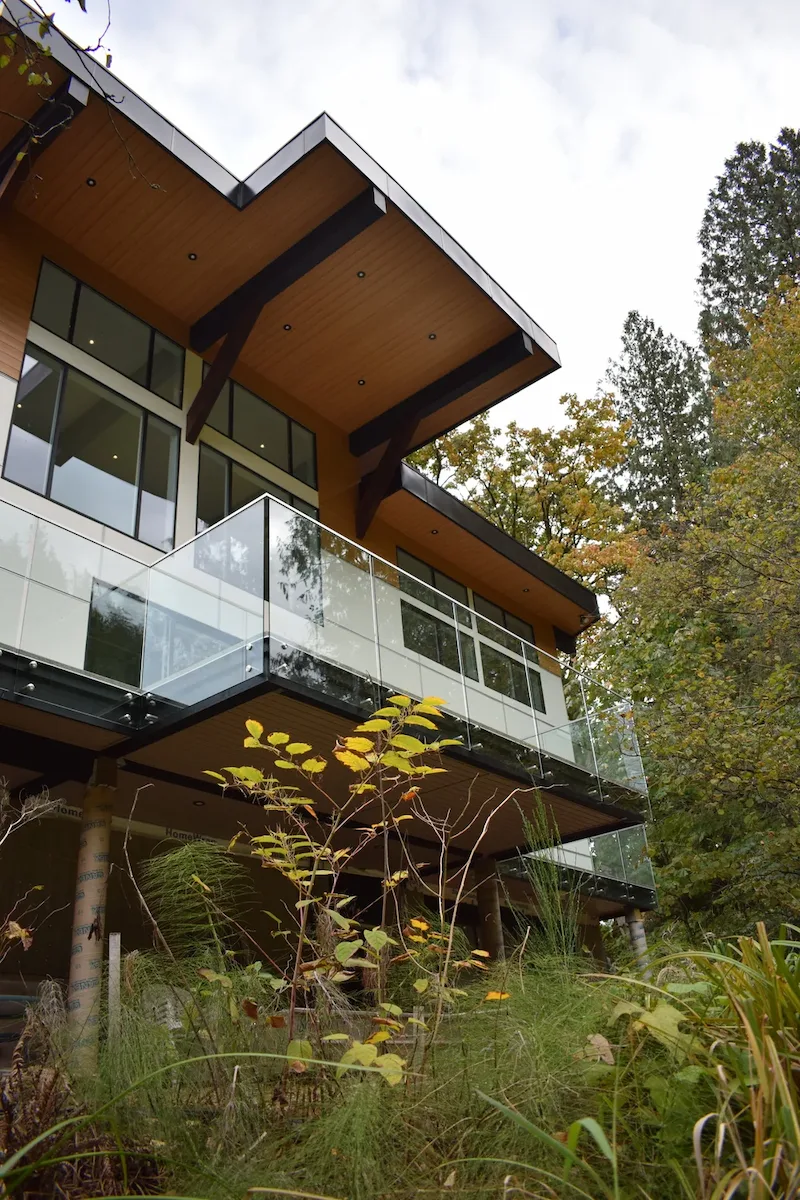
Second-storey decks: glass keeps the view from an upper deck open. See our page on second-storey deck glass railings.
Deck stairs: each stair panel is cut to fit the angle of the stair, so the glass follows the steps. See our custom stair railings.
Wind-exposed decks: read our guide to glass railings as a windbreak for exposed or waterfront decks.
Privacy edges: frosted panels on one side, clear glass on the view side.
Replacing wood pickets: in many cases a glass railing can mount to the existing deck after the framing is assessed. See how we replace wood deck railing with glass, or browse more deck renovation ideas.
For railings beyond the deck, our glass railing designs guide covers balconies, stairs and interiors.
Plan in Winter, Install by Spring
Plan the measurement for winter if you want the railing in by spring. Frameless glass railings take 6–8 weeks from measurement to completion. For semi-frameless, the posts are installed within 2 weeks, followed by glass installation in 6–8 weeks.
Here is how a project runs:
Your first quote is a price range. Send your details and Marten reviews every quote.
Site visit. If the project is a fit, Marten arranges an on-site visit to confirm measurements before fabrication. Every run is carefully measured.
Drawings. Tenmar provides engineer-sealed drawings where the project requires them.
Hardware, then glass. The mounts go in first, and the glass is cut to fit them. We measure to installed hardware to ensure precision glass cutting.
Count back from when you want to use the deck, and leave room for the full timeline before your first warm weekend.
Real Tenmar Deck Projects
Browse the full gallery for more finished railings.
BC Building Code Basics for Deck Railings
A deck needs a guard wherever its walking surface is more than 600 mm above the adjacent surface within 1.2 m (BC Building Code, 2024). Guards must be at least 1,070 mm high. On an exterior deck serving one home, the minimum is 900 mm where the deck is no more than 1.8 m above finished ground.
Openings through a guard must prevent a 100 mm sphere from passing through. Glass in a guard must be a safety glass that meets the code's CAN/CGSB safety glazing standards.
Jobs in the City of Vancouver fall under the Vancouver Building By-law, which adopts the 2024 BC Building Code with Vancouver-specific provisions. Our guide on how to meet glass railing code requirements in BC goes deeper.
Pricing
Frameless glass railings cost $300–$400 per linear foot. Semi-frameless railings cost $250–$350 per linear foot, depending on complexity and site conditions.
Our glass deck railing cost guide covers what moves a quote within those ranges. Ready to price your own deck? Start with our glass deck railing page.
Frequently Asked Questions
What is the best glass railing for a deck?
It depends on the look and the budget. Frameless glass has no posts along the run and costs $300–$400 per linear foot. Semi-frameless glass with aluminum posts costs $250–$350 per linear foot and adds a framed look.
How much do glass deck railings cost?
Frameless glass deck railings cost $300–$400 per linear foot, and semi-frameless railings with aluminum posts cost $250–$350 per linear foot. Complexity and site conditions set where a deck lands in its range.
How long does it take to install a glass deck railing?
Frameless glass railings take 6–8 weeks from measurement to completion. For semi-frameless, the posts are installed within 2 weeks, followed by glass installation in 6–8 weeks. Plan the measurement for winter if you want the railing in by spring.
Can you put a glass railing on an existing wood deck?
Yes, in many cases. The existing framing is assessed first, and some decks need minor reinforcement. See how we replace wood deck railing with glass.
Should I choose frosted or clear glass for my deck?
Use clear glass where you want the view and frosted glass where you want privacy. You can mix the two, with frosted panels on the side that faces a neighbour.
How high does a deck railing have to be in BC?
Under the BC Building Code, guards must be at least 1,070 mm high. On an exterior deck serving one home, the minimum is 900 mm where the deck is no more than 1.8 m above finished ground.
Get a Quote
Want it in by spring? Plan your measurement for this winter. Marten reviews every quote.