Educational
Glass Railing vs Cable Railing: Which Is Right for Your BC Deck?
Published:
Last updated:
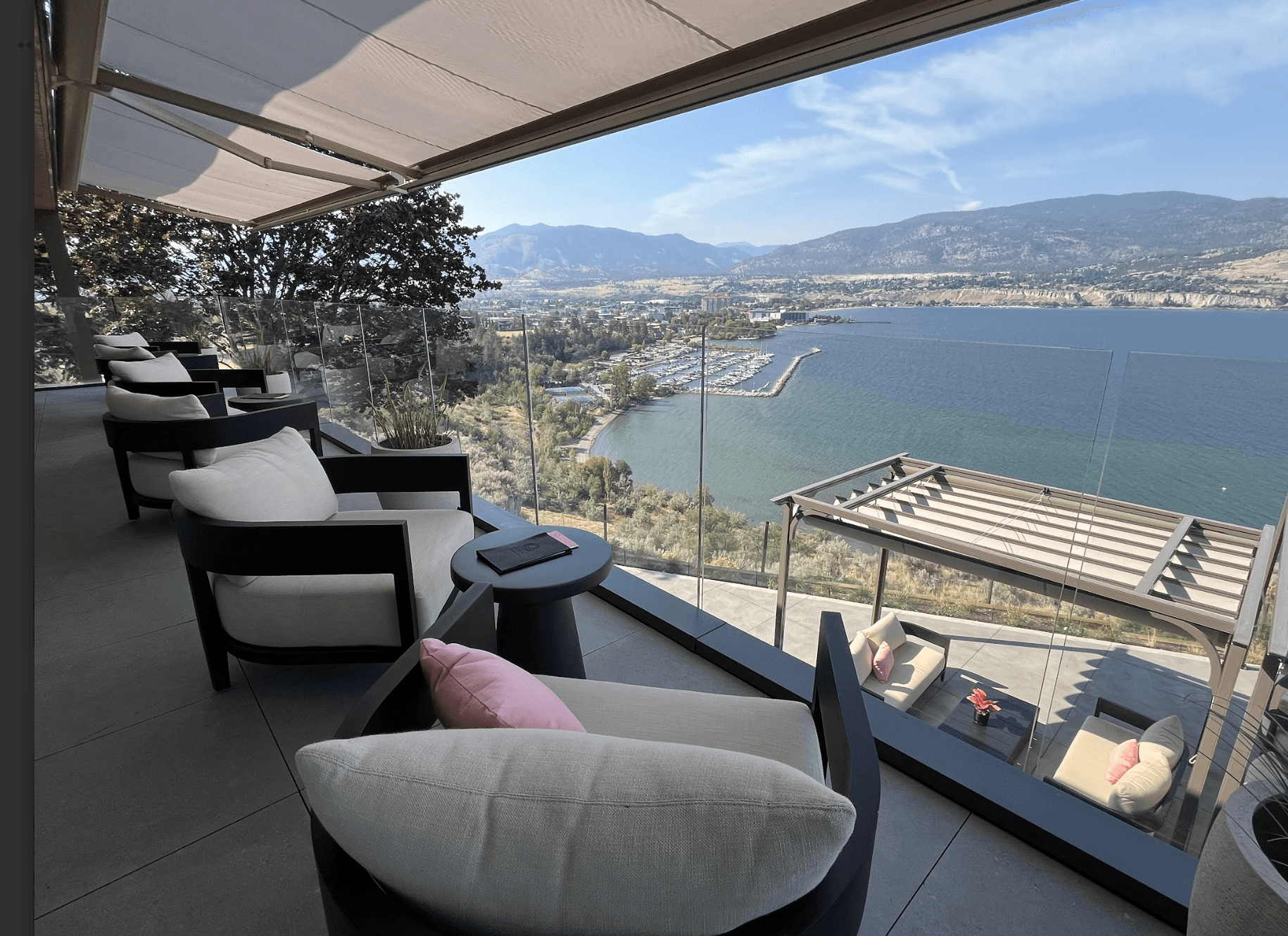
Glass railings and cable railings sit on opposite sides of the same idea: keep the view, lose the visual clutter. Both deliver clean sightlines compared to wood pickets or solid panels. The similarities mostly end there.
Cost, maintenance, climate fit, wind behaviour, and what your municipality will let you install are different for each. For a home in Vancouver, the Fraser Valley, Whistler, Squamish, or anywhere on the BC coast, those differences matter more than they would in a drier inland climate.
This guide compares glass railings and cable railings across the factors that drive the decision: pricing, daily upkeep, BC Building Code compliance, view quality, wind protection, and the use cases where each system fits best.
For a broader look at the railing styles available in BC homes, see our guide to types of glass railings.
Glass Railing vs Cable Railing at a Glance
Before getting into the details, here is how the two systems compare across the factors most BC homeowners care about.
Factor | Glass Railings | Cable Railings |
|---|---|---|
Cost (installed) | $250 to $400 per linear foot | $150 to $250 per linear foot |
View | Fully transparent panels | Thin cables that visually recede |
Wind protection | High (full barrier) | None (air passes through) |
Daily appearance | Shows fingerprints and water spots | Hides surface grime |
Structural maintenance | None after installation | Annual tension checks |
Lifespan with proper care | 15 years or more | 15 to 20 years |
Best climate fit | Coastal, exposed sites | Sheltered or inland sites |
BC Code compliance | Permitted with proper engineering | Permitted; Vancouver may apply extra rules |
The rest of this guide explains what is behind each row.
How Each System Works
Both systems are structured around the same goal: meeting BC Building Code load and opening requirements while preserving the view. They get there in different ways.
Glass Railings
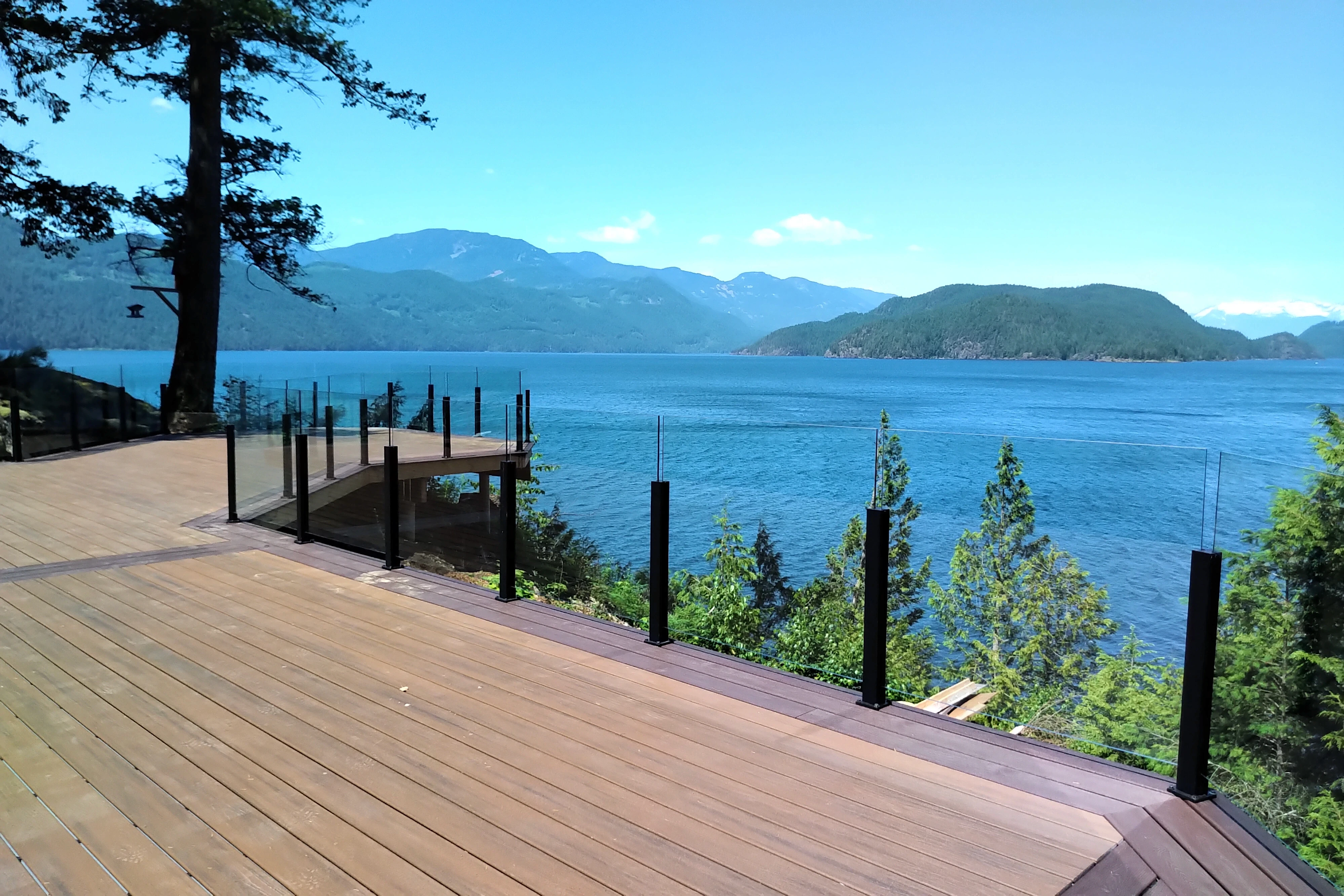
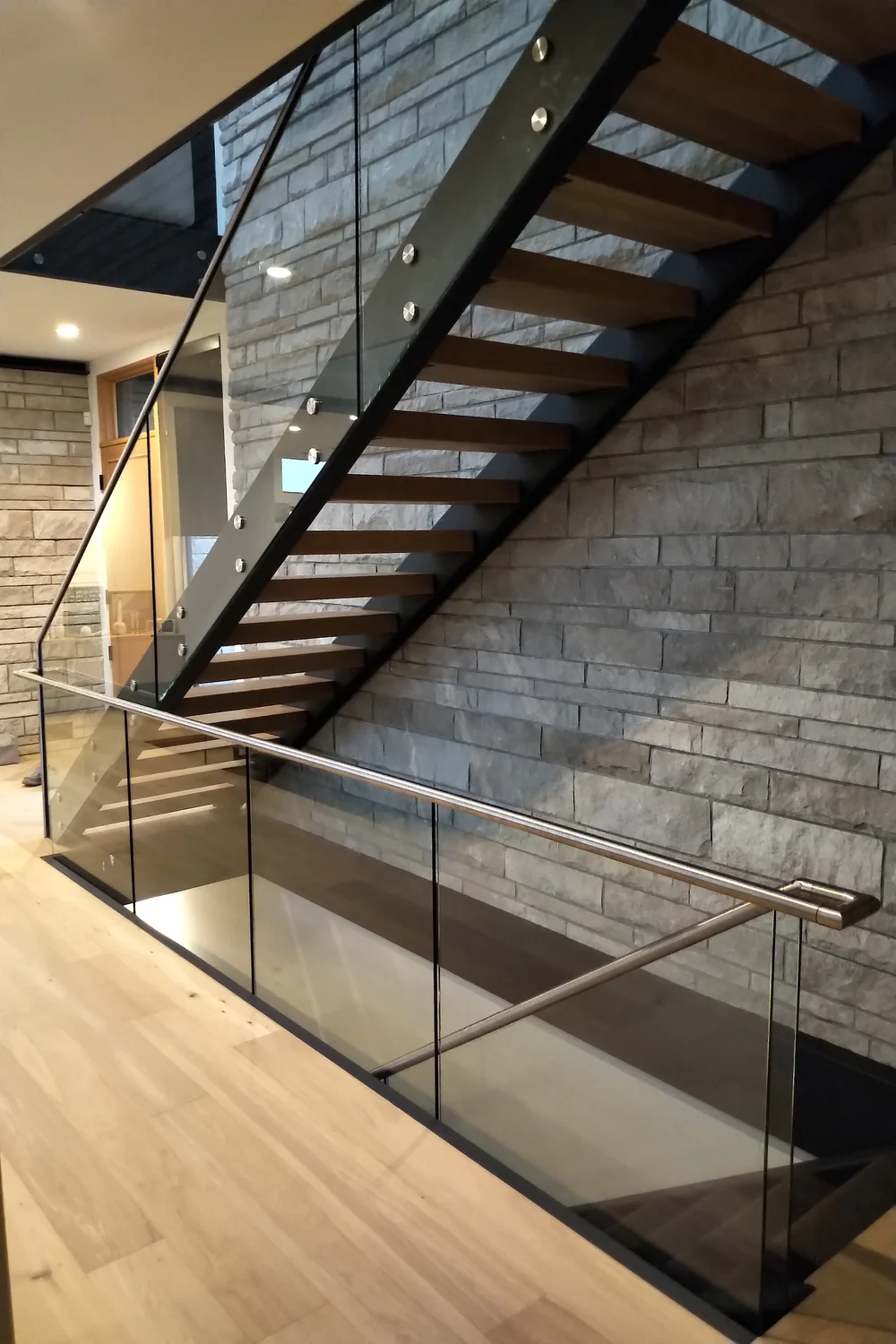
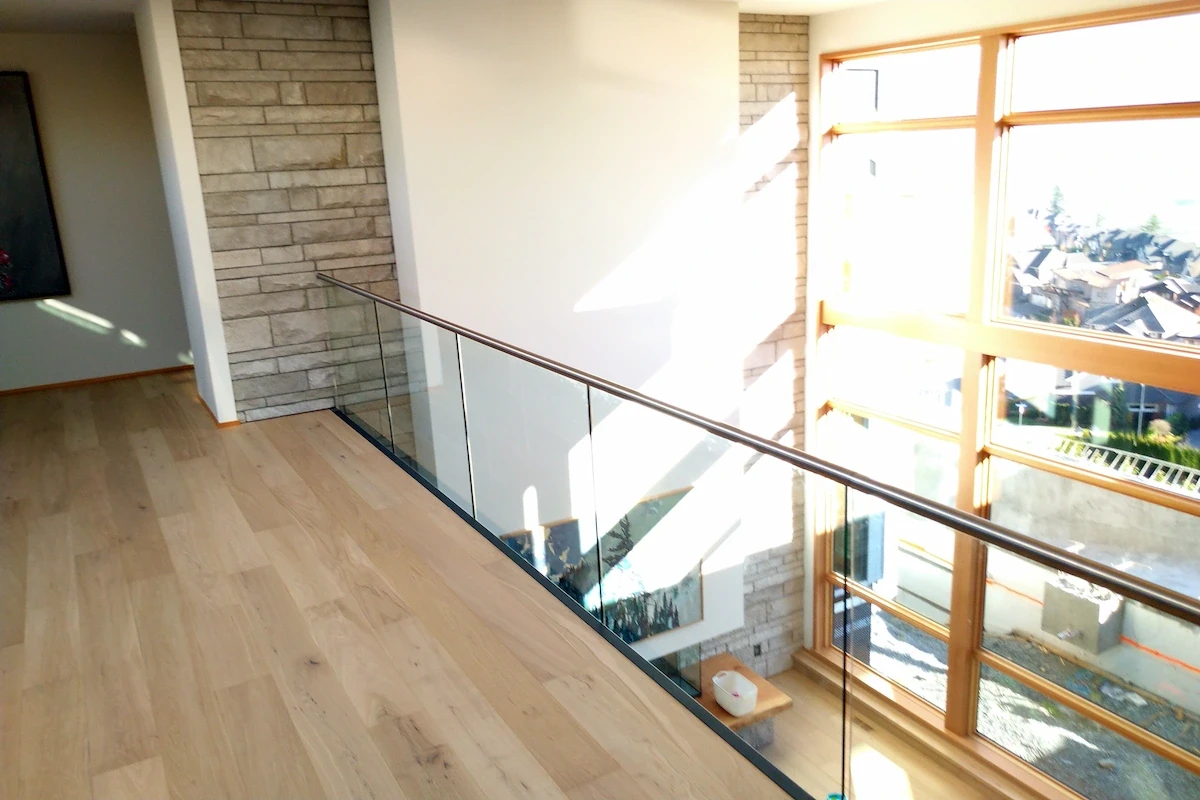
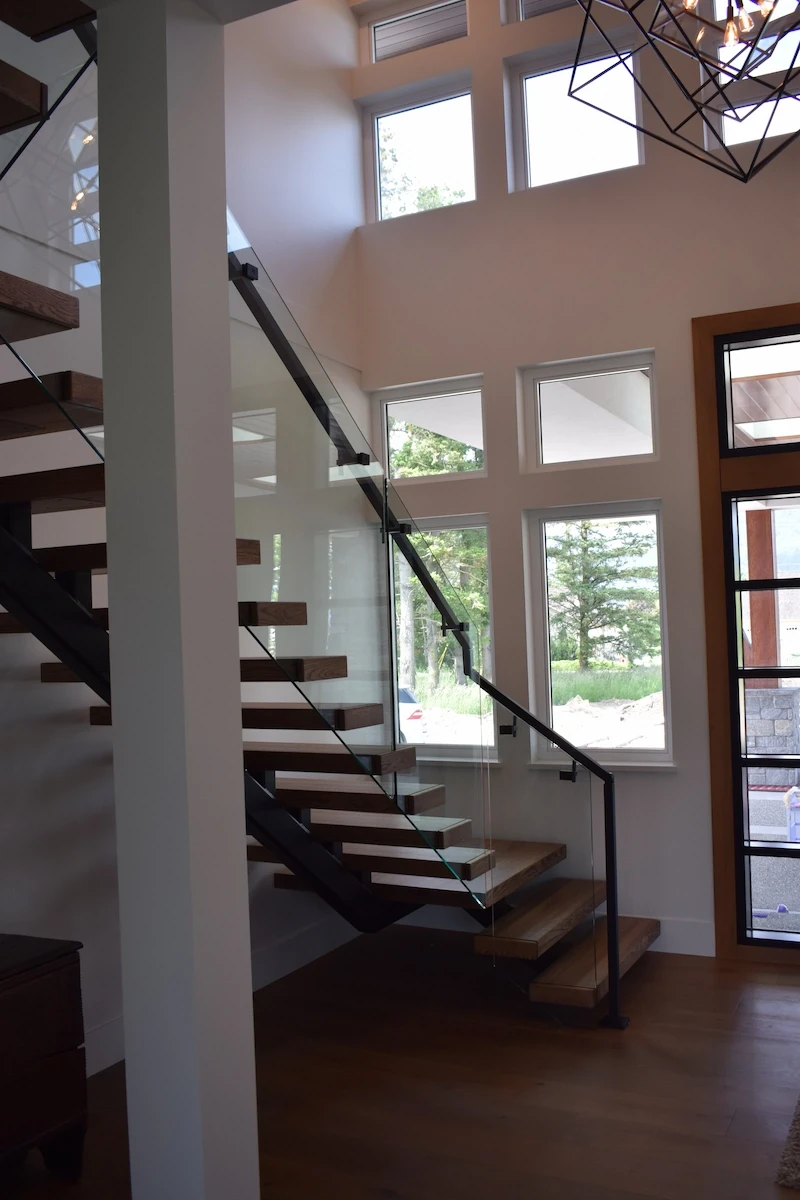
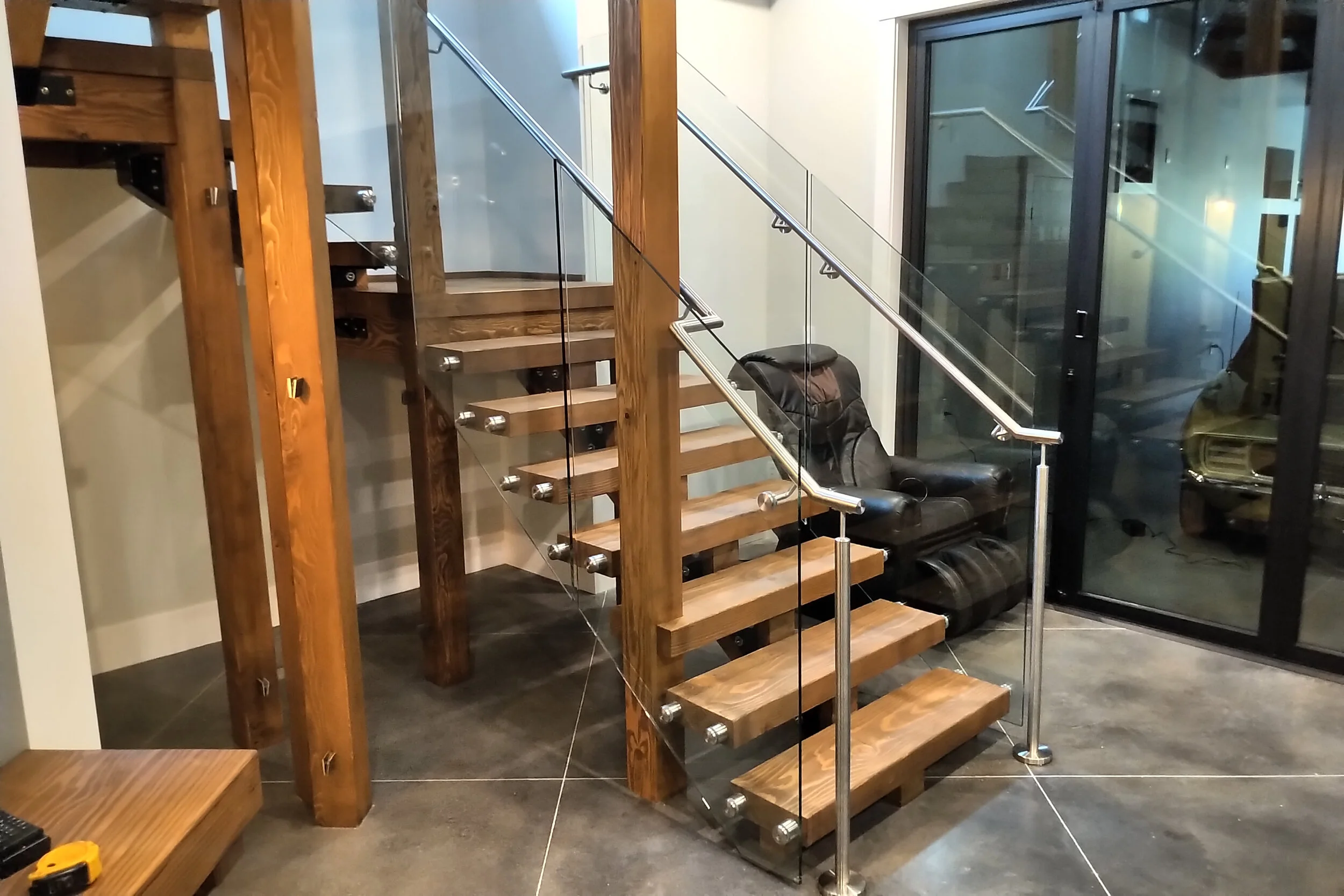
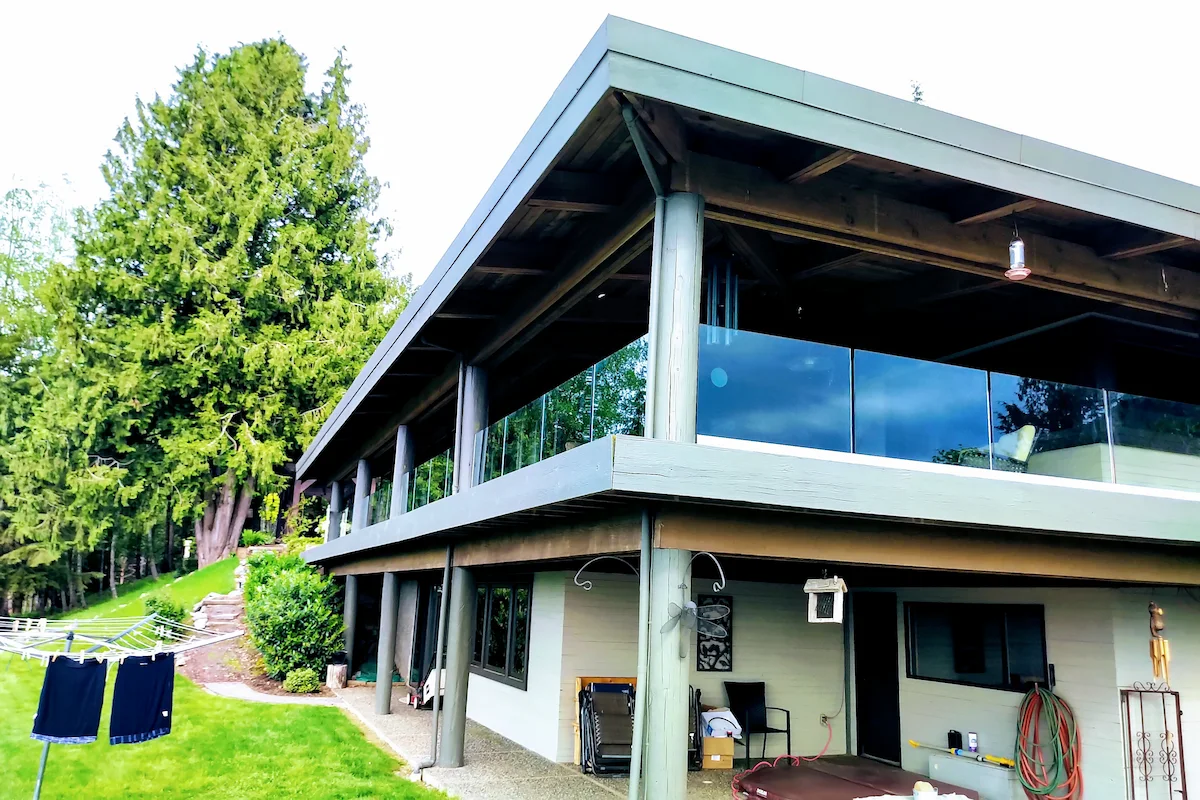
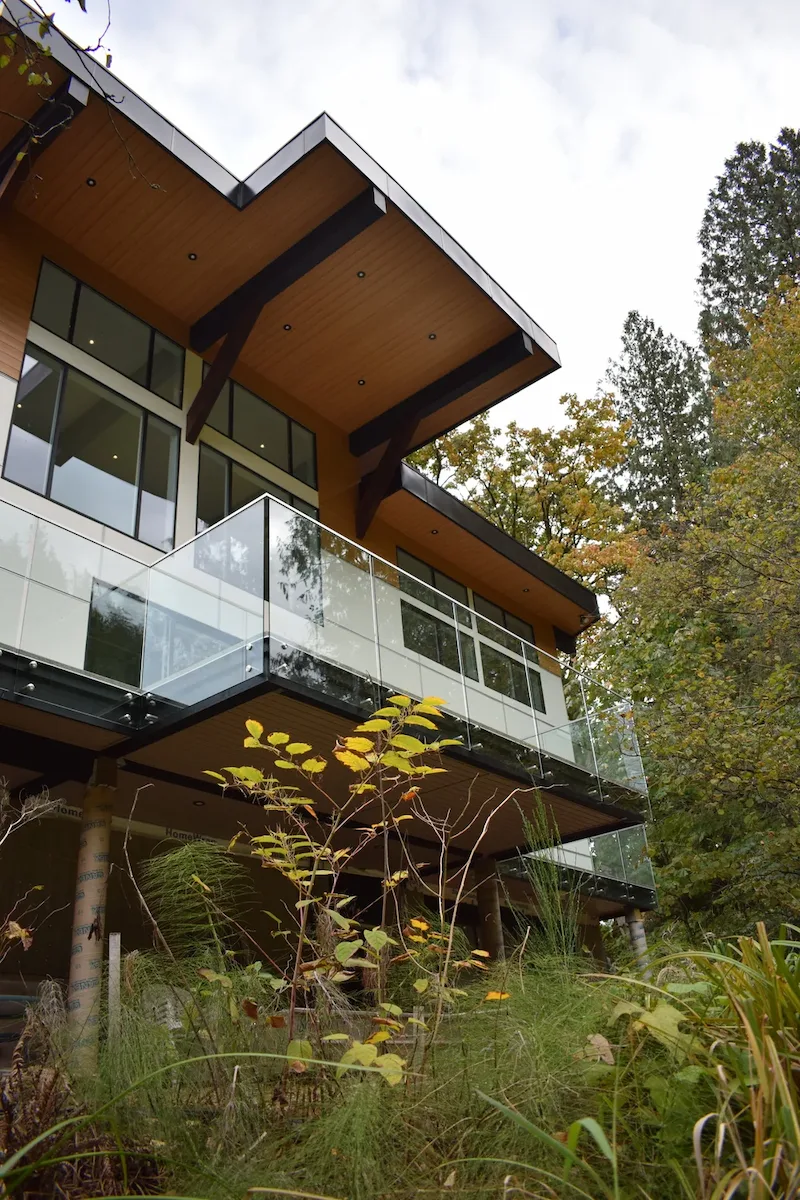
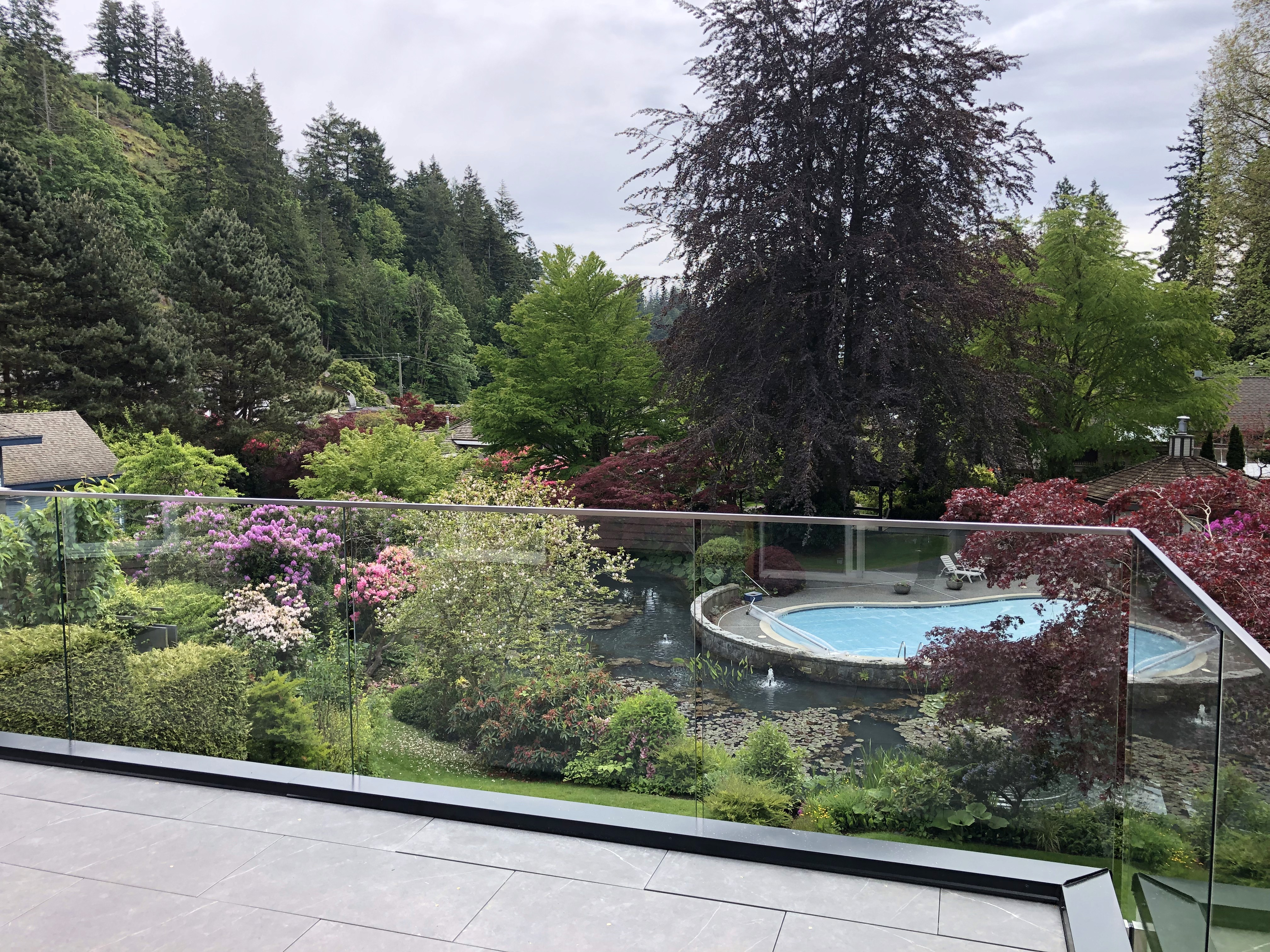
A glass railing system uses 12mm safety glass panels as the primary barrier. The panels are secured at the base by hardware, and the rest of the panel acts as the guard.
Tenmar installs two main configurations:
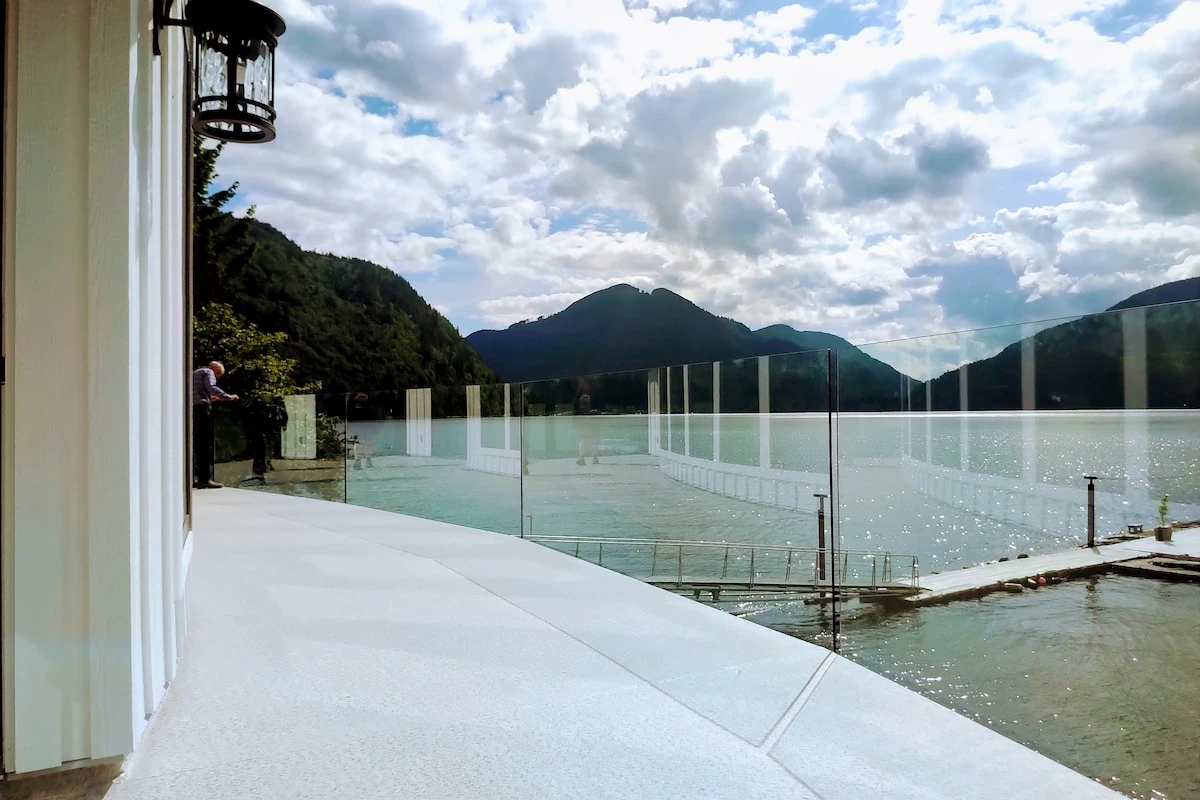
Frameless: 12mm glass panels held by concealed base hardware. No posts. No top rail. Maximum transparency.
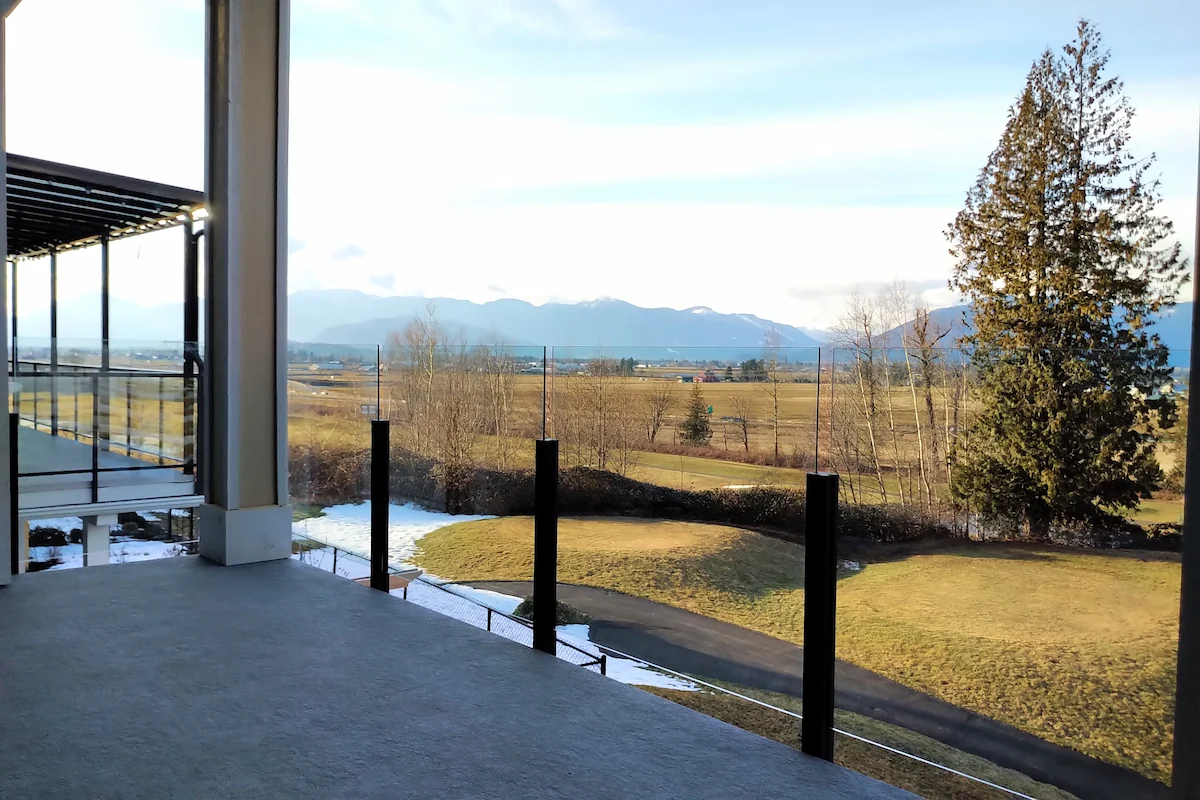
Semi-frameless: 12mm glass panels between aluminum posts spaced no more than 42 inches apart, with an optional slim top rail.
Both options are detailed on our frameless glass railings and semi-frameless railings service pages. For a wider view of styles, mounting hardware, and finish options, see our overview of glass railing designs.
Cable Railings
A cable railing system uses stainless steel cables threaded horizontally between posts. The posts carry the structural load. The cables fill the openings between posts and the top rail.
Cables must be tensioned tightly enough that the spaces between them stay within code. Stainless cables stretch slightly over time, which is why annual tension checks are part of a cable system's lifecycle.
Cost Comparison
Pricing for both systems varies by hardware grade, layout complexity, post spacing, and site access. Published ranges in the BC market land in similar territory across sources.
Glass Railing Pricing
Frameless: $300 to $400 per linear foot installed
Semi-frameless: $250 to $350 per linear foot installed
These ranges reflect installed costs in BC, including hardware, 12mm safety glass, and professional installation.
Cable Railing Pricing
Cable railings typically install for $150 to $250 per linear foot, depending on post material, finish grade, and project complexity. All-stainless post systems sit at the higher end of that range. Wood-framed cable systems with stainless cables sit at the lower end.
What Drives Cost
Three factors move pricing more than anything else:
Hardware grade: Marine-grade 316 stainless costs more than 304 but resists salt-air corrosion in coastal applications
Layout complexity: Straight runs cost less than systems with multiple turns, gates, or stair transitions
Site conditions: Difficult access, structural prep, and unusual mounting surfaces add labour
For a deeper look at glass railing pricing in the Lower Mainland, see glass railing costs revealed.
View, Wind, and Privacy
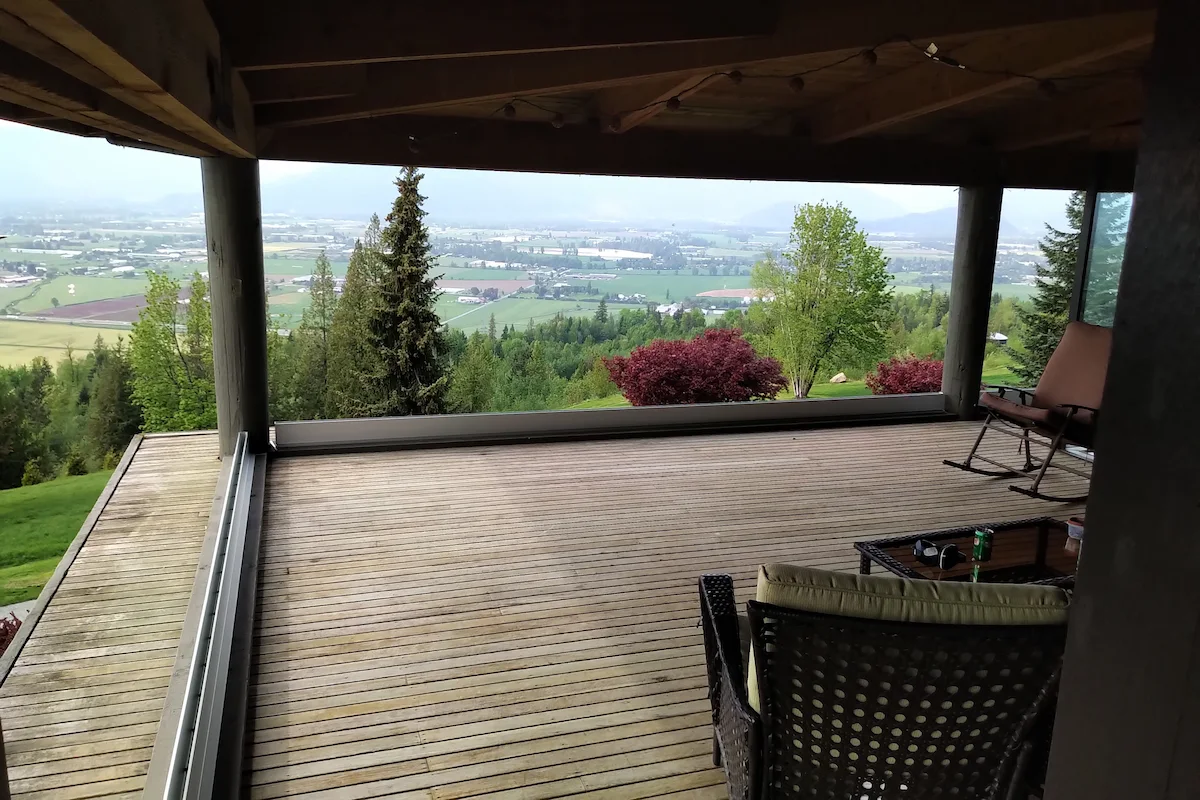
The view comparison is where most homeowners make their decision. Both systems maximize sightlines, but they do it differently. The climate where you live often changes which one feels right.
The View
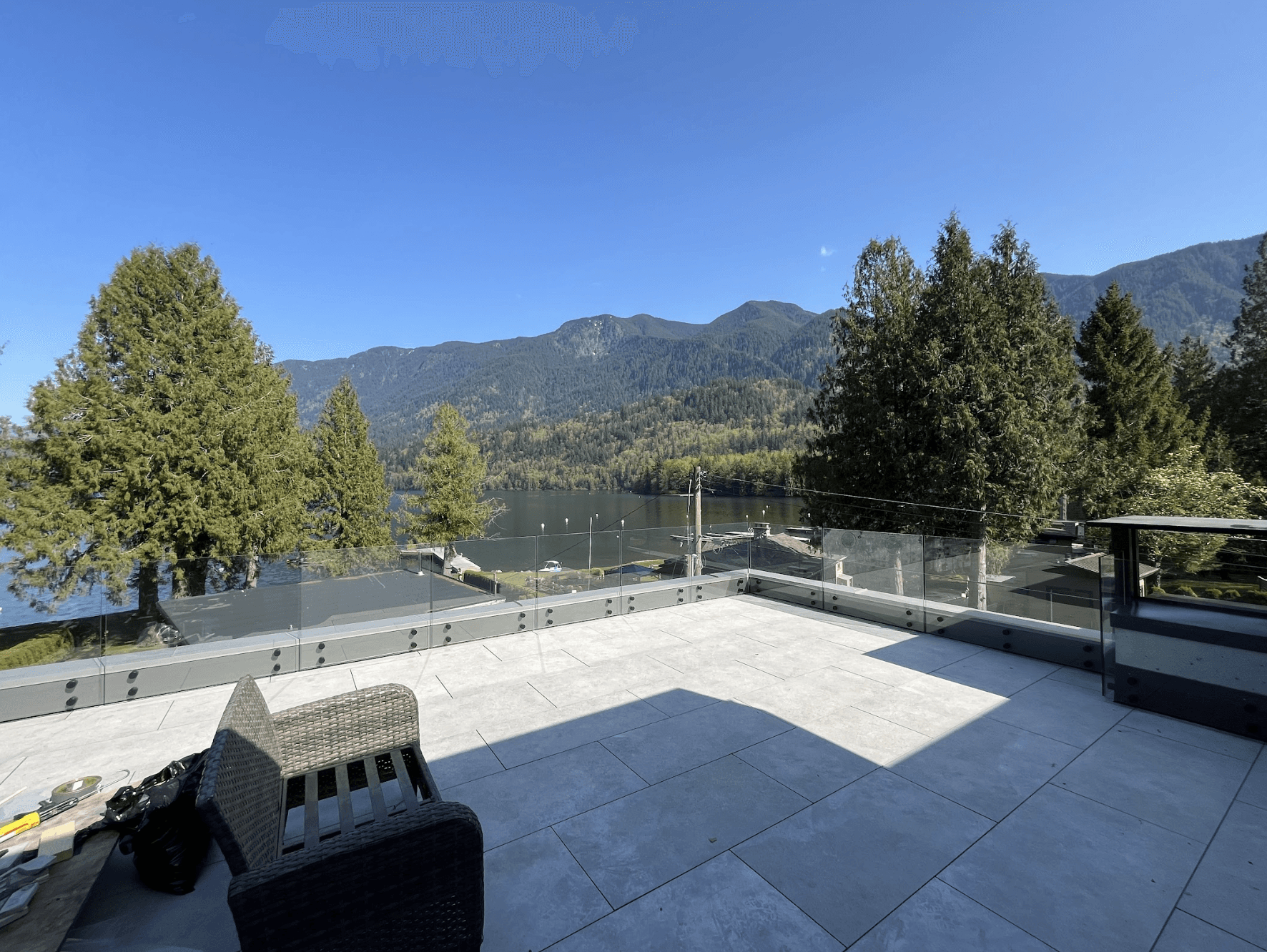
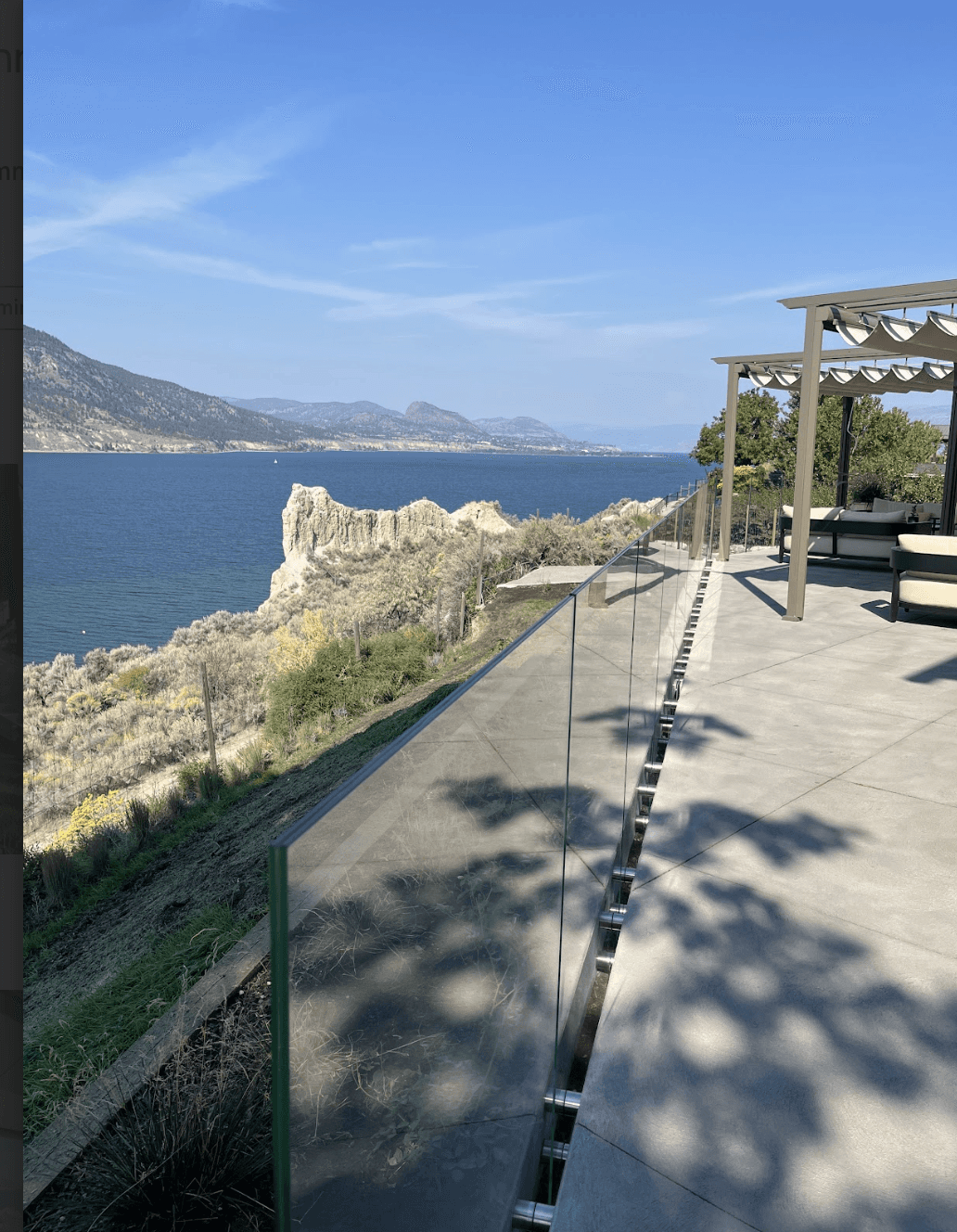
Clean glass disappears. From a chair on the deck, a frameless glass panel reads as nothing at all. Looking up from the yard, the same.
Cables work differently. The eye focuses past the cables to the view beyond, and the cables visually recede. Up close they are still visible, especially in raking light. From a distance they almost vanish.
Both options eliminate the visual interruption of pickets or solid panels. Which one feels cleaner depends on how close you typically sit to the railing and how you light the deck at night.
Wind
This is the single biggest functional difference between the two systems.
Glass blocks wind. Cable lets it through.
For an exposed deck in Coquitlam catching afternoon gusts off the Fraser River, or a White Rock waterfront patio facing the strait, glass turns an unusable space into a comfortable one. Cable on those same decks does nothing for wind.
For a sheltered backyard deck in Langley with mature trees on the windward side, cable's airflow keeps the space cooler in summer and avoids any greenhouse effect that solid glass can create on hot days.
For more on this trade-off, see our guide on glass railings for wind protection.
Fingerprints, Water, and Salt
Glass shows everything. Fingerprints, sea spray, pollen, water spots, and pet noses all appear on glass within hours. In coastal BC, salt residue is a constant low-level presence.
Cables hide most of that. The fine profile means there is less surface area for grime to land on, and what does land is barely noticeable from a distance.
This does not mean cable is maintenance-free. It means the maintenance burden looks different.
Maintenance in BC's Coastal Climate
Both systems need ongoing care. The work involved is different for each. For a deeper look at how Vancouver's 169 rainy days and salt-air exposure affect outdoor materials, the climate-specific guide breaks down the numbers behind why glass outlasts wood and metal in BC.
Glass Maintenance
Routine cleaning with mild soap, water, and a microfibre cloth handles standard buildup. Coastal homes will need to clean more often during salt-spray months, especially in winter.
Avoid abrasive cleaners. They scratch the surface and the damage is permanent. Frosted or textured glass shows fingerprints less than clear, which can reduce cleaning frequency in high-traffic areas.
Glass panels do not require structural maintenance. Once installed, the hardware does not need adjustment.
Cable Maintenance
Cable tensioning is the maintenance task that catches many owners off guard. Stainless cables stretch slightly with temperature changes and use. The spacing between cables can open up over time, which can push the system out of code compliance with the 100mm sphere rule.
Annual inspection and re-tensioning is the manufacturer-recommended baseline for most cable systems. In coastal BC, hardware also needs periodic checks for early corrosion at fittings and connection points.
Hardware Grade Matters for Both
For exterior installations on the BC coast, 316 marine-grade stainless steel is the right specification. Lower-grade hardware corrodes faster in salt air, regardless of which infill you choose.
BC Building Code: What You Can Install
Both glass and cable railings can meet BC Building Code requirements. The path to compliance is different for each, and your municipality may add restrictions on top of the provincial code.
The Core Rules That Apply to Both
BC Building Code Section 9.8 sets the requirements for guards on residential decks, balconies, and stairs (Government of British Columbia):
Guard height: 900mm (36 inches) minimum within dwellings; 1,070mm (42 inches) for exterior guards above 1.8m drop
Opening size: No opening can allow a 100mm sphere to pass through
Climbing: For guards protecting levels more than 4.2m above the adjacent surface, no element between 140mm and 900mm can facilitate climbing
The 100mm sphere rule is the key one for cable railings. Tension matters because if cables sag, the spacing widens and the system fails inspection.
Cable Railings Under BC Code
British Columbia adopted updated National Building Code language in 2018 that allows horizontal infill, including cable, for stairs, decks, and exterior guards in most residential applications. The change followed research from the National Research Council of Canada showing that the previous "no climbing" interpretation was not supported by injury data.
Important caveat: the City of Vancouver maintains its own Building By-law, which may apply additional restrictions on cable railings for specific guard situations. Always confirm requirements with the local building department before specifying cable for a Vancouver project.
Glass Railings Under BC Code
Glass railing systems must use 12mm safety glass conforming to the Canadian safety glazing standard. Frameless installations require engineer-sealed shop drawings showing how the system handles the load requirements without a top cap.
Tenmar's frameless systems are engineered to pass inspection in municipalities including Vancouver, Burnaby, and across the Fraser Valley.
For the full code overview, see our guide on BC Building Code requirements for glass railings.
Which System Fits Your Project
The honest answer depends on the property, not on which option is "better" in the abstract.
Glass Is the Better Fit When
The deck is exposed to wind and you want to use it through shoulder seasons
You have a strong view to preserve, such as waterfront, mountain, or valley
Children or pets are part of the household and climbability matters
You want minimal structural maintenance over the next 15 years or more
Privacy is important in part of the run, and frosted or textured options would help
The aesthetic goal is contemporary, modern, or West Coast luxury
Cable Is the Better Fit When
The deck is sheltered and airflow is welcome on hot days
You prefer an industrial or West Coast cabin aesthetic
Annual tensioning is acceptable as part of regular property care
Budget is the primary constraint and the project is small enough that the cost difference matters
The site is inland and salt-air corrosion is less of a concern
For most residential decks across Vancouver, Surrey, and the Fraser Valley, glass tends to be the more durable long-term choice. Wind exposure, view priority, and low structural maintenance all favour it. Cable suits specific use cases well, but it is not the default for the BC coast.
The Tenmar Process for Glass Railings
Every glass railing project begins with on-site measurement. Hardware is installed first, then panels are fabricated to exact dimensions. From measurement to completed installation, the full process takes 6 to 8 weeks.
The process for both system types follows the same sequence:
On-site measurement and design confirmation
Hardware installation
Glass fabrication to exact dimensions
Panel installation
Final inspection and finish
The timeline reflects the fabrication step. Custom panels are cut to exact measurements and cannot be adjusted on site, which is why the measurement step matters as much as it does.
Explore the full range: frameless glass railings, semi-frameless railings, curved glass railings and privacy walls.
Frequently Asked Questions
Are cable railings allowed in Vancouver?
Cable railings are permitted in BC under the 2018 National Building Code adoption. The City of Vancouver maintains its own Building By-law that may apply additional restrictions, particularly for elevated guards. Always confirm with the local building department before specifying cable for a Vancouver project.
How long do glass railings last compared to cable?
Both systems can last 15 years or more with proper care. Glass requires periodic cleaning but no structural adjustment. Cable requires annual tension checks and occasional fitting replacement. Hardware grade affects lifespan more than infill type for both systems in coastal BC.
Do glass railings actually block wind?
Yes. Solid 12mm glass panels block wind almost completely, which is why glass is the standard for exposed coastal and mountain decks. The trade-off is reduced airflow on hot days. Some homeowners offset this with partial glass runs combined with open sections.
Is cable cheaper than glass?
Generally, yes. Cable typically installs for $150 to $250 per linear foot, while glass ranges from $250 to $400. The gap narrows with high-end stainless post systems, which can approach the cost of semi-frameless glass when fully specified.
Are cable railings safe for kids?
BC Building Code requires no element between 140mm and 900mm to facilitate climbing on guards above 4.2m. Cable can meet this requirement when tensioned and spaced correctly. Glass has no climbable elements at all, which is one reason it is often preferred for elevated decks with young children.
Which option needs more cleaning?
Glass shows more daily marks. Fingerprints, water spots, and salt residue all appear quickly. Cable hides most surface grime due to its thin profile. However, cable needs annual tension checks, which glass does not. Total time investment depends on how visible cleanliness needs to be for your household.
Can I switch from cable to glass later?
Often, yes. If the existing posts are structurally sound and the layout works for glass panels, conversion is possible. Most projects involve replacing the infill while keeping the structural framework. A site assessment confirms what is involved for your specific setup.
Key Takeaways
Glass and cable railings both maximize views, but they handle wind, maintenance, and BC code requirements very differently
Glass railings cost $250 to $400 per linear foot installed in BC; cable railings range from $150 to $250 per linear foot
BC Building Code Section 9.8 permits both systems, though the City of Vancouver may apply additional restrictions on cable through its municipal by-law
Glass blocks wind and requires no structural maintenance; cable allows airflow but needs annual tension checks to stay within the 100mm sphere rule
For exposed BC decks with strong views and year-round use, glass is the more practical long-term choice; cable suits sheltered, inland, or budget-driven projects
Transform Your BC Deck
Choosing between glass and cable comes down to how you use the space. Wind exposure, view, household needs, and long-term maintenance all factor in.
Whether you want maximum transparency with frameless glass, balanced openness with semi-frameless, or the curved geometry of a custom design, Tenmar engineers each system to BC Building Code and the realities of the coastal climate.
Ready to discuss your project? Contact Tenmar to get a quote.