Educational
Glass Railing Designs: Styles, Mounts, and Options for Every Space
Published:
Last updated:
Glass railing designs have moved well beyond basic clear panels on a deck. Today, homeowners and builders choose from frameless systems, frosted panels, tinted glass, and a range of hardware finishes that shape how a space looks and feels. The right design turns a glass railing into a feature that complements the home rather than competing with it.
This guide covers the most popular glass railing styles, how mounting hardware changes the overall look, which glass types suit different spaces, and what homeowners in British Columbia should know before committing to a design. For a broader look at why glass is the dominant choice in Vancouver, see our guide to the benefits of glass railings in Vancouver.
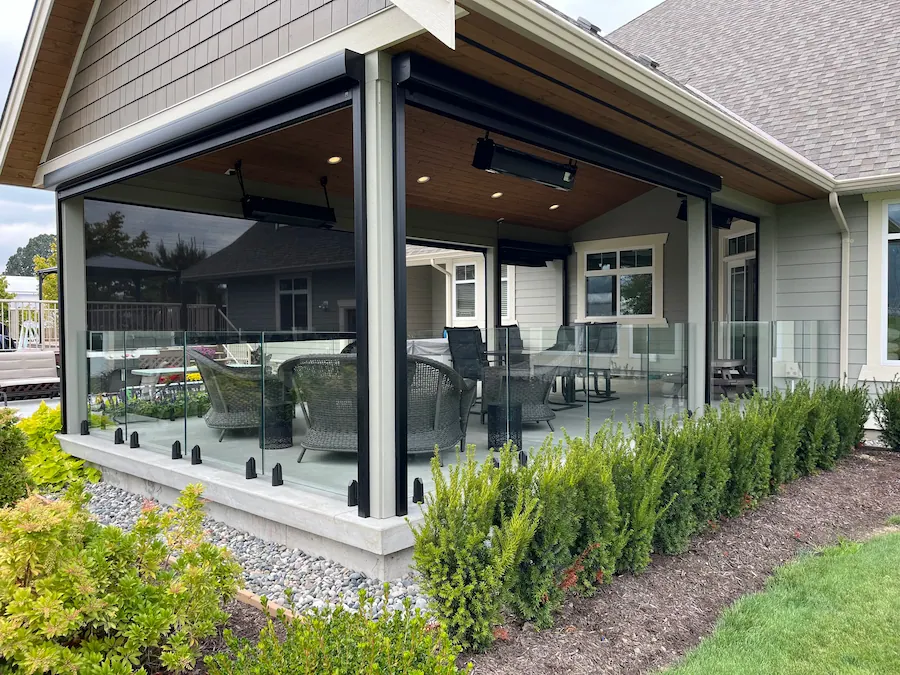
Popular Glass Railing Designs
Glass railings fall into distinct categories based on how much hardware is visible. Each style creates a different visual effect, and the choice often comes down to the balance between openness and structure.
Frameless Glass Railings
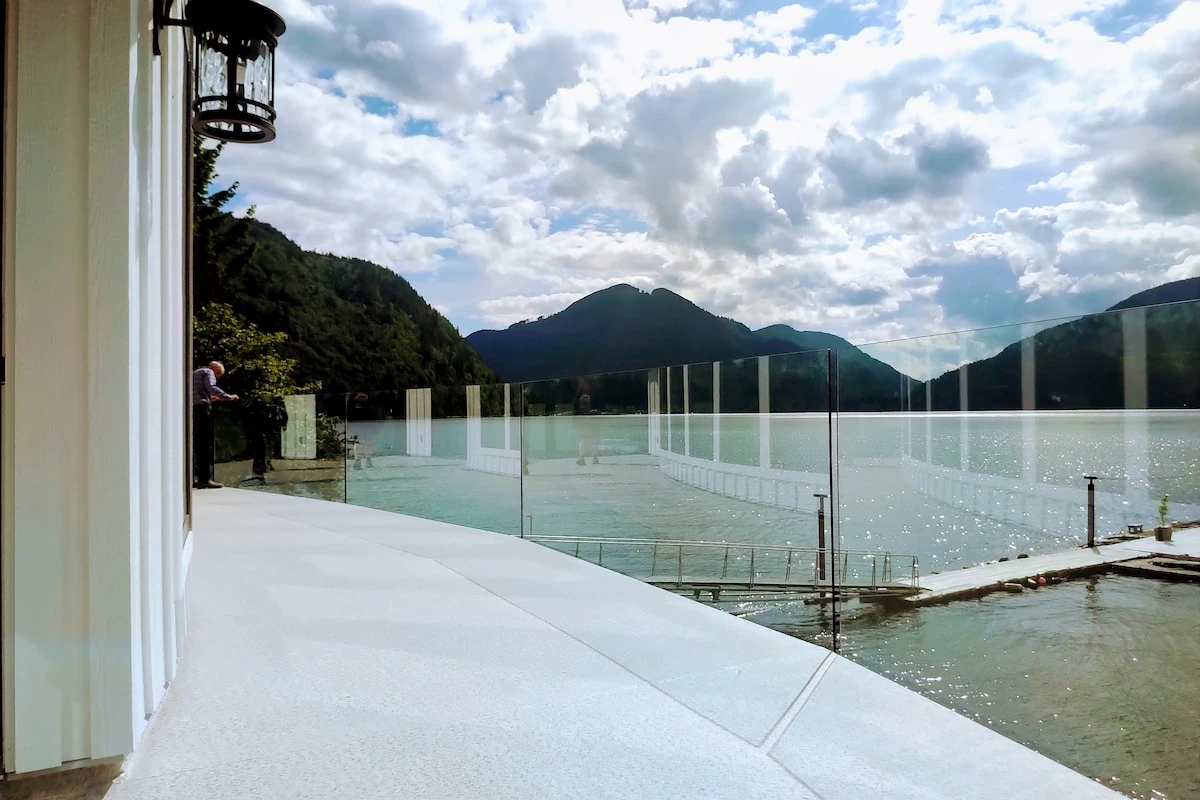
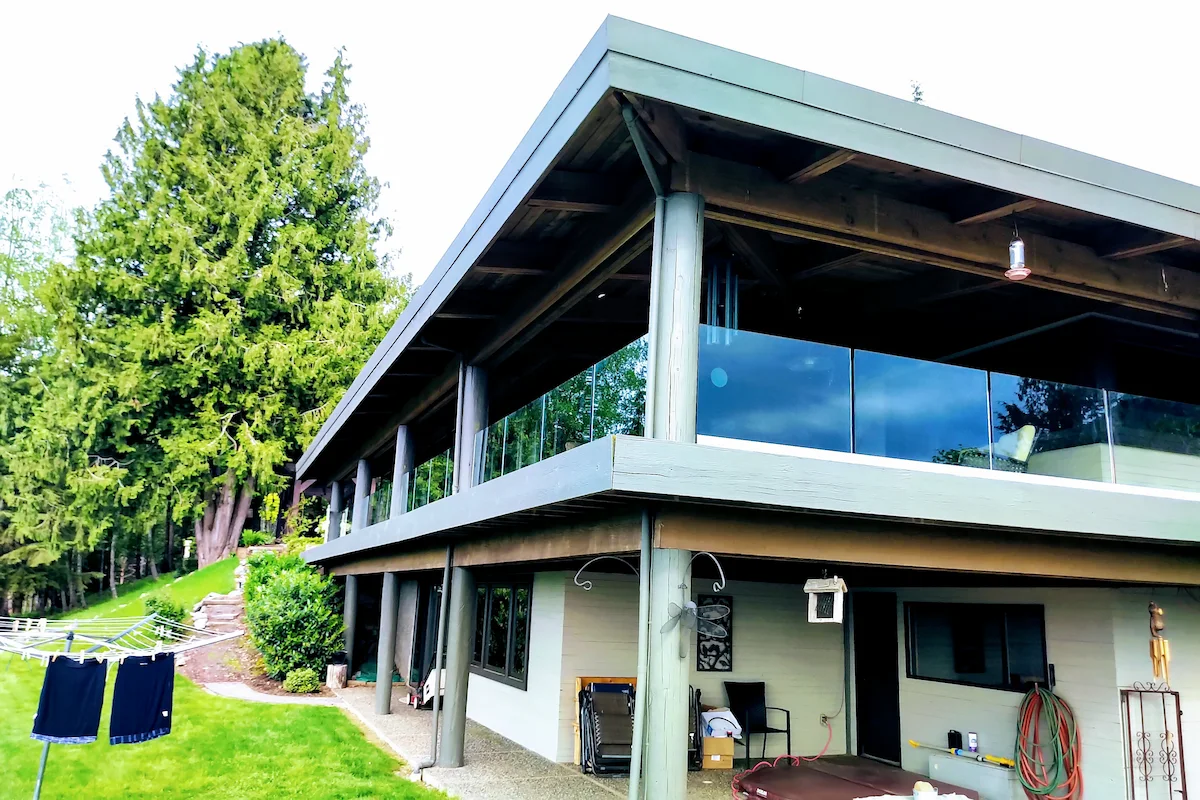
Frameless glass railings use minimal hardware to hold large glass panels in place. The result is an uninterrupted sightline with no posts or top rail breaking the view.
These systems typically use 12mm glass panels for structural integrity. The glass does the heavy lifting visually and structurally, which is why frameless glass railings have become the most specified style in residential projects. According to industry data, frameless systems now account for roughly 70% of the glass railing market by revenue (Verified Market Reports, 2024).
Frameless designs work especially well on decks, balconies, and waterfront properties where preserving the view is the main priority. Three different mounting options (base shoe, standoffs, and spigots) shape the final appearance. More on those below.
Semi-Frameless Glass Railings
Semi-frameless railings pair glass panels with aluminum posts spaced at regular intervals. The posts provide structure while the glass preserves the view between them.
This design shows more hardware than a fully frameless system, but it offers a clean, defined look that suits many architectural styles. All posts are aluminum, spaced a maximum of 42 inches apart. Semi-frameless systems are a practical choice for longer spans, staircase runs, and properties where the homeowner wants a slightly more traditional frame around the glass.
Curved Glass Railings
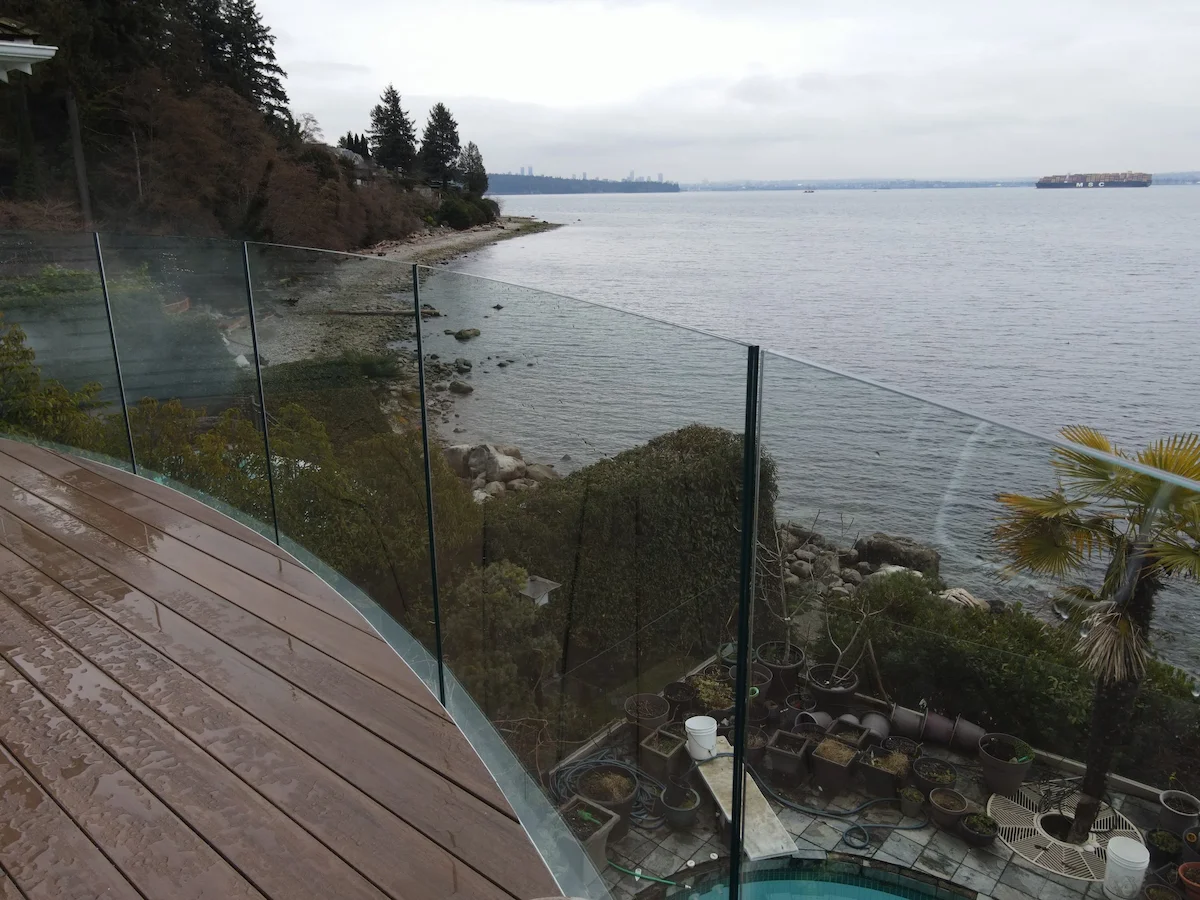
Curved glass railings use custom-bent glass panels that follow the shape of rounded decks, balconies, or spiral staircases. These panels require precision measurement and fabrication to match the exact curve of the structure.
Curved systems create a high-end, architectural statement. They are less common than straight-panel designs, which means they stand out on properties that use them. If a deck or balcony has a rounded edge, curved glass is the only way to maintain a consistent railing line without segmented flat panels creating visible angles.
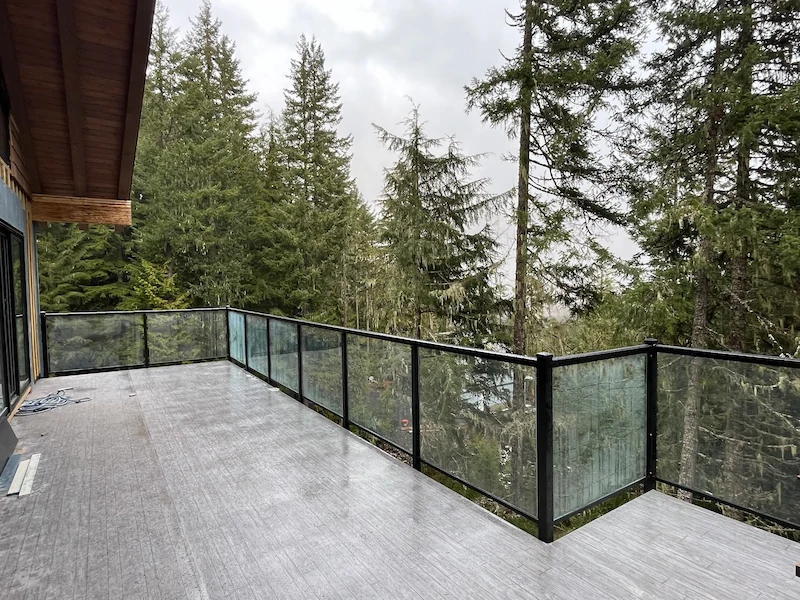
Metal-Framed Glass Railings
Metal-framed glass railings surround each panel with a visible frame, typically stainless steel or aluminum. The frame becomes a design element in itself, creating defined lines and a more structured appearance.
Hardware finishes play a larger role in this design. Matte black frames create high contrast against clear glass. Brushed stainless steel offers a neutral, modern look. Bronze and champagne tones add warmth that pairs well with natural wood decking. Metal-framed designs suit homeowners who want visible structure and a slightly more traditional feel.
How Mounting Hardware Shapes the Design
The mounting system affects how a glass railing looks just as much as the glass itself. Three common systems are used in residential and commercial installations, and each creates a different visual effect.
Base Shoe Systems
A base shoe mounts glass into a continuous channel at the base of the panel. The channel sits flush with the deck surface, and the glass rises directly from it with no visible posts or clamps.
This creates the cleanest possible look. Base shoe systems are the most popular choice for frameless designs where minimal hardware is the goal. They work well on flat surfaces like decks, patios, and balcony edges. Drainage details matter with base shoe systems, especially in rainy climates, because water can collect in the channel if it is not properly designed.
Standoff Systems
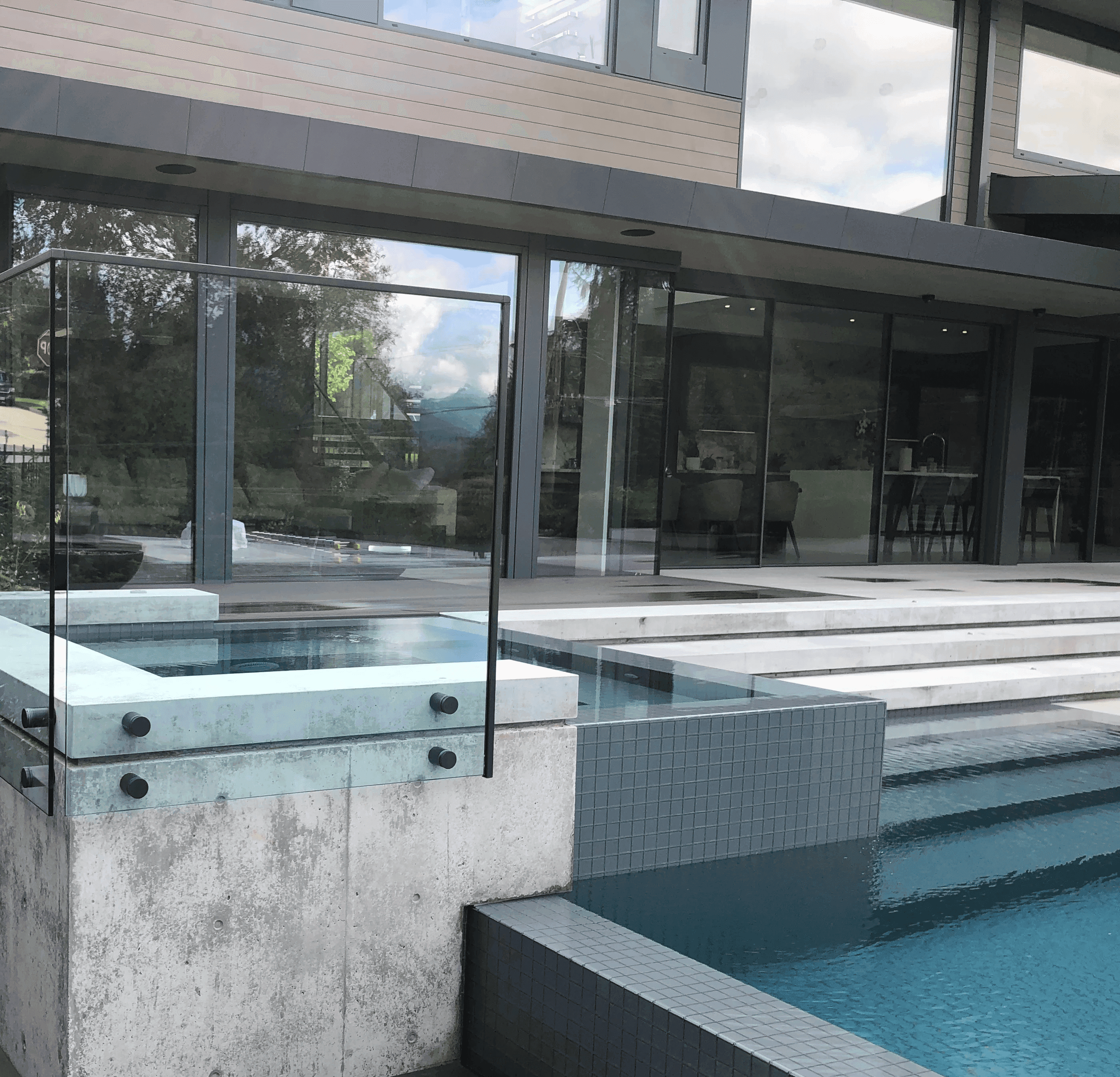
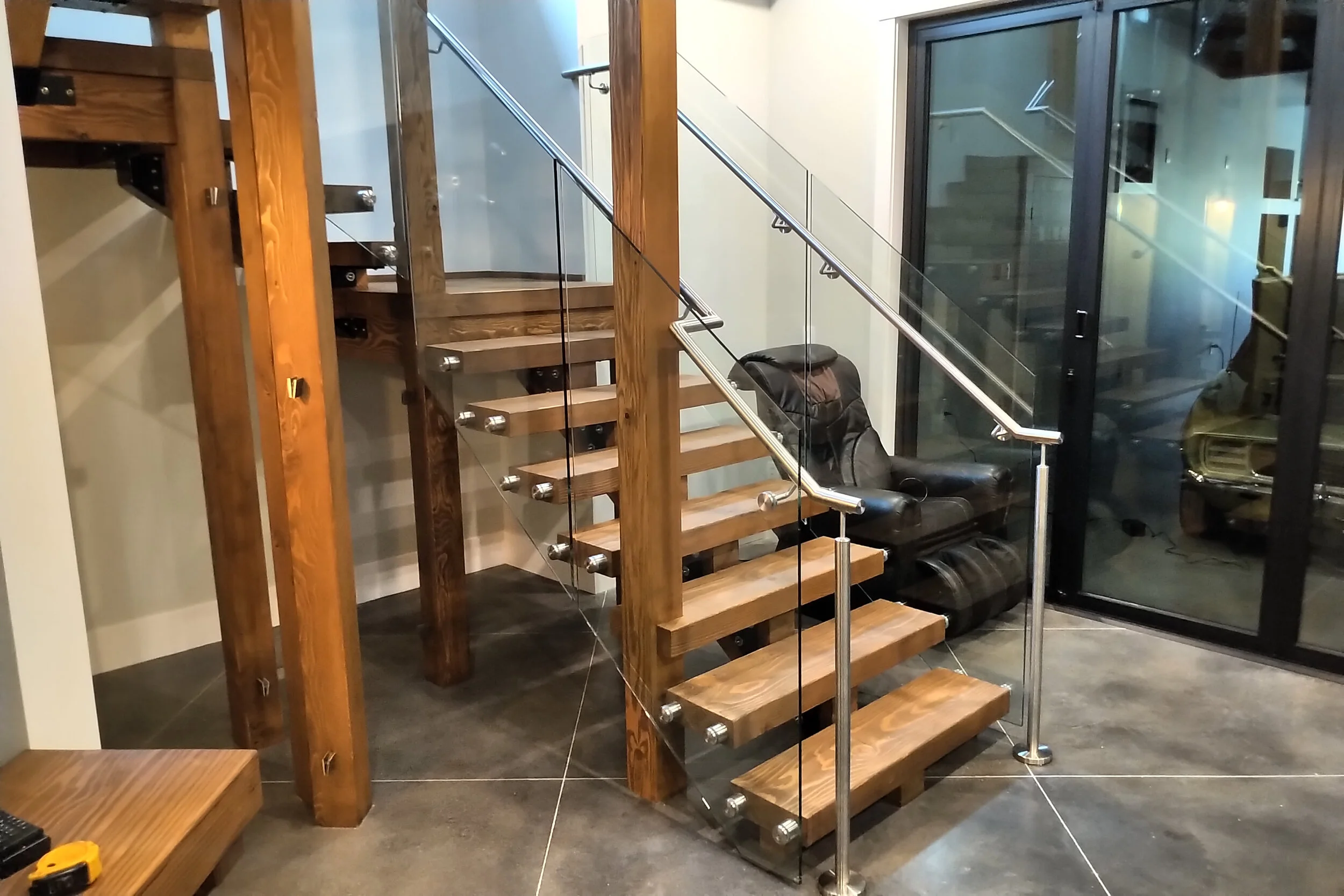
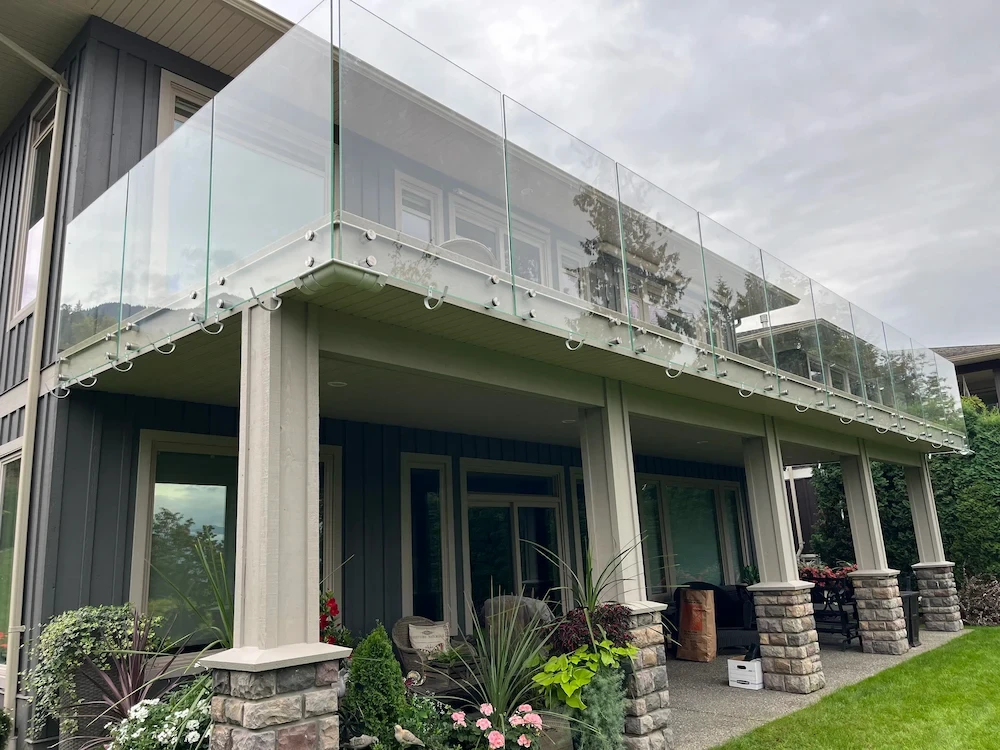
Standoffs anchor glass to the deck face using pairs of stainless or powder-coated hardware. The result is small, circular mounting points visible on the glass surface.
Standoffs add a subtle industrial detail that some homeowners prefer. Each mounting point is compact, so the overall effect remains minimal. This system works well for both interior and exterior applications and offers flexibility when mounting to different surface types.
Spigot Systems
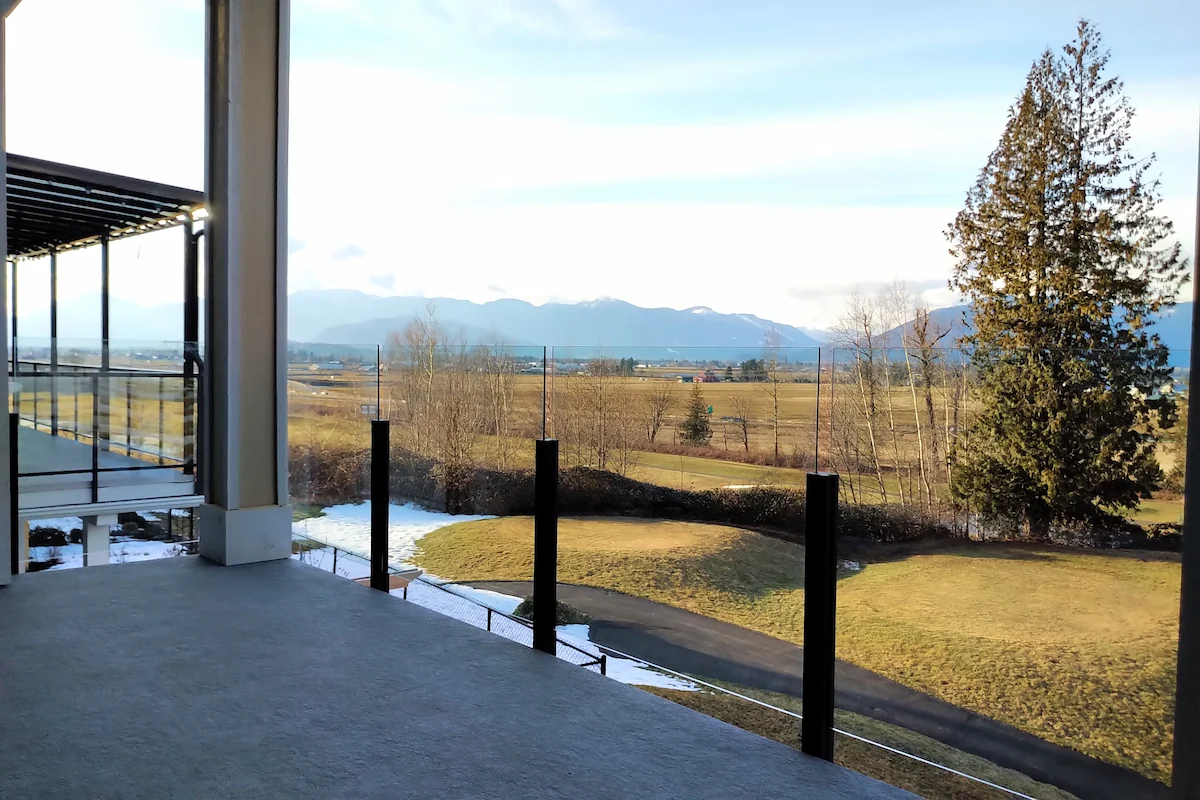
Spigots clamp glass in pairs of surface-mounted hardware at the base of each panel. Unlike a continuous base shoe channel, spigots are individual mounting points spaced along the railing run.
Spigot systems create a floating-glass effect without the continuous channel of a base shoe. They are common in commercial and multi-family applications. The visible hardware at the base adds a clean, architectural detail.
Choosing between these systems often comes down to the desired level of hardware visibility and the surface they mount to. A deck railing installation specialist can advise on which system suits the structure and aesthetic goals of a specific project.
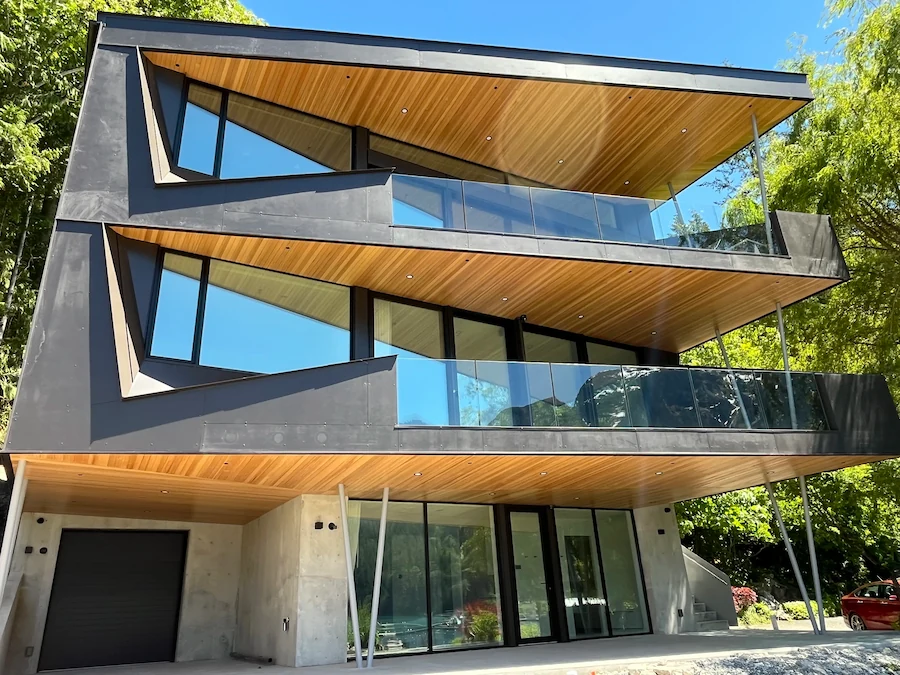
Glass Types That Change the Look
The type of glass determines transparency, privacy, light diffusion, and the overall feel of the railing. Each option serves a different purpose.
Clear Glass
Clear glass provides maximum transparency and light. It is the standard choice for outdoor glass railings on decks and balconies where preserving the view is the priority.
The trade-off is visibility of fingerprints, water spots, and dust. Coastal properties will need more frequent cleaning to keep clear panels looking sharp. For view-driven spaces, this is still the most popular choice.
Low-Iron Glass
Standard clear glass has a faint greenish tint, most visible at the panel edges. Low-iron glass removes this tint, providing true colour clarity.
The difference is subtle when looking through the panel face-on but becomes obvious at the edges, especially on thicker 12mm panels. Low-iron glass is a popular upgrade for custom homes and luxury properties where colour accuracy matters. It costs slightly more than standard clear glass.
Frosted Glass
Frosted glass diffuses light while adding privacy. The frosted effect is created through sandblasting or acid-etching.
This option works well for ground-floor patios, pool surrounds, patio glass railings, and interior staircases where partial screening is helpful. Frosted panels also hide fingerprints and water spots better than clear glass, reducing maintenance effort.
Tinted Glass
Tinted glass is available in bronze, grey, and other shades. It reduces glare, adds a design accent, and provides subtle privacy without fully blocking the view.
Tinted panels work well on sun-exposed decks and west-facing balconies where afternoon glare is an issue. The colour can also complement exterior finishes like siding, trim, and deck stain. Bronze tint pairs naturally with warm-toned wood, while grey tint suits cooler, contemporary colour palettes.
Glass Railing Designs by Application
The right glass railing design depends on where it will be installed. Each application has its own structural, visual, and code-related considerations.
Deck and Patio Railings
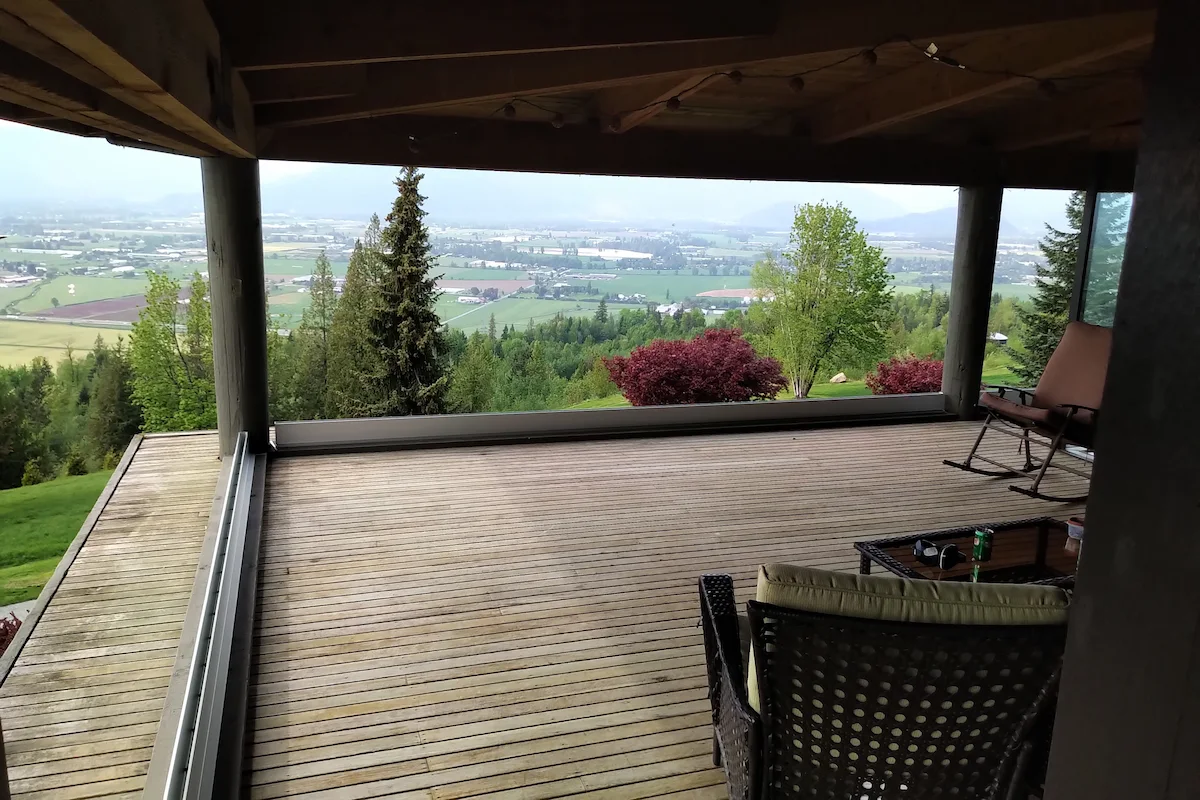
Frameless and semi-frameless designs are the most common choices for decks. View preservation is typically the main priority, and glass panels serve double duty as wind barriers in exposed locations - a key reason glass tends to outperform cable on exposed BC decks.
Glass railings for decks must comply with local building codes. In BC, guards are required for any deck with a drop of 600 mm (24 inches) or more above grade (BC Building Code 2024, Division B, Section 9.8). The minimum height depends on the elevation of the deck, which is covered in detail in the code section below.
Staircase Railings
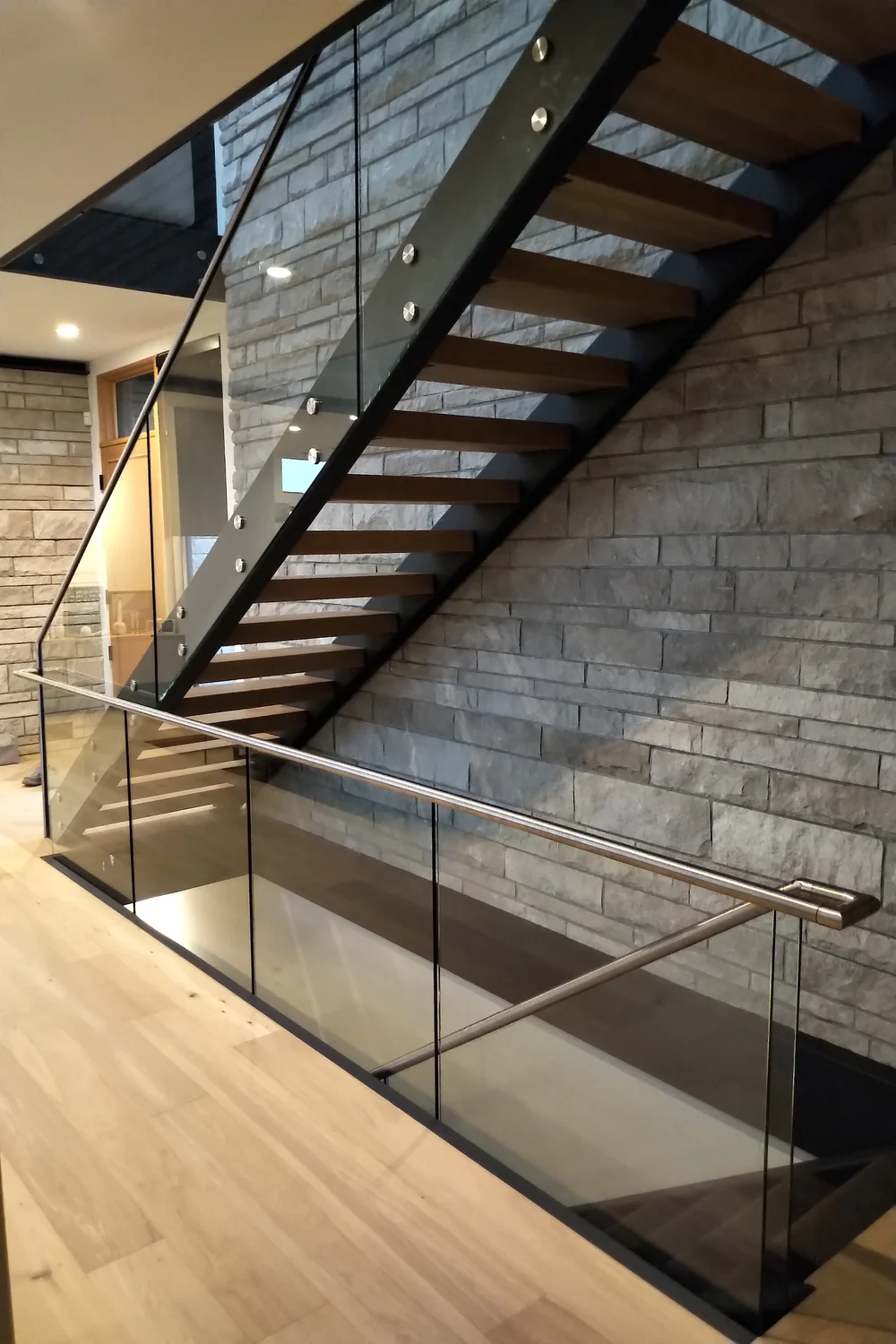
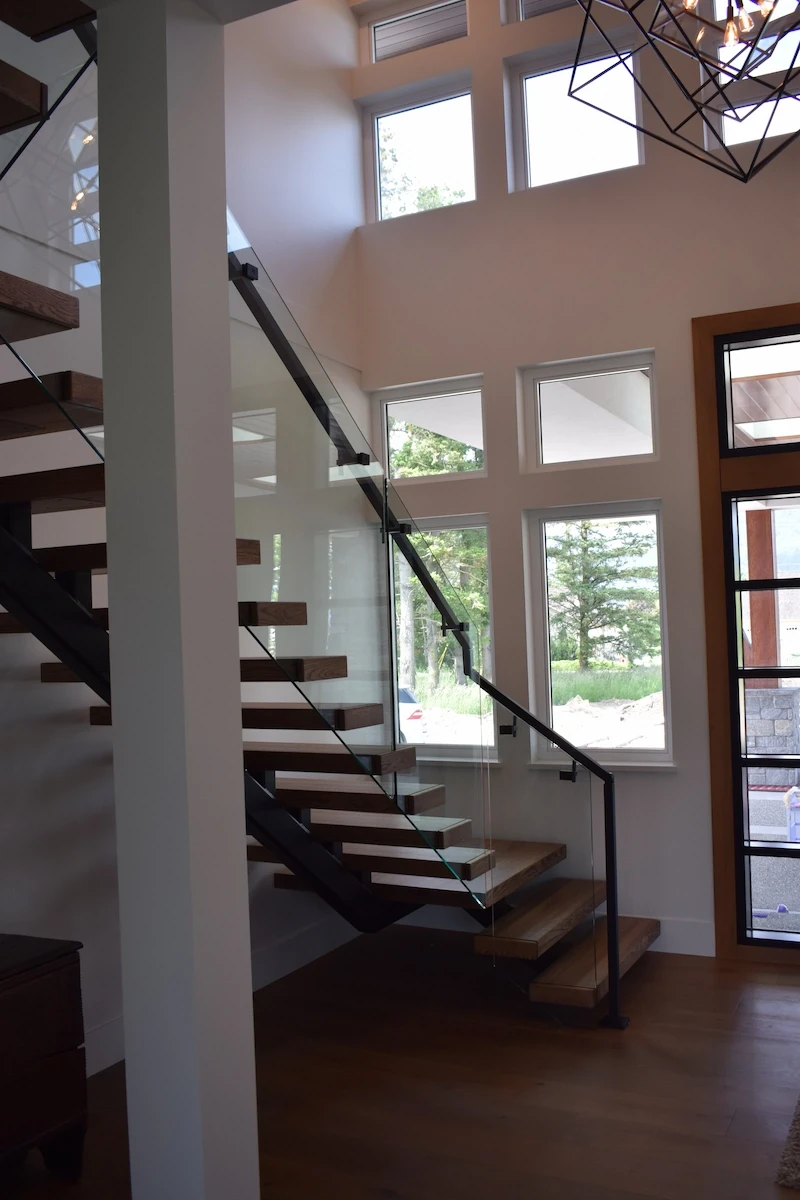
Glass panels follow the angle of the stair run, creating a continuous barrier along the staircase. Both frameless and semi-frameless systems work on interior and exterior stairs.
A handrail is typically required along staircase guards. This can be a top-mounted cap rail on the glass itself or a wall-mounted grab rail on the opposite side. Glass on staircases opens up the stairwell and improves light flow between floors, which is why interior glass stair railings have become a common upgrade in open-concept homes.
For staircases with curves or turns, a stair railing installation requires careful measurement and sometimes custom-fabricated panels to match the geometry.
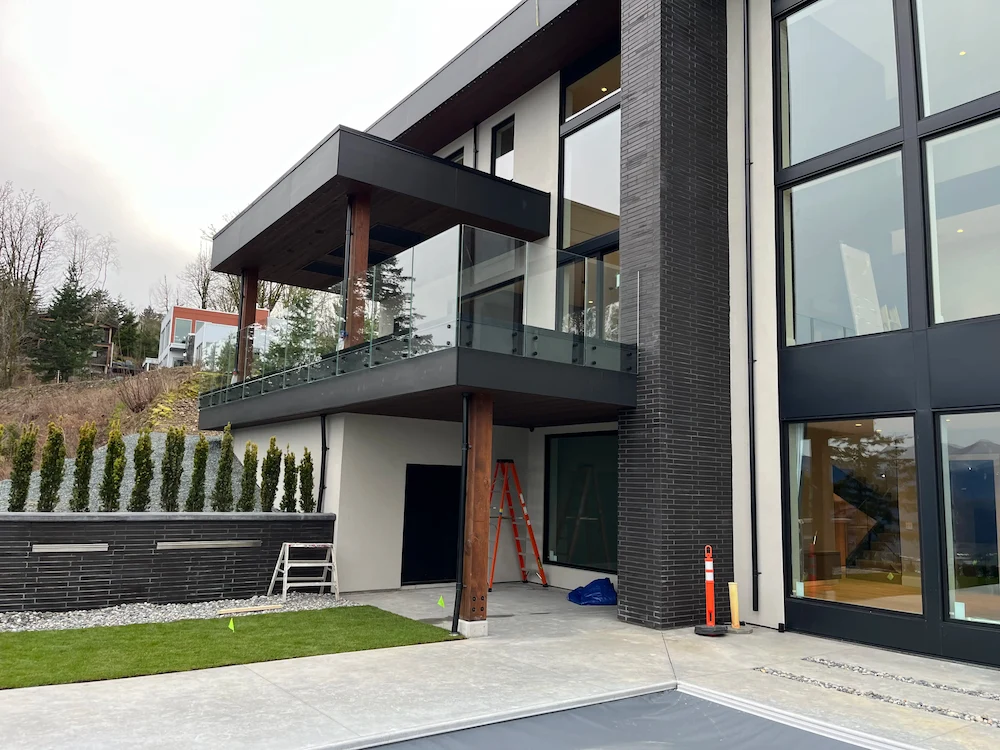
Balcony Railings
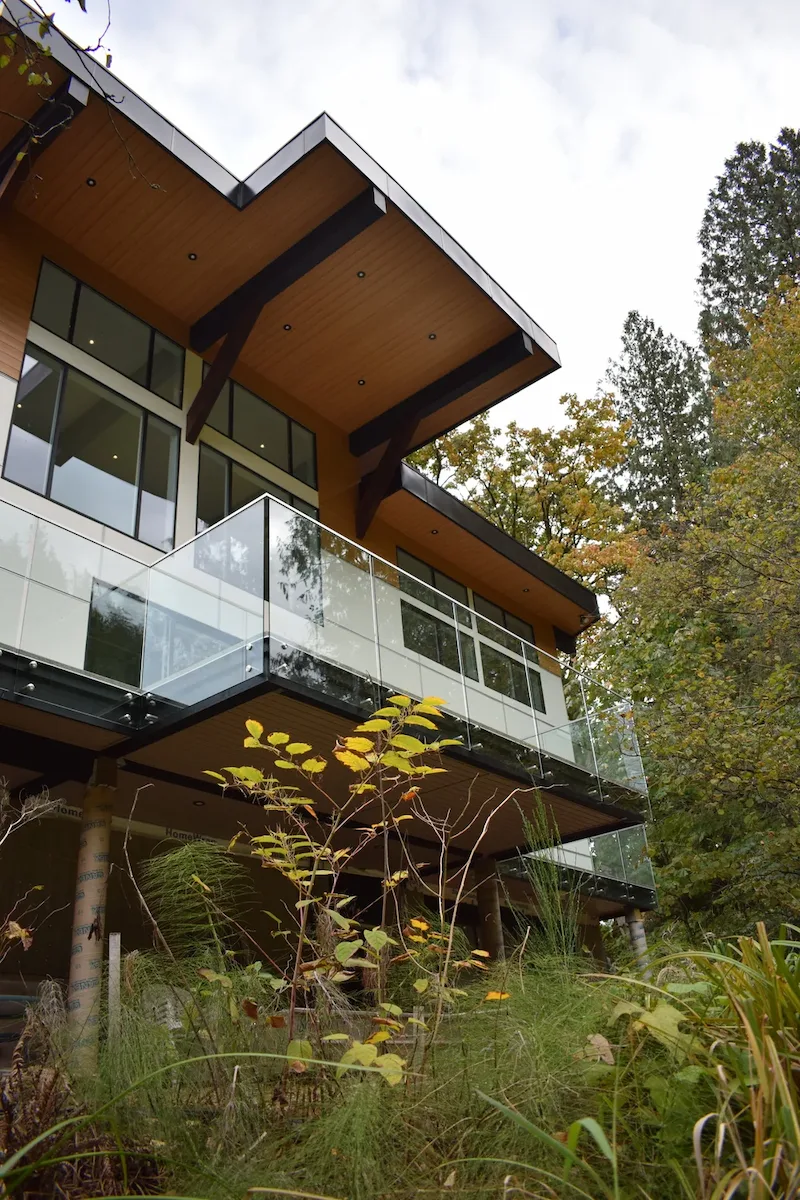
Height requirements are stricter for elevated balconies. In BC, any balcony above 1.8 m (roughly 5 feet 10 inches) requires a guard height of at least 1,070 mm (42 inches) (BC Building Code 2024).
Frameless systems are popular for condo balcony glass railings and multi-family buildings. Wind load calculations may be required for high-rise or exposed balconies, which adds an engineering step to the design process.
Indoor Railings
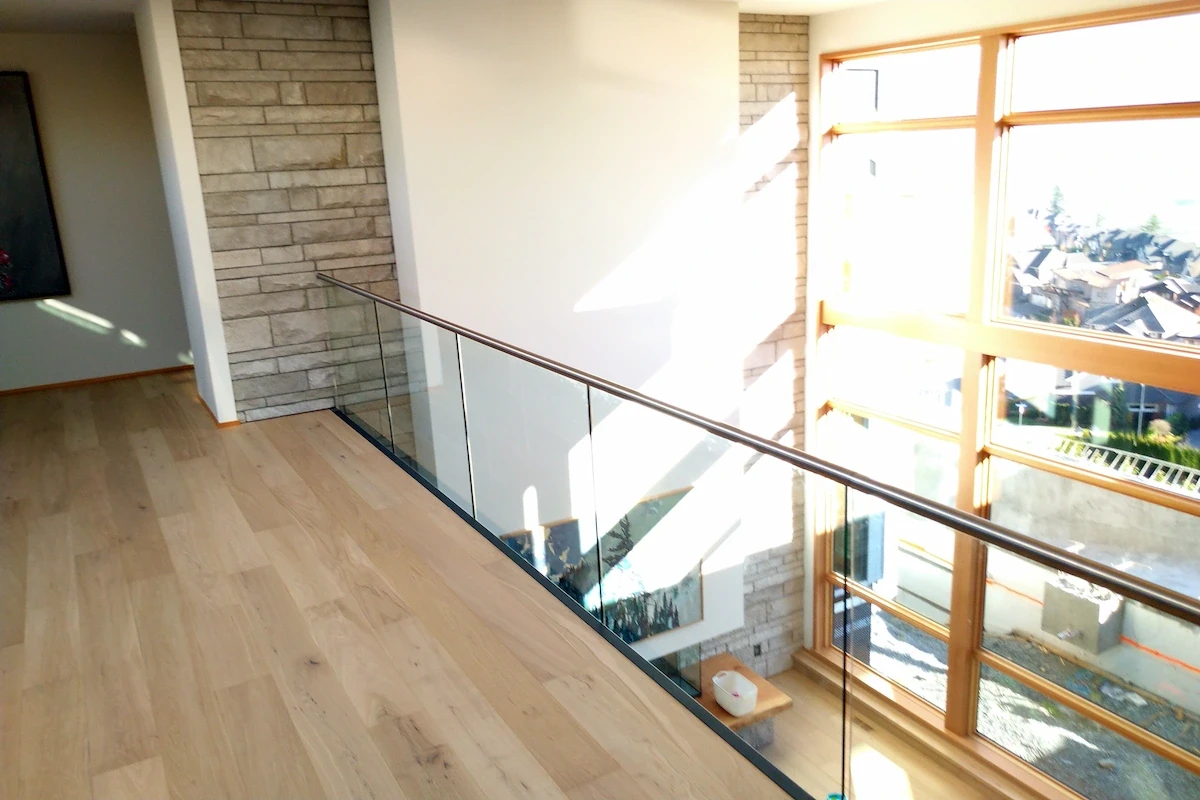
Glass railings create visual separation without closing off interior space. They are popular for lofts, mezzanines, and open-concept homes where maintaining sightlines matters.
Clear and low-iron glass are the most common indoor glass railing choices. Frosted glass works well for offices or spaces where partial privacy is useful. Indoor applications often allow thinner glass where code permits, which can affect cost.
See examples of these applications in our project gallery.
Hardware Finishes and Design Trends
Hardware colour and finish have become a design element in their own right. The finish can make railing hardware blend into the background or stand out as a deliberate accent.
Matte black creates high contrast against clear glass. It suits modern, industrial, and West Coast contemporary homes. This finish has grown in popularity over the past several years and remains one of the most requested options.
Brushed stainless steel is clean and neutral. It works with coastal designs, traditional homes, and commercial spaces. Stainless steel complements chrome fixtures and cool-toned exteriors.
Bronze and champagne tones add warmth. They pair well with natural wood decking, earth-toned siding, and timber-frame construction.
Powder-coated custom colours let homeowners match hardware to specific exterior elements like siding, trim, or window frames. Powder-coated aluminum glass railing hardware also resists corrosion, which is an important factor in coastal BC where salt air and moisture are constant.
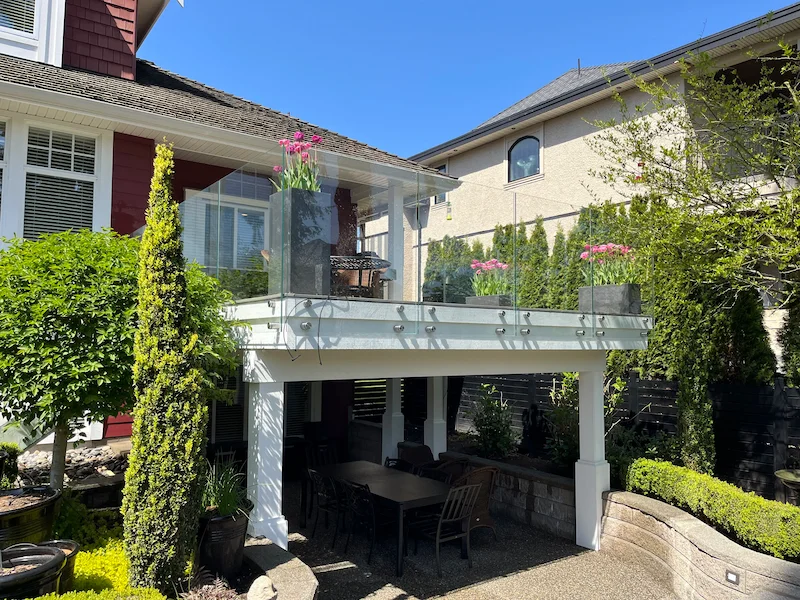
What BC Homeowners Should Know Before Choosing a Design
Design preferences matter, but so do local building codes, climate, and site conditions. These factors shape glass railing decisions in British Columbia.
BC Building Code Requirements
The BC Building Code 2024 edition applies to all new building permits submitted after March 8, 2024. Key requirements for glass railings include:
Guards are required for any platform with a drop of 600 mm (24 inches) or more
Minimum guard height: 900 mm (36 inches) for decks up to 1.8 m above grade
Minimum guard height: 1,070 mm (42 inches) for decks and balconies above 1.8 m
Glass must be safety glass conforming to CAN/CGSB-12.1
All glass panels must be at least 12 mm thick
No openings larger than 100 mm (4 inches) between panels
Frameless topless systems often require engineer-sealed drawings
These requirements affect design choices. A homeowner who wants a frameless topless system (no cap rail) may need an alternative solution application and engineering documentation that a semi-frameless system with a top rail does not require. Confirming code requirements early prevents design changes later.
For a detailed code compliance guide, consult with your installer and local building authority before finalizing a design.
Coastal Climate Considerations
BC's coastal climate creates specific demands on glass railing hardware. Salt air accelerates corrosion on exposed metal. Powder-coated aluminum and marine-grade stainless steel resist coastal weathering far better than uncoated metals.
Rain and moisture make drainage details important in base shoe systems. A well-designed channel includes weep holes or drainage slots to prevent standing water that could damage the mounting surface over time.
Wind exposure on waterfront properties may require thicker glass or additional engineering. This is especially relevant for elevated decks and balconies on properties facing open water. A corrosion-resistant railing system rated for marine environments is worth the investment for properties in these conditions.
View Preservation
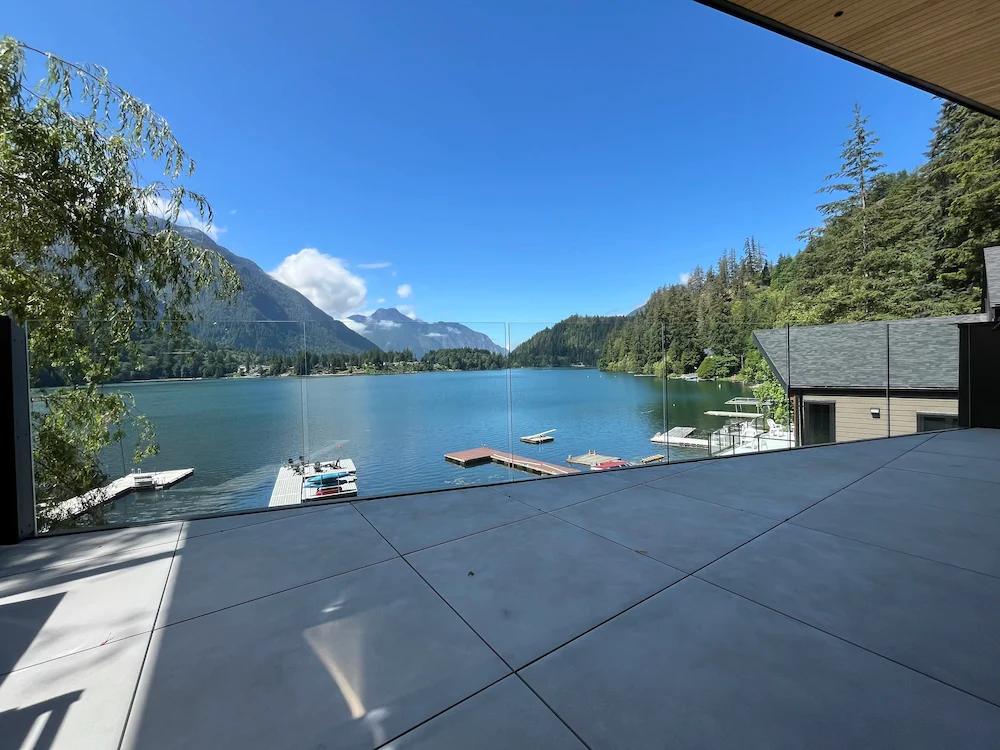
BC homeowners often choose glass railings specifically to protect mountain, ocean, and valley views. Design decisions that affect view quality include:
Mounting system: Frameless base shoe and spigot systems have the least visual obstruction
Glass type: Low-iron glass eliminates the green edge tint visible in standard panels
Panel height: Taller panels provide safety at height while keeping sightlines clear
Seated vs. standing views: Panel height and mounting position affect what is visible from deck furniture versus a standing position
For properties with significant views, mountain view glass railings designed with these factors in mind make a noticeable difference in daily enjoyment of the space.
How to Choose the Right Glass Railing Design
Narrowing down a glass railing design comes down to a few key decisions. Use these factors to guide the selection:
Budget: Frameless systems typically range from $300 to $400 per linear foot. Semi-frameless systems range from $250 to $350 per linear foot. Glass type, hardware finish, and site complexity affect the final number. If budget is the deciding factor, it is worth weighing glass against cable railing before committing - cable typically installs for less but trades off wind protection and ongoing maintenance.
View priority: If preserving an unobstructed view is the main goal, frameless with clear or low-iron glass is the strongest option.
Privacy needs: Frosted or tinted glass provides partial screening for ground-level patios and street-facing balconies.
Maintenance tolerance: Clear glass shows water spots and fingerprints more readily. Frosted and tinted glass hide them. Coastal properties require more frequent cleaning and maintenance.
Architectural style: Match hardware finishes to the existing home design. Modern homes suit matte black or minimal hardware. Traditional homes may benefit from brushed stainless or bronze accents.
Code requirements: Confirm height, glass thickness, and engineering requirements with your local building authority before finalizing a design.
The right glass railing design ties all of these factors together into a system that looks intentional, meets code, and performs well over time.
Frequently Asked Questions
What is the most popular glass railing design?
Frameless glass railings are the most widely chosen style for both residential and commercial applications. The frameless approach maximizes transparency and pairs well with modern architecture. Industry data shows frameless systems now represent the majority of glass railing installations by market share (Verified Market Reports, 2024).
Are frameless glass railings safe?
Yes. Frameless glass railings use 12mm safety glass and are engineered to meet building code load requirements. In BC, all glass used in guards must conform to CAN/CGSB safety standards. Properly installed frameless systems meet the same structural requirements as any other guard type.
How much do glass railings cost in BC?
Frameless glass railings typically range from $300 to $400 per linear foot installed. Semi-frameless systems range from $250 to $350 per linear foot. Final pricing depends on glass type, mounting system, hardware finish, and site conditions. For a more detailed breakdown, see our guide to glass railing costs in Greater Vancouver.
Can glass railings be used on stairs?
Yes. Glass panels are cut to follow the angle of the stair run. Both frameless and semi-frameless systems work on interior and exterior staircases. A handrail is typically required along staircase guards per the BC Building Code.
Do glass railings block wind?
Glass panels create a solid barrier that reduces wind on decks and balconies. This makes them a practical choice for exposed or elevated outdoor spaces. Unlike open picket or cable railings, glass provides a continuous windbreak across the full span. For a full breakdown of how the two systems compare on cost, maintenance, and BC code, see our guide on glass railing vs cable railing.
How do you maintain glass railings?
Clean glass panels with a non-abrasive glass cleaner and a soft cloth. For coastal properties, rinse hardware regularly to remove salt deposits. Inspect mounting hardware, seals, and fasteners at least once a year. For a complete maintenance guide, see how to clean glass railings in coastal BC.
What glass thickness is required for railings in BC?
The BC Building Code requires a minimum of 12 mm for safety glass used in guards. Thicker glass may be needed for larger panels, wider spans, or high-wind locations where additional engineering is required.
Key Takeaways
Frameless, semi-frameless, curved, and metal-framed glass railings each create a distinct look depending on how much hardware is visible.
Mounting hardware (base shoe, standoffs, spigots) shapes the design just as much as the glass itself.
Glass type matters: clear for views, frosted for privacy, tinted for glare reduction, and low-iron for true colour clarity.
BC homeowners should confirm code requirements (guard height, glass thickness, engineering documentation) before selecting a design.
Matching hardware finishes to the home's existing style ties the railing into the overall design rather than making it an afterthought.
Coastal climate, wind exposure, and view preservation are practical considerations that affect which design performs well over time in BC.
Ready to explore glass railing designs for your property? Contact Tenmar for a free consultation. We design, fabricate, and install frameless and semi-frameless glass railings across Vancouver and the Fraser Valley.