Educational
How to Clean & Maintain Glass Railings: Coastal BC
Published:
Last updated:
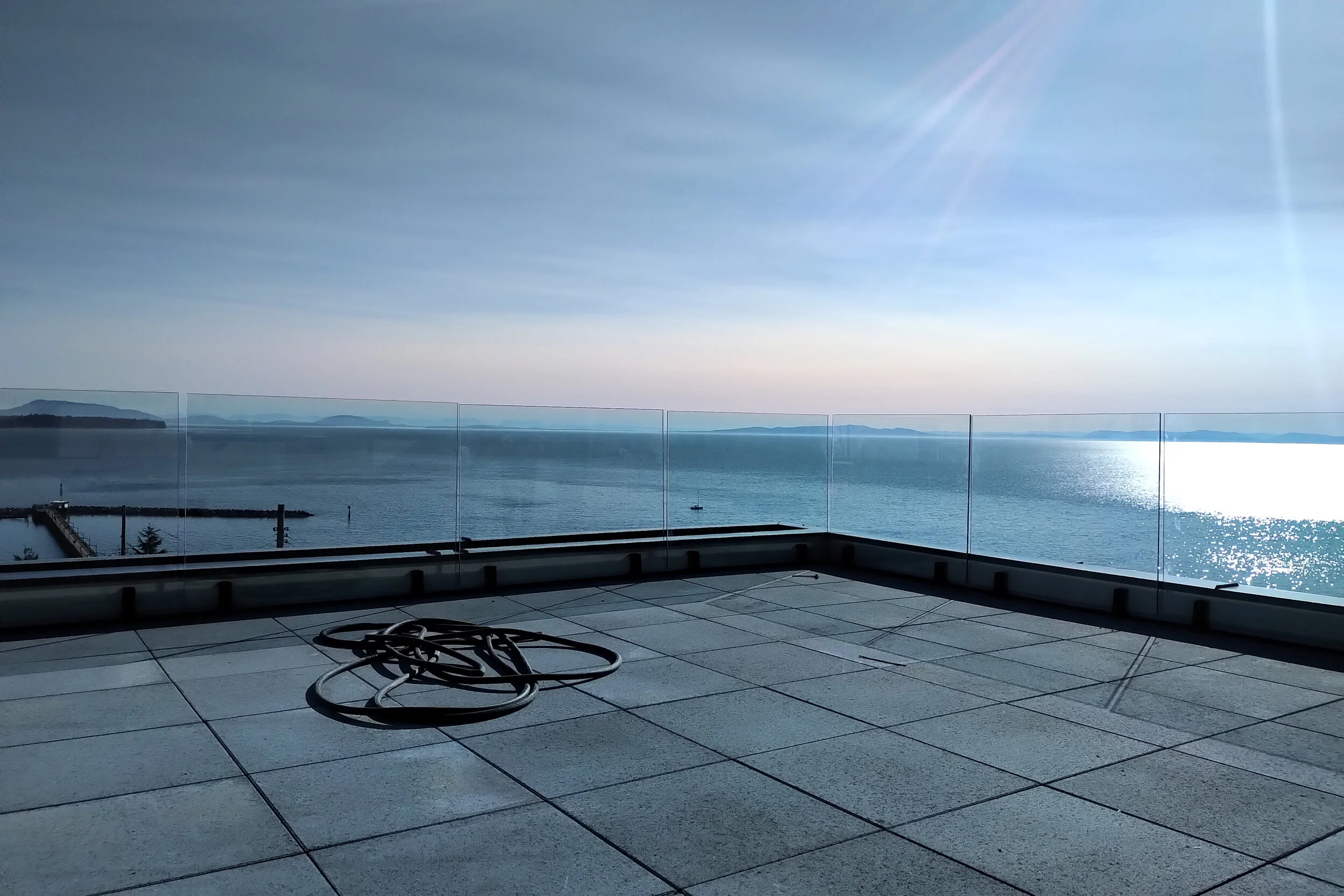
Outdoor glass railings are a defining feature of many homes and waterfront properties across coastal British Columbia. They offer unobstructed views of the Pacific and modern architectural appeal. However, the same environment that makes these views stunning; salt-air, humidity, and windborne grit; also presents challenges for maintaining glass clarity and hardware longevity.
This guide draws from local expertise and regional climate data to help homeowners understand how to protect their investment and extend the lifespan of their low-upkeep glass railing systems in Vancouver, the Fraser Valley, and along the BC coast.
TL;DR
Glass railings in coastal British Columbia require special attention because salt-air, high humidity and wind bring accelerated wear.
Rinse monthly, clean quarterly, inspect annually, and pick hardware rated for marine environments (e.g., marine-grade 316 stainless).
Ensure installations comply with the British Columbia Building Code 2018 (Part 9.8) for guards. Advanced hydrophobic coatings offer an extra layer of protection.
With the right guidance and materials, homeowners can expect long-term clarity and structural safety.
Why Coastal BC Is Different
Coastal British Columbia’s unique marine climate accelerates the wear of exterior building materials. Frequent rain, ocean spray from the Georgia Strait, and high relative humidity create the perfect conditions for mineral deposits and corrosion. The combination of salt accumulation on the surface and the high humidity common in many coastal areas further accelerates the corrosion rate of untreated steel and other metals commonly used in connectors, fasteners, and other building materials. (Marine Construction Magazine, 2023)
The region’s freeze-thaw cycles, especially between November and March, can also expand microscopic cracks in glass panels and stress metal hardware. Windborne grit and pollen from surrounding vegetation further dull the surface. These factors make consistent care and smart material selection essential for coastal installations.
The Right Way to Care for Glass Railings
While Tenmar does not provide cleaning services, its experience designing and installing glass railing systems across BC offers valuable insight into long-term maintenance. Homeowners can protect their railings through simple, consistent steps tailored to the coastal environment.
Step 1: Rinse with Fresh Water
Regularly rinsing the glass with fresh water removes salt and dust before they can dry on the surface. A soft garden hose spray is sufficient. Avoid high-pressure washers, as they can damage sealants and push water into hardware joints.
Step 2: Use Mild Cleaning Solutions
For deeper cleaning, mix a small amount of gentle dish soap or white vinegar with warm water. Apply it using a non-abrasive microfiber cloth or sponge. Rinse thoroughly and wipe dry with a squeegee to prevent water spots.
Homeowners should avoid ammonia-based products or harsh abrasives, which can degrade protective coatings and stainless steel fittings.
Step 3: Dry Completely
Leaving moisture on the surface allows mineral buildup to form, especially in areas with hard water. Dry the glass with a soft, lint-free cloth, and ensure that metal posts or caps are also dried to prevent oxidation.
Inspecting Hardware and Frames in Coastal Conditions
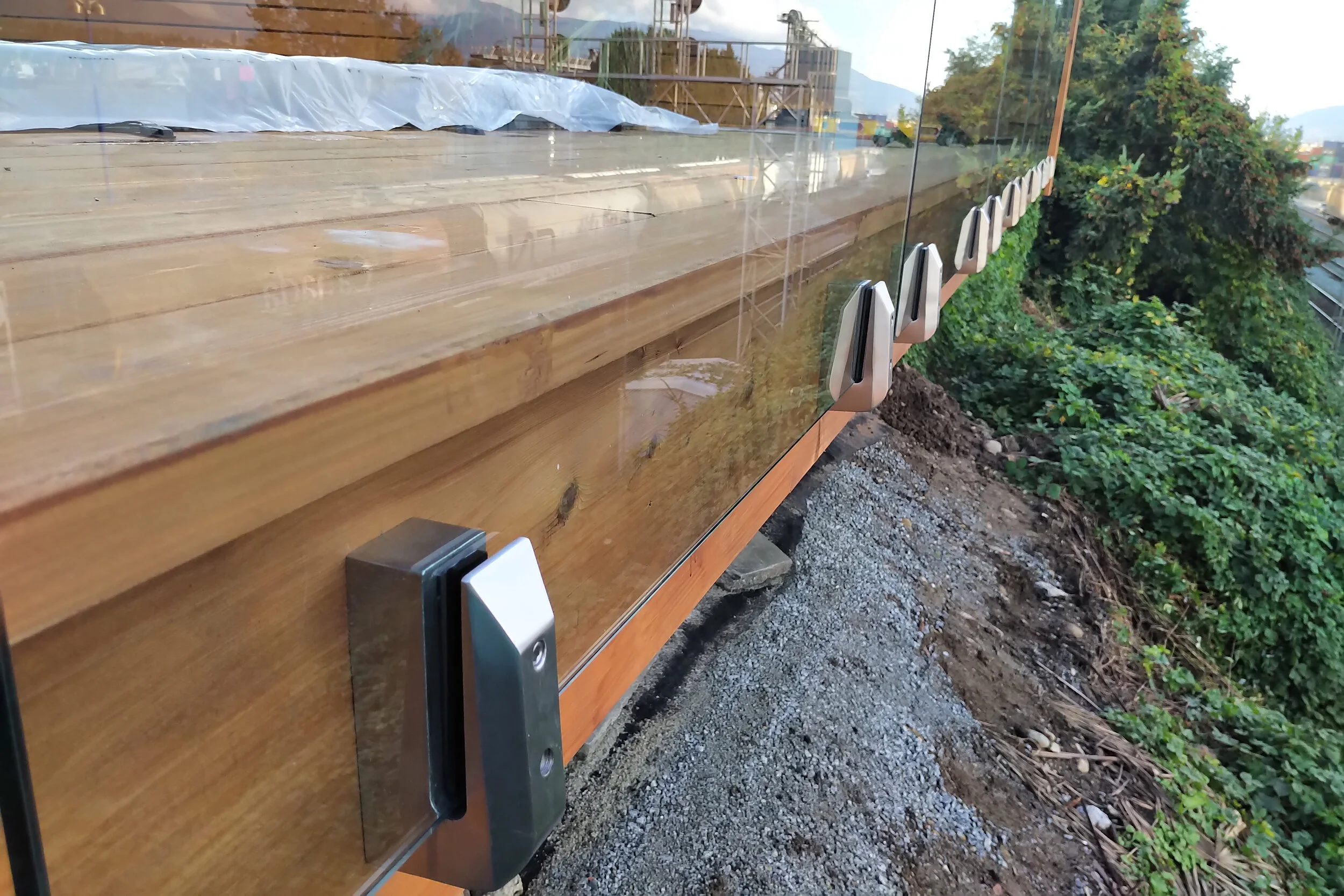
Hardware and structural fittings are often more vulnerable to salt exposure than the glass itself. Coastal BC’s air contains higher levels of chloride, which can accelerate corrosion of fasteners and brackets (Frontiers, 2024).
When inspecting your railings, look for early signs of pitting or discolouration around joints, bolts, and welds. Hardware should ideally be made from marine-grade 316 stainless steel, which offers greater resistance to chloride corrosion compared to standard 304 stainless steel.
The BC Building Code (Part 9.8) specifies structural requirements for guardrail height, load resistance, and material performance. Even minor corrosion can compromise compliance, which is why regular visual inspections are important for safety as well as aesthetics (BC Publications, 2024).
For homeowners uncertain about the integrity of their system, consultation with a qualified installer or inspector is advisable before any repair or modification.
A 3-Tier Maintenance Schedule for Coastal Homes
Consistency is more effective than intensity. Based on Tenmar’s project experience in high-exposure zones like West Vancouver and White Rock, the following schedule helps homeowners balance clarity and corrosion prevention year-round:
Monthly:
Rinse all glass panels with fresh water.
Check for new salt buildup, algae growth, or grit along the lower rail.
Quarterly:
Clean with a mild soap or vinegar solution.
Inspect fasteners, caps, and brackets for early signs of corrosion.
Verify that drain holes and glass gaskets are clear of debris.
Annually:
Apply a hydrophobic (water-repelling) coating designed for exterior glass.
Consider a professional safety inspection if your property is within one kilometre of open water.
This structured approach reduces the risk of long-term damage and helps maintain optical clarity even in high-salt environments.
Advanced Protection Options
Homeowners near oceanfront zones often benefit from surface treatments that reduce cleaning frequency and prevent etching. Hydrophobic nano-coatings create a transparent, water-repellent layer that minimizes the adhesion of salt and minerals. Studies show that hydrophobic and superhydrophobic coatings help prevent buildup, mineral deposits, and corrosion in marine environments. A 2024 study reported that coated composites maintained greater durability over time (ScienceDirect, 2024).
Some systems also allow for protective films that shield the glass from windborne grit or accidental scratches during storms. When applied correctly, these films can last three to five years before reapplication is required.
Common Mistakes to Avoid
Using abrasive pads or scouring powders. These scratch the glass and remove protective coatings.
Cleaning in direct sunlight. Rapid drying leaves streaks and mineral spots.
Neglecting hardware. Even stainless steel requires occasional rinsing and inspection.
Applying waxes or sealants not designed for glass. These can trap moisture beneath the surface.
Simple avoidance of these mistakes significantly extends the lifespan of both glass and metal components.
When to Consult a Professional
While routine upkeep is manageable for most homeowners, certain conditions warrant professional assessment:
Persistent white haze that does not clear after rinsing (possible etching).
Visible rust or pitting on fasteners.
Loose panels or shifting posts after windstorms.
Leaking water into deck seams or mounting points.
Professional inspection ensures structural safety and code compliance, particularly in older or ocean-facing properties.
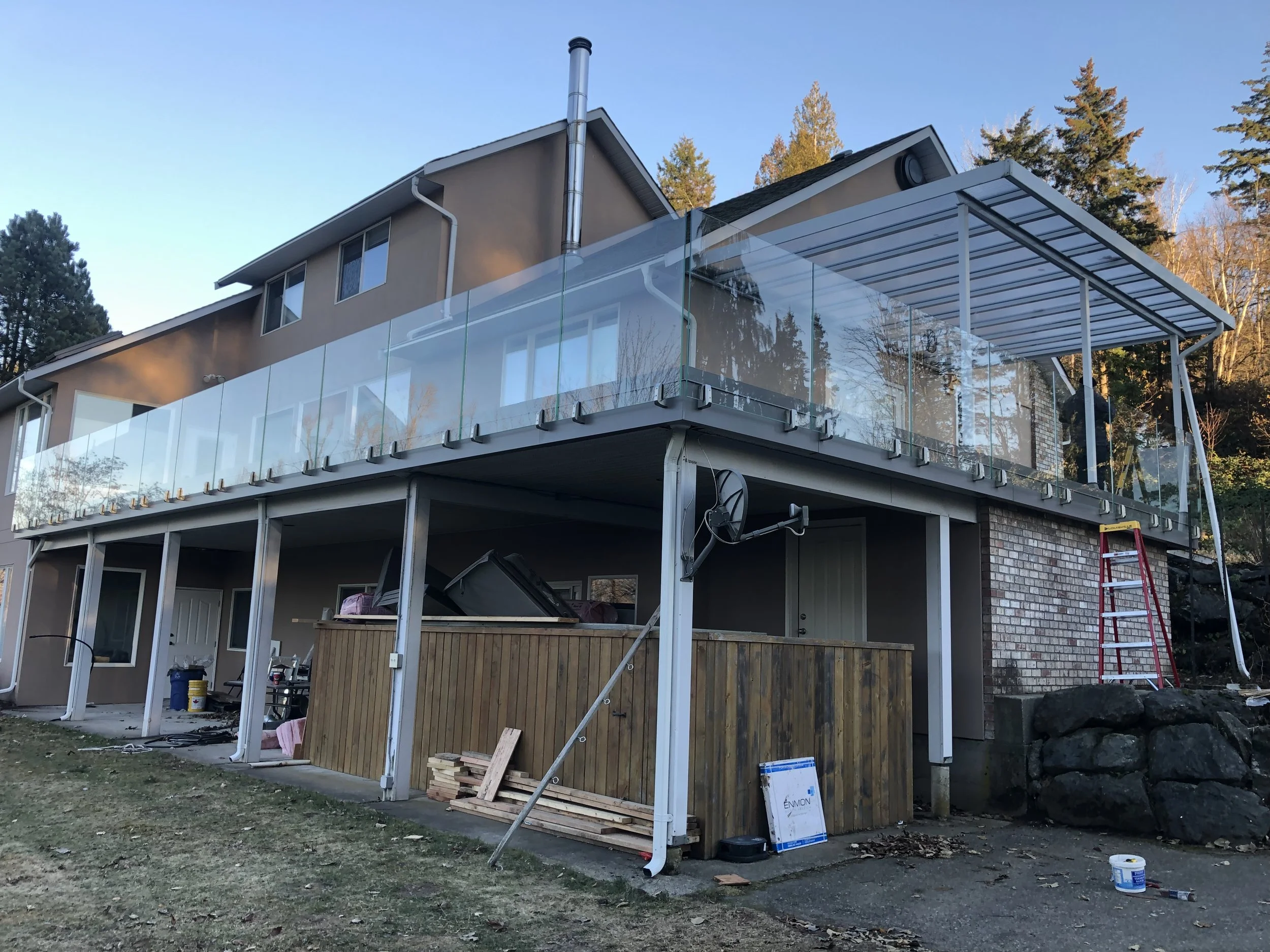
Why High-Quality Installation Matters Most
Ultimately, the most effective form of maintenance begins at installation. Tenmar’s engineered glass railing systems are designed to withstand BC’s demanding coastal conditions. By combining tempered safety glass with marine-grade stainless hardware and precision installation practices, these systems minimize corrosion risk and simplify long-term upkeep.
Homeowners who invest in durable materials and proper installation spend less time on maintenance and preserve their home’s visual appeal for decades.
Final Thought
Coastal BC offers some of Canada’s most beautiful natural views, and glass railings are the best way to enjoy them. With informed care and the right materials, homeowners can keep those views clear through years of salt-air exposure, storms, and seasons of rain.
For guidance on selecting a glass railing system built for coastal performance, contact Tenmar for design expertise and installation support.
FAQ
Q: Can I use a pressure washer to clean glass railings in coastal BC?
A: No. High-pressure washers can force water into mountings, damage seals and shorten durability of components. Gentle rinsing with fresh water is safer.
Q: What hardware grade should I have for ocean-exposed balconies?
A: For high chloride environments, marine-grade 316 stainless steel is recommended because it offers greater resistance to corrosion than standard 304. (See metal corrosion in coastal zones) (Marine Construction Magazine, 2023)
Also pick hardware finishes and coatings designed for exterior exposure near salt air. (Linetec, 2022)
Q: Does the BC Building Code apply to glass railings?
A: Yes. For example, Section 9.8 of the BC Building Code 2018 covers “Stairs, Ramps, Handrails and Guards” including requirements for height, loads and design of glass guard systems. (BC Publications)
Homeowners should ensure their system meets code design loads and maintain it accordingly.
Q: Are hydrophobic coatings worth the investment for glass near the coast?
A: Evidence shows hydrophobic and superhydrophobic coatings significantly reduce buildup, mineral deposits and corrosion over time in marine settings. For example, a recent study of hydrophobic-coated composites in a marine environment found improved durability. (ScienceDirect, 2024)
So yes, they are a worthwhile protective measure for high-exposure properties.
Q: How far inland does salt-air exposure significantly affect railings?
A: Studies show that salt spray and airborne chloride from ocean waves can extend several kilometres inland, significantly accelerating corrosion even away from direct shoreline exposure. (Marine Construction Magazine, 2023)
Therefore even properties not beachfront should evaluate exposure and material suitability.