Educational
House Balcony Glass Design: What to Consider Before Choosing a System for Your Home
Published:
Last updated:
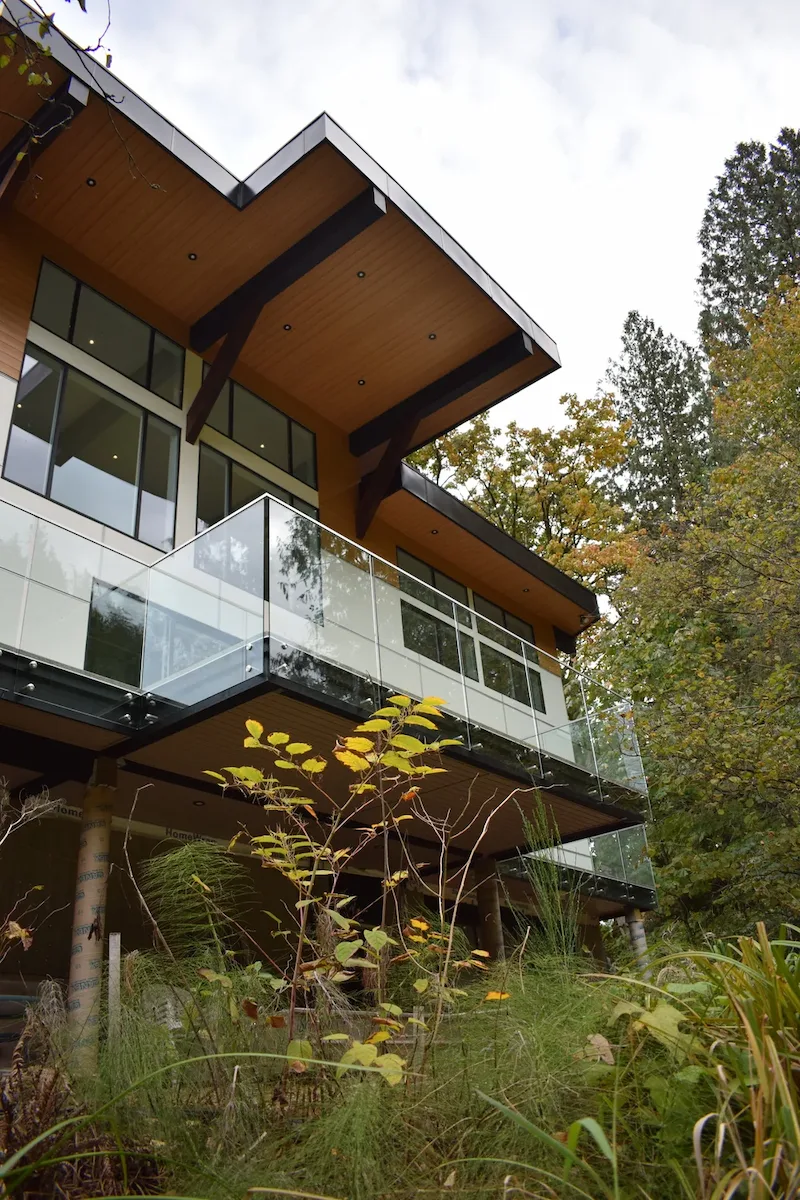
House balcony glass design involves more than picking a railing style. The balcony type, its height above grade, the direction it faces, what the neighbours can see, how much wind it catches, and how the railing looks from the street all influence which glass system will work. A glass railing that looks right on a ground-floor patio can be the wrong choice for an exposed upper-floor balcony.
This guide covers what makes balcony glass design its own category of decisions, from balcony architecture to privacy, wind exposure, facade integration, and what BC homeowners need to know before starting the project.
For an overview of railing styles, mounting hardware, and glass types, see our guide to glass railing designs.
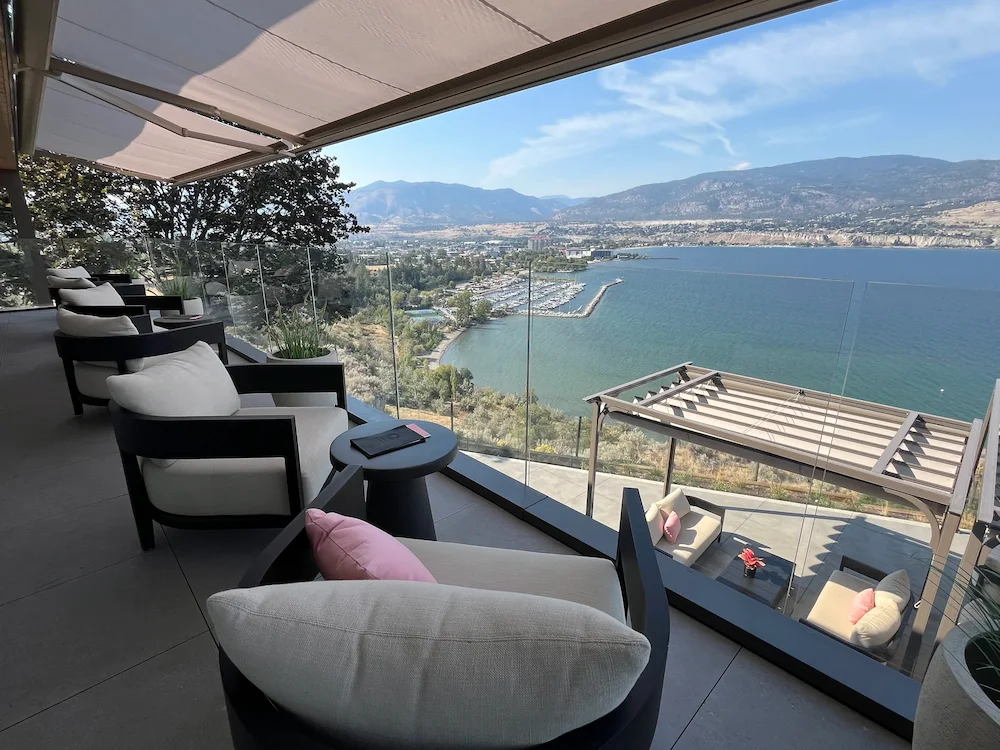
How Balcony Type Shapes the Glass Design
Not all balconies are the same structure. The type of balcony determines the glass panel dimensions, mounting approach, and how the railing integrates with the building.
Cantilevered Balconies
A cantilevered balcony extends outward from the building with no columns or supports beneath it. The floor slab projects from the wall, and the glass railing wraps the exposed edges.
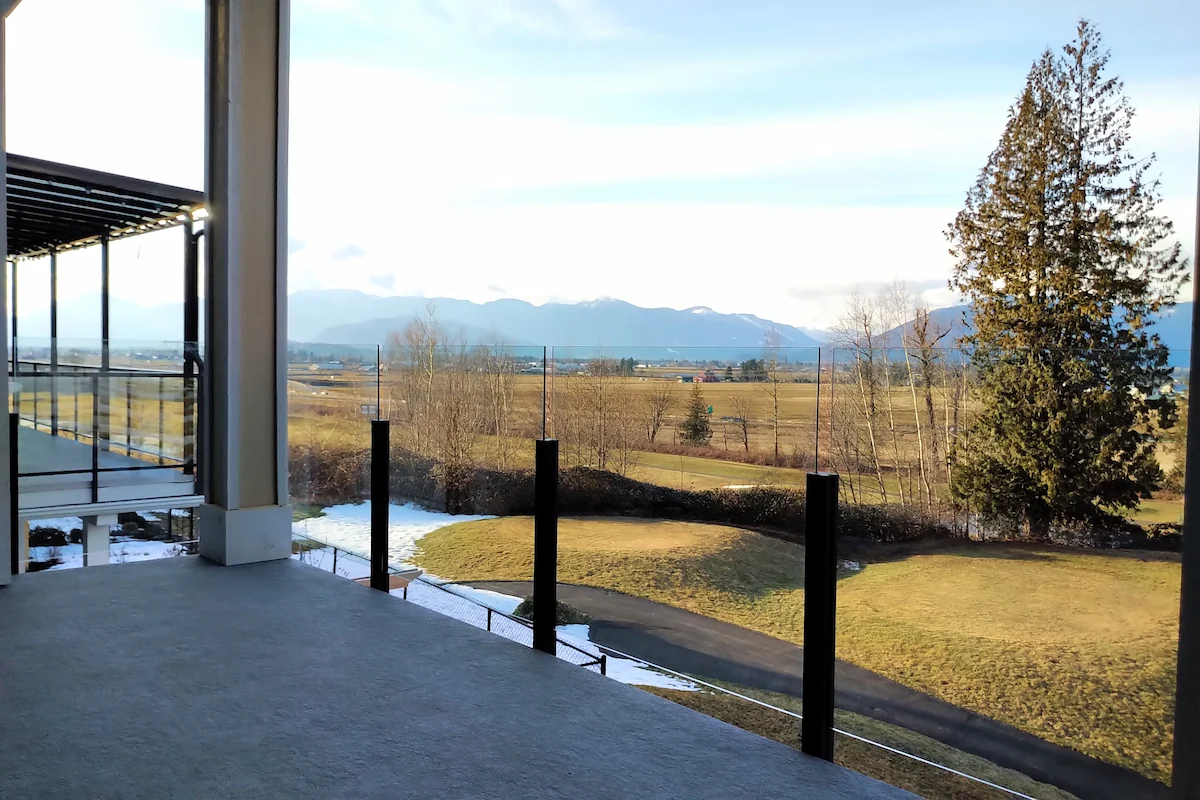
Glass design for cantilevered balconies needs to account for three exposed sides. The railing is visible from below, from the sides, and from the front. Frameless glass railings are the standard choice here because they preserve the floating effect of the cantilevered structure. Adding bulky posts or framing to a cantilevered balcony undermines the architectural intent.
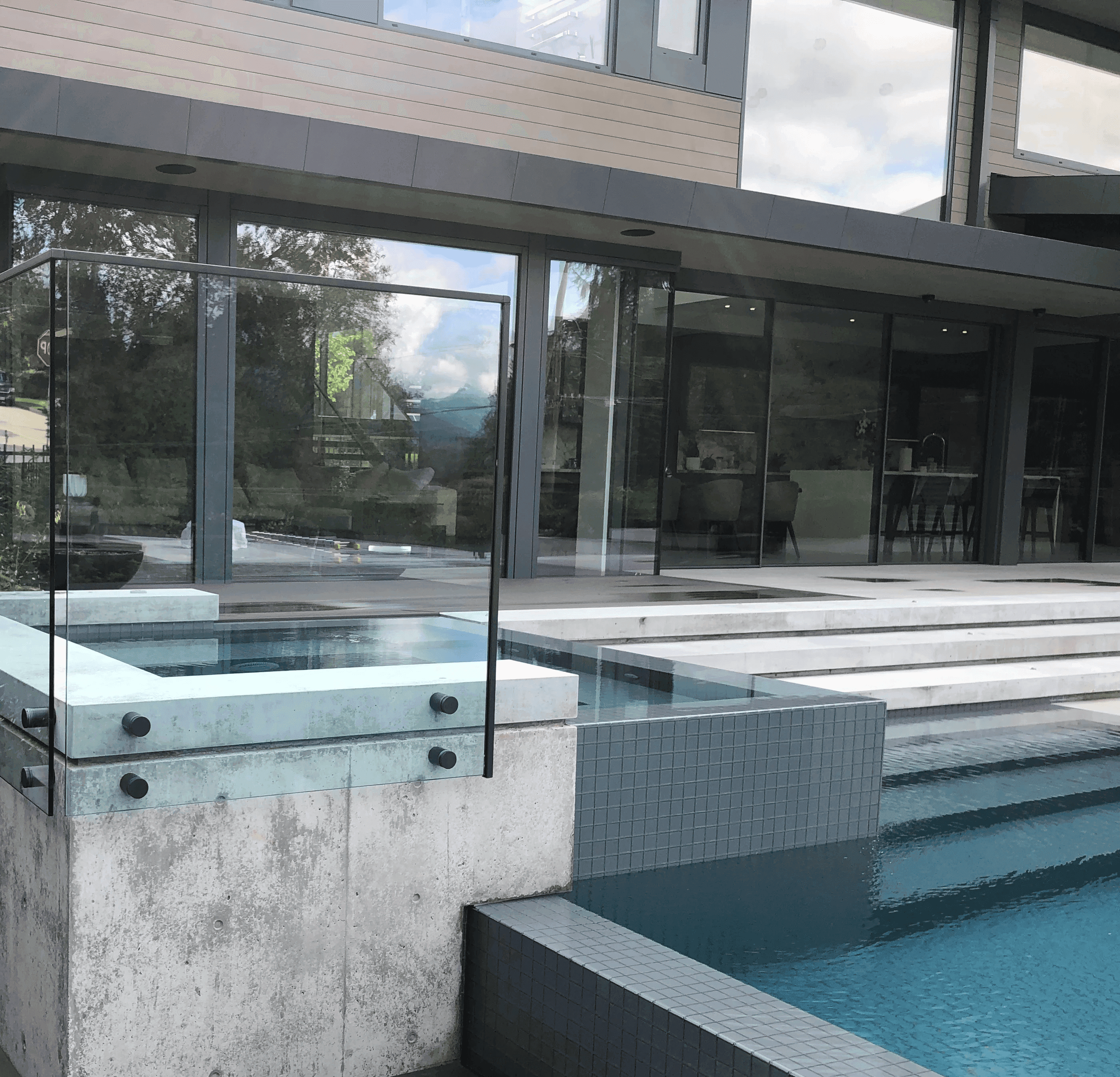
Mounting is typically to the top of the balcony slab or the outer face. Spigot systems work well on concrete slab edges. Wind exposure is high on cantilevered balconies because there are no adjacent walls to break airflow.
Juliet Balconies
A Juliet balcony has no floor area. It is a railing mounted directly to the exterior wall at a door or window opening, allowing the door to open outward without risk of falling. The glass panel sits flush against the facade.
Because there is no deck surface, the mounting system attaches directly to the wall or the door threshold. Standoff systems are common for Juliet applications because they keep hardware compact against the building face. The glass panel is typically a single piece spanning the width of the opening.
Juliet balconies are a popular retrofit option for bedrooms and upper-floor living areas. They add an outdoor connection and increase natural light without the structural cost of a full balcony.
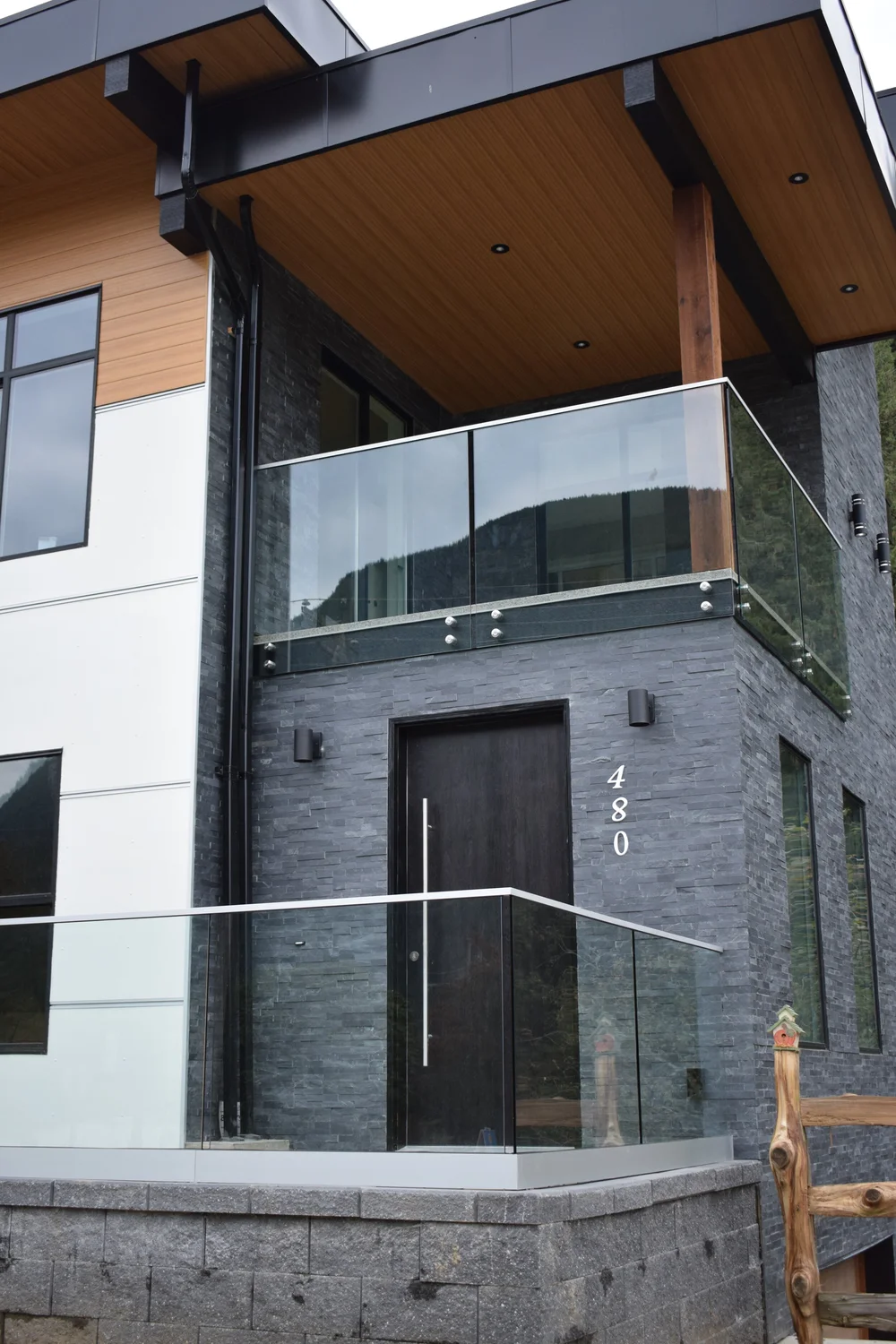
Recessed (Inset) Balconies
A recessed balcony is set into the building footprint rather than projecting outward. The floor area is carved out of the building volume, with walls on two or three sides and the glass railing on the open face.
Recessed balconies are common in multi-family condo buildings and townhouse developments. The glass railing typically spans only one side, which simplifies the design. However, the recessed position means the railing is the primary visual element of the balcony when viewed from outside. A well-designed glass panel with coordinated hardware becomes the focal point of each unit's exterior.
The surrounding walls provide wind protection, which reduces engineering requirements compared to a fully exposed cantilevered balcony.
Wrap-Around Balconies
A wrap-around balcony extends along two or more sides of the building. The glass railing follows the perimeter, turning corners where the balcony changes direction.
Corner transitions are the main design challenge. Glass panels cannot bend at a 90-degree angle, so the design must use mitered joints, corner posts, or overlapping panels at each turn. Semi-frameless systems handle corners well because a post anchors each change of direction. Frameless systems require more precise engineering at corners but produce a cleaner result.
Wrap-around balconies often serve the primary living space, making the railing visible from multiple interior rooms. The glass design needs to work from every viewing angle.
Rooftop Terraces and Upper-Floor Balconies
Rooftop balconies sit at the highest point of the building with no surrounding structure for wind protection. Glass railings on rooftop terraces face the highest wind loads of any residential application.
Penthouse glass railings and rooftop terrace systems often require engineer-sealed drawings, thicker glass, or closer mounting hardware spacing to meet wind-load requirements. The BC Building Code requires a guard height of 1,070 mm (42 inches) for any guard where the drop on the other side exceeds 1.8 m, which applies to virtually all rooftop and upper-floor balconies.
The design payoff is significant. A rooftop glass railing with unobstructed views is one of the highest-value features a property can offer.
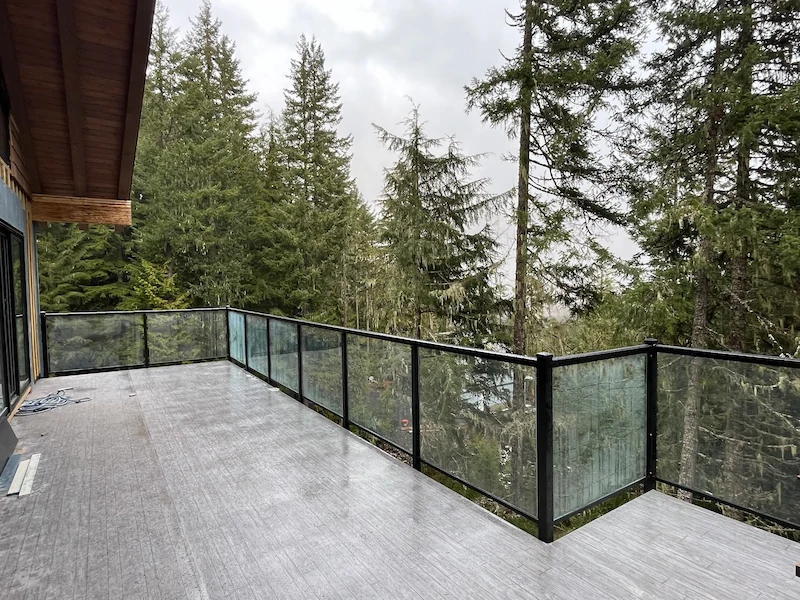
How Balcony Glass Affects the House Exterior
A balcony railing is one of the most visible elements on a house facade. Unlike an interior stair railing seen only by residents, a balcony glass design is seen by everyone who approaches the property.
Curb Appeal and First Impressions
The balcony railing is part of the architectural composition of the house front. Research published in The Journal of Real Estate Finance and Economics found that curb appeal can account for up to 7% of a home's sale value (Villupuram et al., University of Texas at Arlington). Glass railings create a lighter, more contemporary facade compared to wood pickets or metal balusters. The transparency lets the building material behind the railing remain visible, which keeps the facade from looking heavy or cluttered.
For street-facing balconies, the hardware finish matters as much as the glass itself. Matte black hardware coordinates with dark window frames and creates strong contrast lines. Brushed stainless steel recedes visually and lets the glass dominate. Bronze and champagne tones add warmth that pairs with natural wood cladding, stone, or warm-toned siding.
Matching the Architectural Style of the Home
Glass balcony railings are not limited to ultra-modern homes. The hardware, glass type, and cap rail material adapt the look to different styles:
West Coast contemporary: Frameless glass with a wood cap rail and matte black spigots. Pairs with cedar cladding, flat rooflines, and large window walls.
Modern farmhouse: Semi-frameless glass with powder-coated black aluminum posts. Complements board-and-batten siding and metal roofing. See our modern farmhouse glass railings page.
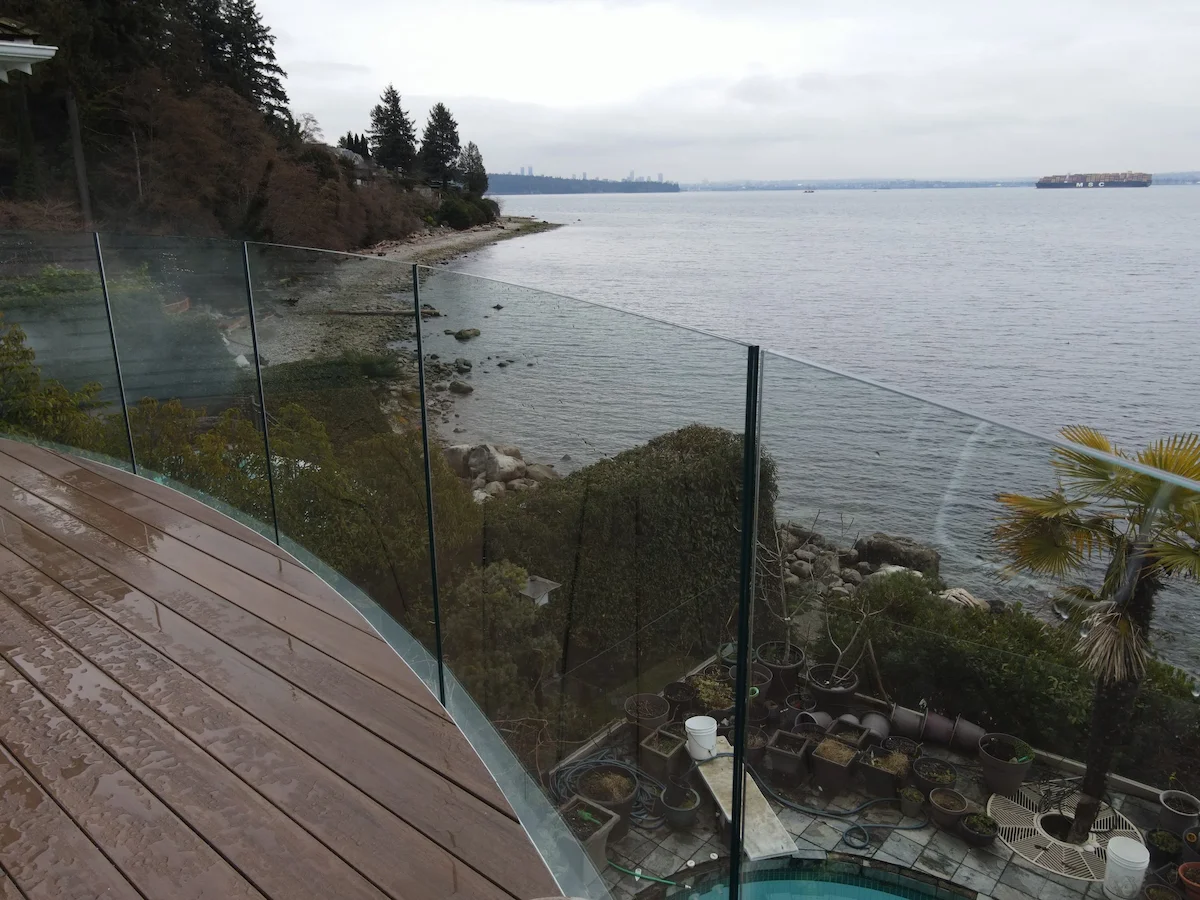
Coastal: Frameless glass with brushed stainless steel hardware. Clean lines that resist salt corrosion and suit waterfront properties.
Traditional with a modern update: Semi-frameless glass with a wood handrail and bronze-toned posts. Adds transparency without fully abandoning the defined structure of a traditional railing.
Multi-Unit Consistency
In strata buildings, townhouse complexes, and mixed-use developments, every balcony is visible from the exterior. A unified glass design across all units creates a cohesive facade, while mismatched railings make the building look disorganized.
Property managers and strata councils often specify a single glass type, hardware finish, and mounting system for the entire building. This consistency also simplifies bulk ordering, installation scheduling, and long-term maintenance.
Privacy vs. View: Choosing Glass for Your Balcony Exposure
Balcony privacy is a different challenge than interior railing privacy. The balcony is part of the outdoor environment, and the railing is the boundary between the homeowner's space and public or neighbouring sightlines.
Street-Facing Balconies
A ground-floor or second-storey balcony facing a busy street exposes the outdoor living area to pedestrian and vehicle traffic. Frosted glass provides effective screening without blocking light. Partial frosting on the lower portion of the panel shields seated areas while leaving the upper portion clear for views.
Tinted glass in grey or bronze reduces visibility from outside, especially during daylight hours when the sun angle creates reflections on the glass surface. Tinted panels also reduce glare for the homeowner.
Neighbour-Adjacent Balconies
Balconies in townhouse rows, condos, and dense residential neighbourhoods often face directly into a neighbour's property. Frosted glass is the practical solution for these applications. It provides a visual barrier while still admitting light, which prevents the balcony from feeling enclosed.
For townhouse and row home balconies, frosted panels on the sides closest to neighbours can be combined with clear panels facing the yard or open space. This selective approach maintains the view where it matters and adds privacy where it is needed.
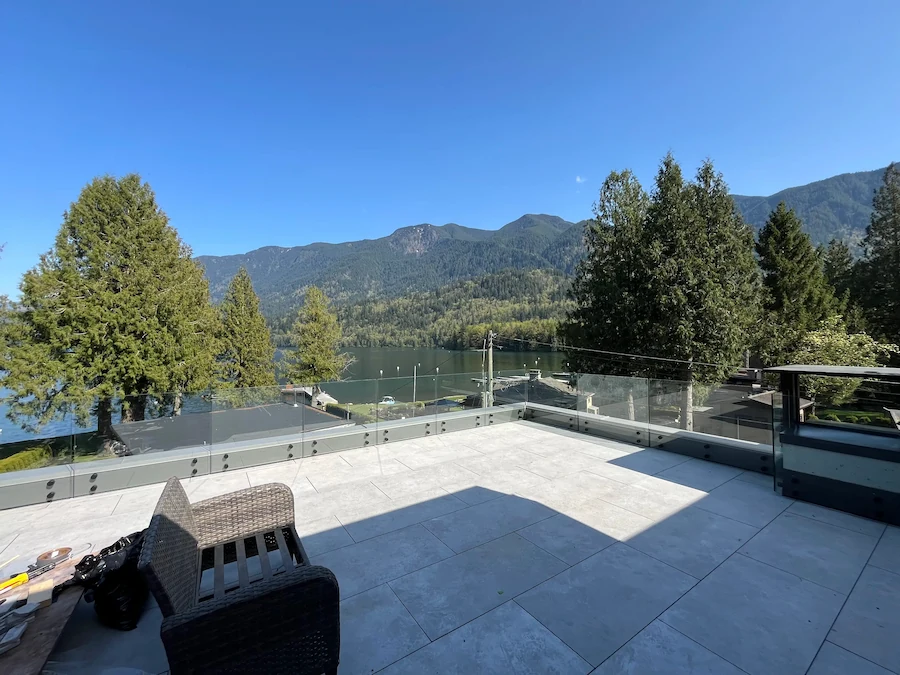
View-Oriented Balconies
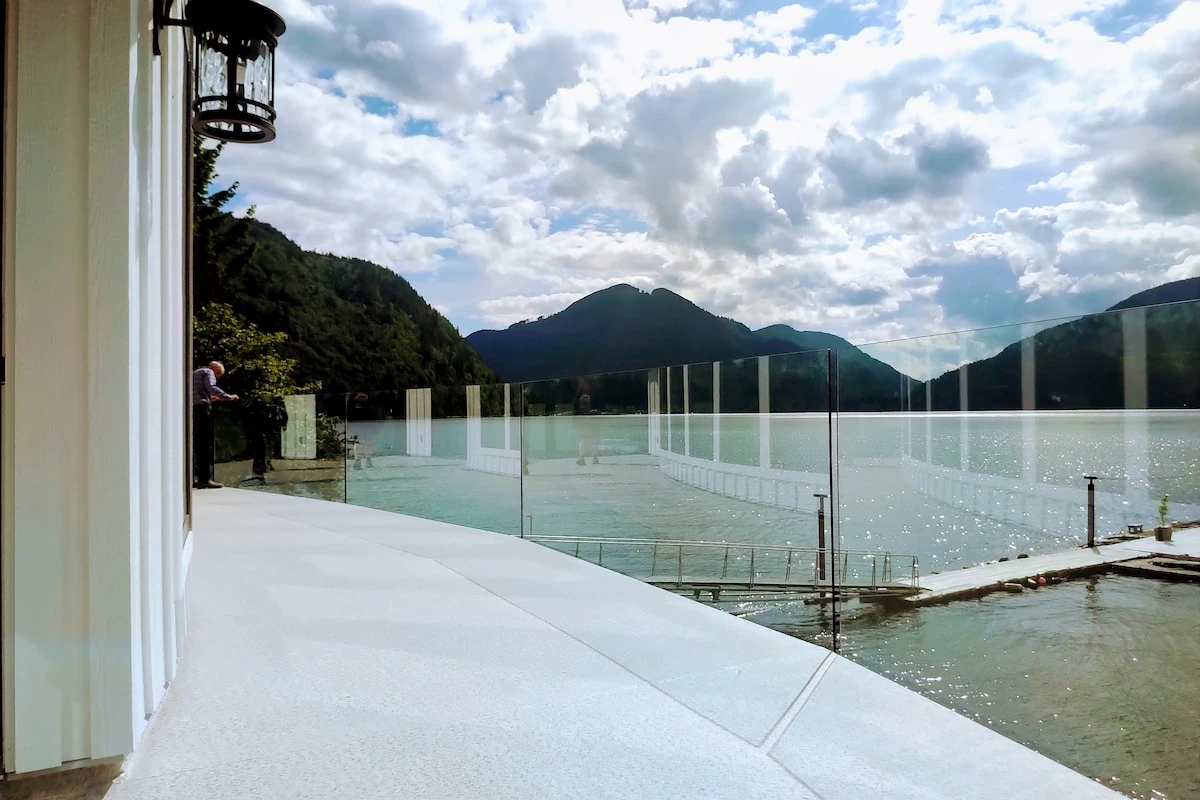
Balconies designed to showcase a mountain view, waterfront panorama, or city skyline should use clear glass or low-iron glass to maximize transparency. Any tinting, frosting, or texturing reduces the view quality that the balcony was designed to capture.
Low-iron glass eliminates the green edge tint visible in standard clear glass, providing true colour accuracy. This matters on balconies of custom homes and luxury properties where the view is the primary amenity.
Upper-Floor Balconies
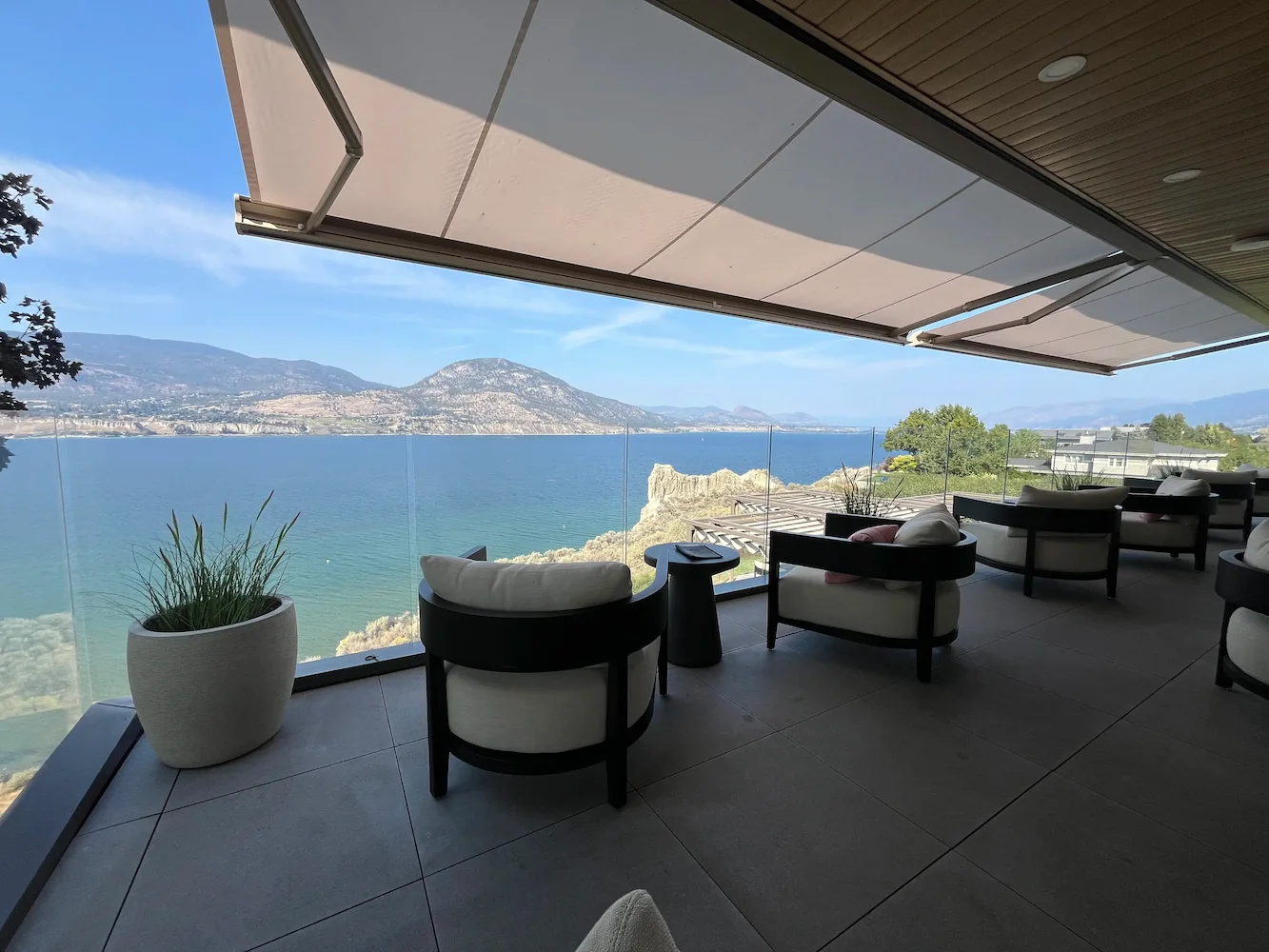
Balconies above the third floor generally do not have street-level privacy concerns. The height creates natural separation from ground-level sightlines. Clear glass is the standard choice for upper-floor balconies because the view is the reason the balcony exists at that height.
The exception is adjacent buildings at the same elevation. In dense urban settings, upper-floor balconies in condo buildings may face directly across to another building. Frosted or tinted glass on the side panels resolves this without compromising the primary view direction.
Wind, Weather, and What Exposed Balconies Demand
Balconies are more exposed to weather than any other residential glass railing application. Decks are typically lower to the ground. Interior stairs are fully sheltered. Balconies, especially on upper floors, face direct wind, driven rain, and in coastal BC, salt air.
Wind Loads on Elevated Balconies
Wind pressure increases with height above ground. A glass railing on a rooftop terrace experiences significantly more wind force than the same railing on a ground-floor patio. The BC Building Code sets minimum live load and wind load requirements for guards, and in exposed or high-rise applications, an engineer may need to calculate site-specific wind pressures.
Design responses to high wind loads include thicker glass panels, closer spacing of mounting hardware, reinforced base shoe channels, and in some cases, a top-mounted cap rail that adds stiffness to the panel system.
Drainage
Rain collects on balcony surfaces and drains toward the railing. Base shoe mounting channels must include drainage slots to prevent standing water, which can cause staining, mineral buildup, or freeze-thaw damage in cold-weather periods.
Spigot systems have an advantage in wet climates because they leave the base of the glass open between mounting points, allowing water to drain freely off the balcony edge. This is one reason spigot mounts are common on balconies in Greater Vancouver and the Fraser Valley.
Salt Air and Corrosion
Coastal properties within a few kilometres of the ocean are exposed to airborne salt. Salt accelerates corrosion on exposed metal hardware, especially stainless steel that is not marine-grade and aluminum that is not powder-coated.
Corrosion-resistant glass railing systems use marine-grade stainless steel or heavy-duty powder-coated aluminum hardware designed for saltwater environments. Regular rinsing of hardware with fresh water extends the life of the finish. See our maintenance guide for coastal BC for a seasonal schedule.
Temperature and Thermal Movement
Glass expands and contracts with temperature changes. In a climate like Greater Vancouver, where winter lows can dip below freezing and summer sun heats exposed surfaces to high temperatures, mounting hardware must accommodate this movement. Quality mounting systems include rubber gaskets and spacers that allow the glass to move slightly without creating stress points.

Replacing an Existing Balcony Railing with Glass
Many BC homeowners are replacing aging wood, aluminum picket, or wrought iron balcony railings with glass. This is one of the most common renovation scenarios for house balcony glass design.
Common Situations
Wood railings reaching end of life. Wood balcony railings in BC's wet climate deteriorate over time. Rot, warping, and splitting reduce both safety and appearance. Glass replacement eliminates ongoing wood maintenance. See our page on replacing wood deck railings with glass.
Aluminum picket railings looking dated. Older homes often have thin aluminum picket railings that block the view and feel insubstantial. Glass panels open up the balcony and update the exterior.
Code compliance upgrades. Some older railings no longer meet current BC Building Code height or opening requirements. A glass replacement brings the railing up to current code while improving the design.
Selling the home. Upgrading a balcony railing to glass before listing improves curb appeal and property photos. A Zillow study found that homes with outdoor spaces such as balconies sell for 5% to 12% more than comparable properties without them (Fulton Grace Realty, 2025). A glass railing makes the most of that by keeping the balcony open and visually connected to the surrounding landscape. It is one of the most visible exterior improvements a homeowner can make.
What Changes During a Replacement
The balcony structure itself rarely needs major modification. The existing railing is removed, and the new glass mounting system is installed to the existing deck surface, fascia, or slab edge.
However, the attachment method depends on the substrate. Concrete balcony slabs accept spigots and base shoe systems with mechanical anchors. Wood-framed balcony edges may need reinforcement to support the weight and load of glass panels. A site assessment determines what preparation is needed.
Permits and Approvals
A building permit is typically required for balcony railing replacement in most BC municipalities. The permit process requires structural details, glass specifications, and in some cases engineer-sealed drawings for frameless systems on elevated balconies.
In strata buildings and managed properties, exterior modifications also require council or property manager approval before work begins. Confirm both municipal permit requirements and strata bylaws before committing to a design.
What BC Homeowners Should Know About Balcony Glass Code Requirements
The BC Building Code 2024 sets specific requirements that affect house balcony glass design:
Guard height: 1,070 mm (42 inches) for most residential balconies. The lower 900 mm (36 inches) height only applies within a dwelling unit where the drop is 1.8 m or less. Most elevated balconies exceed this threshold.
Glass specification: safety glass, minimum 12 mm thick, conforming to CAN/CGSB-12.1.
Openings: No gap larger than 100 mm (4 inches) between panels or between the glass and the balcony surface.
Anti-climbing: Guards must not have horizontal elements between 140 mm and 900 mm that could serve as footholds. Glass panels meet this requirement inherently because they are a solid surface with no climbable elements.
Engineering: Frameless glass systems on elevated balconies may require engineer-sealed drawings depending on the municipality and the height above grade.
For a detailed breakdown, see our BC building code compliance page.
Frequently Asked Questions
How does balcony glass design differ from deck railing design?
Balconies are typically elevated, which means higher wind loads, stricter code requirements, and greater visibility from the street. Deck railings are usually closer to grade, less exposed to wind, and less prominent on the home exterior. Balcony glass design also involves facade integration and privacy considerations that ground-level deck railings rarely require.
What glass works for a balcony that faces the neighbours?
Frosted glass provides effective visual screening while still admitting light. A common approach is to use frosted panels on the sides closest to adjacent properties and clear panels on the open or view-facing side. Tinted glass in grey or bronze offers a more subtle privacy solution.
Do elevated balconies need thicker glass?
The BC Building Code requires a minimum of 12 mm for glass guards. In high-wind or high-rise applications, an engineer may specify thicker panels or closer hardware spacing to meet load requirements. Height above grade, exposure direction, and local wind conditions all factor into the calculation.
How much does it cost to replace a balcony railing with glass in BC?
Frameless glass balcony railings typically range from $300 to $400 per linear foot installed. Semi-frameless systems range from $250 to $350 per linear foot. Replacement projects may include additional costs for removing the old railing and preparing the mounting surface. See our glass railing cost guide for more detail.
Can I install glass on a Juliet balcony?
Yes. Juliet balcony glass panels mount directly to the exterior wall at a door or window opening using standoff or bracket systems. They require no balcony floor structure and are a popular upgrade for upper-floor bedrooms and living areas.
Do I need strata approval to change my balcony railing?
In most strata buildings, exterior modifications require council approval before work begins. This includes railing replacement because the railing is visible from the exterior and affects the building's overall appearance. Contact your strata property management before proceeding.
How do I keep glass balcony panels clean in a rainy climate?
Clean panels with a non-abrasive glass cleaner and a soft cloth every two to four weeks. Rain in coastal BC can leave mineral deposits, so a squeegee after heavy rain reduces buildup. Rinse hardware with fresh water seasonally if the property is near the ocean. See our full maintenance guide.
Key Takeaways
Balcony type (cantilevered, Juliet, recessed, wrap-around, rooftop) determines the glass panel dimensions, mounting approach, and engineering requirements. These factors matter more for balconies than for deck or stair railings.
Balcony glass is part of the home exterior. Hardware finish, glass type, and cap rail material should coordinate with the facade, window frames, and architectural style.
Privacy needs vary by balcony orientation. Street-facing and neighbour-adjacent balconies benefit from frosted or tinted glass. View-oriented and upper-floor balconies should use clear or low-iron glass.
Wind exposure increases with height. Upper-floor and rooftop balconies may require engineering review, thicker glass, or closer hardware spacing.
Replacing an aging wood or metal railing with glass is one of the most visible exterior upgrades a homeowner can make. A building permit is required in most BC municipalities, and strata buildings require council approval.
The BC Building Code requires 1,070 mm guard height for most elevated balconies, 12 mm minimum glass thickness, and no openings larger than 100 mm.
Planning a glass design for your home balcony? Contact Tenmar for a free consultation. We design, fabricate, and install glass balcony railings for homes across Vancouver and the Fraser Valley. See examples in our project gallery.