Educational
Deck Privacy Ideas That Let the Light Through
Published:
Last updated:

Good deck privacy ideas block the sightline you care about and keep everything else. Most decks only need screening on one side, the one facing a neighbour, a shared driveway or the street. Pick the idea that covers that side without closing in the rest of the deck.
This guide covers deck and balcony privacy ideas for BC homes, from frosted glass walls to planters and screens, with what each one does for light, wind and the view.
Frosted Glass Privacy Walls
A frosted glass wall blocks the view in from neighbours and the street while still letting natural light through.
A glass privacy wall is not the same as a railing. A railing is a guard that stops falls, and it is typically 42 inches tall.
A privacy wall stands taller, usually 5 to 8 feet, and its job is to block sightlines, cut wind and define the space. Some decks need both: a railing along the edge and a privacy wall on the side facing the neighbour.
See glass privacy walls for how Tenmar builds them.
Gradient Frost: Privacy Plus a View Above
Gradient frost glass gives you privacy plus a view above. It suits decks where the view sits on the same side as the neighbour.
Tinted Glass for Filtered Light
Bronze and grey tinted glass gives filtered light and makes the deck harder to see into, without the full privacy of frosted glass. It suits decks where you want softer light.
Clear Glass Where Wind Is the Problem

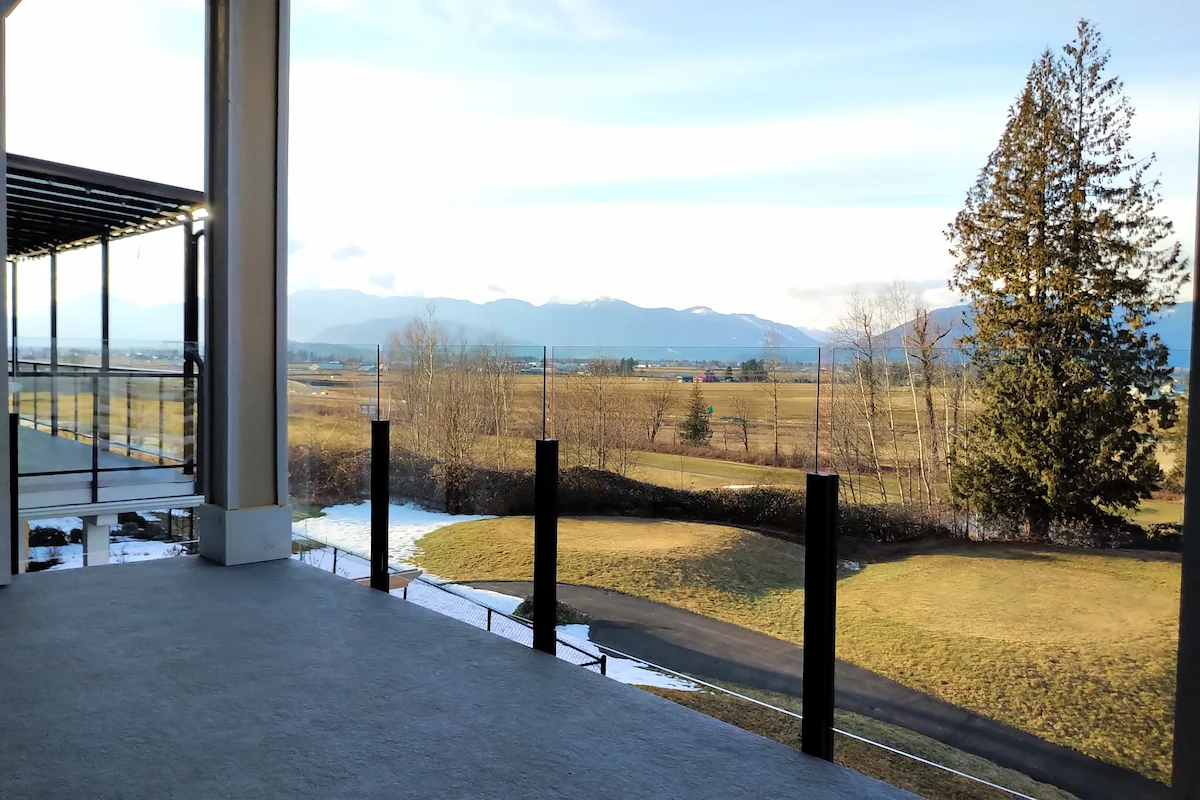
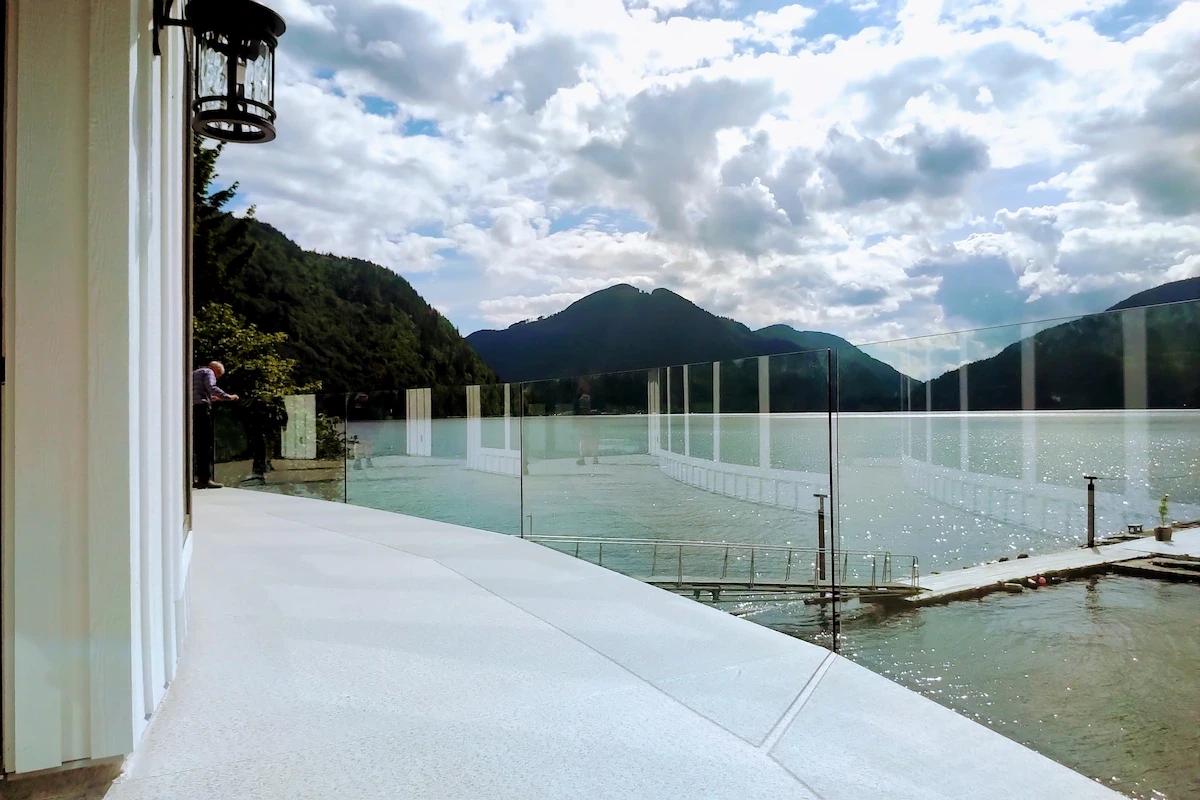
If wind is the reason you want a wall, clear glass cuts it at deck level and keeps the view. A glass wall can turn a deck that is too windy to sit on into one you can use for meals, the hot tub or just relaxing. Our guide to glass railings for wind protection covers exposed decks.
Hot Tub Privacy Ideas

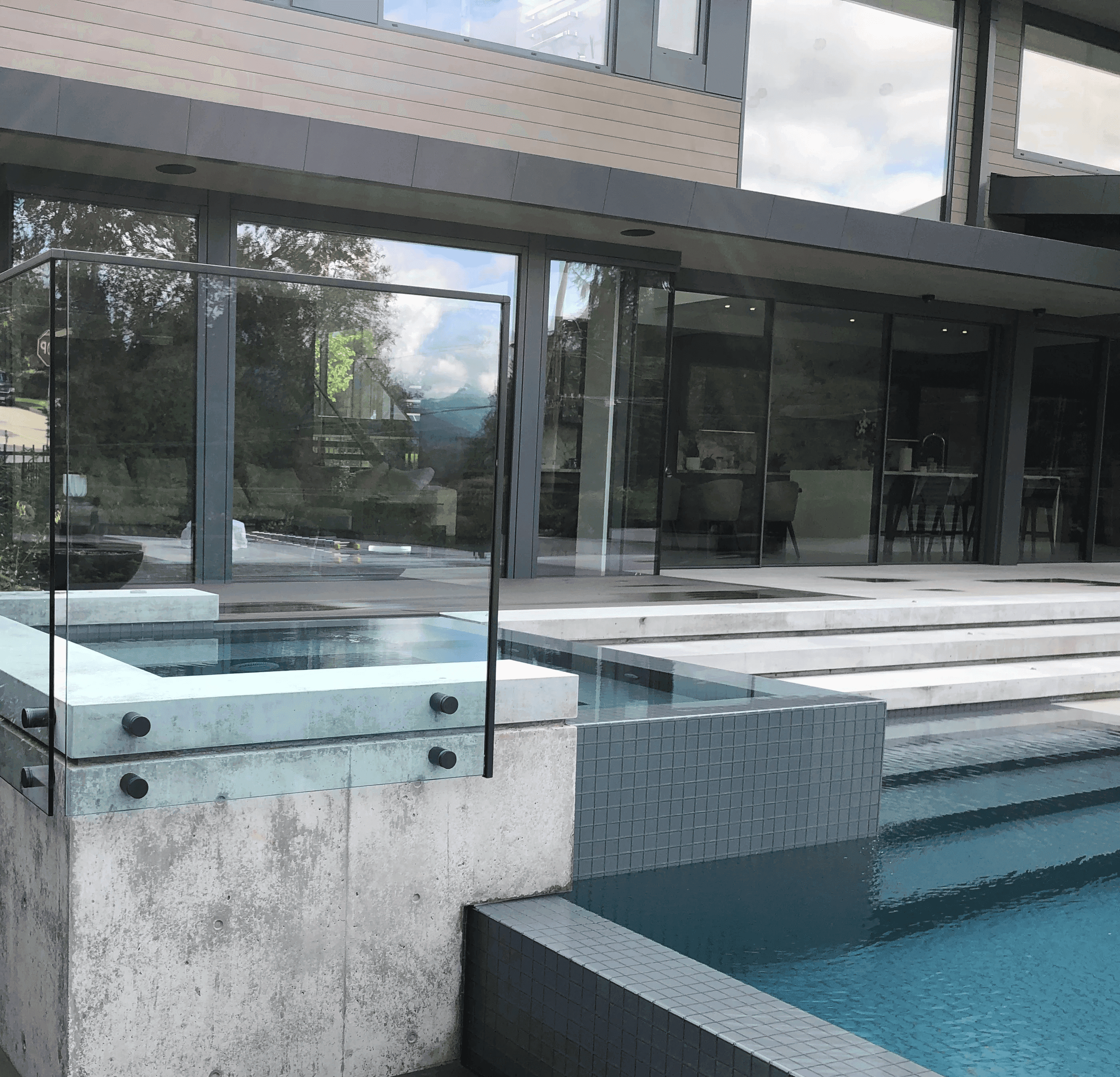
A hot tub is a common place to want screening. A frosted glass wall on the side facing the neighbours gives privacy and cuts the wind while you sit in the water, and it still lets light through. Hot tub enclosures are one of the common places Tenmar installs glass privacy walls.
Planters and Tall Plants
Large planters with tall grasses, bamboo in containers or climbing plants on a trellis add green screening along the edge of a deck. Plants take time to fill in, need watering and change with the seasons, so they suit decks that also have a fixed screen, or where some gaps are fine.
Outdoor Curtains and Fabric Screens
Outdoor curtains on a pergola or a frame give privacy you can open and close. They are easy to change, but fabric moves in the wind and needs to be taken down or tied back in storms.
Wood Slat and Lattice Screens
A wood slat or lattice screen gives a warm look and partial privacy, with gaps that let some light and air through. Wood needs more upkeep than glass. On treated or naturally durable wood, a finish is mainly for looks, and keeping that look means recoating it regularly (Canadian Wood Council).
Balcony Privacy Ideas

On a balcony, a privacy wall or screen often goes on the side shared with the next unit. Frosted or tinted glass keeps light coming onto the balcony, which matters more on a small space than on a large deck. Planters and fabric screens work too, as long as they are secured against wind.
If you live in a strata building, check first. BC's Standard Bylaws, which apply unless a strata has filed its own, require the strata corporation's written approval before an owner alters balconies, or fences, railings or similar structures that enclose a balcony (Strata Property Act, Schedule of Standard Bylaws).
Check your own strata's bylaws before you plan anything. Our page on condo balcony glass railings covers balcony work in strata buildings.
Privacy Ideas by Situation
The right privacy idea depends on what you are screening from. These are common places Tenmar installs glass privacy walls, and what suits each one.
A Neighbour Can See Onto Your Deck
Frosted glass on the side facing the neighbour gives full privacy and still lets light through. Side-yard separation between properties is one of the common places for a privacy wall. If you also have a view on that side, gradient frost gives privacy plus a view above.
A Patio Next to a Sidewalk or Shared Driveway
Ground-level patios next to busy sidewalks or shared driveways are another common place for a glass privacy wall. Frosted glass screens the patio from people walking by. Tinted glass is a softer option if you want filtered light more than full privacy.
A Rooftop or High-Rise Patio
On a rooftop or high-rise patio, wind protection is often the goal. Clear glass cuts the wind and keeps the view, and tinted glass filters the light. See our guide to glass railings for wind protection for more on exposed decks.
A Pool Area
Pool surrounds are a common place for glass privacy walls too. A pool fence has its own rules, set by each city, so read our glass pool fence guide before you plan one.
One Part of an Existing Glass Railing
You do not have to change the whole deck to add privacy. Privacy walls are also installed alongside existing glass railings, to give one section of a deck more screening without changing the rest.
How a Glass Privacy Wall Is Built
A glass privacy wall is built from aluminum posts with 12mm glass panels set between them. Each wall is measured on site and planned for the deck, the exposure and how you want to use the space.
Quote. We review your project and give you an estimate based on your deck and the glass finish you want.
Site visit. We confirm the measurements, the mounting options, the glass type and the wall height.
Measurement. Each post and panel is measured to fit the deck.
Posts. The aluminum posts go in first, spaced a maximum of 42 inches apart.
Glass. The 12mm glass panels are cut to size for your wall layout and finish.
Installation and walkthrough. The panels are installed between the posts, and we walk the finished wall with you.
From measurement to final install, most glass privacy wall projects take 6 to 8 weeks.
Combining Privacy Ideas
Many decks use more than one privacy idea. A glass wall can screen the side facing a neighbour, while planters soften the rest of the deck edge. On a covered area, outdoor curtains add shade you can open and close.
Start with the side that needs full screening, and choose the idea for that side first. Then add lighter ideas, like plants or a slat screen, where some gaps are fine.
Keeping Each Privacy Idea Looking Good
Each privacy idea needs a different kind of care, so plan for it when you choose. A glass privacy wall needs an occasional wash to keep it clear. Our guide to cleaning and maintaining glass railings in coastal BC covers the routine for glass.
Wood slat and lattice screens need regular recoating if you want them to keep their colour. Planters need watering, especially in dry summer weeks. Outdoor curtains and fabric screens last longer when they are taken down or tied back before a storm.
Deck Privacy Ideas at a Glance
Idea | Light | Wind | View |
|---|---|---|---|
Frosted glass wall | Lets light through | Cuts it | Blocks the view in |
Gradient frost glass | Lets light through | Cuts it | Privacy plus a view above |
Tinted glass | Filtered | Cuts it | Harder to see in |
Clear glass wall | Full light | Cuts it | Keeps the view |
Planters and plants | Mostly open | Some | Partial, changes with the season |
Outdoor curtains | Shades when closed | Moves in the wind | Open or closed |
Wood slat or lattice | Partial | Some | Partial |
How to Choose a Deck Privacy Idea

Which side needs screening? Most decks only need privacy on one side. Screen that side and leave the rest open.
Do you also have a wind problem? Glass walls cut the wind. Plants, slats and fabric let some wind through.
How much light do you want to keep? Every glass finish lets light through, and tinted glass filters it. Wood screens and closed curtains shade the deck.
How much upkeep will you do? Glass needs an occasional wash. Wood needs regular recoating to keep its colour, and plants need watering.
Are there rules to check? Ask your city about height limits for tall walls and screens, and check strata bylaws on a balcony.
Frequently Asked Questions
How tall should a deck privacy wall be?
Glass privacy walls are typically 5 to 8 feet tall, which is tall enough to block sightlines from neighbours and adjoining decks. Check with your city before building a tall wall or screen.
How do you get privacy on a deck without blocking light?
Frosted glass blocks the view in and still lets natural light through. Gradient frost gives privacy plus a view above.
What is the difference between a privacy wall and a railing?
A railing is a guard that stops falls and has to meet building code rules for guards. A privacy wall is taller and blocks sightlines and cuts wind. Many decks have both, with the privacy wall on the side facing the neighbour.
Which glass finish gives full privacy?
Frosted glass gives full privacy. Gradient frost gives privacy plus a view above, and tinted bronze or grey glass gives filtered light.
Can I add a privacy wall to part of an existing glass railing?
Yes. Privacy walls are installed alongside existing glass railings, so one section of a deck can get more screening without changing the rest.
How long does a glass privacy wall take?
From measurement to final install, most glass privacy wall projects take 6 to 8 weeks.
Start Your Project
If a glass privacy wall is on your list of deck privacy ideas, Tenmar can help you choose the finish and height for your deck. Marten reviews every quote and oversees the installation, and the first step is a free quote.