Educational
Deck Railing Options in BC: Glass, Aluminum, Wood, Cable and Composite Compared
Published:
Last updated:

The main deck railing options in BC are glass, aluminum pickets, wood, cable, vinyl and composite. Each one makes a different trade between the view, the upkeep and the up-front cost. In the Fraser Valley and Greater Vancouver, where it rains or snows on about 170 days a year at Vancouver International Airport and about 200 at Agassiz (Environment and Climate Change Canada normals for Vancouver and Agassiz), upkeep is a big part of the choice.
This guide compares each option on what it does to your view, how it holds up in a wet climate, and what the BC Building Code asks of any deck railing. Tenmar's railing work is glass, so the other materials are described as plainly as we can, with sources where a claim needs one.
The Short Answer: Which Deck Railing Fits Which Home
Glass suits decks where the view matters and the owner wants little upkeep. Aluminum pickets suit decks where cost matters more than the view. Wood suits a traditional look for owners who are happy to recoat it regularly to keep its colour.
Glass: clear views, little upkeep, can cost more up front.
Aluminum pickets: can cost less, does not rot, pickets sit in front of the view.
Wood: traditional look, weathers unless recoated regularly, can decay over time.
Cable: open look, cables can loosen over time.
Vinyl and composite: no staining, set colours and styles.
Deck Railing Options at a Glance
The table below compares the six deck railing options on view, upkeep and what to watch for. It leaves out prices on purpose, because prices depend on the deck, the site and the system.
Railing | View | Upkeep in a wet climate | What to watch for |
|---|---|---|---|
Glass | Open, nothing in the sightline (frameless) or slim posts (semi-frameless) | Occasional cleaning | Water spots show on the glass |
Aluminum pickets | Pickets and posts sit in front of the view | Does not rot; the powder-coat finish is the part to look after | Lets most wind through |
Wood | Pickets or balusters block much of the view | Recoat regularly to keep the colour | Decay over time, faster where wood stays wet |
Cable | Thin lines across the view | Check cable tension from time to time | Gaps can open if cables loosen |
Vinyl | Solid rails and pickets | Occasional washing | Set colours and profiles |
Composite | Solid rails and pickets | Occasional washing | Set colours and profiles |
Glass Railings: Clear Views, Little Upkeep

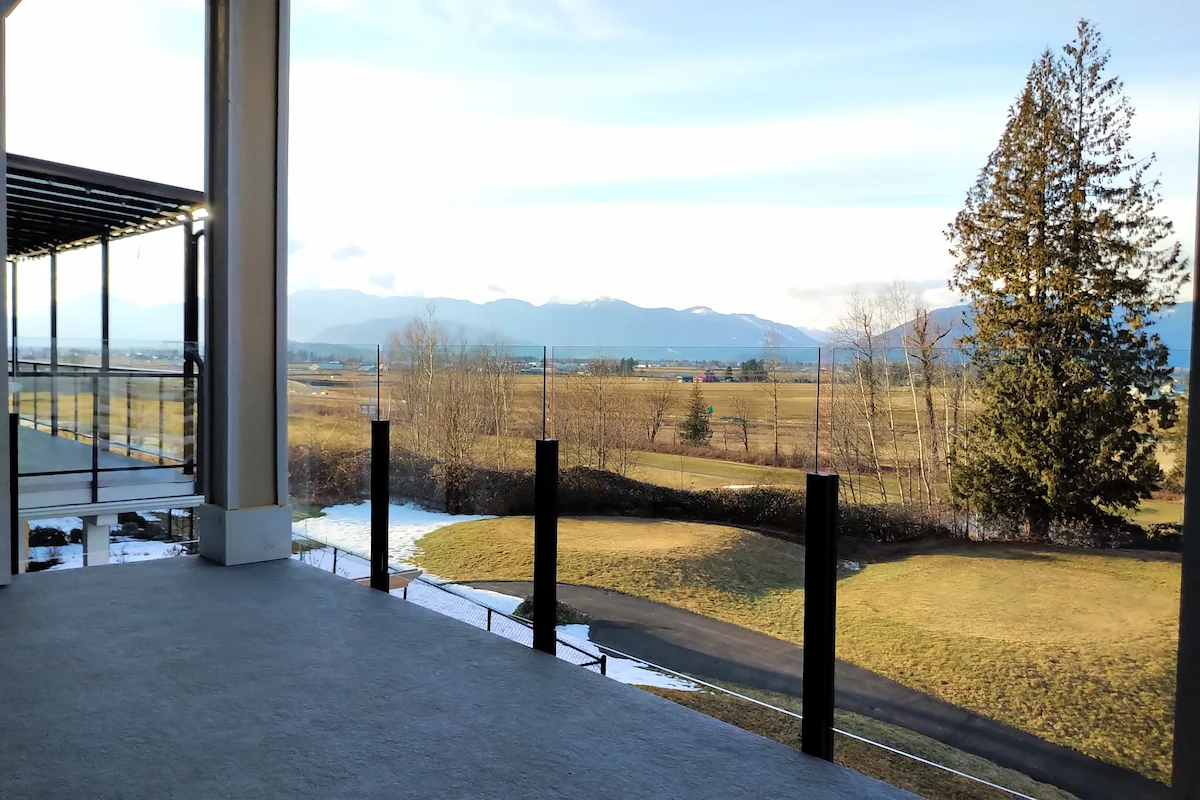
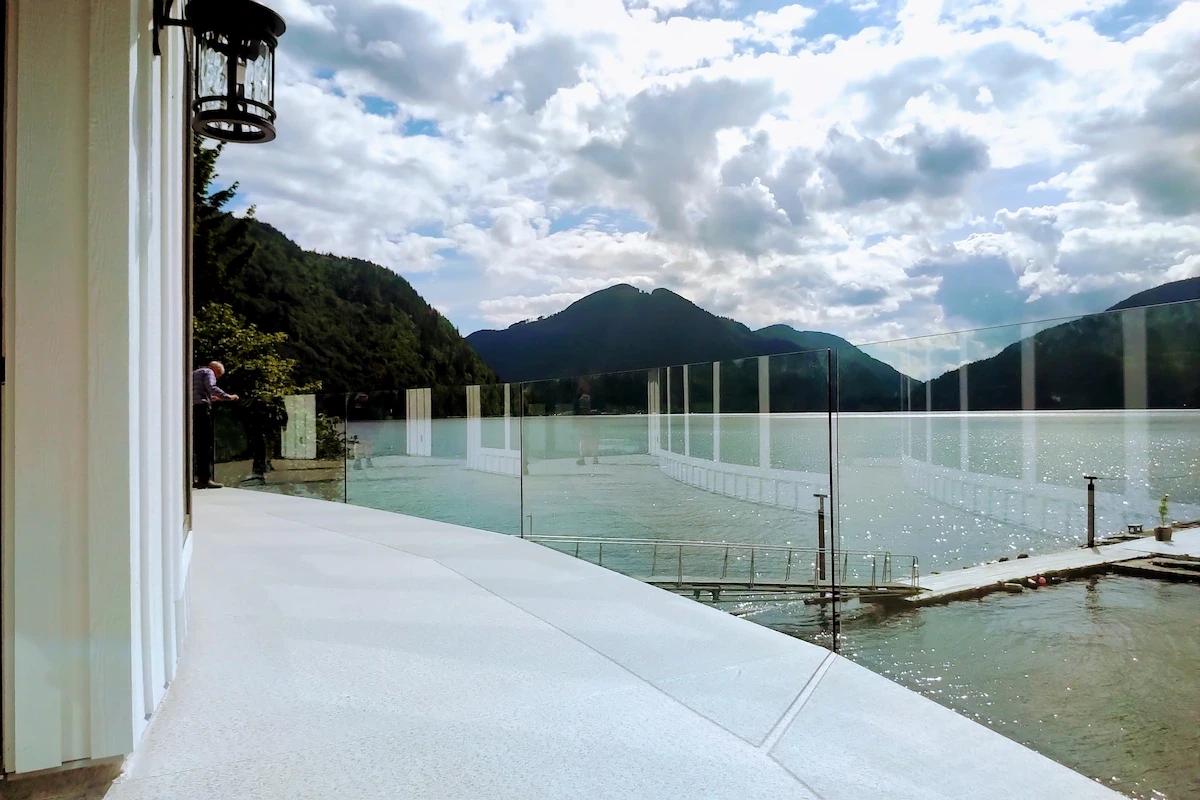
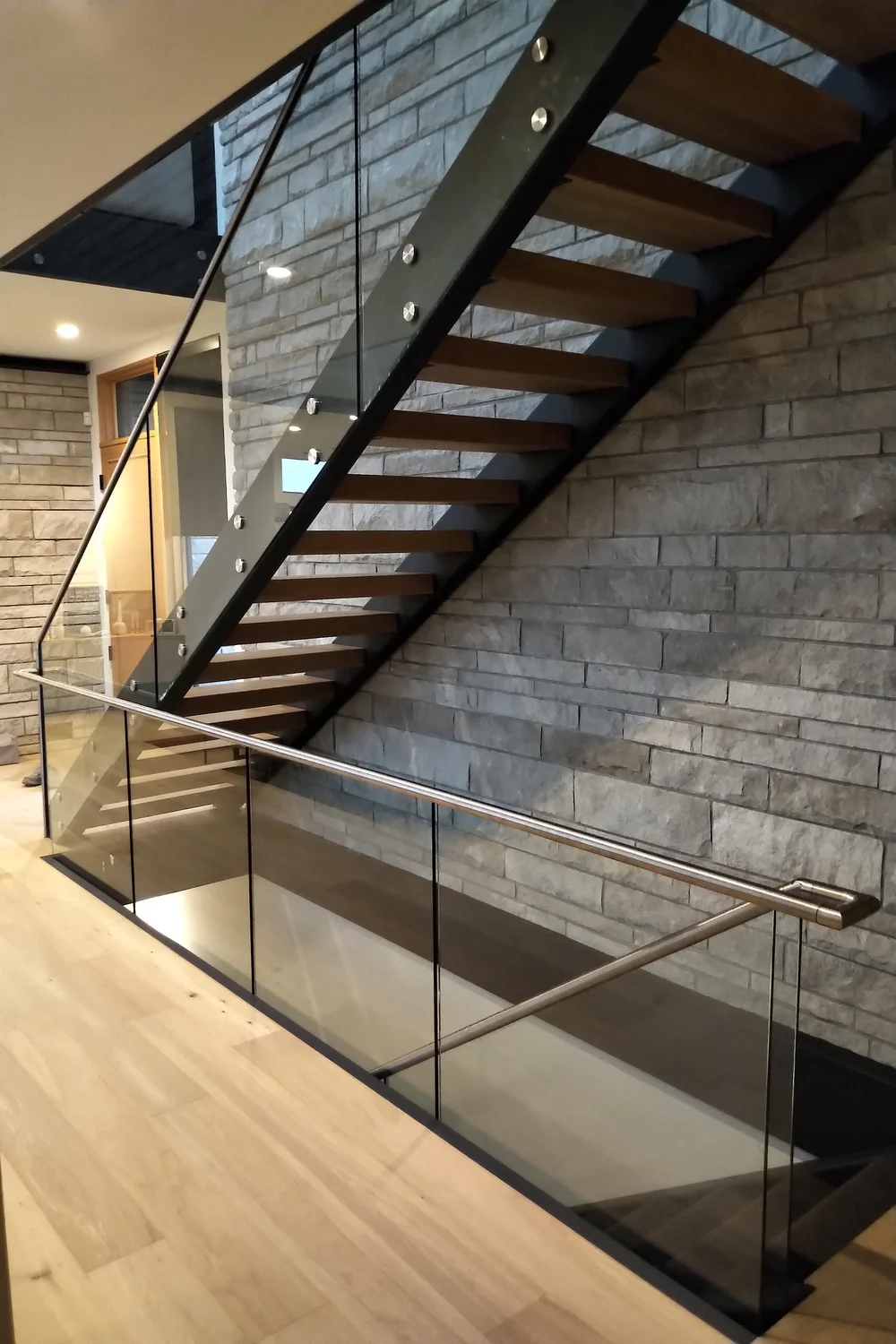
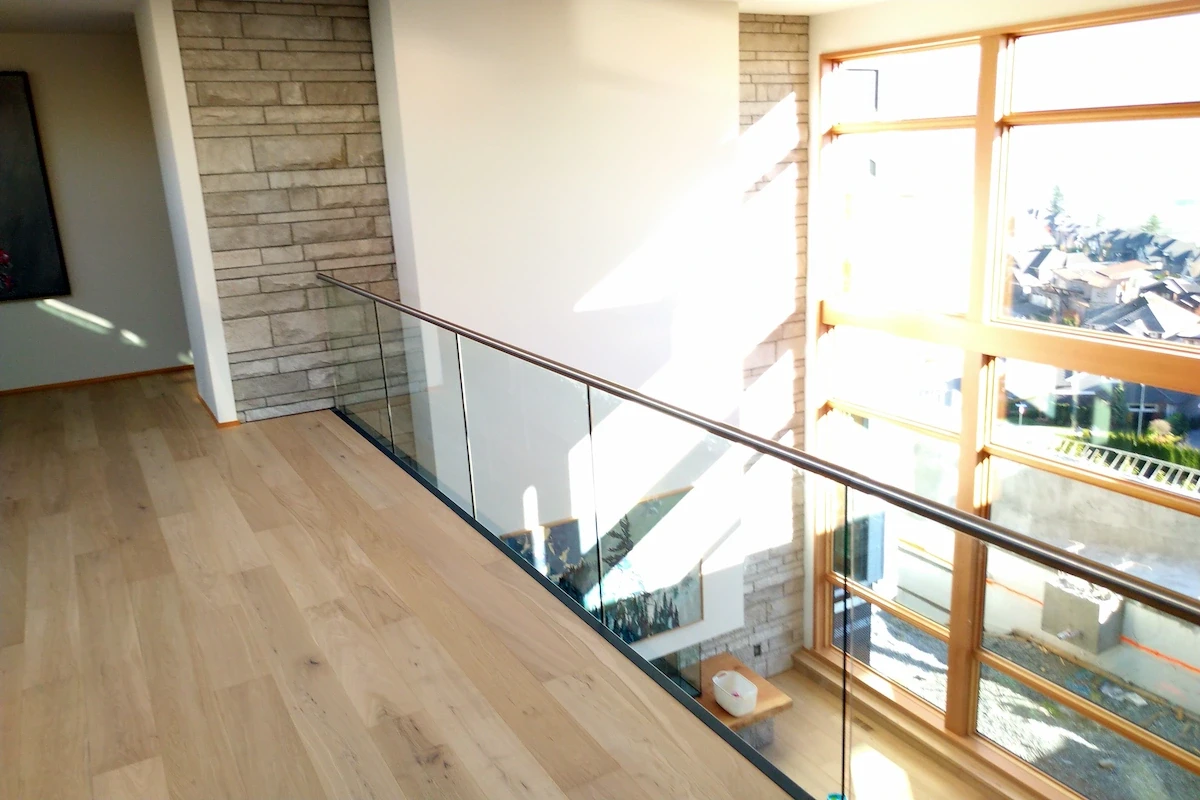
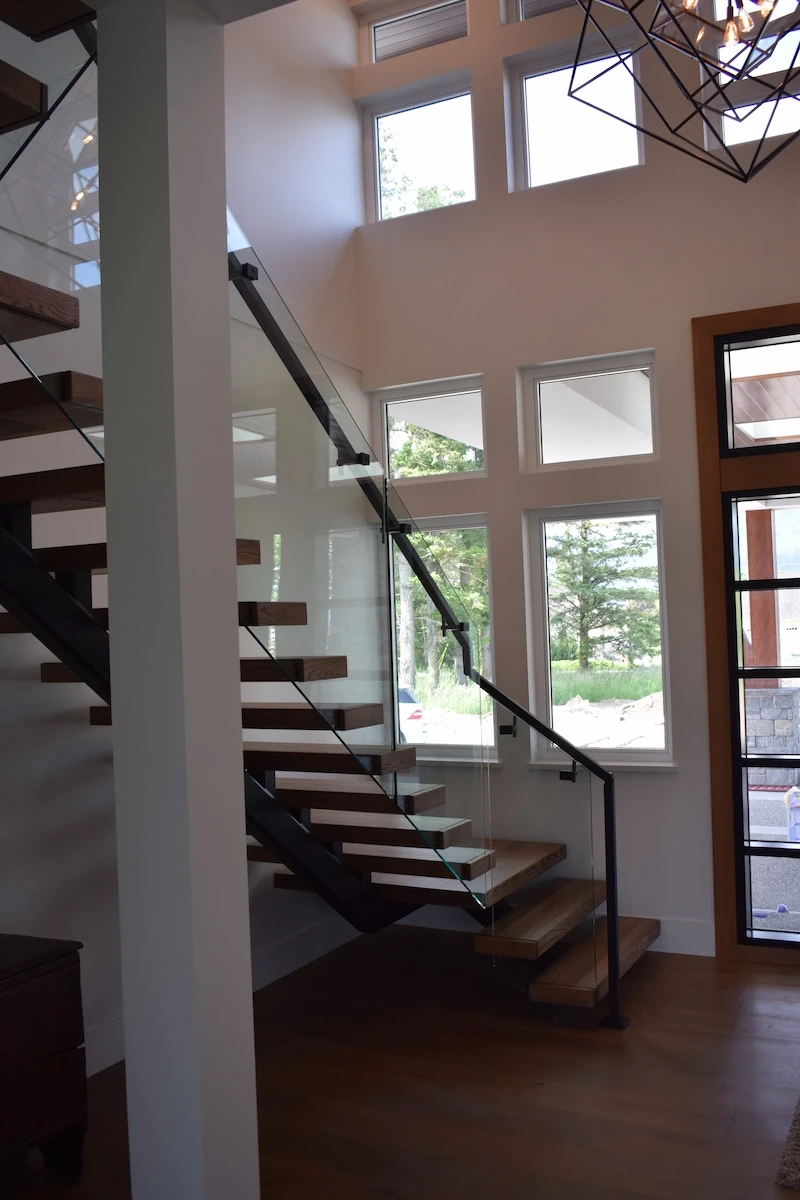
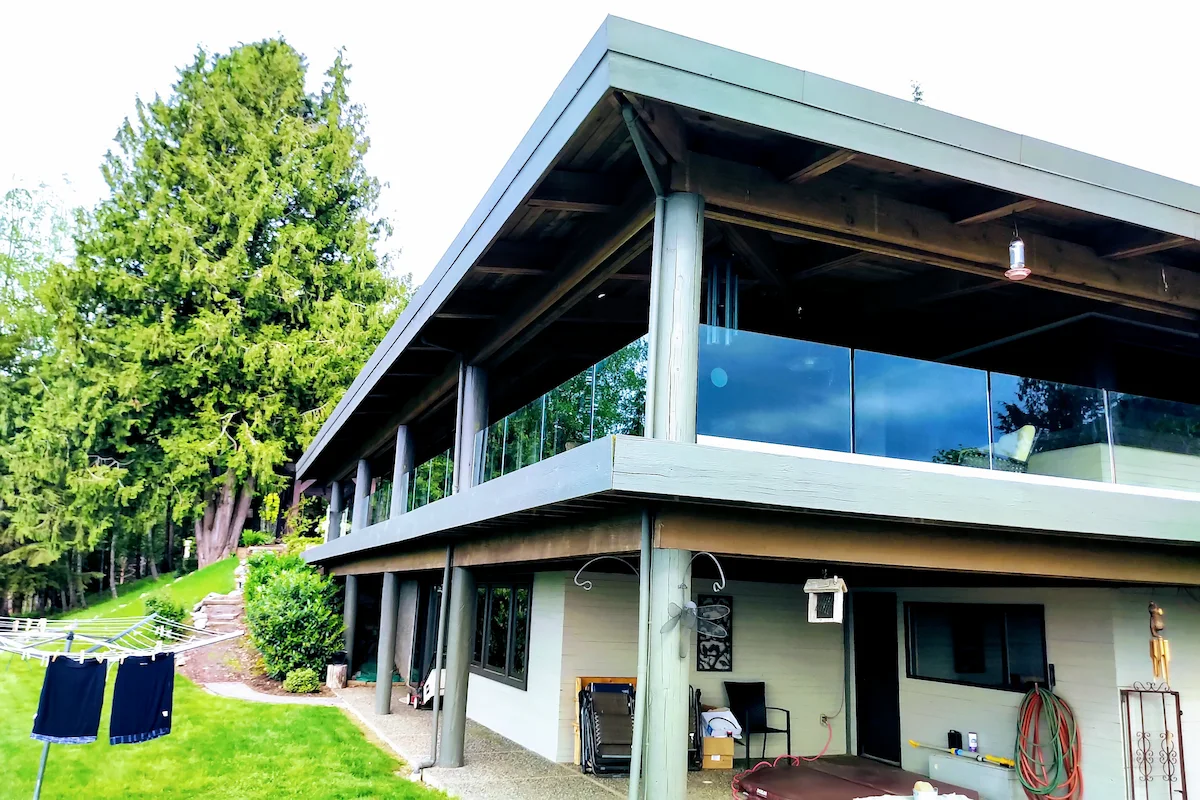
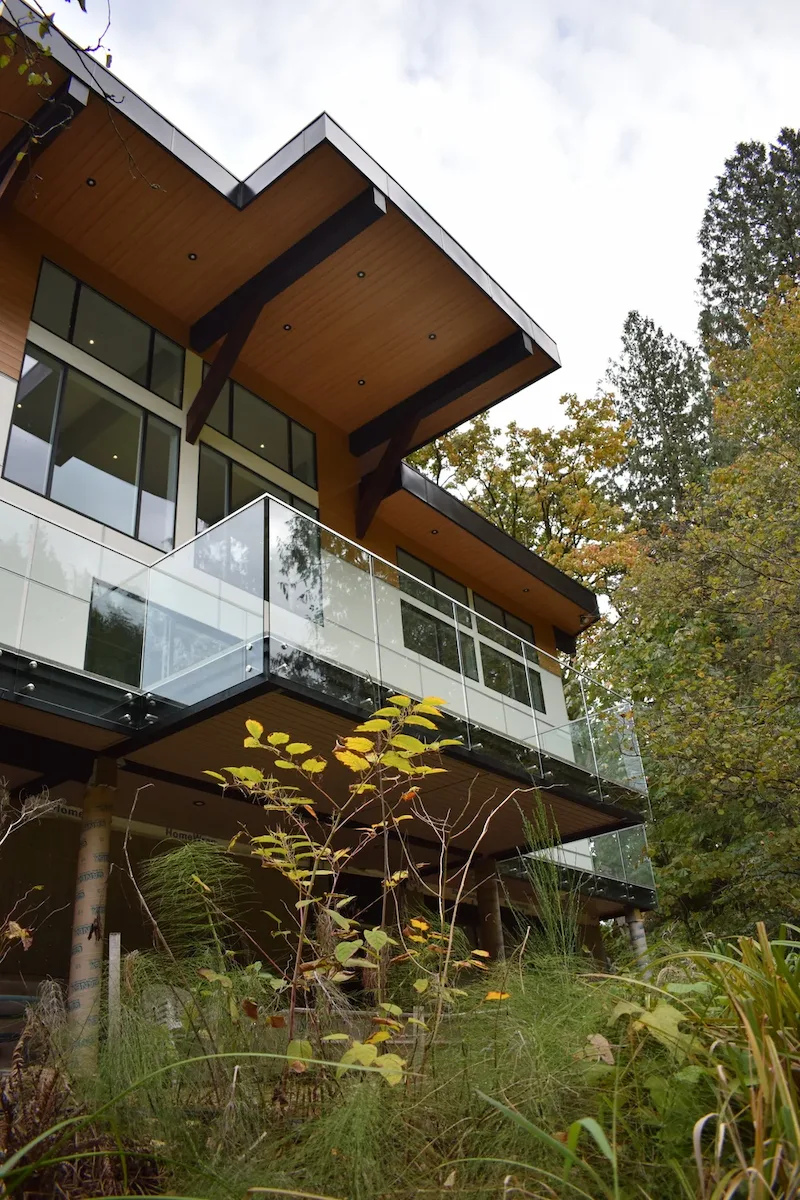
Glass railings keep the view open, and they are virtually maintenance-free. Glass does not rot, warp or need staining. The trade-off is cost: glass can cost more to install than other options.
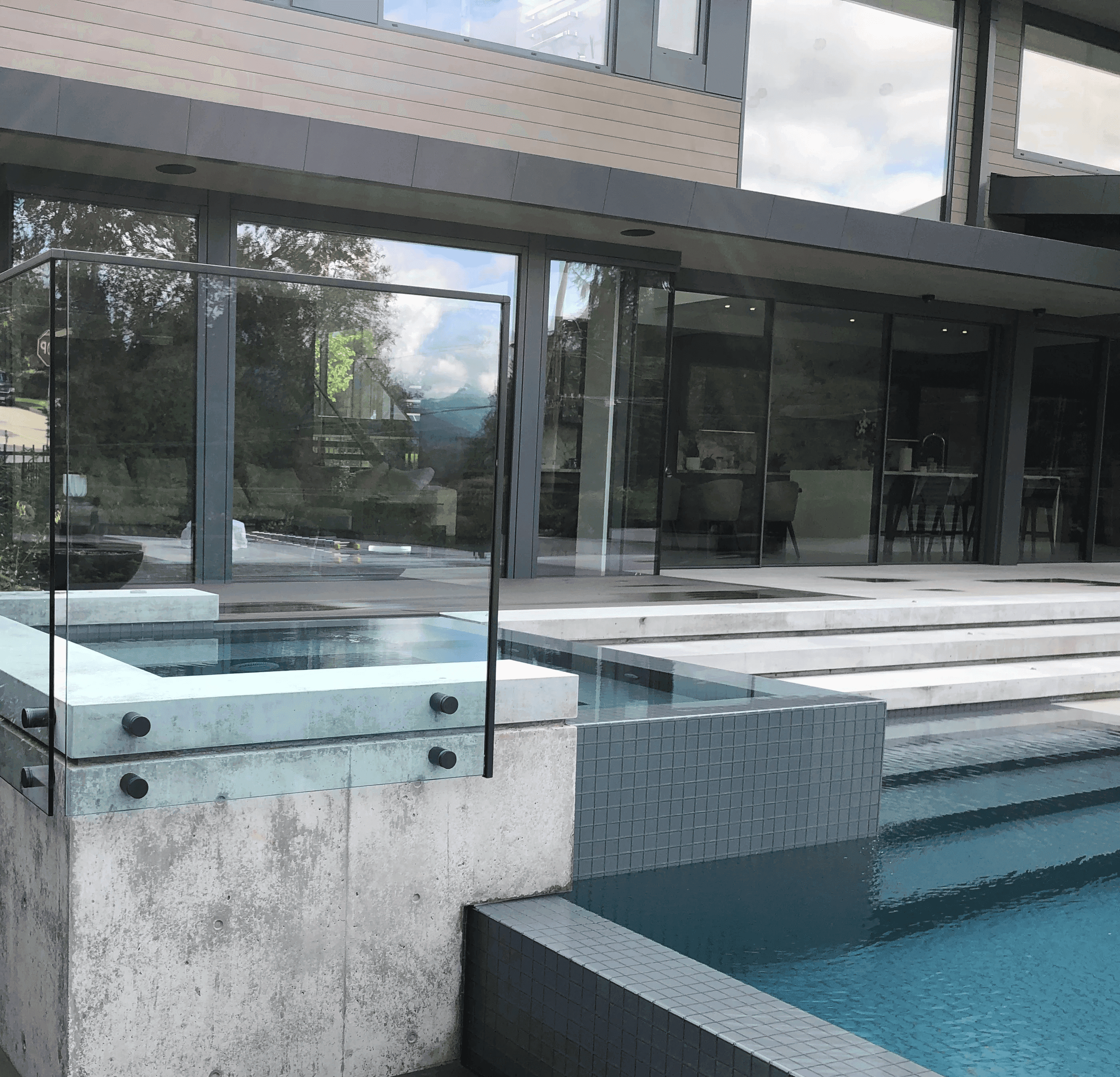
Tenmar builds frameless and semi-frameless glass railings, plus curved glass, and they use 12mm safety glass built to BC Building Code standards.
Frameless glass railings have no posts along the run, so nothing interrupts the view.
Semi-frameless glass railings hold the glass between aluminum posts spaced a maximum of 42 inches apart. They cost less than frameless and suit modern and traditional homes alike.
How Frameless Glass Is Mounted

Frameless glass is held at its base or along the deck face by one of three mounts.
Base shoe: glass mounted in a continuous channel.
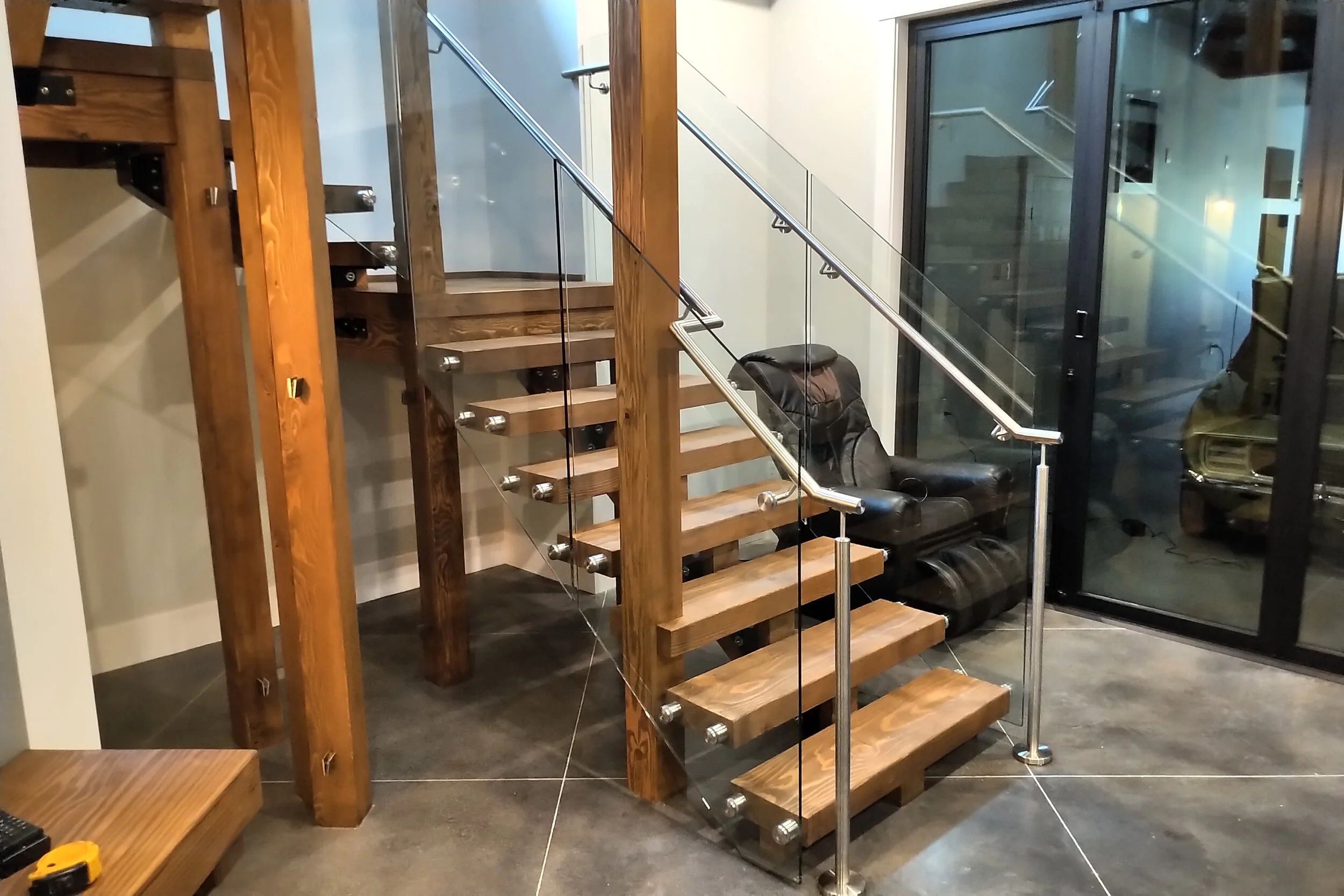
Standoffs: glass anchored to the deck face using pairs of stainless or powder-coated standoffs.
Spigots: glass clamped in pairs of surface-mounted spigots.
What Glass Railings Cost and How Long They Take
Frameless glass railings cost $300 to $400 per linear foot. Semi-frameless glass railings cost $250 to $350 per linear foot. Pricing depends on complexity and site conditions.
Frameless railings take 6 to 8 weeks from measurement to completion. For semi-frameless, the posts are installed within 2 weeks, followed by glass installation in 6 to 8 weeks. Our glass railing cost guide explains what moves a quote within each range.
Upkeep and Wind

Glass needs an occasional wash to keep it clear, and water spots show on it. Our guide to cleaning and maintaining glass railings in coastal BC covers the routine.
Solid glass panels also cut the wind on an exposed deck, while pickets and cables let it through. See our guide to glass railings for wind protection.
Aluminum Picket Railings

Aluminum picket railings can cost less than glass, but every picket and post sits between you and the view. They are a practical choice for decks where the view is not the main feature.
An aluminum railing is built from posts, a top rail, a bottom rail and vertical pickets. The parts arrive with a factory powder-coat finish in a range of colours. Aluminum does not rot, and it does not rust the way steel does (The Aluminum Association).
The finish is the part to look after. Our comparison of glass vs aluminum railings goes deeper on the trade-offs.
Wood Railings and BC Rain
Wood railings give a deck a warm, traditional look and can cost less to install than glass. They also ask more of their owners. A finish on wood is mainly for looks, and keeping that look means recoating it regularly (Canadian Wood Council).
How long exposed wood lasts depends on the species, how exposed it is to rot conditions, how well it is maintained and whether it is treated. A well-designed, well-ventilated cedar deck has a life similar to cedar shingles, about 15 to 25 years, and properly treated wood can last at least 40 years (Canadian Wood Council).
How Wet the Fraser Valley Is
Wet conditions raise the decay hazard for exposed wood, and this part of BC is wet. Environment Canada's climate normals record precipitation on about 169 days a year at Vancouver International Airport, adding up to about 1,189 mm a year (Environment and Climate Change Canada, 1981 to 2010 normals). Agassiz is wetter, with precipitation on about 204 days and about 1,754 mm a year (Environment and Climate Change Canada, 1981 to 2007 record).
On a deck that sees that much rain, owners who want wood to keep its colour plan to recoat it regularly. Weathered, rotting wood railings are one of the reasons homeowners call us.
What Wood to Use
If you choose wood, cedar and pressure-treated lumber are both used outdoors. Cedar heartwood resists decay to some degree, though it varies, and preservative-treated wood is made to resist decay (Canadian Wood Council). A finish on either one is optional and mainly keeps the colour, so plan to recoat it if you want the wood to stay looking new.
If you are weighing a switch, our page on replacing wood deck railings with glass covers how a retrofit works on an existing deck.
Cable Railings
Cable railings usually use stainless steel cables, most often run horizontally between posts. They give a more open view than pickets, though the cables still cross the sightline.
Cable railings are often expected to be the cheaper option, but when Tenmar prices one, it usually comes out close to frameless glass. The cables themselves cost little. Each cable needs a stainless connector at the post on each end plus a stainless tensioner, so a straight run with 12 cables carries 24 connectors and 12 tensioners.
Cables can loosen over time, and loose cables are one of the reasons homeowners call us about replacing a cable railing. Tension matters for code as well as looks. The BC Building Code requires openings in a guard to stop a 100 mm ball from passing through, so as cables loosen and the gaps between them widen, a cable railing can stop meeting the 100 mm rule (Government of British Columbia, BC Building Code 2024).
High decks need one more check. On any deck more than 4.2 m above the level below, the code says nothing between 140 mm and 900 mm above the deck can make the guard easy to climb.
Horizontal cables sit across that zone, so ask your installer how a cable design handles the rule on a high deck. Our glass vs cable railing guide compares the two in detail.
Vinyl and Composite Railings
Vinyl and composite railings are factory-finished systems that do not need staining, and a periodic wash keeps them looking new. They come in set colours and profiles, with solid rails and pickets that sit in front of the view much like wood or aluminum.
Vinyl is a plastic railing. Over time, some vinyl railings yellow or crack, which is another reason homeowners call us. Composite railings also skip the staining and come in a fixed set of colours and profiles.
What the BC Building Code Asks of Any Deck Railing
Every deck railing option has to meet the BC Building Code's height, opening and climbing rules for guards, whatever it is made of. The City of Vancouver uses its own building by-law instead of the BC codes. The code calls a deck railing a "guard," and the main rules for a single home (one dwelling, or a house with a secondary suite) are below (Government of British Columbia, BC Building Code 2024).
When you need one: a guard is required on any open side where the deck is more than 600 mm above the surface within 1.2 m of its edge.
Height: an exterior guard must be at least 900 mm high where the deck is no more than 1,800 mm above the finished ground. Higher decks need a guard at least 1,070 mm high.
Openings: openings in the guard must stop a 100 mm ball from passing through.
Climbing: where the deck is more than 4.2 m above the level below, nothing between 140 mm and 900 mm above the deck can make the guard easy to climb.
A railing on its own does not need a permit. It falls under the permit for any larger construction happening at the same time, and a larger permitted renovation needs engineering for the railings.
We build railings the same way whether or not engineered paperwork is required. For heights in more detail, see our guide on how to choose the right railing height.
How to Choose Among Deck Railing Options
Four questions narrow the deck railing options for most BC homes.
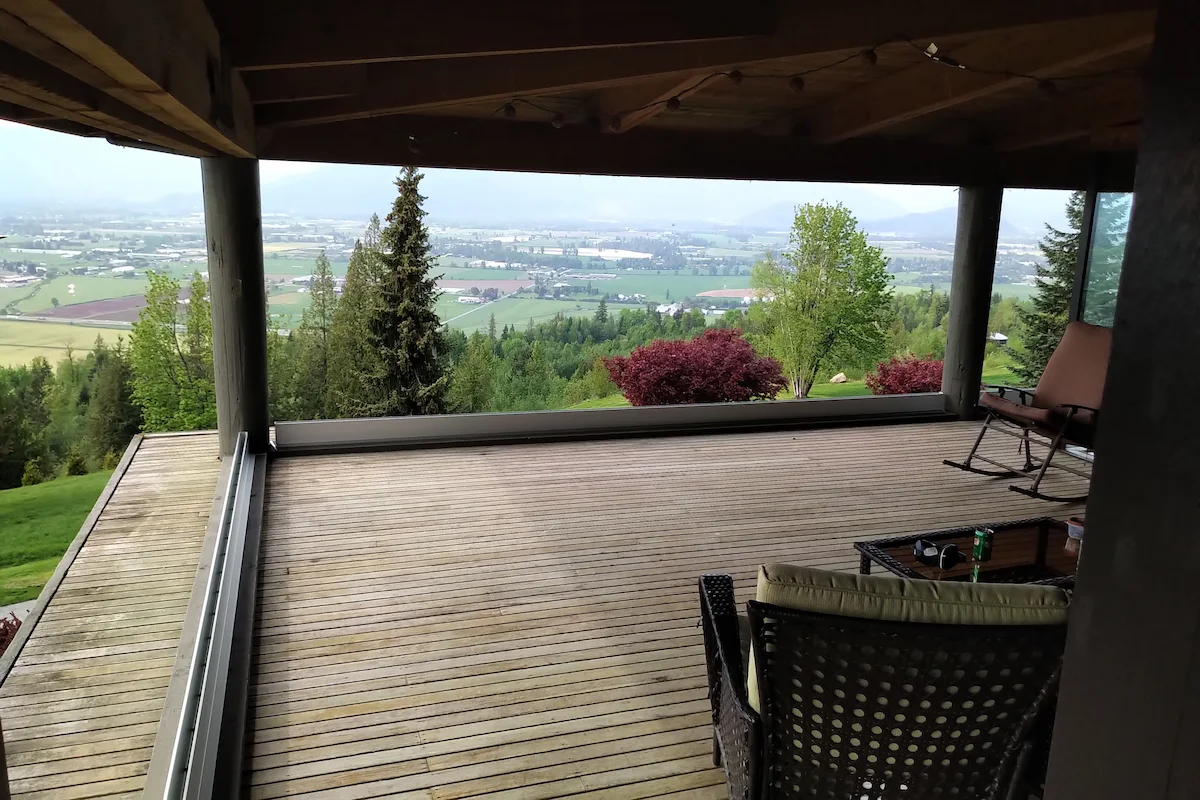
Is the view the main feature of the deck? If so, glass keeps it open, and frameless glass has no posts along the run.
How much upkeep will you do? Wood needs regular recoating if you want to keep its colour. Glass, vinyl and composite do not need staining, and aluminum does not rot.
Is the deck exposed to wind? Solid glass panels cut the wind. Pickets and cables let it through.
What is the budget? Glass can cost more up front. Aluminum pickets and wood can cost less to install.
Frequently Asked Questions
What are the cheapest deck railings?
Wood and aluminum picket railings can cost less to install than glass. Cable is often expected to be cheaper too, but when Tenmar prices a cable railing, it usually comes out close to frameless glass. Wood needs more upkeep than the others if you want to keep its colour, because that means recoating it regularly.
What is the lowest-maintenance deck railing?
Glass is virtually maintenance-free and needs only an occasional wash. Vinyl and composite need only a periodic wash, and aluminum does not rot. Wood needs more upkeep than the others if you want to keep its colour.
What are the vertical rails on a deck railing called?
They are called balusters, also known as spindles or, on a deck, pickets. Glass railings replace balusters with glass panels, which is what keeps the view open.
How high does a deck railing need to be in BC?
For a single home, an exterior guard must be at least 900 mm high where the deck is no more than 1,800 mm above the finished ground. Decks higher than that need a guard at least 1,070 mm high.
What type of wood should I use for a deck railing?
Cedar and pressure-treated lumber are both used outdoors. Cedar heartwood resists decay to some degree, though it varies, and preservative-treated wood is made to resist decay. A finish is optional and mainly keeps the colour, so plan to reapply it if you want the wood to stay looking new.
Which deck railing keeps the view open?
Glass keeps the view open, because there are no pickets in the way. Frameless glass has no posts along the run, and semi-frameless glass uses slim aluminum posts spaced a maximum of 42 inches apart.
Start Your Project
If glass is on your list of deck railing options, Tenmar can help you compare frameless and semi-frameless for your deck. Marten reviews every quote and oversees the installation, and the first step is a free quote.