Comparison
Aluminium and Glass Railing for BC Homes, Comparison
Published:
Last updated:
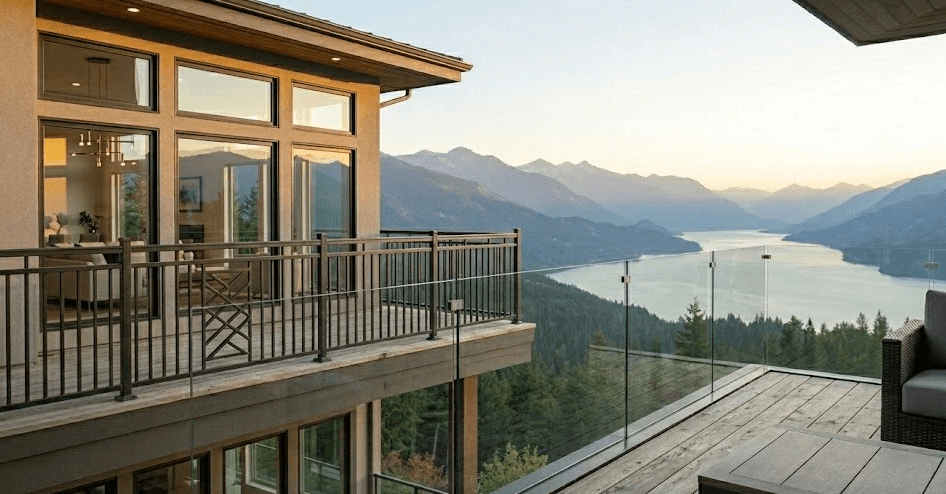
Choosing between an aluminium and glass railing comes down to a few clear trade-offs: how much of the view you want to keep, how the deck handles wind, what upkeep you are willing to do, and what your budget allows. Both are modern choices. Both beat wood pickets for a clean, contemporary finish. The similarities mostly end there.
For a home in Vancouver, the Fraser Valley, Whistler, Squamish, or anywhere on the BC coast, the differences matter more than they would in a drier inland climate. Salt air, frequent rain, and exposed waterfront decks all change which system performs better over time.
This guide compares aluminium and glass railing systems across the factors that drive the decision: cost, view quality, wind behaviour, maintenance, and BC Building Code compliance. It also covers a point that confuses many homeowners, which is that "aluminium" and "glass" are not always separate choices. For a broader look at the railing styles available in BC homes, see our guide to types of glass railings.
Aluminium and Glass Railing: The Quick Comparison
Before looking at individual features in detail, the table below provides a quick comparison of how each railing type performs across the categories most relevant to BC homeowners.
Factor | Glass Railings | Aluminium Railings |
|---|---|---|
View | Fully transparent, keeps the whole sightline | Pickets and posts interrupt the view |
Natural light | Lets daylight through, feels open and bright | Casts shadow lines, blocks some light |
Wind protection | Solid barrier, blocks gusts | Open profile, no shelter from wind |
Modern appeal | Sleek, frameless, premium finish | More traditional look |
Privacy options | Frosted or textured panels available | Limited; relies on solid infill |
Structural maintenance | None once installed | Finish touch-ups; can dent or chip |
Child and pet safety | No footholds to climb | Horizontal bars can offer footholds |
Service life, cared for | 15+ years with simple cleaning | Long-lasting, though the coating wears |
Sun and glare | Frosted glass controls glare | Dark colours absorb heat in sun |
Style detail | Clear, frosted, frameless, semi-frameless | Colours, pickets or bars, wood-look |
Upfront cost | $250 to $400 per linear foot | $80 to $150 per linear foot (picket builds) |
How Each Railing Is Built
Both options are built to satisfy the same BC Building Code load and opening rules. They reach that target by very different routes, and the build explains why glass performs the way it does.
Glass Railings: Clear Panels, Concealed Hardware
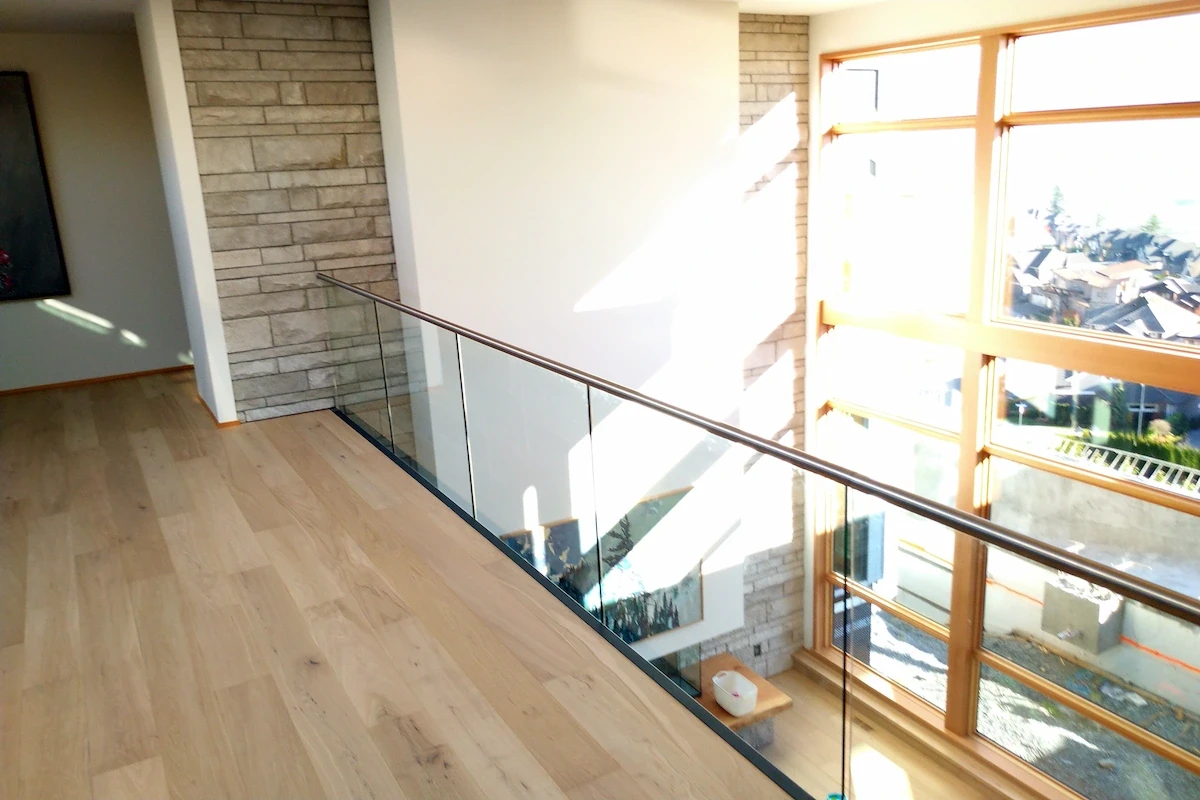
A glass guard relies on 12 mm safety glass panels as its main barrier. The panels anchor at the base through hardware, and the rest of each panel does the work of the guard. Because the glass itself carries the span, there is no need for the closely spaced uprights a metal railing depends on, which is exactly why the view stays open.
Tenmar fits two main configurations:
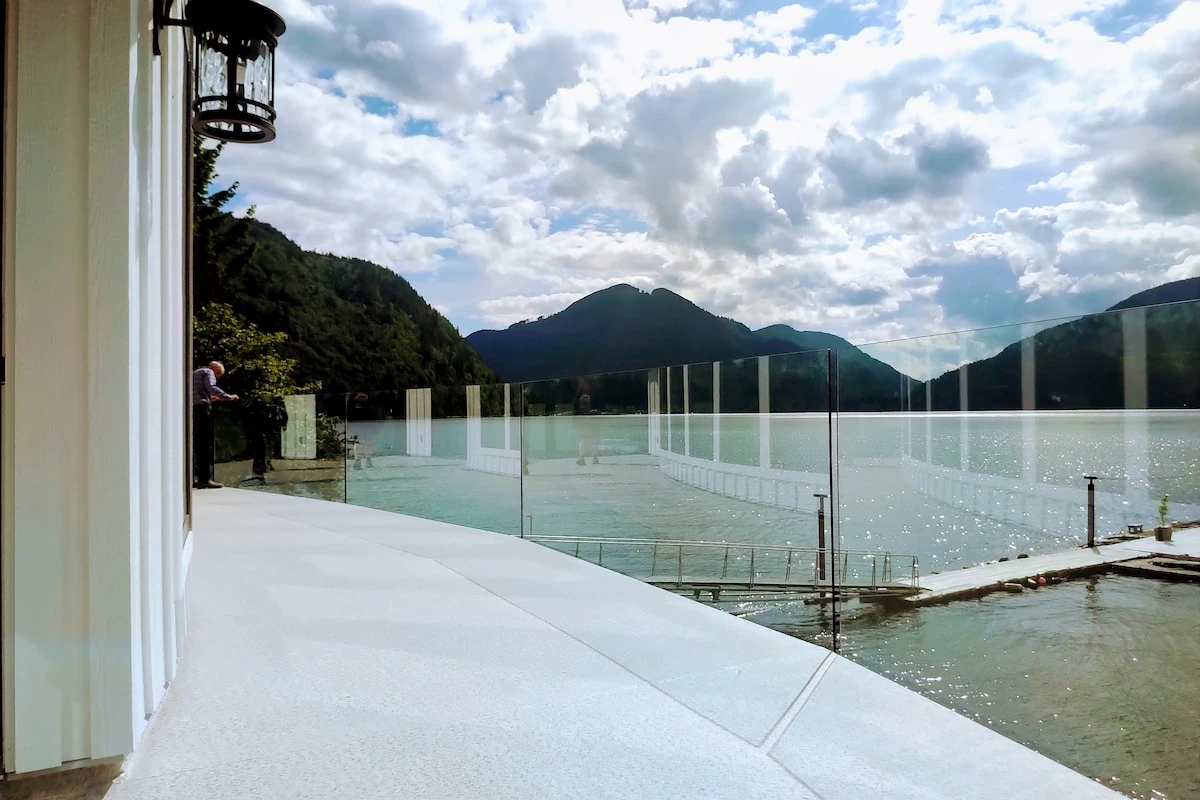
Frameless: 12 mm panels held by concealed base hardware. No posts, no top rail, and full transparency.
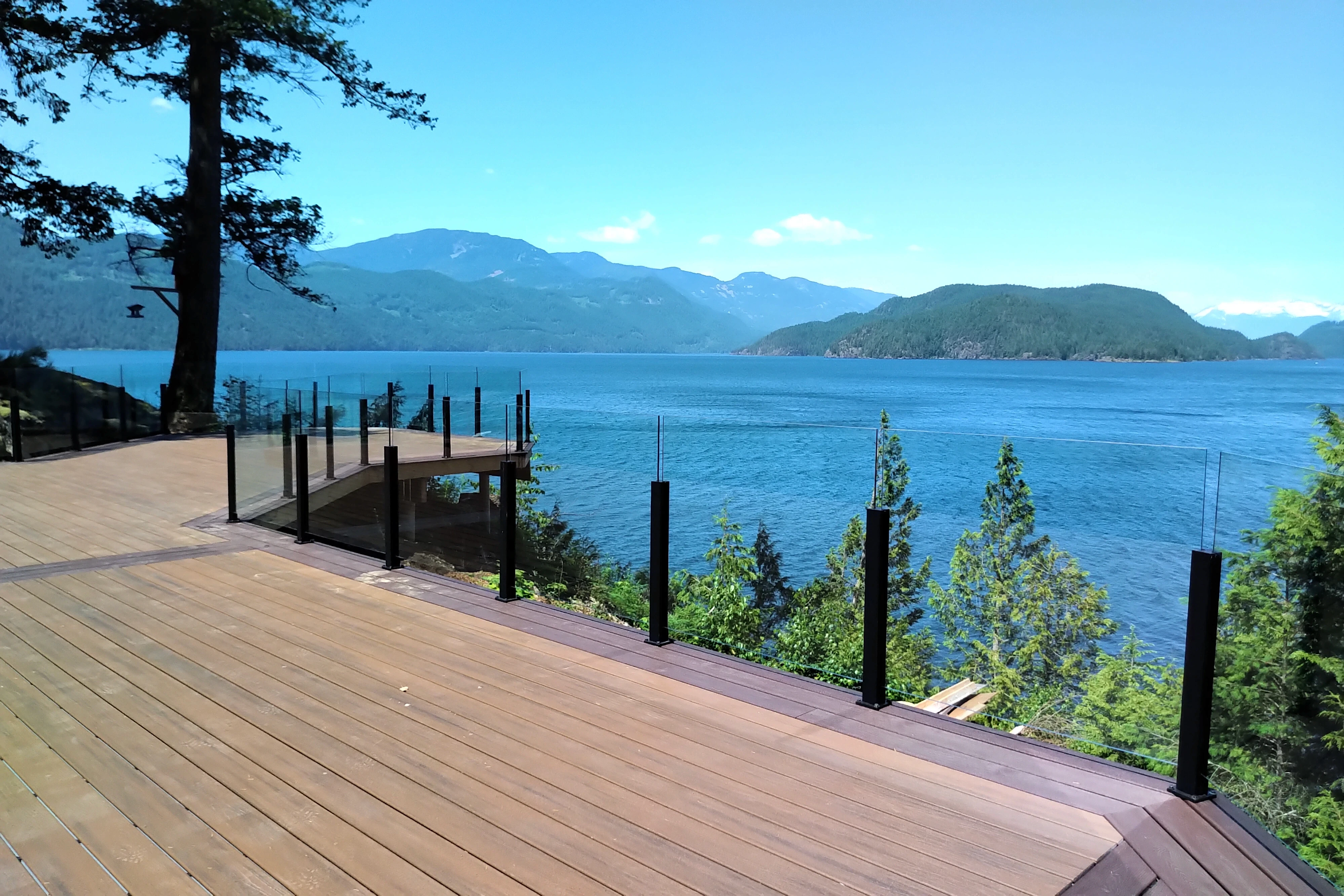
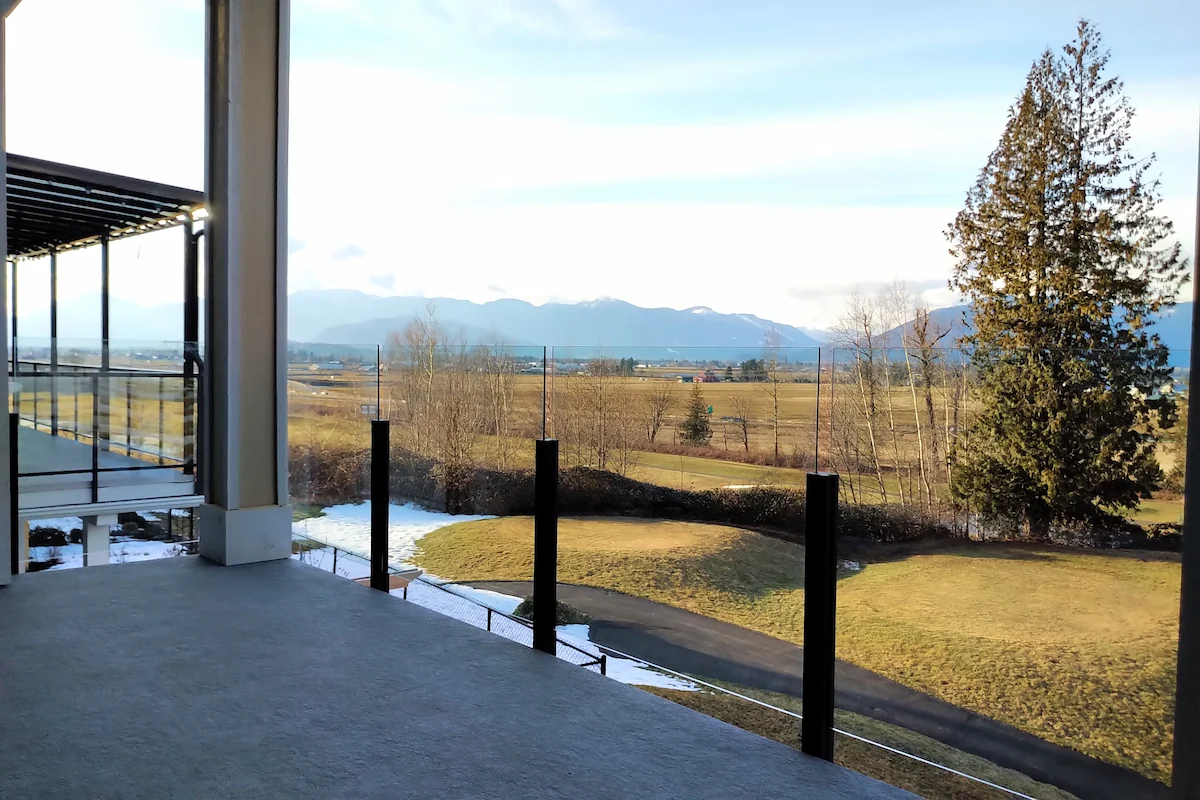
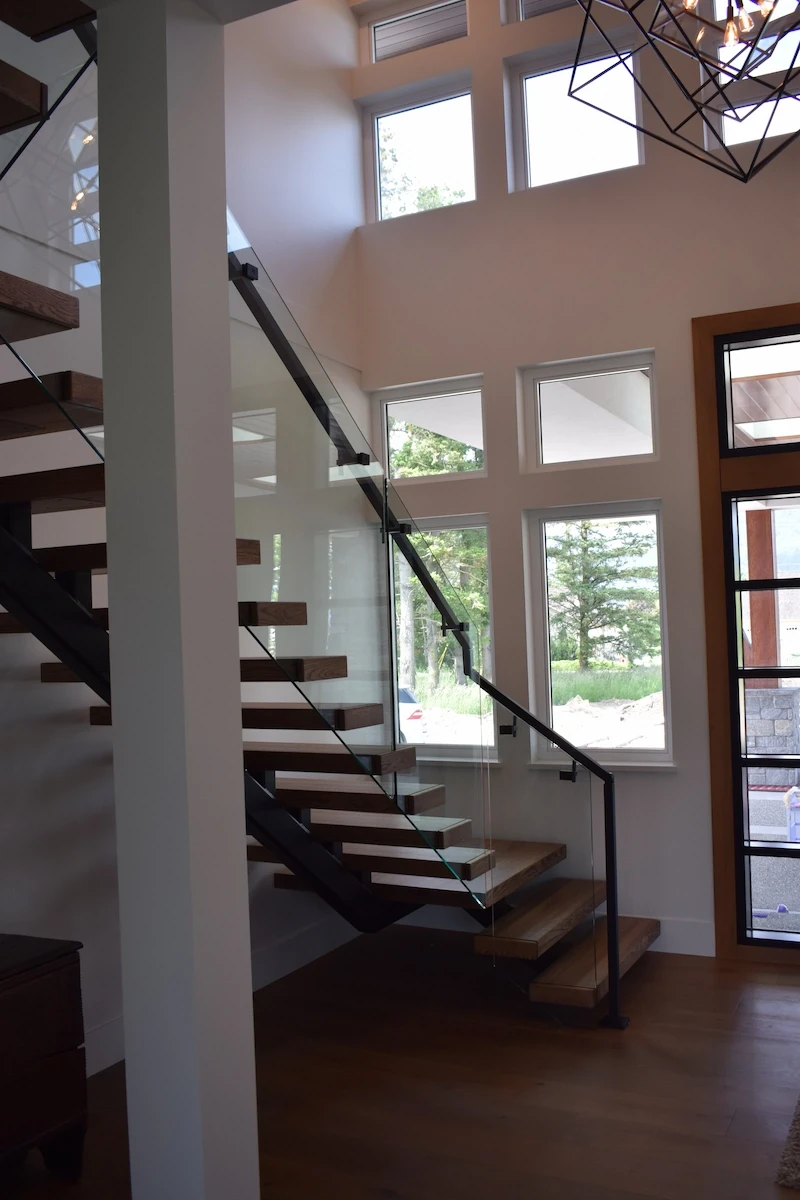
Semi-frameless: 12 mm panels set between aluminium posts spaced no more than 42 inches apart, with an optional slim top rail.
The frameless route gives the cleanest look and suits a prized view. The semi-frameless route keeps most of that clarity while trimming the cost. Both appear in detail on our frameless glass railings and semi-frameless railings service pages.
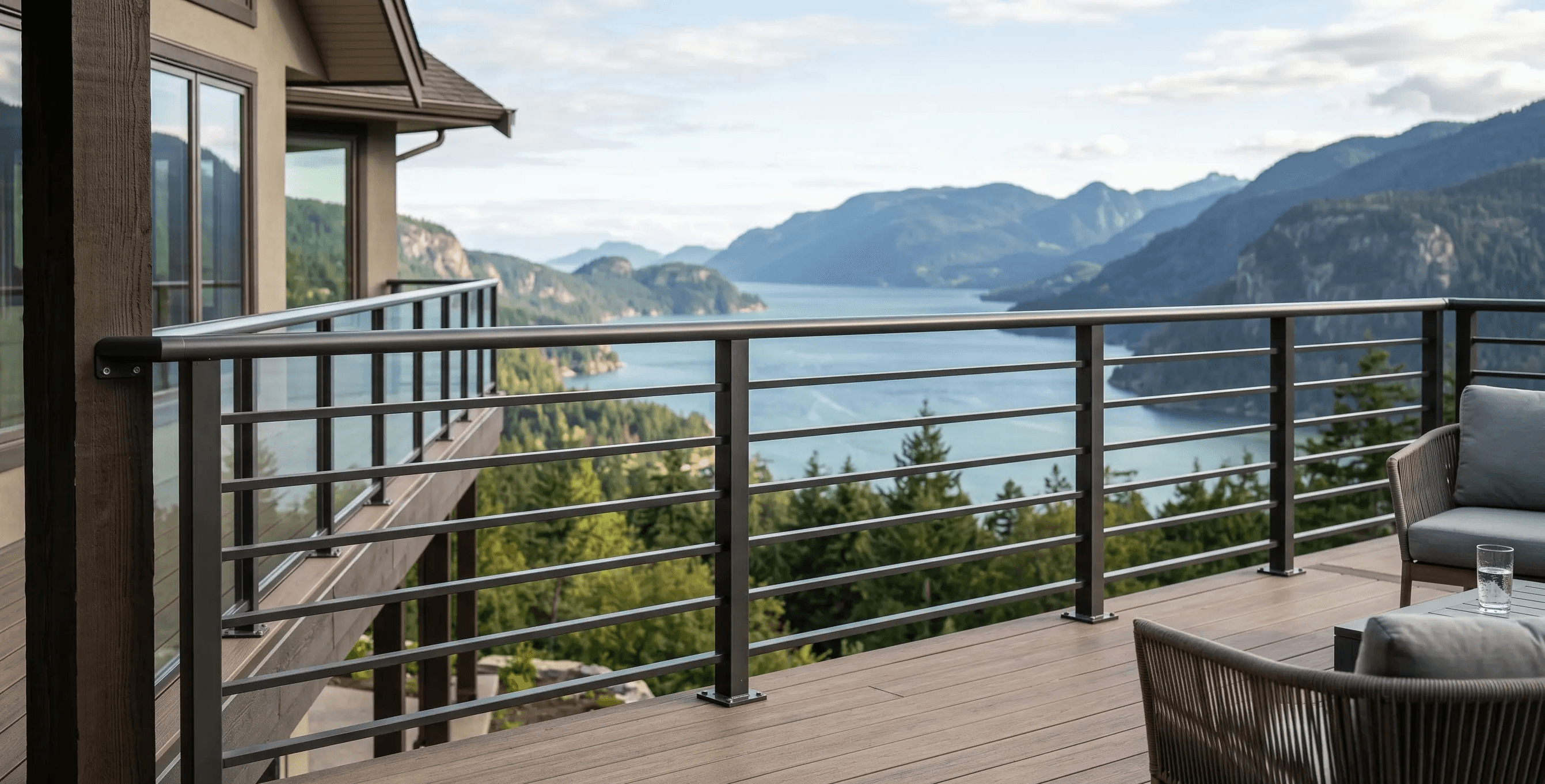
Aluminium Railings: Posts, Rails, and Pickets
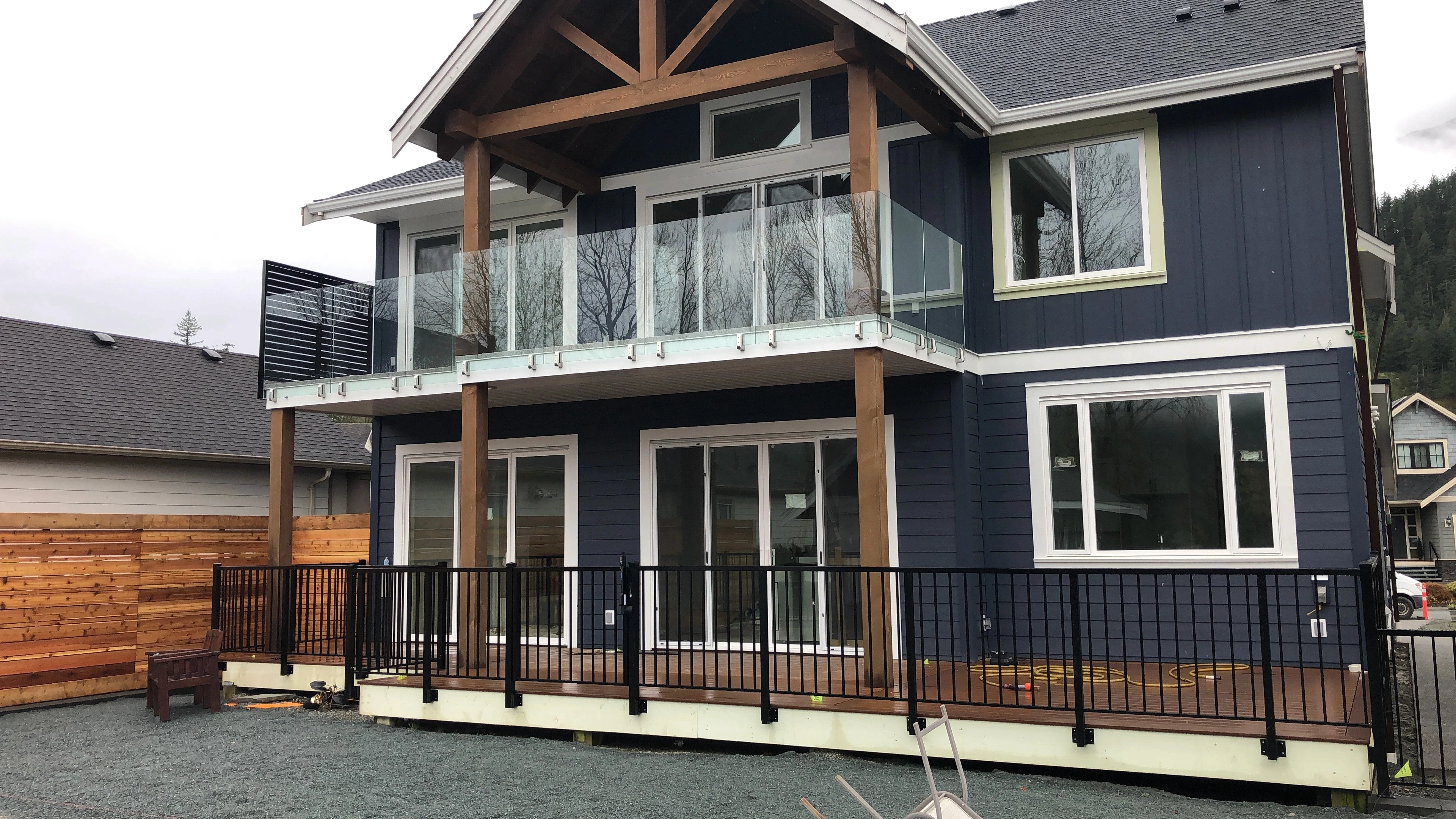
A standard aluminium guard is built from posts, a top rail, a bottom rail, and vertical pickets or horizontal bars as the infill. The posts bear the structural load, while the pickets fill the gaps to keep everything within code.
Components arrive factory-finished with a baked-on powder coat. The assembly is light and goes up quickly. The trade-off is built into the design: every picket and post that holds the railing together also sits in front of the view.
When Aluminium and Glass Are One System
Here is the part that catches most homeowners off guard. A search for an aluminium and glass railing often returns a single combined product rather than two separate ones.
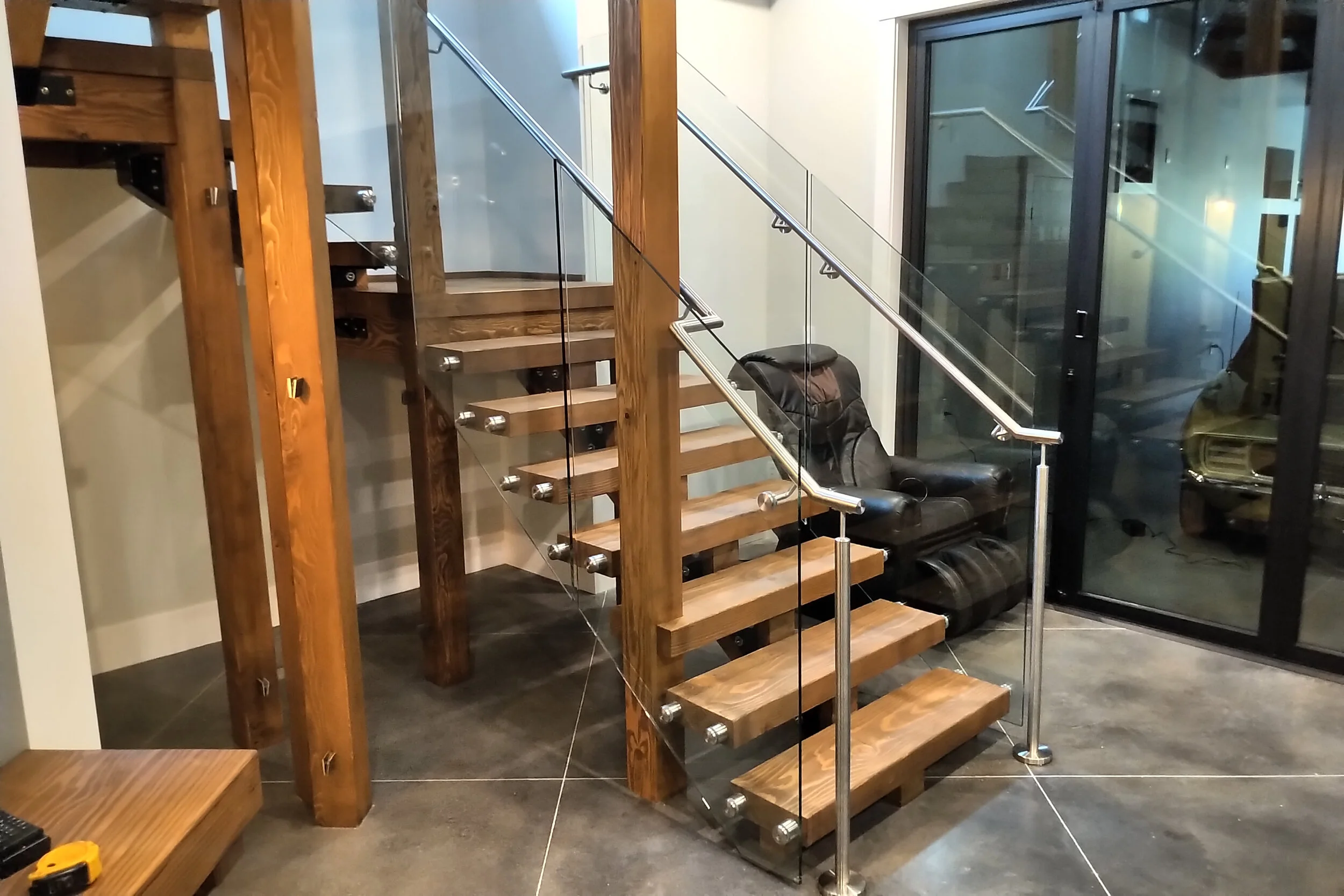
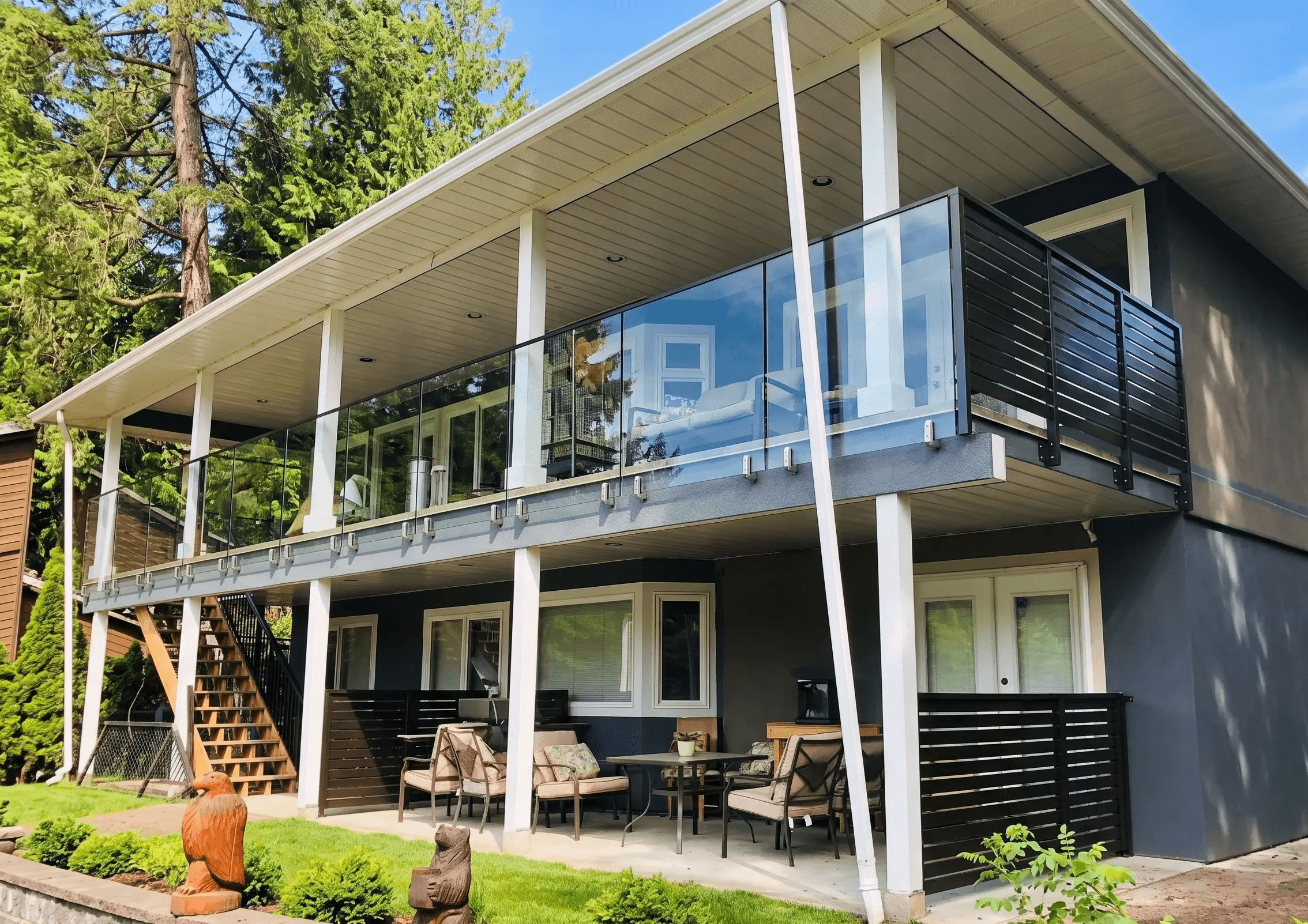
A semi-frameless setup is precisely that blend. Aluminium posts hold 12 mm glass panels between them. The metal supplies the structure; the glass supplies the clear infill and the windbreak. For anyone drawn to aluminum on price, this is often the sweet spot, since it keeps the open glass view while leaning on a simpler frame.
When comparing quotes, check which build you are pricing. A railing described as aluminum-and-glass is usually this framed system, while a frameless quote removes the posts for the cleanest possible sightline.
What Each Option Costs in BC
Pricing on either option shifts with hardware grade, layout, post spacing, and site access. Aluminum is cheaper at the outset. What that lower number does not show is everything glass adds for the spend.
Glass Railing Prices
Frameless: $300 to $400 per linear foot installed
Semi-frameless: $250 to $350 per linear foot installed
Those figures cover installed costs in BC, including fittings, 12mm safety glass, and professional labour. For a closer look, see glass railing costs revealed.
Aluminium Railing Prices
Aluminium picket guards typically run $80 to $150 per linear foot in Canada. The saving is real, but it buys an interrupted view and no wind protection, so it has to be weighed against what the railing is actually for. On a deck bought for its outlook, the cheaper railing can undercut the reason for the deck.
The semi-frameless route is the practical middle ground. It brings the open glass view within closer reach of an aluminium budget, since the visible frame keeps the glass area smaller than a full frameless run.
What Pushes the Price Up
Three things move the number more than anything else:
Hardware grade: Marine-grade 316 stainless and quality aluminum alloys cost more but shrug off salt-air corrosion on the coast
Layout complexity: A straight run is cheaper than a job with several turns, gates, or stair transitions
Site conditions: Difficult access, structural prep, and unusual mounting surfaces add labour
Installation Effort and Timeline
Aluminium installs fast, since standard sections are modular. Glass takes a different path: each panel is custom-cut to the exact measurements of your deck, and that made-to-measure step is what delivers the seamless, gap-free fit a premium railing is known for. The full Tenmar timeline runs 6 to 8 weeks from measurement to completion, covered in detail further down.
How They Perform Day to Day
This is where the decision usually settles, and it is where glass pulls ahead. Both options open a deck up next to wood, yet glass does it without the visual clutter and gives back wind shelter that aluminum cannot.
Keeping the View
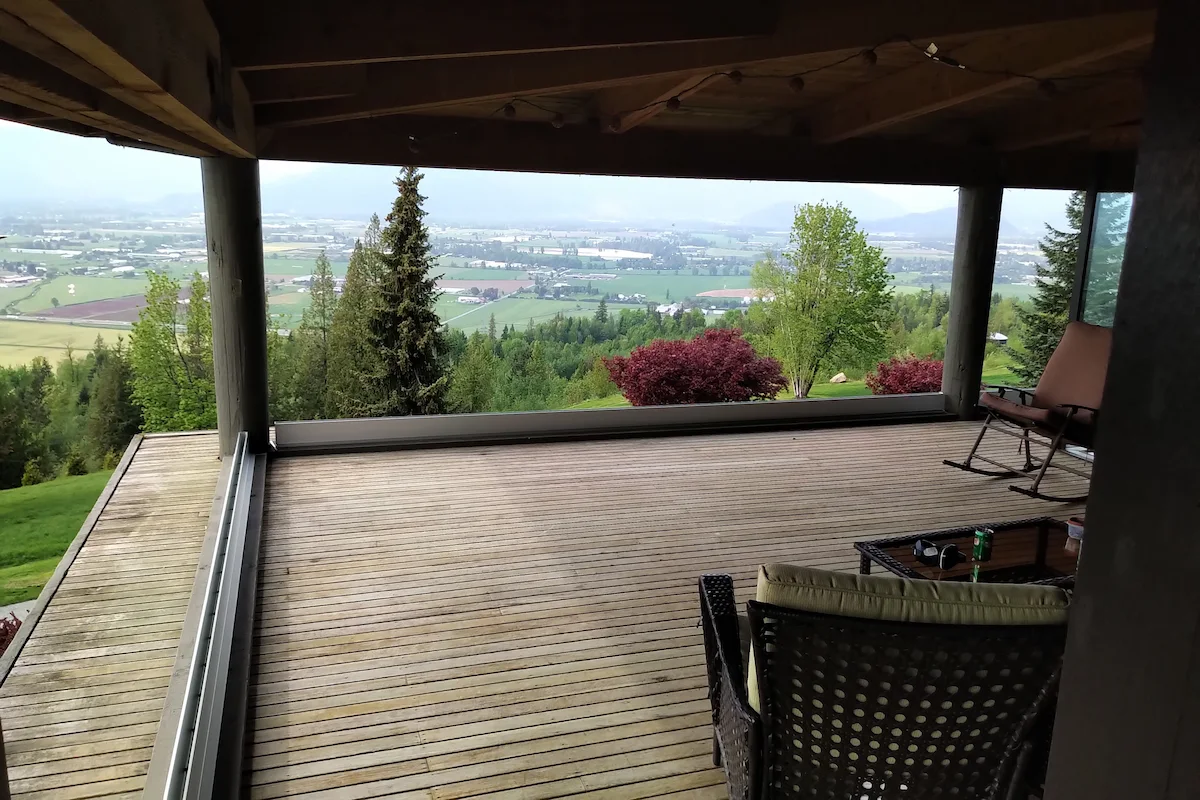
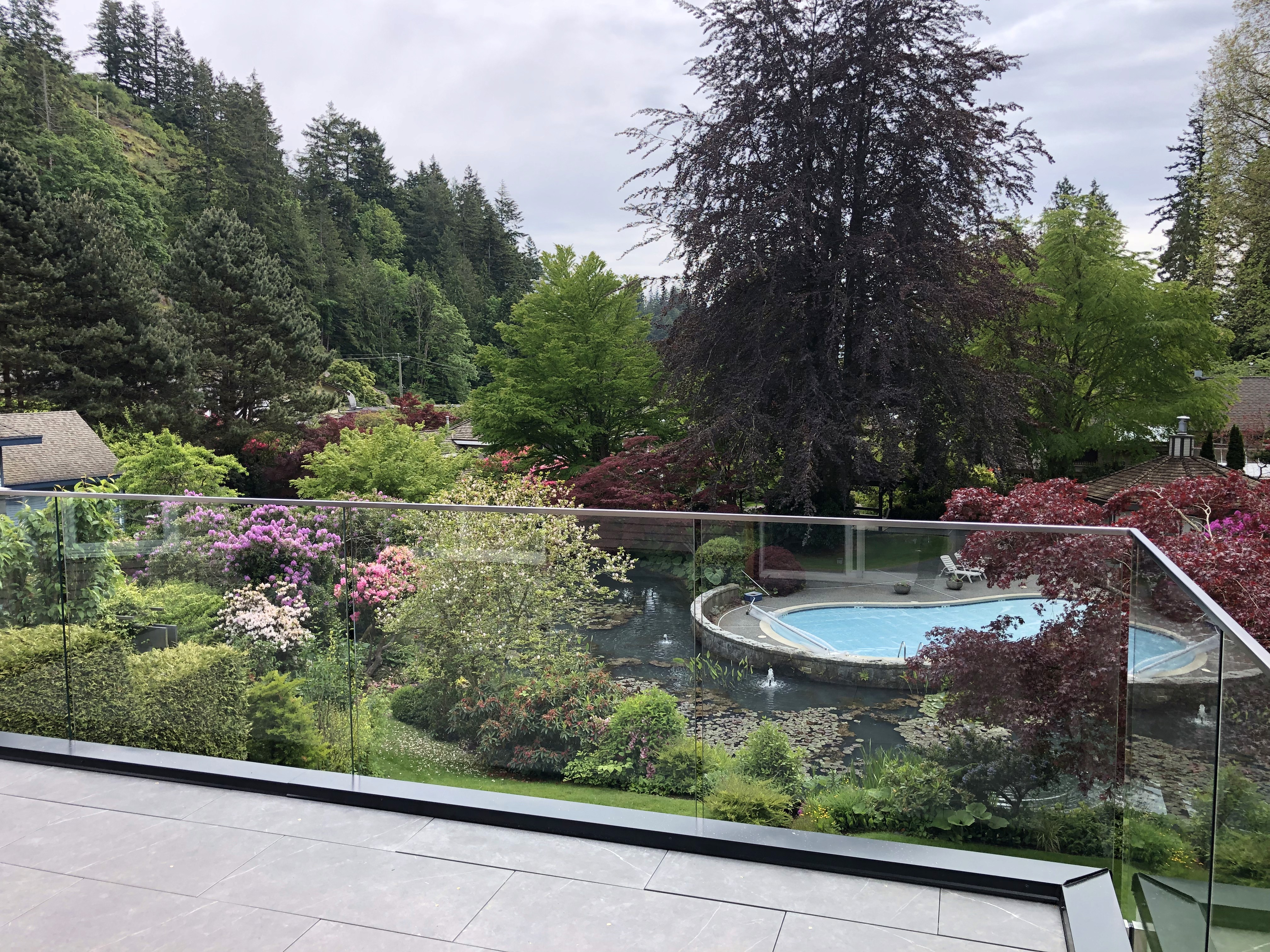
Clean glass vanishes. From a chair on the patio, a frameless panel reads as nothing at all, and the same holds looking up from the yard. Glass also lets daylight pass straight through, so a covered deck or a shaded room behind it stays brighter and feels larger.
Aluminium cannot match that. Even slender pickets set up a repeating vertical rhythm that the eye keeps catching, and they cast thin shadows across the deck. For a waterfront, mountain, or valley vista, glass preserves the sightline that pickets break up, which is the whole point of a view-facing deck.
Handling the Wind
This marks the single largest functional gap between the two, and it favours glass plainly.
Glass stops wind. Aluminium pickets wave it through.
On an exposed deck in Coquitlam catching afternoon gusts off the Fraser River, or a White Rock patio facing the strait, glass turns an unusable corner into a comfortable one that earns its keep through the shoulder seasons. Aluminum pickets do nothing for wind on those same balconies. For more on this trade-off, see our guide on glass railings for wind protection.
Sun, Heat, and Glare
Strong sun affects each option, and glass handles it more gracefully. A fully clear run can add some glare near the railing on a bright day, and frosted or textured panels solve that neatly while adding privacy. Aluminum has no frosted option to reach for, and dark powder-coat colours such as black or bronze absorb heat, so a metal top rail can grow warm to the touch in direct sun.
Smudges, Spots, and Salt
Glass does show marks. Fingerprints, sea spray, and water spots appear, and coastal BC carries a steady trace of salt in the air. The honest counterpoint is that glass cleans like a window in minutes, and frosted panels hide most of it in high-touch spots.
Aluminium does hide grime between cleans. That same thin profile, though, is exactly what lets the wind and the view straight through, so the small cleaning win comes at the cost of the two things most homeowners want from the railing.
Style and Finish Choices
Both materials offer flexibility, but they aim at different ends of the market.
Aluminium competes on colour. Powder coats come in a wide palette, from matte black to soft grey, with wood-look finishes available, and you can pick vertical pickets or horizontal bars. It is versatile, yet every option still reads as a visible frame across the deck.
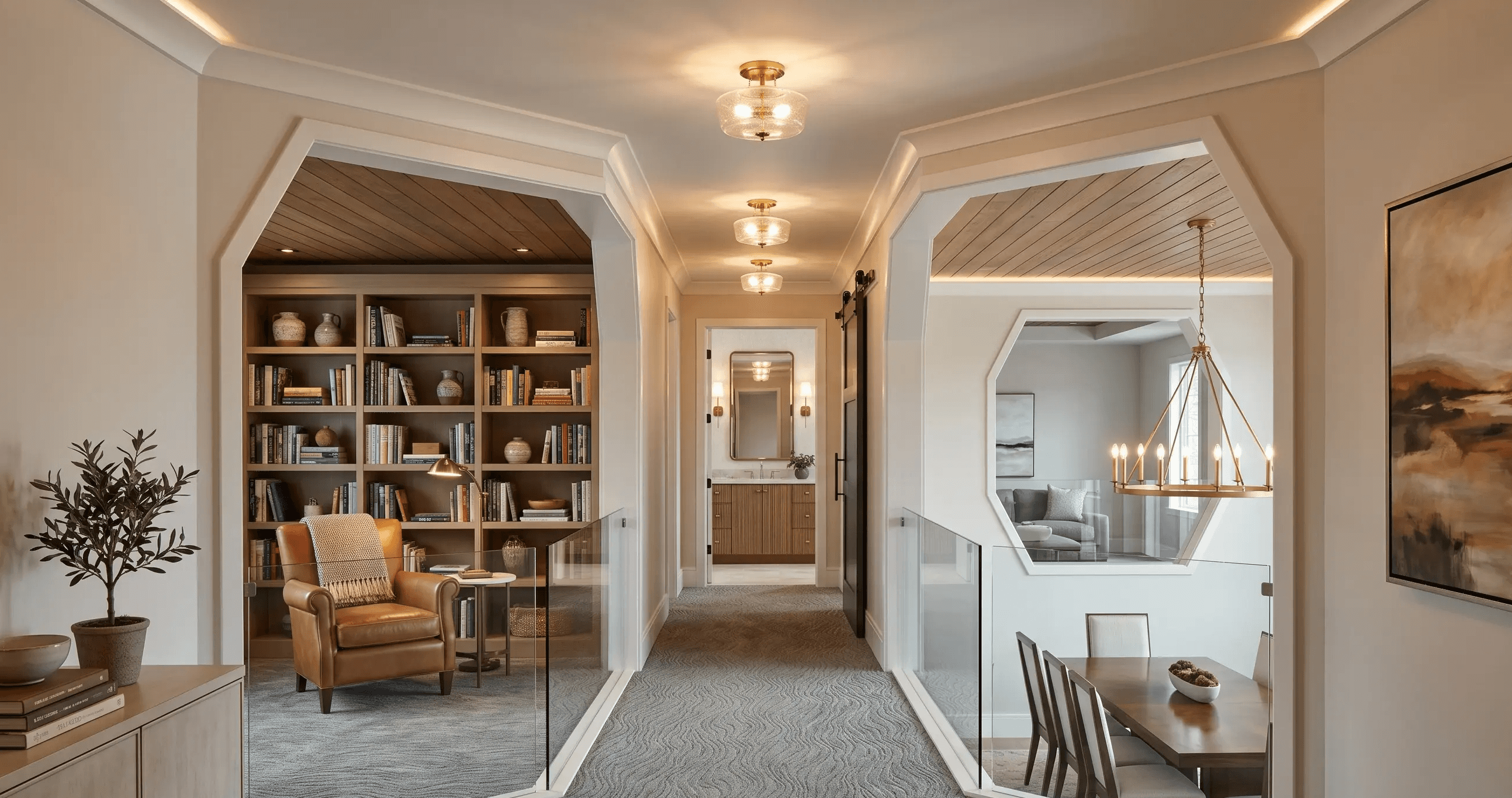
Glass competes on presence. Its character comes from clarity, which is why it has become the signature of contemporary West Coast homes. A clear panel suits an open view, while frosted or textured glass adds privacy to a hot tub run or a property line without closing off the light. The frameless edge all but disappears, and semi-frameless keeps slim posts as deliberate detailing. For inspiration, see our overview of glass railing designs, and for screened sections, our privacy walls.
Strength and Everyday Durability
Both materials are built to last outdoors, but they age differently, and glass holds its finish with less fuss.
Glass is engineered for the loads set out in Section 9.8 and stands up to weather and UV without warping, rotting, or fading. The base hardware shields the panel edges, where glass is most sensitive, and with routine cleaning a panel holds its clarity for years. There is no surface to chip and no colour to wear off.
Aluminium is tough against knocks and tolerates high-traffic use. Its weak point is the finish rather than the metal: a hard impact can dent a rail, and a deep scratch through the powder coat exposes bare aluminium that can corrode in salt air if it is not touched up. On the coast, that finish needs watching.
Both aluminium and glass are recyclable at the end of a long service life, so each beats materials that head to landfill when they wear out.
Upkeep in BC's Coastal Climate
Both options ask far less than wood, which needs staining and sealing on a schedule. Between the two, glass carries the lighter long-term burden. For more on how Vancouver rain and salt air wear on outdoor materials, the benefits of glass railings guide runs the numbers.
Caring for Glass
A wash with mild soap, water, and a microfibre cloth clears standard buildup. Coastal homes will clean more often through the salt-spray months, winter especially. Steer clear of abrasive cleaners, which leave permanent scratches. Frosted and textured panels disguise daily marks better than clear glass. Beyond cleaning, the panels need no structural attention once set, with no fasteners to retighten and no finish to maintain.
Caring for Aluminium
A powder-coated guard needs an occasional rinse, and the finish fends off corrosion well while it is intact. The catch is the coating itself. Chip or scratch it down to bare metal and the exposed aluminium can begin to corrode in salt air, so touch-ups become part of coastal ownership, along with a yearly look over the fasteners.
Why Hardware Grade Matters
For exterior work on the BC coast, 316 marine-grade stainless steel is the right call for fasteners and brackets. Lower-grade fittings rust faster in salt air, whichever infill you pick. On a glass system, that quality hardware is the only moving part to specify, which keeps the whole railing simple to own.
What BC Building Code Allows
Both materials can satisfy BC Building Code, so compliance is not a reason to rule glass out. The route to approval differs, and your municipality may layer extra rules on top of the provincial code.
The Rules Behind Both
BC Building Code Section 9.8 lays out the requirements for guards on residential decks, balconies, and stairs (Government of British Columbia):
Guard height: 900mm (36 inches) minimum within dwellings; 1,070mm (42 inches) for exterior guards above a 1.8m drop
Opening size: No gap may let a 100mm sphere pass through
Climbing: On guards protecting levels more than 4.2m above the surface below, nothing between 140mm and 900mm can aid a climb
Aluminium and the Climbing Rule
Pickets must be spaced so no gap clears a 100mm sphere, and horizontal-bar infill has to be handled carefully, since the climbing rule limits footholds on elevated guards. The 2018 National Building Code wording that BC adopted was shaped by research from the National Research Council of Canada. Spacing and pattern are what keep a metal system compliant.
Glass and a Clean Compliance Path
A solid glass panel has no openings and no footholds, so it clears the sphere rule and the climbing rule by design. Glass guards must use 12mm safety glass that meets the Canadian safety glazing standard, and frameless work uses engineer-sealed shop drawings to show how the assembly carries the load without a top cap. Tenmar engineers its frameless systems to pass inspection in municipalities including Vancouver, Burnaby, and across the Fraser Valley. For the full picture, see our guide on BC Building Code requirements for glass railings.
Which One Suits Your Deck
For most homes across Vancouver, Surrey, and the Fraser Valley, glass is the stronger long-term choice. It is the clear pick whenever the view, the wind, or the look of the home is part of the decision.
Glass Is the Right Call When
You have a view worth keeping, such as waterfront, mountain, or valley
The deck sits exposed to wind and you want it usable through the shoulder seasons
The look you are after is contemporary, modern, or West Coast luxury
Privacy matters along part of the run, where frosted or textured panels help
You want minimal upkeep, no climbable footholds, and a finish that will not chip or fade
Where Aluminium Still Fits
Aluminium can make sense on a sheltered deck with no real view, where the budget is tight and a fast, modular install is the priority, or where a homeowner specifically wants a bold colour or wood-look frame. Even then, the semi-frameless route is worth pricing, since it brings the open glass view much closer to an aluminum budget.
For a related comparison, see glass railing vs cable railing.
How Tenmar Installs Glass Railings
Every glass project opens with on-site measurement. Hardware goes in first, then the panels are fabricated to exact dimensions. From measurement to finished install, the full process takes 6 to 8 weeks.
The sequence runs:
On-site measurement and design confirmation
Hardware installation
Glass fabrication to exact dimensions
Panel installation
Final inspection and finish
That timeline reflects the fabrication step. Custom panels are cut to precise measurements and cannot be trimmed on site, which is why the measuring stage carries so much weight and why the finished result fits so cleanly.
Explore the full range: frameless glass railings, semi-frameless railings, curved glass railings, and privacy walls.
Frequently Asked Questions
Is aluminium or glass railing better?
For most BC decks, glass is the better choice. It keeps the view open, blocks wind, has no climbable footholds, and needs no finish upkeep. Aluminium costs less at the outset and suits sheltered, budget-led projects, but it interrupts the sightline and offers no wind protection.
Is aluminium cheaper than glass railing?
Yes, at the outset. Picket systems run roughly $80 to $150 per linear foot, while glass ranges from $250 to $400. The semi-frameless route narrows that gap, and on a view-facing deck the open sightline and wind shelter are what the extra spend is buying.
Do glass railings block wind better than aluminium?
Yes, by a wide margin. Solid 12mm panels stop wind almost entirely, which is why glass is the standard for exposed coastal and mountain decks. Aluminum pickets let air slip straight through, so they add no shelter from the breeze.
Which lasts longer with less maintenance, aluminium or glass?
Glass needs only routine cleaning and no structural upkeep, since there is no finish to chip and no coating to wear off. Aluminium is long-lasting too, but its powder coat needs touch-ups if it is scratched through to bare metal in salt air. Marine-grade hardware protects either one on the coast.
Are aluminium glass railings allowed under BC code?
Yes. Both materials can satisfy BC Building Code Section 9.8. A solid glass panel clears the 100mm sphere rule and the climbing rule by design, while aluminium pickets rely on correct spacing. Always check any added requirements with your local building department.
Does an aluminium railing get hot in the sun?
It can. Dark powder-coat colours such as black or bronze absorb heat in direct sun, while lighter shades stay cooler. Glass avoids the hot-rail issue, and frosted panels handle any glare on bright days.
Can I get the look of glass on an aluminium frame?
Yes. A semi-frameless system pairs aluminium posts with 12mm glass panels, so you keep the open view and the wind barrier of glass with a simpler frame. It is the usual pick for homeowners weighing the two on price.
Key Takeaways
For most BC decks, glass is the stronger choice: it keeps the full view, blocks wind, lets in daylight, and has no climbable footholds
Glass needs only simple cleaning and no structural upkeep, with no finish to chip, fade, or touch up
Aluminium's main advantage is a lower upfront cost of about $80 to $150 per linear foot, against $250 to $400 for glass, but it interrupts the view and offers no wind shelter
BC Building Code Section 9.8 permits both, and a solid glass panel clears the sphere and climbing rules by design
The semi-frameless system pairs aluminium posts with 12mm glass, bringing the open glass view within closer reach of an aluminum budget
Plan Your BC Deck Railing
For a deck with a view or any wind exposure, glass is the choice that keeps the outlook open and the patio usable. Wind, sun, privacy, upkeep, and budget all point the same way for most BC homes.
Whether you want full transparency with frameless glass, the balanced framing of semi-frameless, or the geometry of a custom curve, Tenmar engineers each build to BC Building Code and the realities of the coastal climate.
Ready to talk through your project? Contact Tenmar to get a quote.