Educational
What Is a Glass Guardrail? Systems, Code, and Uses in BC
Published:
Last updated:
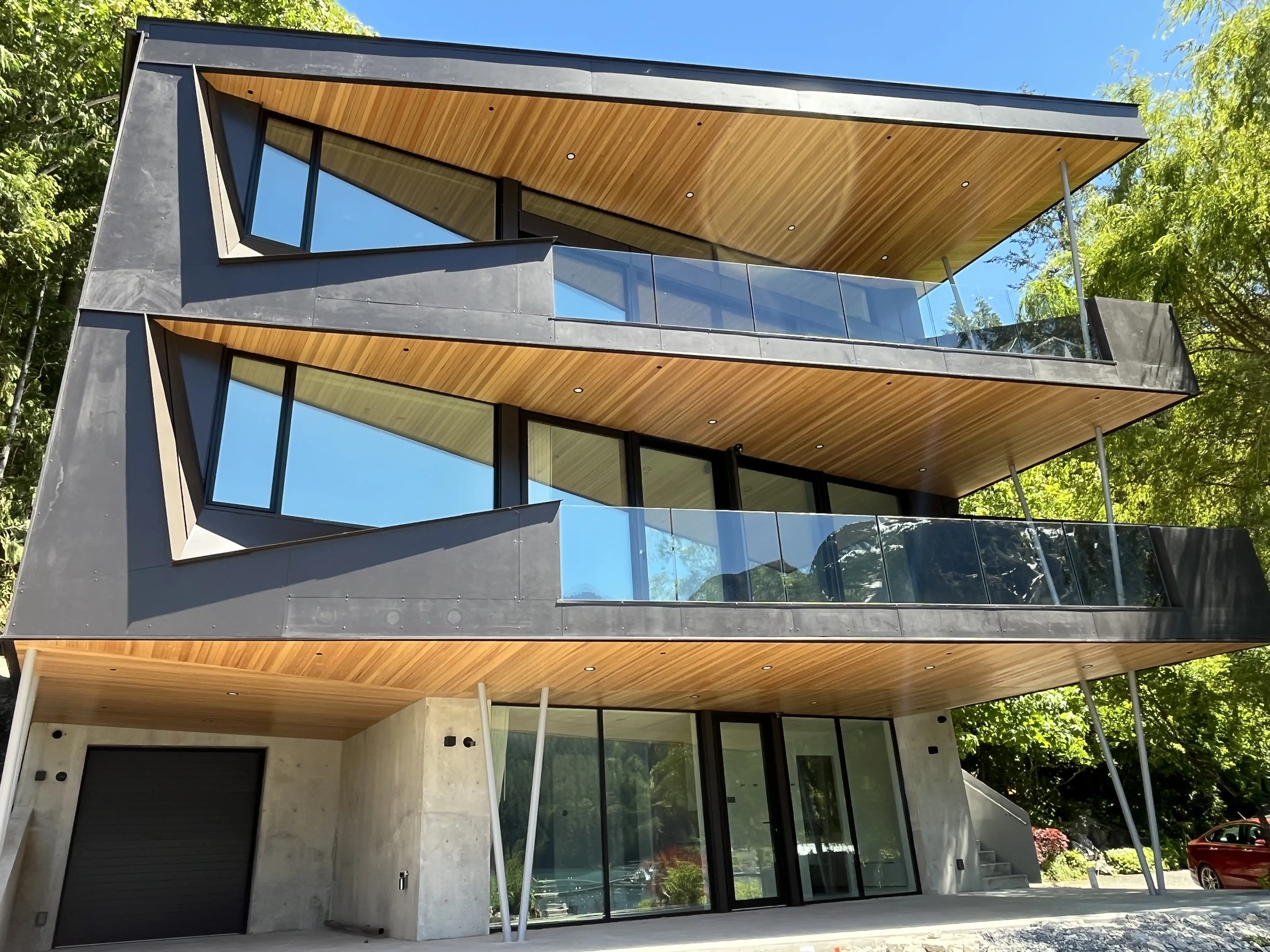
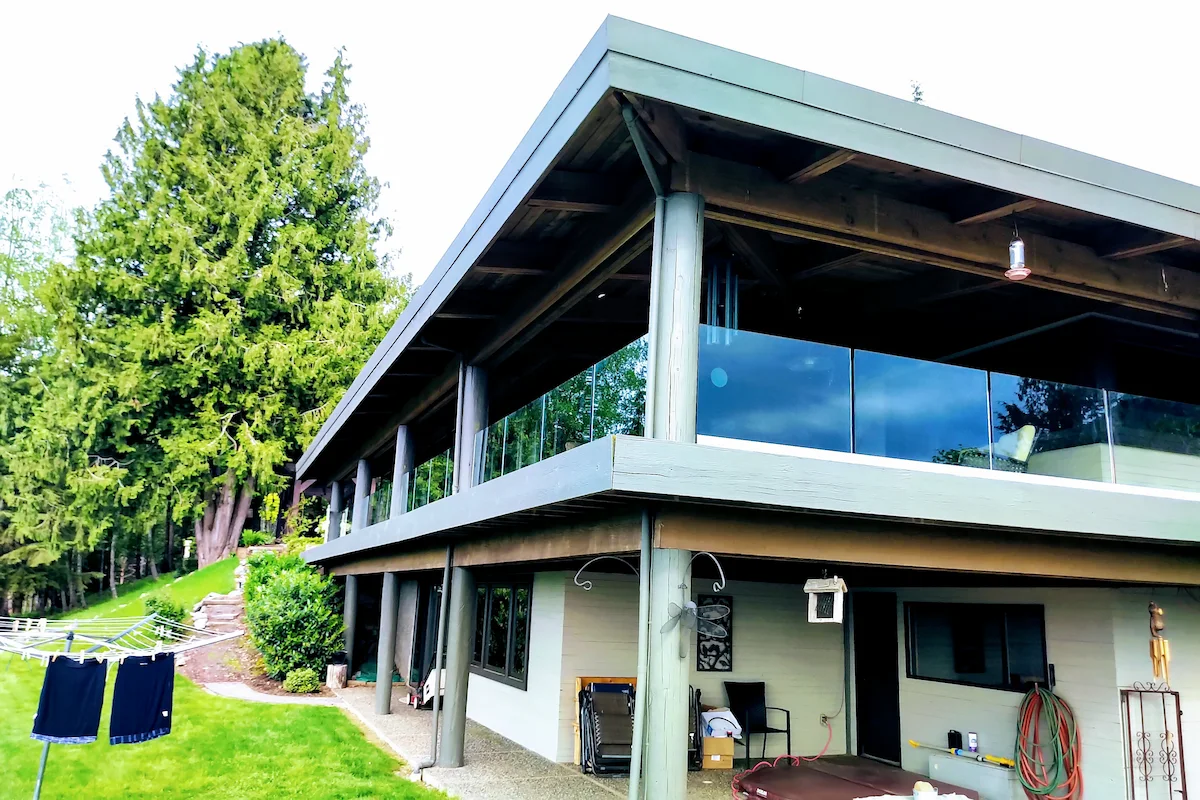
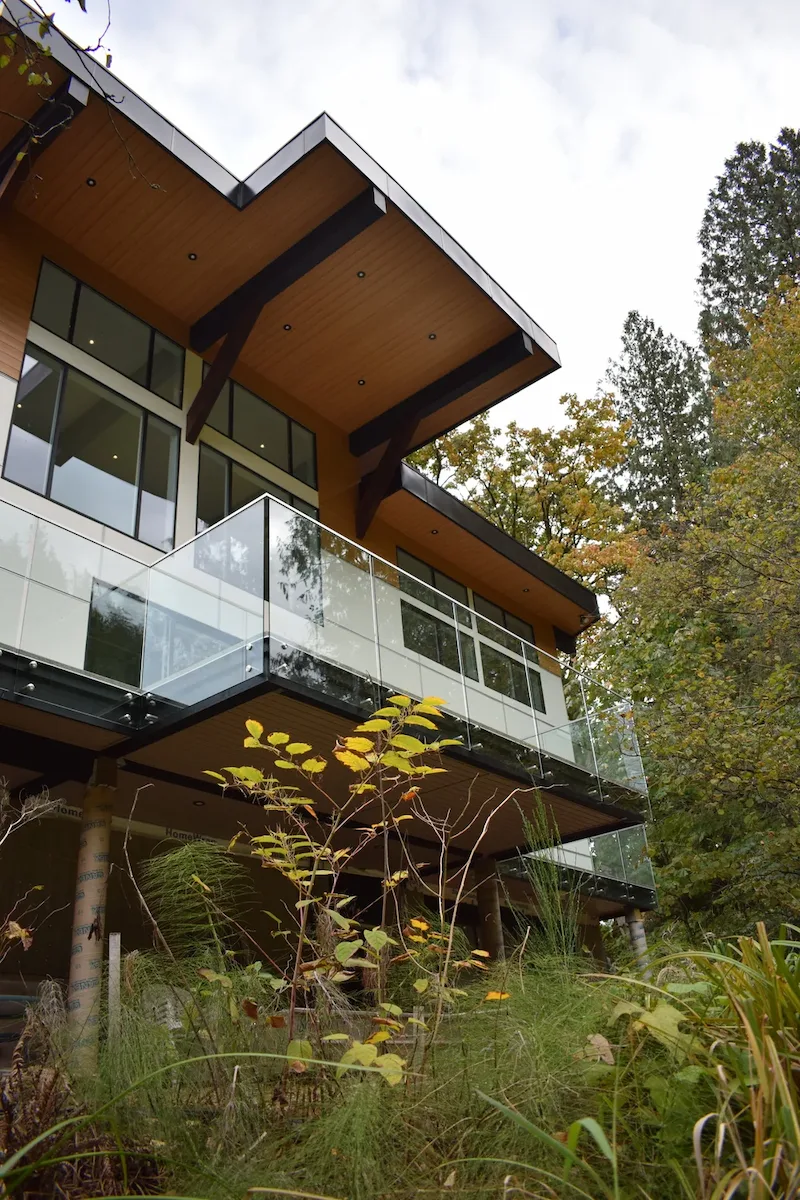
A glass guardrail is a fall-protection barrier that uses glass panels as the guard, giving you a code-compliant edge on a deck, balcony, or stair without blocking the view. It does the same safety job as a wood or metal railing. It just does it with a clear panel instead of pickets.
That single difference changes a space. A railing built from boards or balusters draws a visual line at the edge of every deck and landing. A glass guardrail removes that line, so the eye reads the view, the water, or the room beyond instead of the barrier in front of it.
This guide explains what a glass guardrail is, how the main systems work, where they fit, and what the BC Building Code requires. If you are weighing glass against other options, it gives you the full picture before you talk to a contractor.
For a side-by-side look at two popular open-view systems, see our guide to glass vs cable railings.
Glass Guardrail Basics at a Glance
Before the detail, here is the short version of what a glass guardrail is and why homeowners choose one.
Question | Short Answer |
|---|---|
General view | A guard (fall barrier) that uses glass panels instead of pickets |
Type of glass used | 12 mm glass that meets the Canadian safety glazing standard |
Code compliancy | Yes, when designed to BC Building Code guard rules |
Key applications | Decks, balconies, stairs, mezzanines, and commercial walkways |
Main systems | Frameless and semi-frameless |
Biggest benefit | Full safety barrier with an unobstructed view |
The rest of this guide explains what sits behind each row.
What a Glass Guardrail Actually Is
The guard is a protective barrier installed wherever there's a risk of falling: along the open sides of decks, balconies, stairs, landings, raised walkways, and mezzanines
Guard vs Handrail
A guard and a handrail do two different jobs. A guard is the barrier that stops a fall along an open edge like a deck, balcony, or landing. A handrail is the graspable rail you hold for support as you go up or down stairs or a ramp. The code defines them separately, with their own height and load requirements.
A glass guardrail is a guard. On a staircase, the system can also include a graspable handrail mounted along the top, but the glass panel itself is doing the guard's job: stopping the fall.
Glass as the Infill
In a guard system, the panel that fills the space between supports is called the infill. Pickets, cables, and solid panels are all forms of infill. In a glass guardrail, the infill is a single sheet of glass.
The glass is structural in frameless systems. It is held at the base by hardware, and the panel itself resists the loads the code requires. This is why the glass spec matters so much, a point we return to in the code section below.
Why Homeowners Choose Glass
Falls are not a minor risk. They are the leading cause of injury-related hospitalizations in Canada across nearly every age group (Public Health Agency of Canada, 2021). A guard is the barrier standing between a raised surface and that risk, so the quality of the barrier is worth getting right.
Glass earns its place by doing the safety job without the visual cost. You get a full barrier and a full view at the same time. On a waterfront deck or a hillside balcony, that combination is the whole reason to build with glass.
How Glass Guardrail Systems Work
Most residential glass guardrail systems fall into two families. Both use 12 mm glass. The difference is how the panels are supported.
Frameless Systems
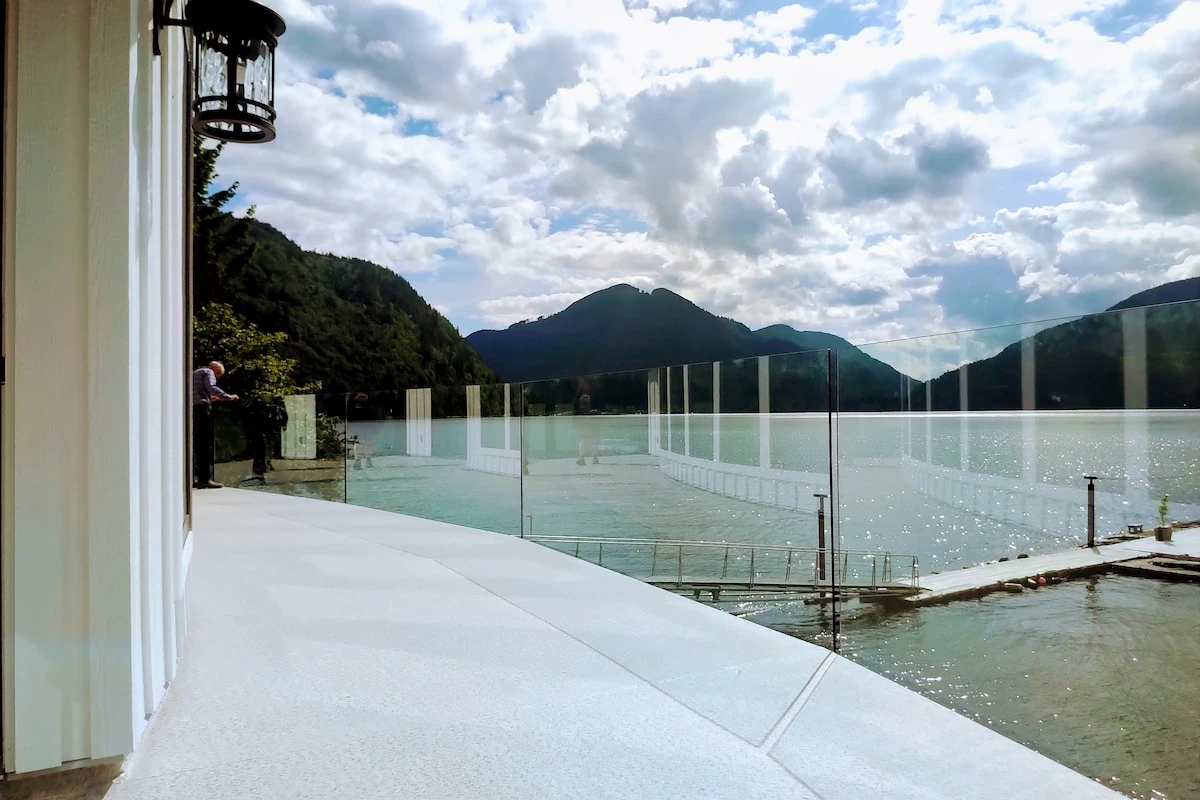
A frameless glass guardrail uses 12 mm glass panels held by concealed base hardware. There are no posts and no top rail. The panel stands on its own as both the structure and the barrier.
Frameless mounting can be done with a continuous base shoe or with individual standoff fittings, depending on the look and the mounting surface. The result is the cleanest possible sightline. From a chair on the deck, a well-installed frameless panel almost disappears.
Learn more on our frameless glass railings page.
Semi-Frameless Systems
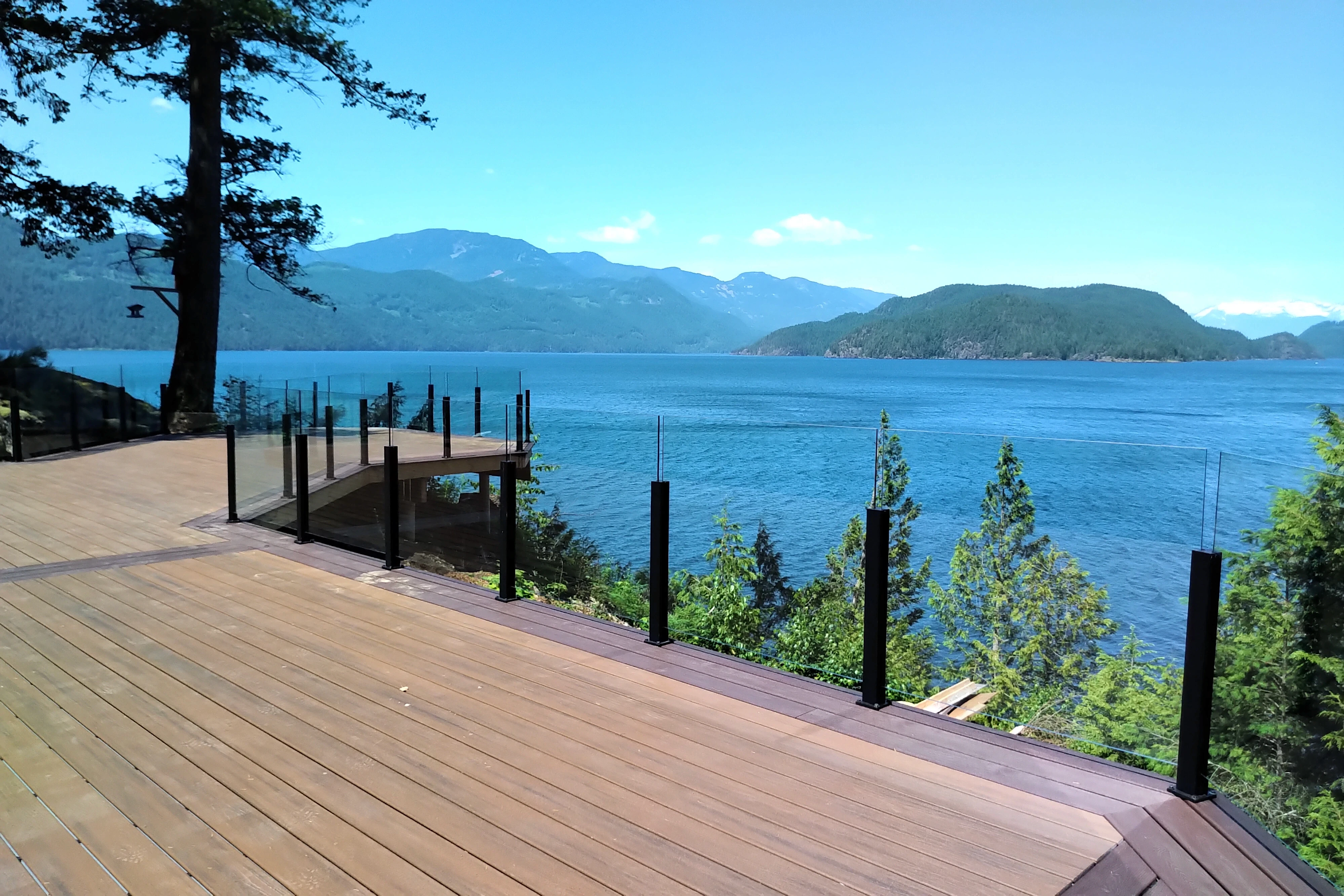
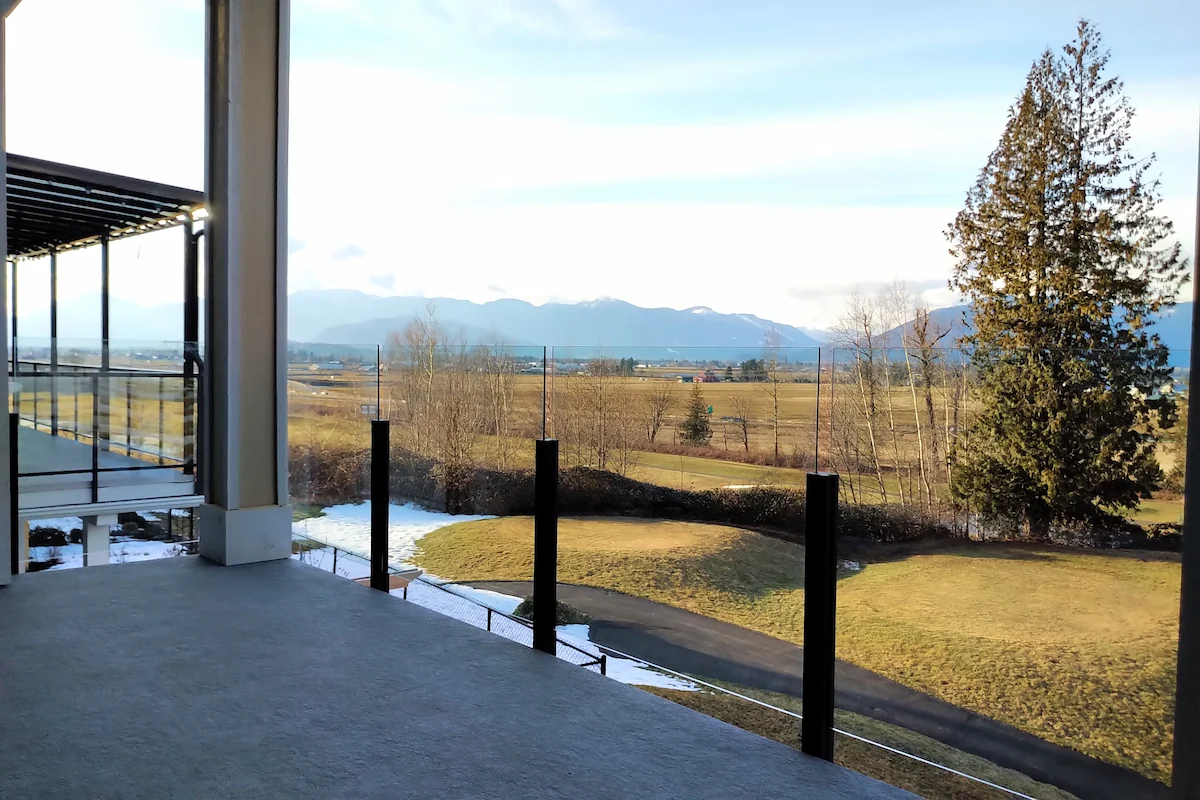
A semi-frameless system places 12 mm glass panels between slim aluminum posts. The posts carry the structural load, and the glass fills the openings between them. Posts are spaced no more than 42 inches apart.
This system costs less than frameless and suits longer runs or windier exposures where the posts add reassurance. An optional slim top rail can finish the look. See our semi-frameless railings page for details.
Frameless vs Semi-Frameless
Here is how the two systems compare on the factors that usually drive the choice.
Factor | Frameless | Semi-Frameless |
|---|---|---|
Posts | None | Slim aluminum, max 42 inches apart |
View | Maximum transparency | Very open, with visible posts |
Top rail | None (optional handrail on stairs) | Optional slim top rail |
Relative cost | Higher | Lower |
Best for | Premium views, short to medium runs | Long runs, exposed or budget-aware projects |
For curved layouts and feature staircases, a curved glass railing follows the same principles with custom-shaped panels.
Where Glass Guardrails Are Used
A glass guardrail works anywhere the code requires a guard and the view is worth preserving. The applications break down into a few clear groups.
Decks and Balconies
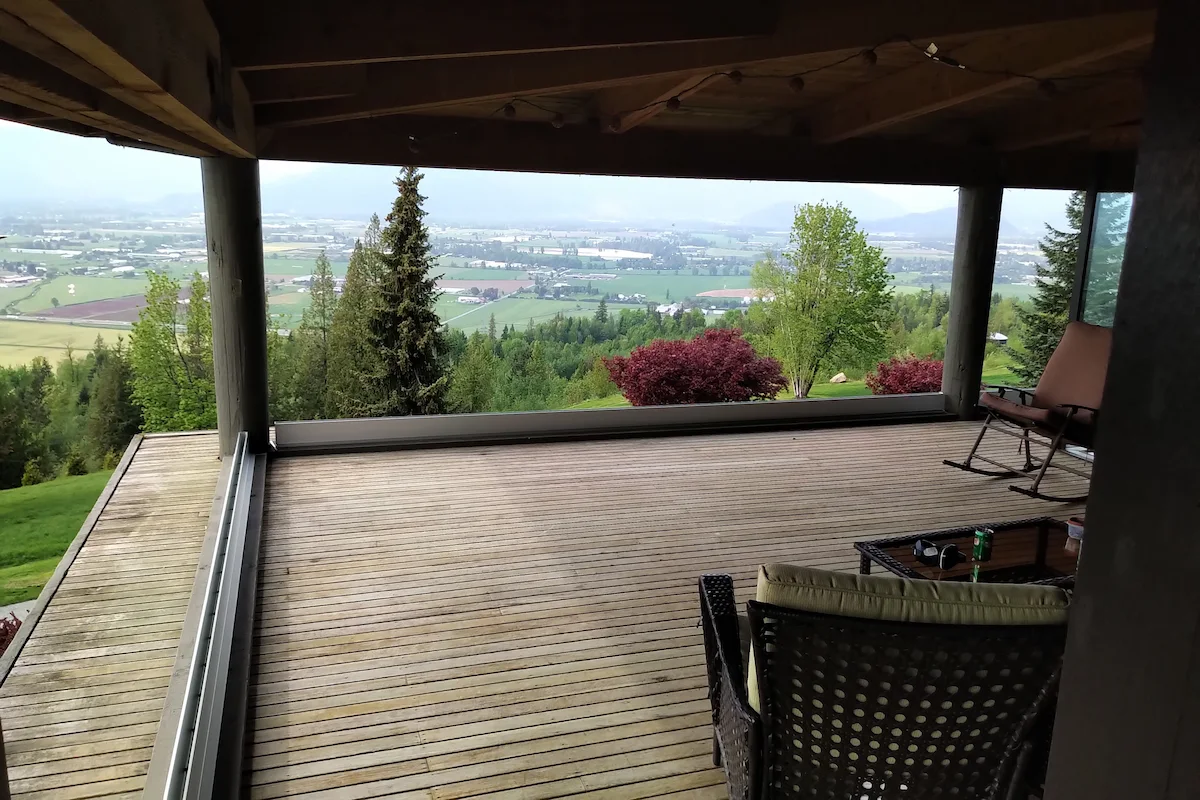
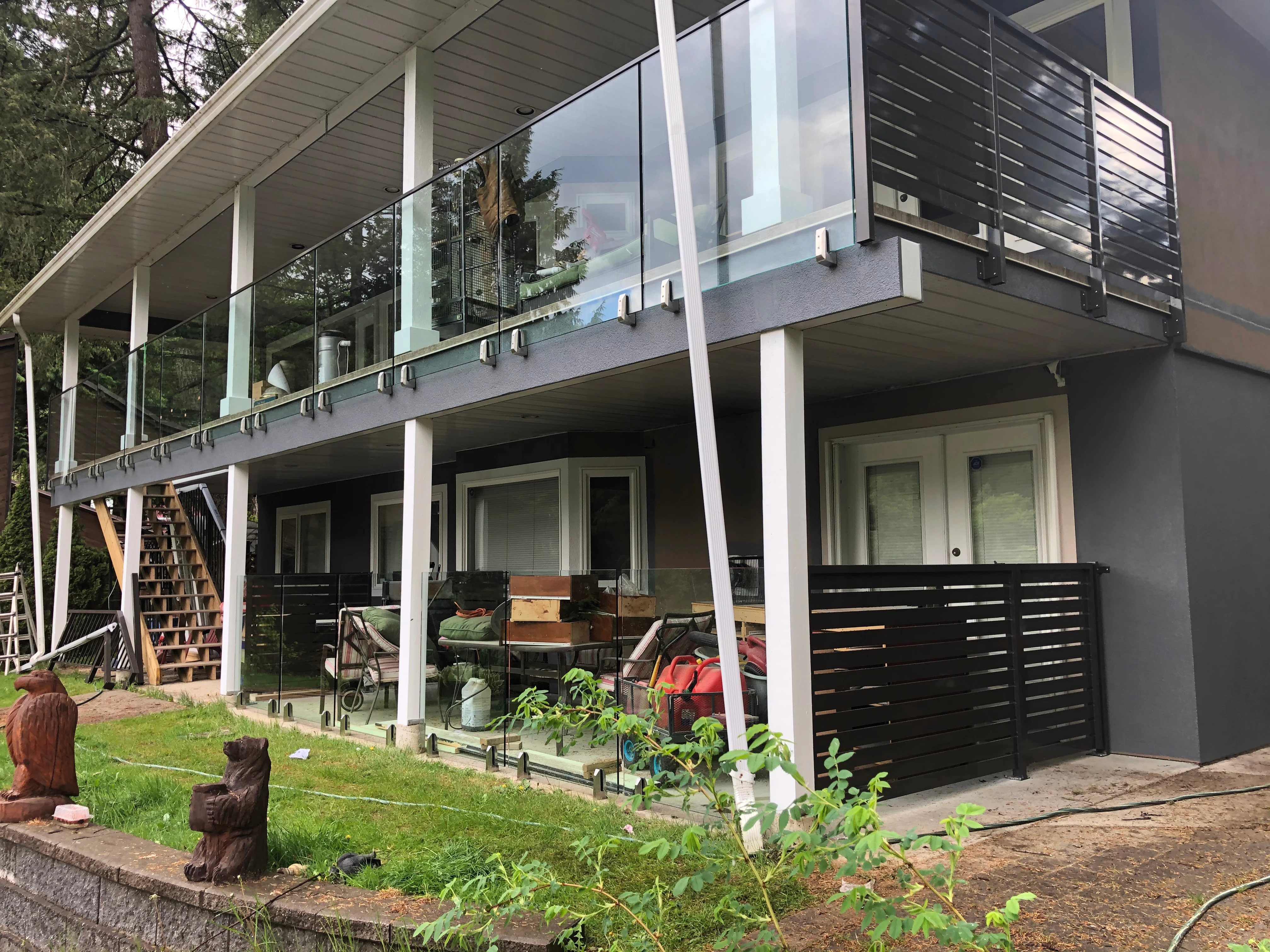
This is the most common use. Elevated deck railings and balcony railings on homes with water, mountain, or valley views are the natural fit for glass. The barrier keeps the space safe and usable while the view stays open.
Glass also blocks wind. On an exposed coastal or hillside deck, a solid glass panel turns a gusty edge into a comfortable seating area, which an open-infill railing cannot do.
Stairs and Mezzanines
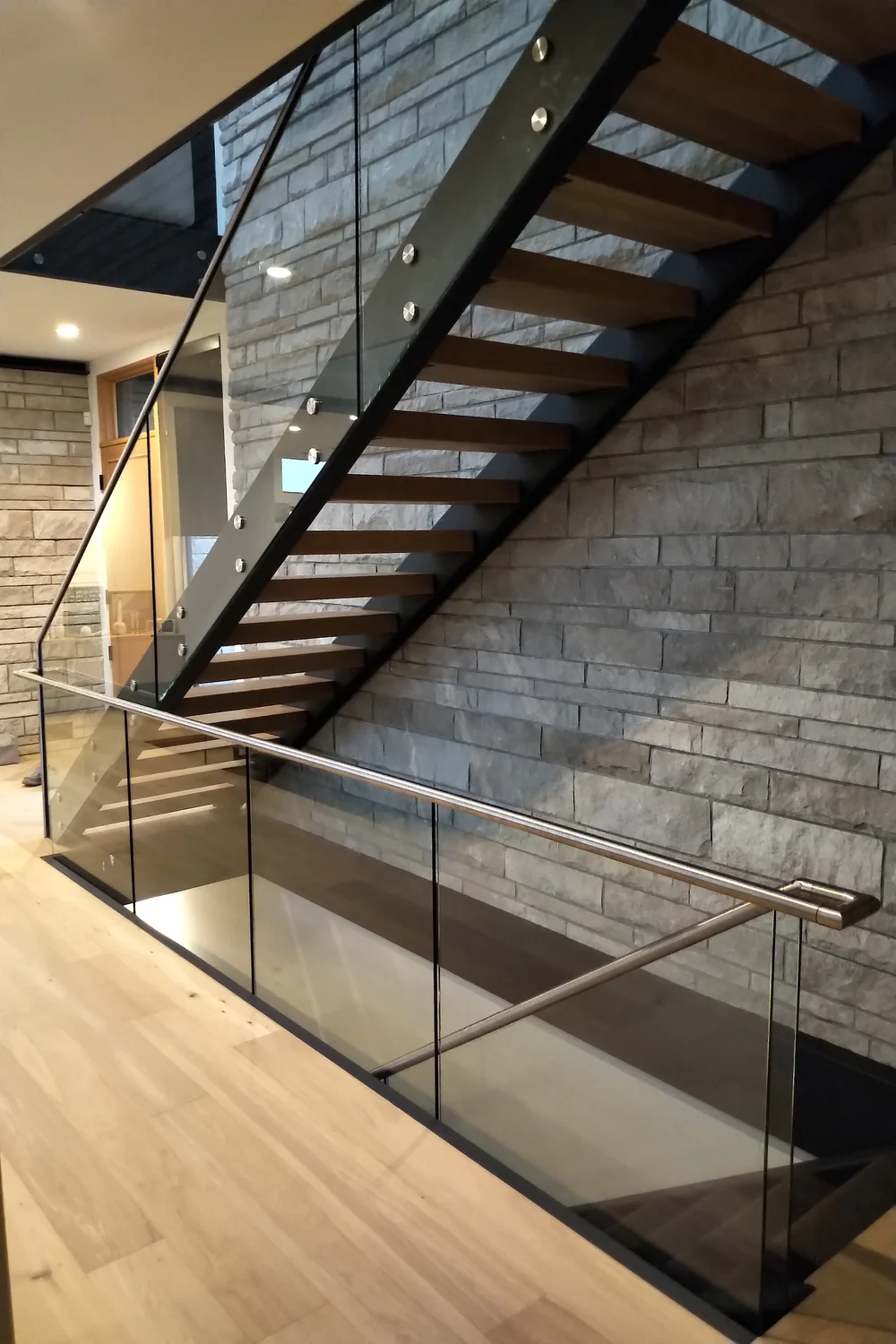
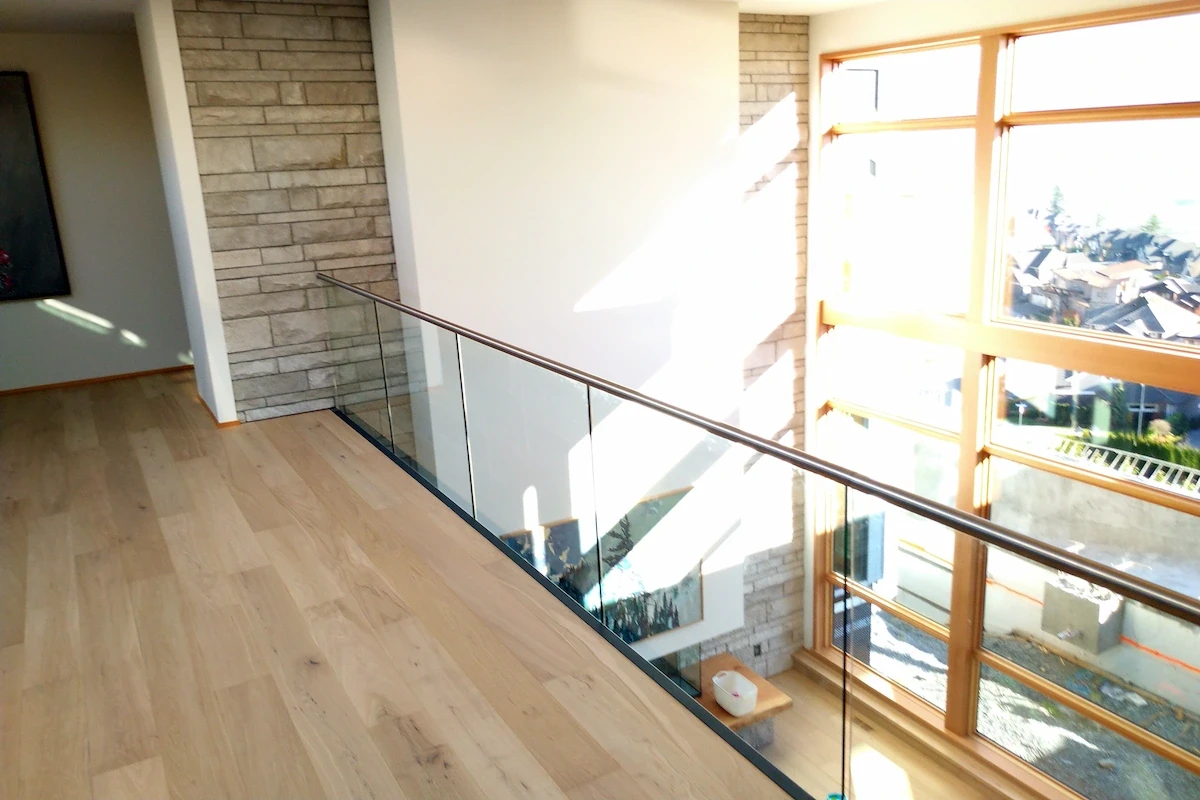
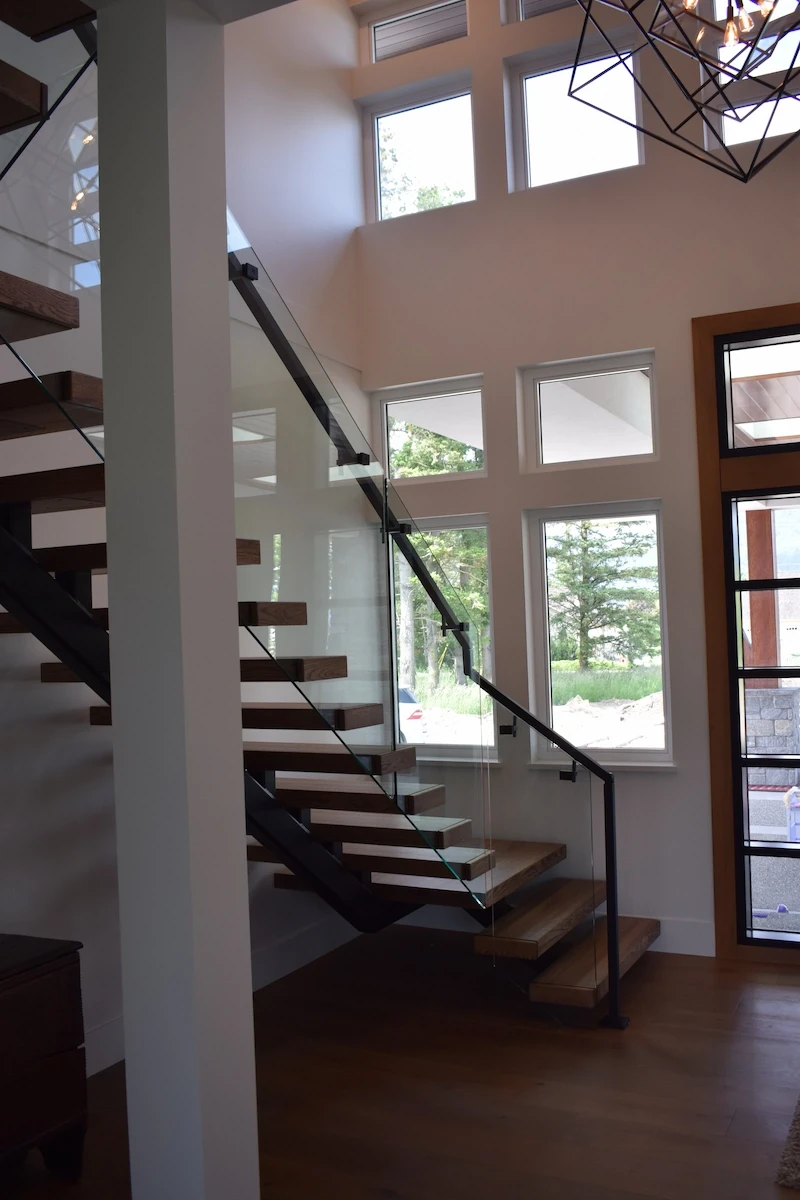
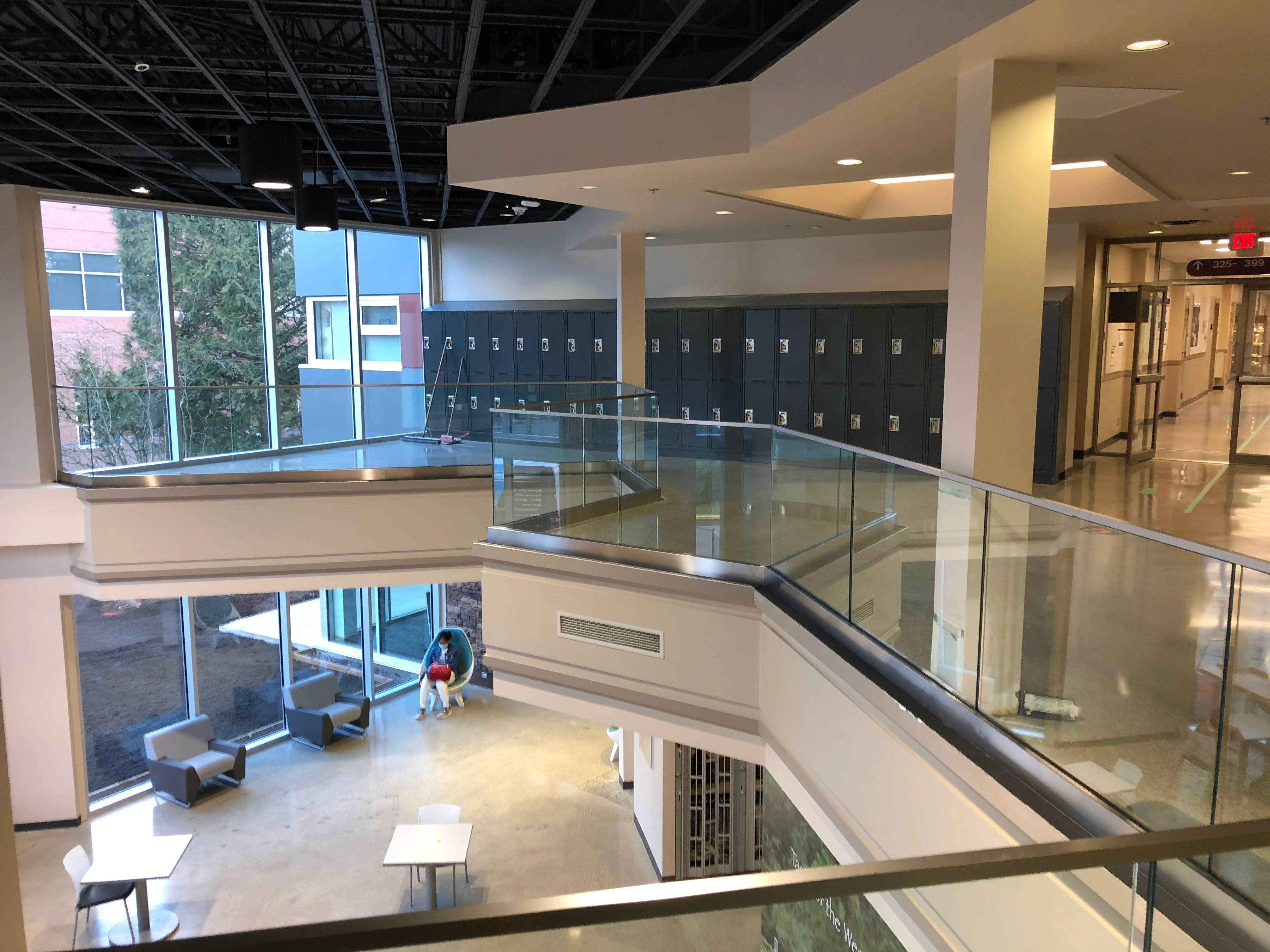
Indoor staircases and upper-floor landings are a strong interior application. A glass guardrail keeps a stairwell feeling open and lets light travel between floors, which matters in homes with a central staircase or a double-height entry.
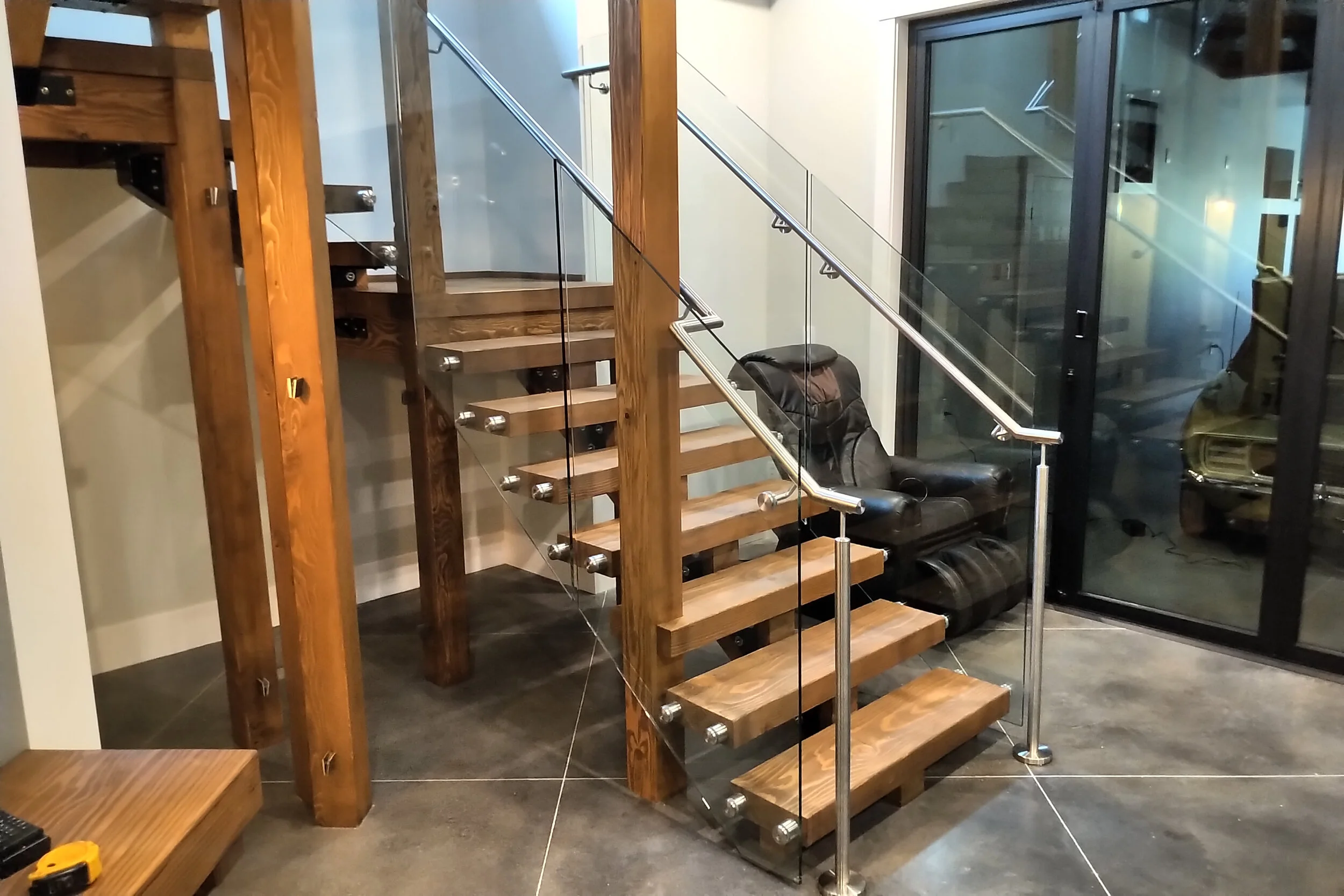
In these settings the glass guard often pairs with a stainless or wood handrail along the top, satisfying both the guard and the handrail requirements in one run. Explore options on our indoor glass railings page.
Commercial and Multi-Unit Buildings
Offices, lobbies, schools, and condo common areas use glass guardrails for the same reasons homes do, with the added benefit of a clean, modern look that holds up to traffic. Mezzanine edges, atrium walkways, and feature stairs are typical locations.
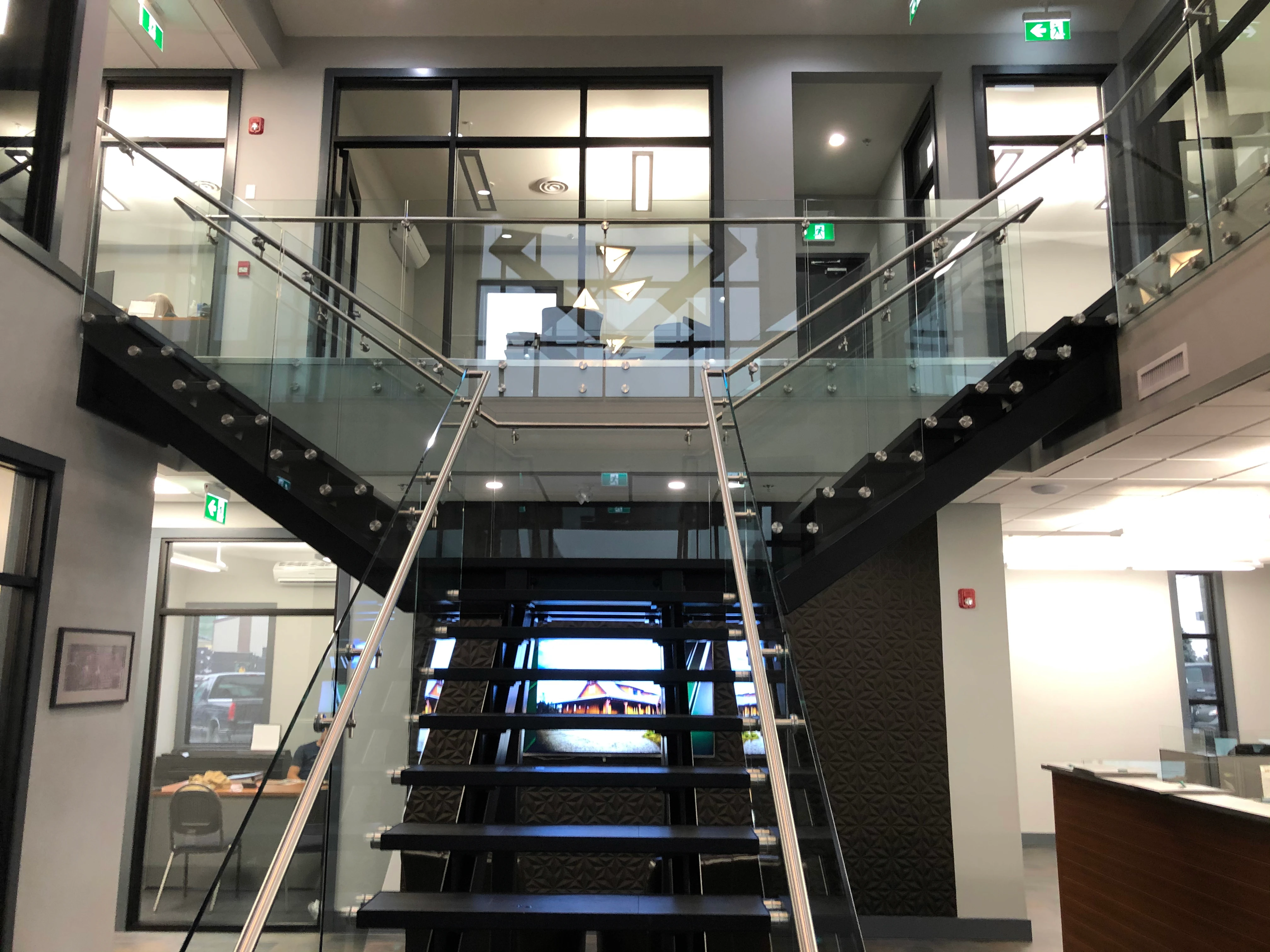
Tenmar installs these systems for commercial glass railings projects as well as residential ones.
Glass Guardrails and the BC Building Code
A glass guardrail is only as good as its compliance. In British Columbia, guards are governed by the BC Building Code, and the rules are specific.
When a Guard Is Required
A guard is required at the open side of any deck, balcony, stair, landing, or raised walkway where the drop to the surface below is more than 600 mm, about 24 inches (Government of British Columbia, 2018). Below that height a guard is not required by code, though many homeowners still add one.
Height and Opening Rules
BC Building Code Section 9.8 sets the core dimensions for residential guards (Government of British Columbia):
Height: 900 mm (36 inches) minimum for low decks and interior locations, rising to 1,070 mm (42 inches) for exterior guards where the drop is more than 1.8m
Openings: No opening in the guard can allow a 100 mm sphere to pass through
Climbing: On higher guards, no element between 100 mm and 900 mm can make the guard easy to climb
A solid glass panel passes the opening and climbing rules easily, since there are no gaps and nothing to grip. The height rule still applies, so panel size is set to meet it.
The Glass Specification
Glass used in a guard must be 12 mm glass that conforms to the Canadian safety glazing standard (CAN/CGSB-12.1). This is the part of the system that protects people if a panel is ever struck, and it is not the place to cut corners.
Frameless systems with no top cap need engineer-sealed drawings showing how the panels handle the load on their own. For the full breakdown, see our guide to BC Building Code requirements.
A glass guardrail is a guard system that uses 12 mm glass as the infill to meet BC fall-protection rules while keeping the view open.
Choosing the Right Glass Guardrail System
The right system depends on the property, not on which option is best in the abstract. A few questions sort most projects quickly.
Start With the View and the Exposure
If the view is the reason you are building, frameless is usually the answer, because it removes the most visual interruption. If the run is long, the site is windy, or budget is a primary constraint, semi-frameless delivers a very open look at a lower cost.
Factor In the Climate
The BC coast is wet and, near the water, salty. Marine-grade stainless hardware resists corrosion far better than lower grades, and it is the right call for any exterior glass guardrail near the coast. The glass itself needs routine cleaning but no structural upkeep once it is installed.
Understand the Investment
Installed pricing in BC generally runs from $300 to $400 per foot for frameless systems and $250 to $350 per foot for semi-frameless, depending on layout, hardware, and site conditions. For a closer look, see glass railing costs.
The Tenmar Process
Every glass guardrail project follows the same sequence, and the order matters.
On-site measurement and design confirmation
Hardware installation
Glass fabrication to exact dimensions
Panel installation
Final inspection and finish
Each panel is carefully measured and cut to exact dimensions, so it cannot be adjusted on site. That is why measurement comes first and why it carries so much weight. From measurement to completed installation, the full process takes 6 to 8 weeks.
Explore the full range: frameless glass railings, semi-frameless railings, curved glass railings, and privacy walls.
Frequently Asked Questions
What is the difference between a glass guardrail and a glass railing?
The terms are used interchangeably in everyday conversation. Technically, guardrail is the building-code word for the fall barrier, while railing is the common name for the same product. A glass railing on an elevated deck is functioning as a glass guardrail.
Is a glass guardrail safe?
Yes. A glass guardrail uses 12 mm glass that meets the Canadian safety glazing standard, and the system is engineered to the load requirements in the BC Building Code. A solid panel also removes the gaps and climbable elements that other infill types must work around.
Do glass guardrails meet the BC Building Code?
Yes, when designed and installed correctly. The system must meet the guard height (900 mm or 1,070 mm depending on the drop), the 100mm opening rule, and the glazing standard. Frameless systems without a top cap require engineer-sealed drawings.
How tall does a glass guardrail need to be?
For interior locations and low decks, the minimum is 900 mm (36 inches). For exterior guards where the drop is more than 1.8m, the minimum rises to 1,070 mm (42 inches). The City of Vancouver may apply stricter heights, so confirm with the local building department.
Are frameless glass guardrails better than semi-frameless?
Neither is better in every case. A frameless glass guardrail gives the cleanest view and suits premium settings. Semi-frameless costs less and works well on long runs or exposed sites. The right choice depends on view priority, exposure, and budget.
How much maintenance does a glass guardrail need?
Routine cleaning with mild soap, water, and a soft cloth handles normal buildup. Coastal homes clean more often during salt-spray months. The glass needs no structural maintenance after installation, and marine-grade hardware resists corrosion in salt air.
Can a glass guardrail be used indoors?
Yes. Staircases, mezzanines, and upper-floor landings are common interior applications. Glass keeps these spaces open and lets light move between floors, while still meeting the guard requirement at the open edge.
Key Takeaways
A glass guardrail is a code-required fall barrier that uses 12 mm glass as the infill, delivering full safety with an unobstructed view
Guards and handrails are different things in the code; a glass guardrail is the guard, and it can also carry a handrail on stairs
BC Building Code Section 9.8 requires a guard wherever the drop exceeds 600 mm, with heights of 900 mm or 1,070 mm and a 100 mm opening limit (Government of British Columbia, 2018)
Frameless systems offer maximum transparency; semi-frameless systems cost less and suit long or exposed runs
Falls are the leading cause of injury-related hospitalizations in Canada, which is why guard quality and compliance matter (Public Health Agency of Canada, 2021)
Plan Your Glass Guardrail
A glass guardrail gives you a safe, code-compliant edge without giving up the view that made the space worth building. Whether you want the clean sightline of frameless, the value of semi-frameless, or a custom curved layout, Tenmar engineers each system to the BC Building Code and the realities of the coastal climate.
Ready to talk through your project? Contact Tenmar to get a quote.