Educational
The Complete Guide to Glass Railings in British Columbia
Published:
Last updated:
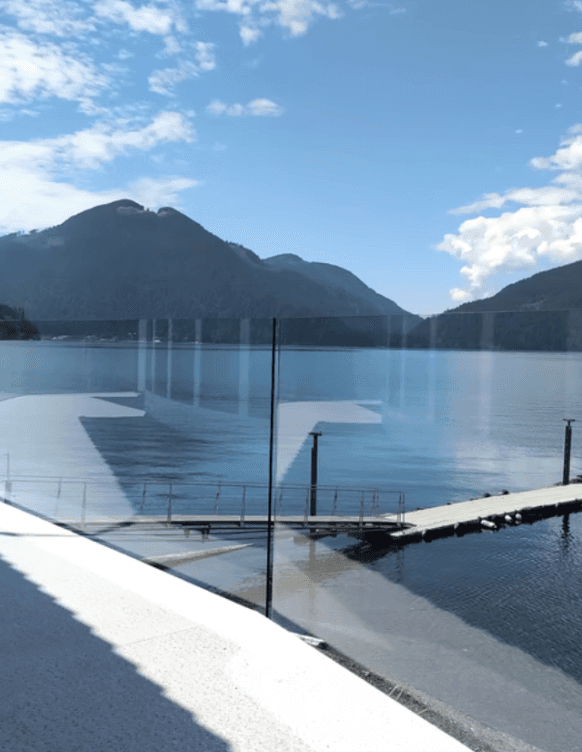
Glass railings give British Columbia homeowners a code-compliant safety barrier without giving up the view. This guide covers the three system types, what the BC Building Code requires, what installation costs, and how to choose an installer.
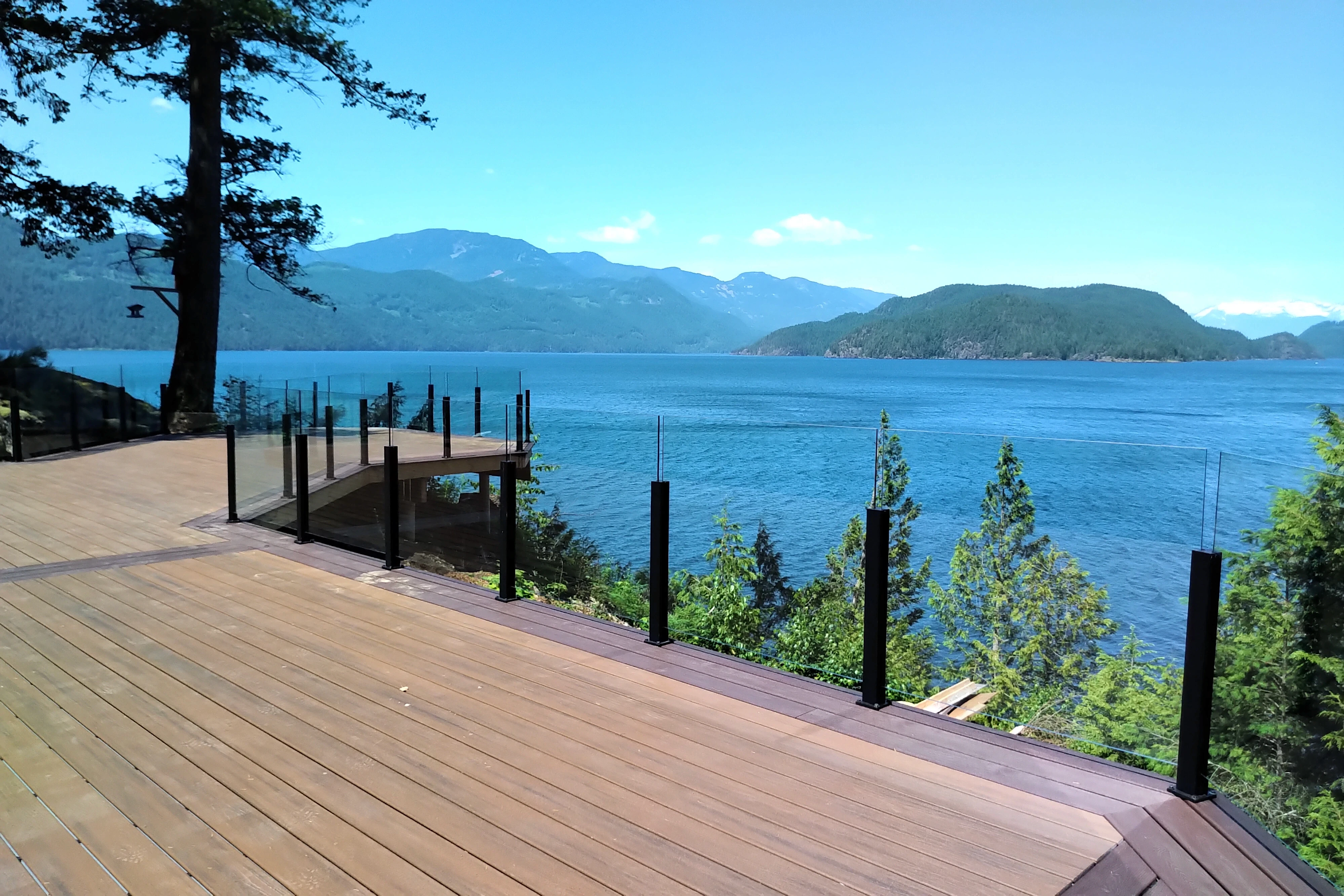
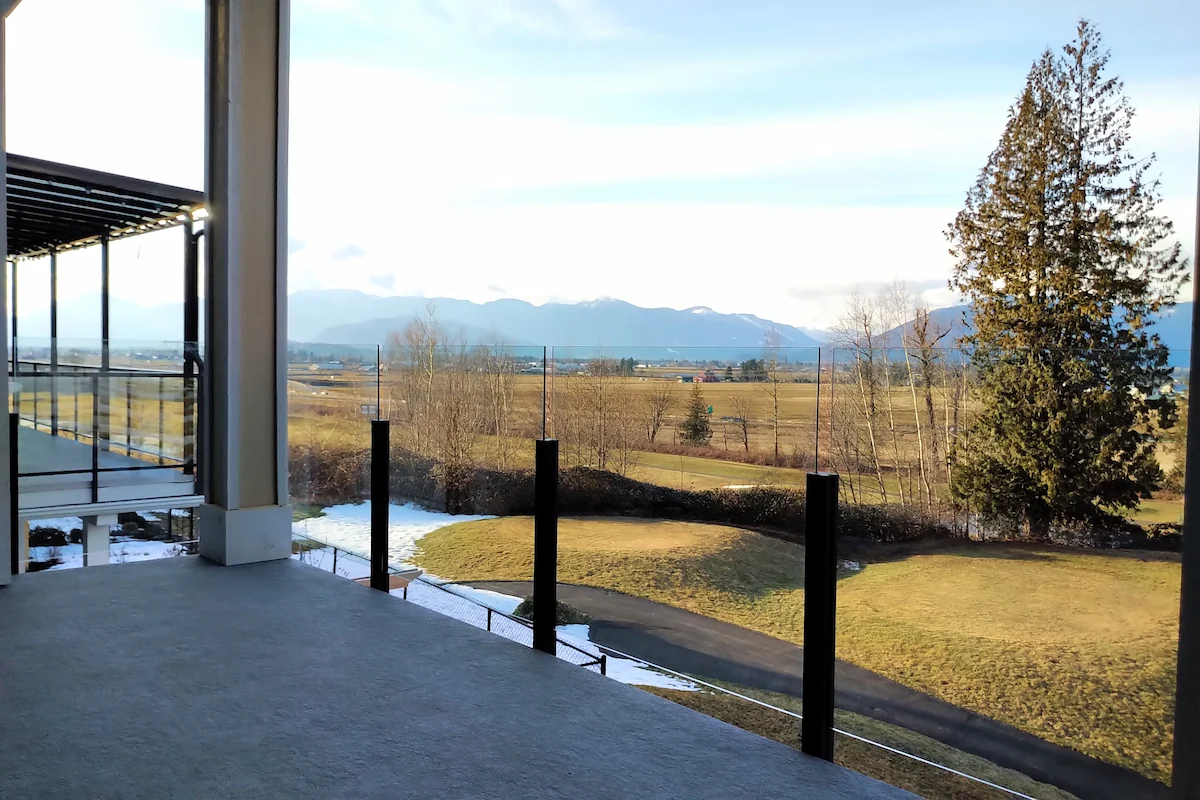
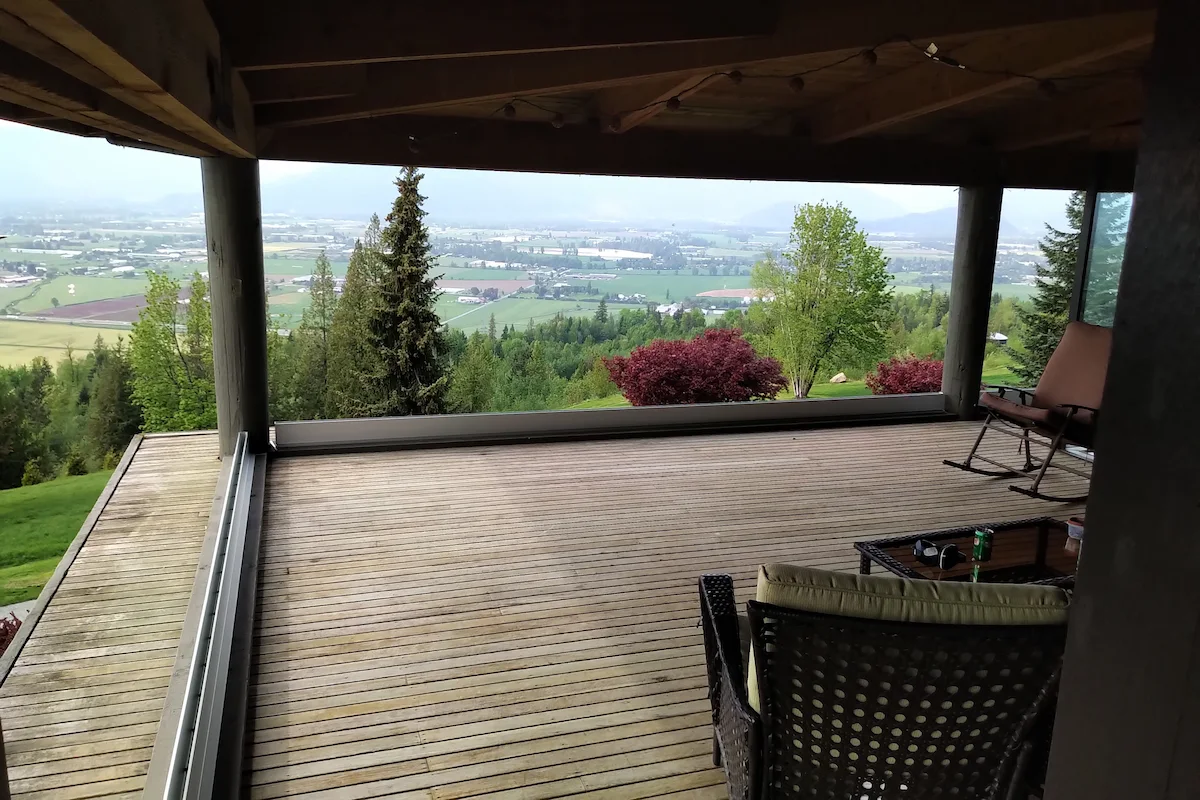
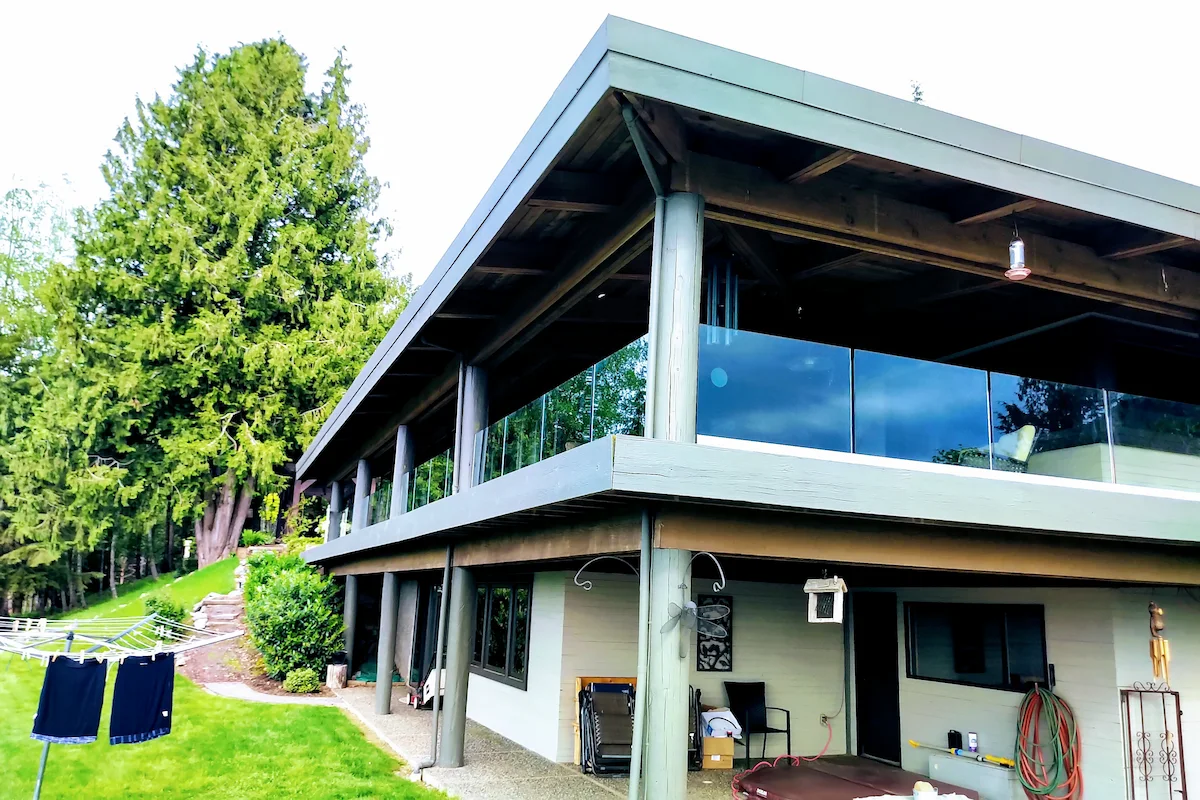
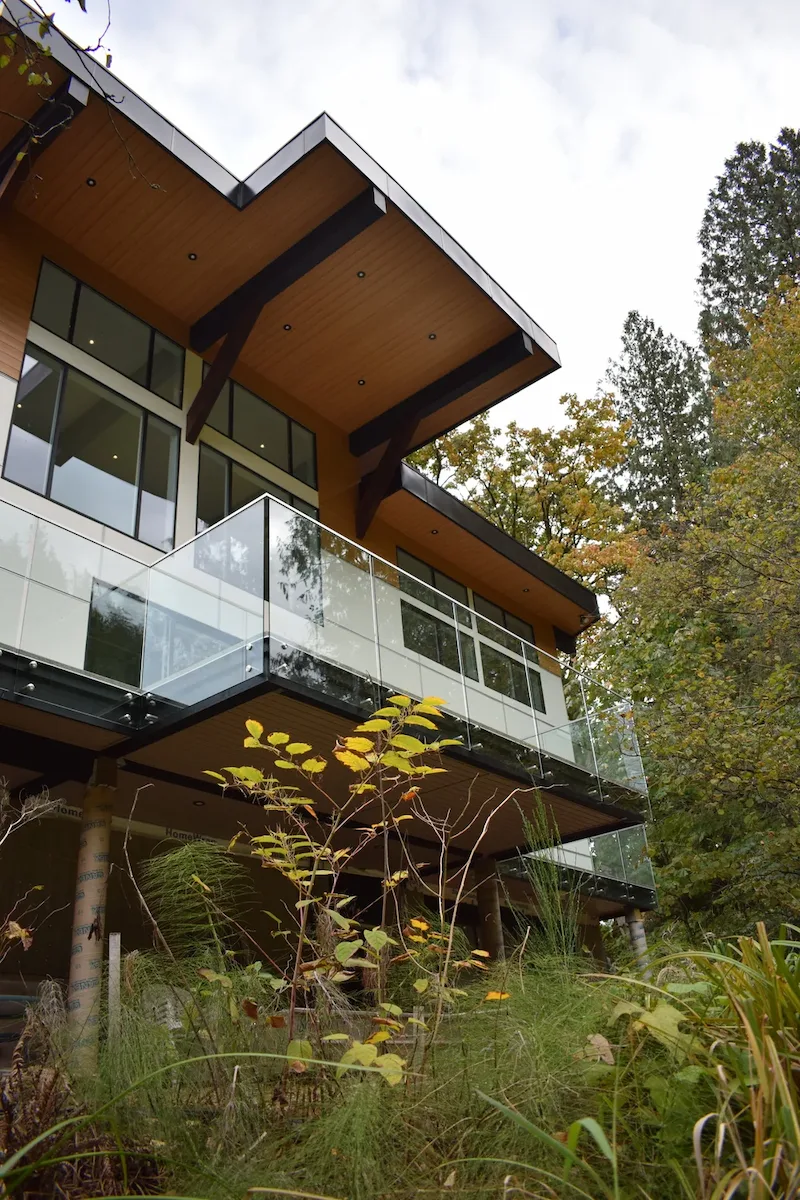
Glass railings have changed how BC homeowners treat their outdoor and indoor spaces. On a deck above the Fraser Valley or a staircase in a Vancouver home, glass keeps the sightline open while meeting the same guard requirements as wood or metal.
This page is the starting point. Each section below summarises one part of the decision and links to the full breakdown.
In this guide:
Why BC homeowners are switching to glass
The three glass railing systems
How glass performs in a coastal climate
What the BC Building Code requires
What glass railings cost in BC
Where glass railings are used
Keeping glass railings clear
The installation process
Choosing a glass railing installer in BC
Frequently asked questions
Why BC Homeowners Are Switching to Glass
Glass railings replace wood pickets and metal balusters with 12mm glass panels. The barrier meets code, and the view stays intact.
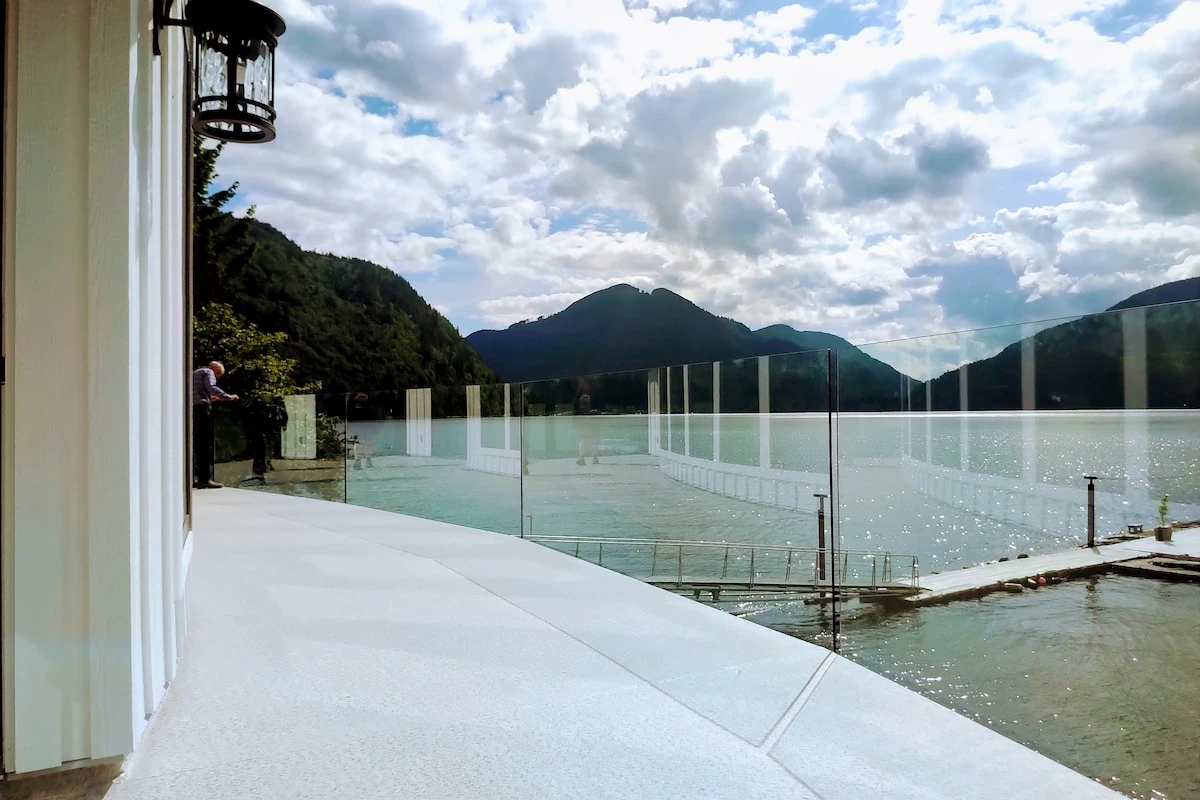
The appeal in BC is specific. Waterfront lots, mountain vistas, and West Coast contemporary architecture all reward transparency, and a picket railing wastes the exact thing the property was bought for. Glass also outlasts wood in a wet coastal climate without annual staining.
For the full explanation of what these systems are and how they work, read what are glass railings.
The Three Glass Railing Systems
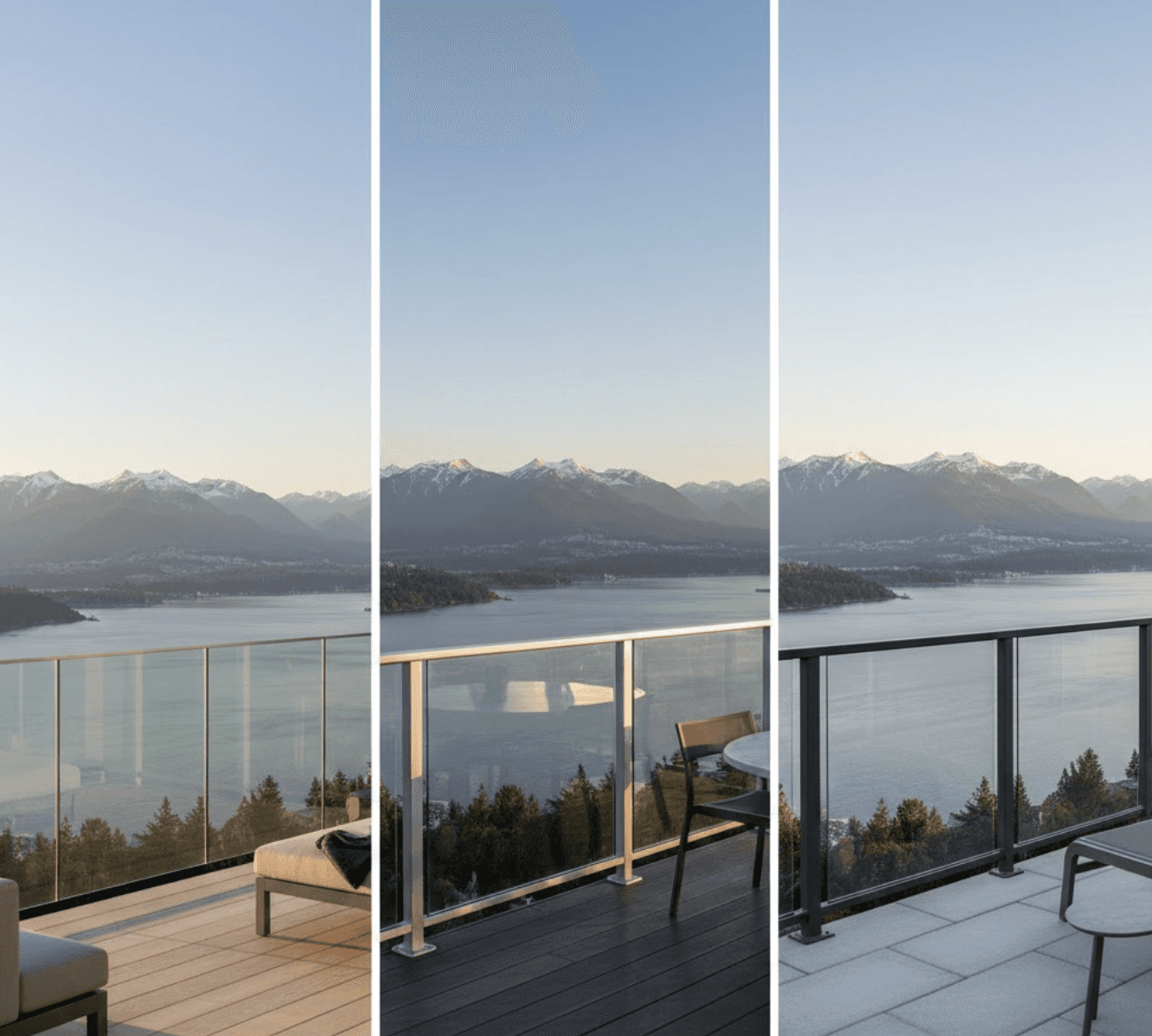
System | Look | Cost per linear foot |
|---|---|---|
Frameless | No posts, no top rail | $300 to $400 |
Semi-frameless | Aluminum posts, top rail only | $250 to $350 |
Aluminum and glass | Top and bottom rails | See quote |
Frameless panels mount with base shoe, standoffs, or spigots. No posts interrupt the glass. Best where the view is the reason the deck exists.
Semi-frameless uses aluminum posts spaced a maximum of 42 inches apart with a top rail and no bottom rail. It is the most common residential choice in the Fraser Valley.
Aluminum and glass frames the panel top and bottom. More visual interruption, more structural support, and the easiest code path.
Full comparison in types of glass railings and frameless vs semi-frameless glass railings.
How Glass Performs in a Coastal Climate
Wood absorbs moisture and rots. Metal corrodes faster near salt water. Glass does neither. It is non-porous, rain sheets off it, and it holds clarity for decades without refinishing.
Solid panels also work as a windbreak, which extends the usable season on exposed decks in places like White Rock and along the Burrard Inlet.
The full climate breakdown, with lifespan and maintenance cost comparisons, is in benefits of glass railings for Vancouver's climate.
What the BC Building Code Requires
Requirement | Specification |
|---|---|
Minimum glass thickness | 12 mm |
Guard height, drop under 1.8 m | 914 mm (36 inches) |
Guard height, drop over 1.8 m | 1067 mm (42 inches) |
Maximum opening | 100 mm sphere |
Post spacing, semi-frameless | Maximum 42 inches |
Pool enclosure height | 1500 mm, lower in some municipalities |
Glazing standard | CAN/CGSB-12.1-M90 |
Guards are required wherever the drop exceeds 600 mm. Frameless systems without a top rail need engineer-sealed drawings.
Panels cannot have chips, cracks, or visible deformation. A damaged panel gets replaced, not repaired.
Full code detail, including load requirements and the permit process, is in BC Building Code requirements for glass railings. For thickness specifically, see glass railing thickness requirements.
What Glass Railings Cost in BC
Frameless systems run $300 to $400 per linear foot installed. Semi-frameless runs $250 to $350 per linear foot installed. Both figures include measurement, hardware, glass, and installation.
Price moves with site access, panel height, curved sections, and hardware finish. A straightforward ground-level deck sits at the low end. A multi-storey install requiring specialised access sits at the high end.
Every quote comes from an on-site measurement, not a phone estimate.
Full cost breakdown in glass railing costs.
Design Possibilities: Glass Railing Applications Throughout Your Vancouver Home
Glass railings adapt to virtually any application, indoor or outdoor. Here's how Vancouver homeowners are using them creatively.
Outdoor Deck Railings
The most popular application. Glass deck railings transform decks from simple platforms into outdoor living spaces.
Design considerations:
Specialty glass options for specific applications
Consider tinted glass to reduce glare in south-facing locations
Add integrated lighting for evening ambiance
Pair with matching glass gates for stairs
Tenmar Contracting frequently installs curved glass sections on wrap-around decks, following the deck's contour while maintaining consistent views.
Balcony Railings for Condos and Townhouses
Condo and townhouse owners face unique challenges—strata approval, wind loads, and often limited working space. Our balcony railing services address these specific requirements.
Key factors:
Obtain strata approval before proceeding (provide engineering drawings)
Wind load calculations are critical for higher floors
Installation may require specialized access equipment
Noise considerations during installation (work with building management)
Staircase Railings (Interior and Exterior)
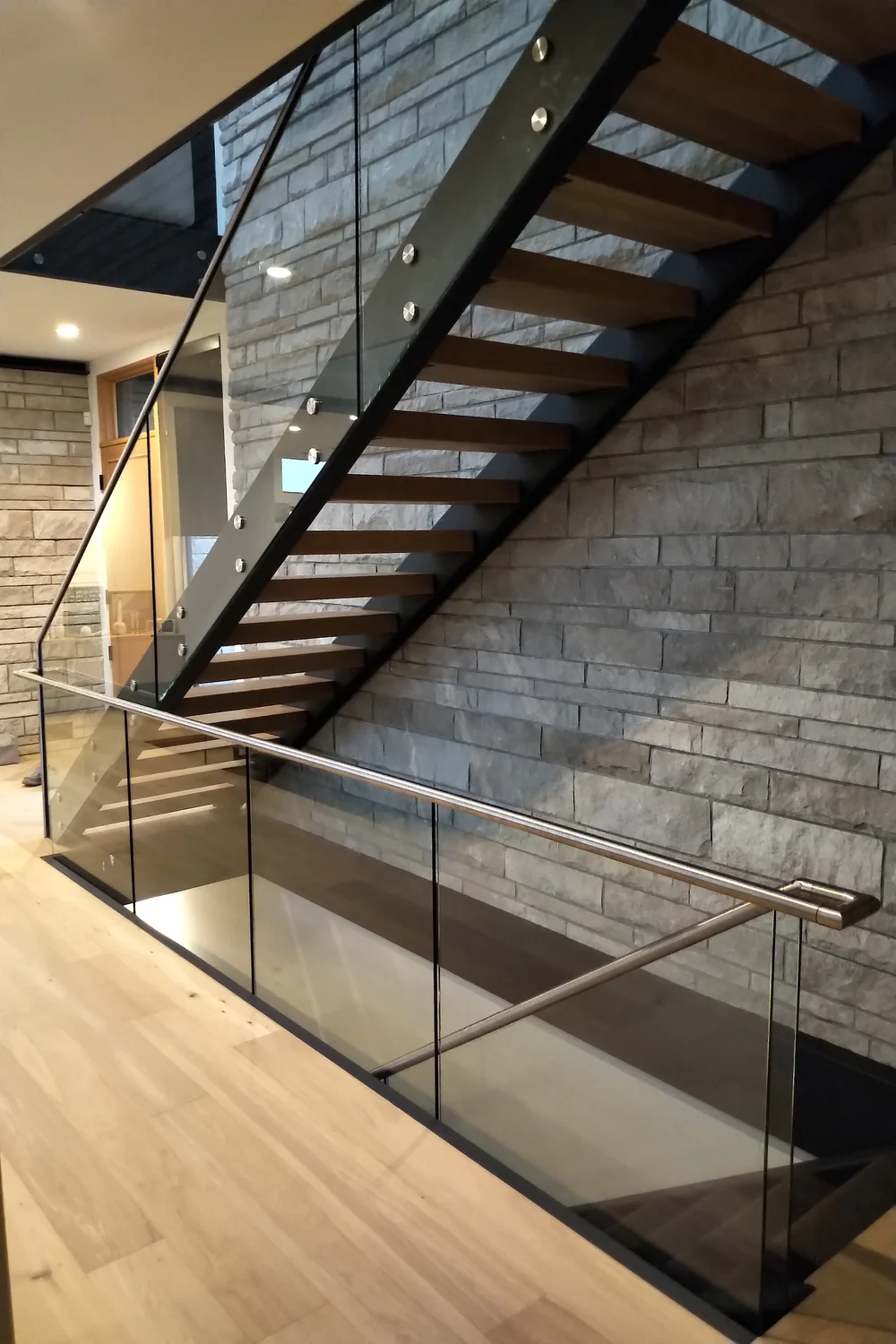
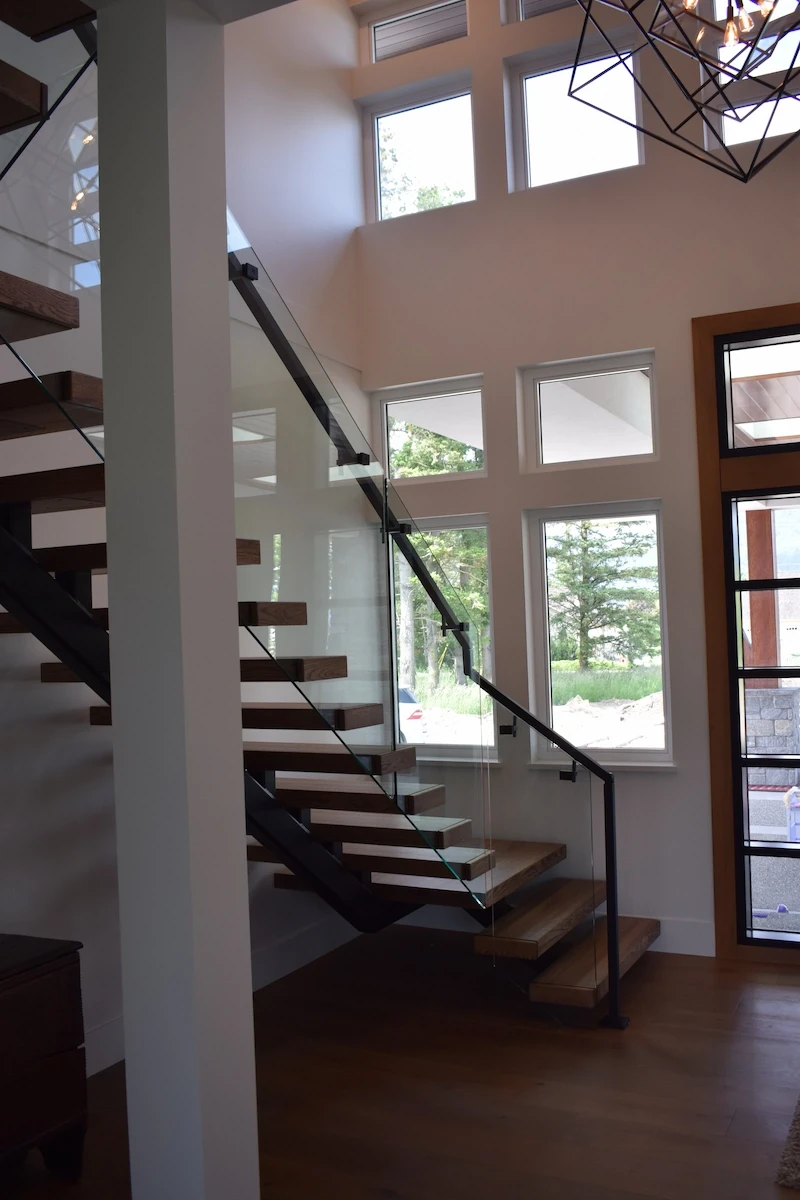
Glass stair railings create dramatic visual impact while meeting BC handrail requirements.
Interior Stairs:
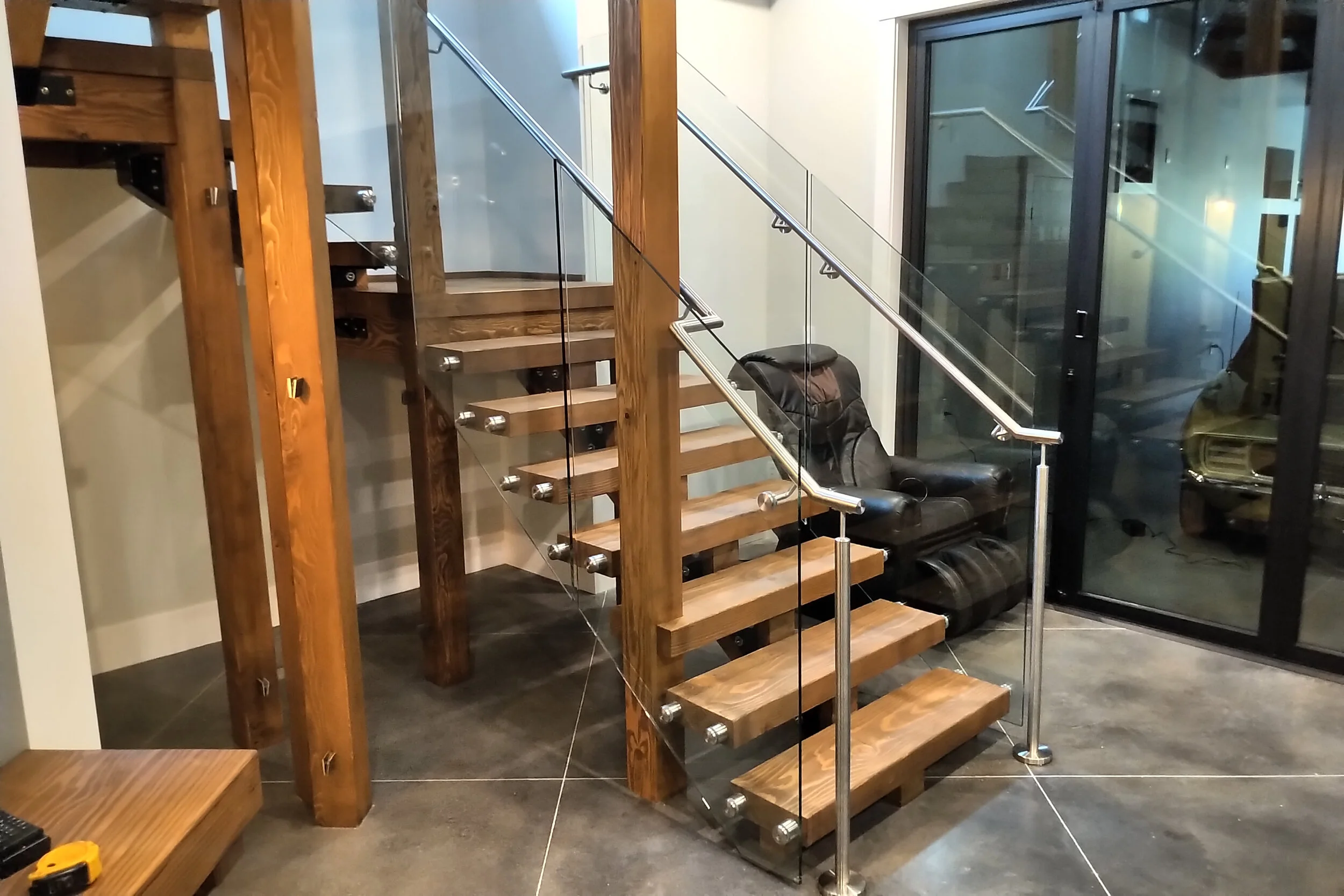
Floating glass panels with stainless steel standoffs create contemporary look
Curved glass follows winding staircases
Frosted glass provides privacy in two-story foyers while maintaining light flow
Top rail required per code, available in wood, aluminum, or stainless steel
Learn more about our specialized interior glass railing solutions.
Exterior Stairs:
Glass specifications handle weather exposure and traffic
Textured glass reduces slip hazards from handprints
Drainage design prevents water pooling on horizontal surfaces
Explore our full range of stair railing options.
Pool Fencing
BC's pool safety regulations require enclosures. Glass fencing meets requirements while maintaining aesthetics and sightlines for supervision.
Pool-Specific Requirements:
Minimum 1500mm (59 inches) height in most municipalities
Self-closing, self-latching gates with locks 1500mm high
No climbable features between 140mm-1500mm height
No gaps exceeding 100mm at bottom
Safety glass minimum 12mm thickness
Pro tip: Position gates and latches on side away from pool furniture that children could use for climbing.
Juliet Balconies
Small balcony openings benefit from frameless glass Juliet railings—providing code-required fall protection without shrinking already compact spaces.
Privacy Screens and Windbreaks
Beyond traditional railing applications, glass serves as:
Privacy screens between townhouse decks
Windbreaks for rooftop patios
Noise barriers on busy street-facing balconies (specialty glass provides better sound dampening)
View our patio railing solutions for additional outdoor applications.
Maintenance in Vancouver's Rainy Climate: Keep Glass Railings Crystal Clear
One of glass railings' biggest selling points is low maintenance—but "low" doesn't mean "no." Here's your complete maintenance guide for Vancouver's climate. For more detailed maintenance tips specific to coastal BC, read our guide on how to clean and maintain glass railings for coastal BC.
Regular Cleaning Schedule
Monthly (Minimum):
Wipe down glass panels with glass cleaner and microfiber cloth
Focus extra attention on bottom edges where debris accumulates
Clean aluminum posts and hardware with mild soap and water
Inspect and clean drainage channels in post bases
After Heavy Storms:
Remove debris lodged in gaps or drainage channels
Check for loose hardware or shifting panels
Wipe away water spots before they dry
Quarterly (Recommended):
Deep clean with specialized glass cleaner for hard water deposits
Lubricate moving parts on gates
Inspect rubber gaskets and seals for deterioration
Check and tighten fasteners as needed
Best Cleaning Products for Vancouver Hard Water
Vancouver's relatively soft water is easier on glass than many regions, but minerals still accumulate:
Recommended cleaners:
White vinegar solution (1:1 with water) for hard water spots
Commercial glass cleaners with ammonia for streak-free shine
Automotive glass cleaner with rain repellent for longer clean periods
Avoid abrasive cleaners that scratch safety glass
Tools that work:
Microfiber cloths (never paper towels on glass)
Squeegees for large panels
Soft-bristle brushes for aluminum components
Pressure washers on low setting (stay 12+ inches from glass edges)
Dealing with Moss, Algae, and Coastal Grime
North-facing glass railings in shaded Vancouver yards can develop green algae or moss growth, particularly in fall and winter.
Prevention and treatment:
Apply water-repellent coatings designed for glass (available at marine supply stores)
Treat early algae growth with diluted bleach solution (1:10 bleach:water)
Consider professional cleaning 1-2 times annually for persistent issues
Improve drainage around railing bases to prevent standing water
Hardware Maintenance Specific to Coastal Environment
Salt air accelerates corrosion. Even corrosion-resistant aluminum benefits from maintenance:
Rinse stainless steel hardware monthly with fresh water
Apply silicone spray to moving parts twice yearly
Touch up scratched powder coating immediately to prevent oxidation
Replace corroded fasteners promptly—don't wait
Seasonal Considerations
Fall/Winter:
More frequent cleaning due to rain and debris
Check drainage more often to prevent ice formation
Monitor for leaf accumulation in channels
Inspect seals—cold weather can cause temporary hardening
Spring/Summer:
Polish glass before outdoor entertaining season
Apply rain repellent coatings (last 3-6 months)
Check hardware for any winter damage
Trim vegetation growing near railings
When to Call Professionals
Some maintenance requires expert attention:
Cracked or chipped glass panels
Loose posts or structural concerns
Persistent leaks or drainage issues
Faded or peeling powder coating
Corroded hardware that won't budge
Tenmar Contracting offers annual inspection and maintenance services throughout Fraser Valley and Metro Vancouver, catching small issues before they become expensive problems.
The Glass Railing Installation Process
Understanding the installation process helps you prepare and sets realistic expectations. Here's exactly how professional glass railing installation works.
Project Timeline
From the first site visit to completed installation, plan on 6 to 8 weeks. This covers permit processing, glass fabrication, and installation.
Step 1: Initial Consultation and Site Assessment (Week 1)
We begin with a thorough on-site consultation:
Discuss your vision, style preferences, and functional requirements
Evaluate site conditions, access, and structural considerations
Take precise measurements
Review building code requirements for your specific application
Present glass type and design options with transparent pricing
Provide preliminary timeline and budget
You receive: Detailed quote with itemized costs, timeline estimate, and design recommendations
Step 2: Design Finalization and Engineering (Week 2)
Once you approve the project:
Create detailed engineering drawings for permit submission
Calculate wind loads, structural requirements, and anchoring specifications
Finalize glass specifications and mounting system
Select hardware finishes and post configurations
Order custom-manufactured glass panels (lead time varies by system)
You receive: Complete design package showing exactly what will be installed
Step 3: Permit Application (Weeks 3-5)
We handle the bureaucracy:
Submit permit applications to your municipality
Provide all required engineering calculations and drawings
Respond to any plan check comments or questions
Coordinate inspection schedules
Timeline varies by municipality: Vancouver (2-4 weeks), Surrey (2-3 weeks), Fraser Valley cities (1-3 weeks)
Step 4: Site Preparation (Day Before Installation)
Preparation sets up installation success:
Confirm glass panels arrived undamaged
Stage all materials and tools
Protect existing deck surfaces and landscaping
Mark post locations per engineered drawings
Confirm access for glass delivery (panels are large and heavy)
Step 5: Installation Day(s) (Typically 1-3 Days)
Professional installation follows precise sequences based on your system type:
Frameless Installation Process:
Frameless installation sequence:
Measure on site
Install mounting hardware, either base shoe, standoffs, or spigots
Cut glass panels to the measured specification
Install and secure the panels
Finish, level, and complete quality checks
Semi-Frameless Installation Process:
Install aluminum posts (maximum 42 inches apart)
Set and level all posts
Install glass panels (typically 2 weeks after posts)
Add top rail and handrail
Final inspection and adjustments
Step 6: Inspection and Final Approval (Week Following Install)
Building inspector verification:
Schedule final inspection with municipality
Inspector checks code compliance: heights, spacing, glass specs, structural integrity
Address any deficiencies (rare with professional installation)
Receive final inspection approval
You receive: Copy of approved inspection report and certificate of occupancy if required
Step 7: Final Walkthrough and Warranty Registration (Same Day as Approval)
We complete your project:
Walk through installation with you
Demonstrate cleaning and maintenance procedures
Answer questions about care and warranty
Provide maintenance kit with cleaning supplies
Register warranty coverage
Collect final payment
You receive: Warranty documents, maintenance guide, and emergency contact information
Choosing a Glass Railing Installer in BC
Quality varies widely across BC contractors. These are the checks worth making before signing.
Essential Qualifications to Verify
WorkSafeBC Registration: Every legitimate contractor carries WorkSafeBC coverage. This protects you from liability if workers are injured on your property. Always verify current status.
Liability Insurance: Minimum $2 million general liability coverage. Request certificates of insurance and verify directly with insurance provider.
Business Licensing: Check municipal business licenses are current. Different municipalities have different requirements.
Review history: Look for a consistent rating across Google and a track record of resolved complaints rather than a perfect score.
References and Portfolio: Ask for 5+ recent references from projects similar to yours. Visit completed installations if possible.
Warning Signs of Unreliable Contractors
Red flags that should send you elsewhere:
Requests full payment upfront (standard is 30-50% deposit max)
Lacks proper licensing or insurance
Can't provide references from last 12 months
Provides verbal-only quotes without written details
Pressure tactics or limited-time offers
Significantly lower quotes than other estimates (usually corners are being cut)
No physical business address or showroom
Poor communication or slow to respond during sales phase
Six Questions Worth Asking
How many glass railing projects do you complete in a year?
Who does the actual installation, your own team or subcontractors?
What glass thickness do you recommend for my application, and why?
Do you handle permit applications and inspections?
What is your timeline from deposit to completion?
What is covered under warranty, materials, labour, or both?
Why Local Fraser Valley Experience Matters
Contractors familiar with Fraser Valley municipalities understand:
Specific building code interpretations by local inspectors
Typical approval timelines for each city
Which local inspectors prefer which documentation
Regional weather considerations affecting installations
Access issues common in different neighborhoods
Tenmar installs across Greater Vancouver, the Fraser Valley, the Sea-to-Sky corridor, the Sunshine Coast, and Vancouver Island. Marten Kerkhoff handles quotes and installations directly, so the person who measures the job is the person who installs it.
Systems use 12 mm glass. Semi-frameless posts are spaced a maximum of 42 inches apart. Timeline is 6 to 8 weeks from measurement to completion. Google rating 4.8.
Frequently Asked Questions About Glass Railings in Vancouver
Frequently Asked Questions
How long do glass railings last in BC's climate?
Quality systems last 25 years or more with minimal maintenance. The 12mm glass itself is stable indefinitely. Hardware longevity depends on material selection, which matters most on properties close to salt water.
Can existing wood or metal railings be replaced with glass?
Usually yes, but the existing structure gets assessed first. The deck framing has to support the loads of a glass system. Rim joists sometimes need strengthening, and semi-frameless post spacing may need to change to hold the 42 inch maximum.
What is the difference between base shoe, standoff, and spigot mounting?
Base shoe seats the glass in a continuous channel at the base for the cleanest line. Standoffs anchor the glass to the deck face in pairs, creating a floating look. Spigots clamp panels in pairs and surface mount to the deck top. Site conditions and the look you want determine which one fits.
Do glass railings need a building permit in BC?
Most installations do, particularly decks more than 600mm above grade, new construction, and any structural modification. Requirements and timelines vary by municipality.
How do glass railings perform in ice and snow?
Well. Glass sheds snow more readily than picket railings. Clear heavy accumulation from top rails, keep drainage channels open, and use de-icing spray rather than chipping ice off the panel.
Can glass railings be installed on an existing concrete patio?
Yes, using surface-mount base plates or core-drilled anchors. The concrete needs adequate thickness, generally a minimum of four inches, and the hardware stays visible rather than concealed as it can be in decking.
Is Glass Railing Right for Your Vancouver Property
Glass makes sense when the view is worth protecting, the architecture is contemporary, and you would rather clean a panel than restain a rail every year.
It makes less sense on a tight budget or a traditional home where a wood or metal rail suits the building better.
If you are still choosing between systems, read frameless vs semi-frameless glass railings.
Get a Quote for Your Glass Railing Project
Every Tenmar project starts with an on-site measurement. From that visit to completed installation, plan on 6 to 8 weeks.
Tenmar serves Greater Vancouver, the Fraser Valley, the Sea-to-Sky corridor, the Sunshine Coast, and Vancouver Island.
Get a Free Quote or call (604) 819-9896.
More Glass Railing Guides
References and Sources
This article references the following authoritative sources for accuracy and credibility:
BC Building Code Division B, Section 9.8.8 - Official BC building regulations for guards and railings
Source: BC Publications - Building Code
CAN/CGSB-12.1-M90 Standards - Canadian General Standards Board specifications for safety glazing
Referenced via: British Columbia Building Code for Glass Railings
Consumer Product Safety Commission 16 CFR Part 1201 - Safety standards for architectural glazing materials
Source: CPSC Glass Safety Standards
Glass Association of North America (GANA) - Industry standards for glass railing durability and lifespan
Building Code Compliance Guide - Additional reference from Glass Railing Building Codes: Complete 2025 Compliance Guide